
 Bicycling Australia
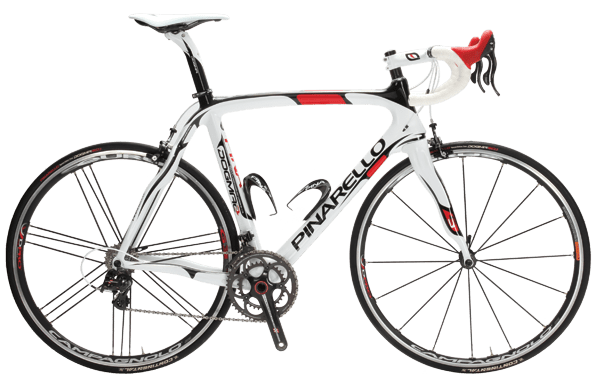 Being handed a Dogma 2, dripping with Super Record and told to go riding, sometimes the world is on your side…
Having looked at these frames for the last few years with their curvy forks and matching stays and not knowing what to think, owning one, if only for a few short weeks has made it much more beautiful in my eyes. Something about the lines of the fork flowing into the frame. The way the top tube just becomes the seat stays. Magic. Pinarello is a name in cycling that just makes you stop, turn around and have another look. The shapes, the head badge, the paint-job… this is a bike that has a lot to live up to.
The passion started for Giovanni Pinarello (born in 1922) as a 17 year old, racing in the juniors category. By 1947 he had turned pro, competing at this level till 1953. In 1952 Giovanni was handed 100,000 lire by his sponsor not to ride the Giro d’italia, stepping aside to allow room for an up and coming team mate. This was to become the beginning of the future.
This money, he decided to put to good use, opening a cycling store in Treviso, Italy. Giovanni had been building bikes for years at this stage and began his professional sponsorship in 1960. By 1975, a win in the Giro d’italia and Pinarello bikes were on their way.
Back to the bike at hand, the Dogma 2. Improvements over last year’s Dogma would be hard to come by. Having both ProTour wins and awards thrown at it, the Dogma was already a popular frame. The finish on the new Dogma 2 is one of the best that I have seen. The paint and decals are perfectly presented, the depth of the paint is even and smooth. On inspection, there were no imperfections on the frame at all. After five weeks of testing there are no stone chips or scratches like I have seen on other bikes. Pinarello’s mirror finish will keep your pride and joy looking new long after some other lesser bikes are looking rather second hand. This should help the resale price of your Dogma when it is upgrade time too. The Dogma 2 frame is built using an Expandable Polystrene System (EPS), where the carbon is laminated onto the EPS mould during the frame building process. This is more reliable than the bladder system used by some other manufacturers and creates a smooth finish on the inside of the frame similar to the finish on the outside. More pressure can be applied to the raw carbon during the build, removing air bubbles which can cause weak spots in the frame. The EPS mould stays in place until the final heating process where it is dissolved. The carbon that is used comes exclusively from Torayca. A Japanese company supplying to the aerospace industry.

Pinarello started by working on the aerodynamics of the Dogma 2, cleaning the lines around the head tube, removing some of the aggressive looking ribs and running all cables internally. Taking the cable thing one step further, they cleaned the lines where the cable enters the frame, moulding the cable stop into the frame to improve airflow. One of the most obvious enhancements is the tail at the top of the fork crown, filling the gap between the frame and fork. These steps apparently yielded a 6% improvement in aero efficiency.
The next step was controlling the power transfer that the rider drives through the bike. Asymmetrical is the word. As with the Dogma, the entire frame is built to control the rider’s inputs. Pinarello stepped it up with the Dogma 2, even the top tube and down tube are offset to the left, leaving the ribs on the right side of the frame to improve stability and efficiency. This is not easy to pick by eye as the bike looks ‘normal’ but the ride…
There was no time for a shakedown ride with the Pina’. It was thrown straight into the car and taken to meet 10 guys that love to test out my test bikes as well as me. Two hours later over a quiet beer, the Dogma 2 had passed all tests and not put a foot wrong. Handling the pace across the flats, staying stable and solid on the descents and not even being upset by the roughest sectors of the day. All the power that I could put through the cranks was being delivered to the road beneath me. Maybe there is more to these uber expensive Italian bred race machines than I first thought.

There were still questions in my mind about the build. Full Campagnolo Super Record, yet compact 50/34 cranks mated to a 12-25 cassette left me wanting at times. The Campagnolo Eurus wheels, wrapped in Continental Pinarello ‘Special edition’ tyres felt as smooth as you would expect from Campagnolo’s second lightest wheel set, but would the sub 200g tyres hold up over time? The finishing kit, including the saddle on the Dogma 2, is supplied by MOST, Pinarello’s component brand. The carbon railed saddle felt comfy on the first ride and stayed on board for the entire test without any issues. At 140g even the weight weenies could leave it alone. The one piece bar and stem combo felt super solid under all riding conditions and the 125mm drop felt just right, yet the feeling never left me that I wanted to try the bars rolled up just a little. This was partially compensated by moving the shifters up the bar slightly but there was still that thought of the bars being stuck in that position. One last thing with this style of bar, while the shape of the tops feels great in your hands, try wrapping your light brackets around them. Verdana Not going to happen. The need to go searching for rubber strap mounted lights at 5am was a hassle. Where standard flat topped bars still have a round section at the stem, allowing for your light mounts, these just flow, albeit very sweetly, into the stem.
Ride after ride on the Dogma 2 was as hassle free as the first with not a noise coming from anywhere on the bike. As the Super Record Group set settled in to its groove, it performed flawlessly with every shift. The braking power was always consistent, even with the single pivot rear caliper supplied on the Dogma 2. Campy have a dual pivot rear caliper available but the feeling of needing more never crossed my mind.
The combination of compact crank and the 12-25 cassette did unsettle the ride on some climbs. I found myself not wanting to drop into the small chain ring as it felt tiny, so cross chaining from big to big cogs was explored more times than expected. This results in excess noise and chain wear and a feeling you are somewhere you don’t want to be…
As most of the Dogma 2’s leaving shops are sold as a frameset and custom built to the riders specs, this would not be an issue for the buyer.

On the other side of the climb, when the fun started, the Dogma 2 was almost untouchable, feeling more planted the faster it was guided deep into a bend, the apex just coming naturally towards the front wheel. Even my first major descent was tackled faster than on my own bike. Grip levels from the Conti ‘Pinarello’ tyres (looking just like a set of Conti GP Attack front and GP Force rear tyres) were matched to the bike perfectly. Changes of line mid corner, while not something you want to do whilst on the limit, were quick and stable. The speed of the Dogma 2 is only limited by how fast you can spin your legs between the corners with the 50-12 top gear. The wheelset supplied with the Dogma 2 stayed round and true the entire test, never needing a spoke key at all. The rear tyre did suffer some serious cuts to the outer casing but didn’t let me down once.
I so can’t wait to be sitting in front of my TV come July and watch the SKY and Movistar guys descending on the same bike that I attacked my local mountains on.
QUALITY
Pinarello have shown that they not only know how to build a seriously quick race bike, combining aerodynamics balance and power transfer but they can finish it off with the best paint, detail and style that maybe only the Italians know how.
PERFORMANCE
Powerful climbing, solid driving and superior descending skills make the Dogma 2 stand out from the crowd. The non chip coating was a bonus.
VALUE
Retailing at $14,999 it is hard to talk about value. This bike is expensive in anybody’s language. A bike like this will end up with special owner who knows the value of the custom build they put together on paper, think about for weeks and decide on late one night. It will be a joy to them for a long time to come.

OVERALL
Pinarello have a variety of frame types available to the consumer, all built with the same attention to detail and creative flair. The entry fees are high but… if a purpose built race bike, fast enough for Cav to ride is what your’re after, then the line for a Dogma 2 starts here.
Specifications
Frame: Pinarello Dogma 2
Fork: Onda 2 1″ 1/8 1″ 1/2
Head Set internal: 1″ 1/8 1″ 1/2
Stem: Most One piece with Bar 110mm
Handlebars: Most Talon 1k Compact 44cm
Shift Levers: Super Record 11 spd
F Derailleur: Super Record 11 spd
R Derailleur: Super Record 11 spd
Cassette: Super Record 11 spd 12-25
Chain: Record 11 spd
Crank: Super Record 11 spd compact 50/34
Bottom Bracket: Campagnolo Screw in Italian
Pedals: N/A
Brakes: Super Record 11 spd (single pivot rear)
Wheels: Campagnolo Eurus
Tyres: Continental Pinarello Special Edition Dogma 60.1 (22mm Front, 24mm rear)
Saddle: Most Catopuma Carbon Rail
Seatpost: Pinarello Dogma Carbon
Weight: 6.8 kg
Price: $14,999