
 Harry Kooros
I’ve been testing two pairs of Goodr’s performance-focused sunglasses – the Astro G and the Bolt G – and for what are essentially budget-friendly cycling sunnies, they’ve genuinely impressed me. With most premium brands charging $250–$500, I didn’t expect much from a $79 pair. Plenty of brands make bold claims at this price point, but few deliver.
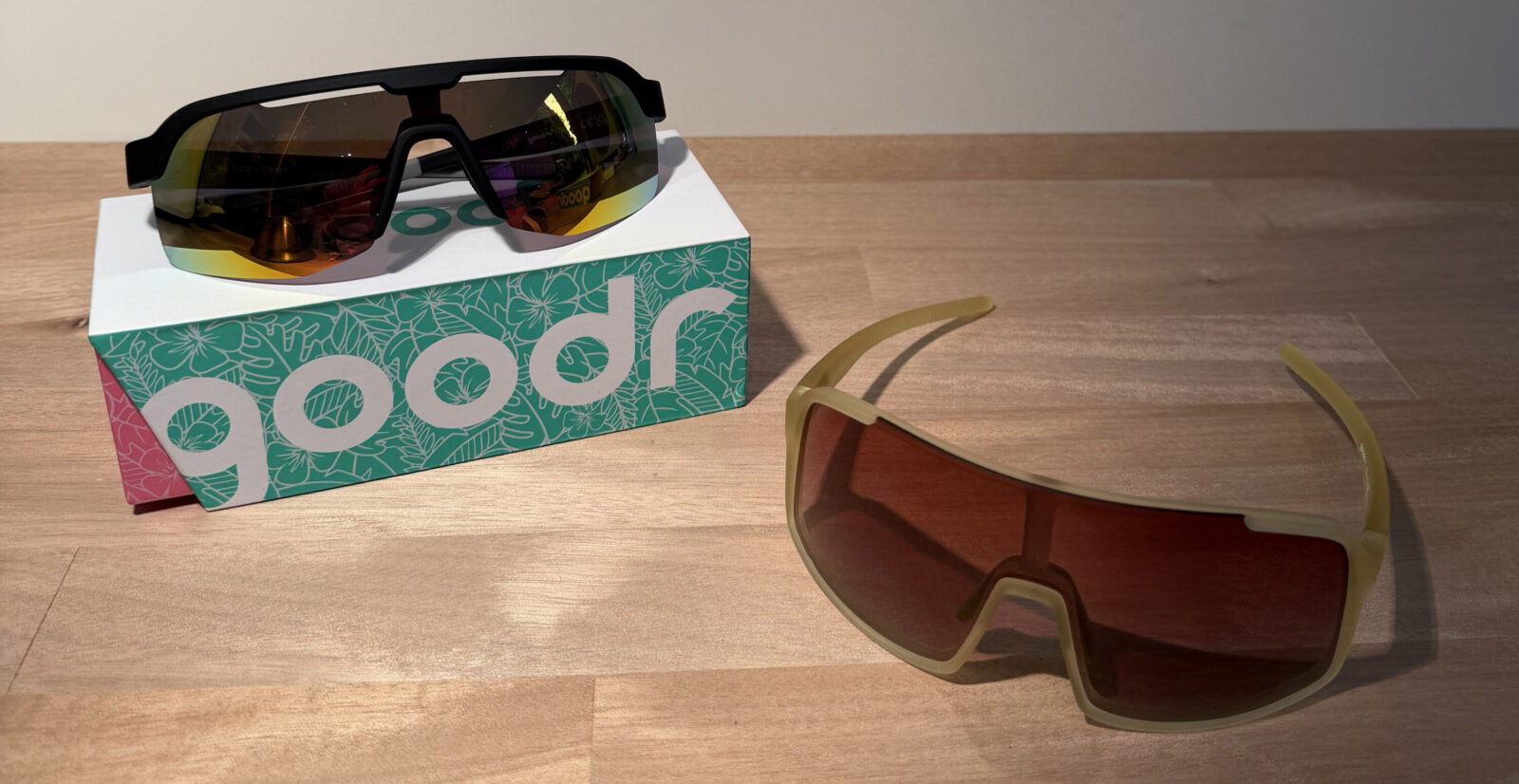
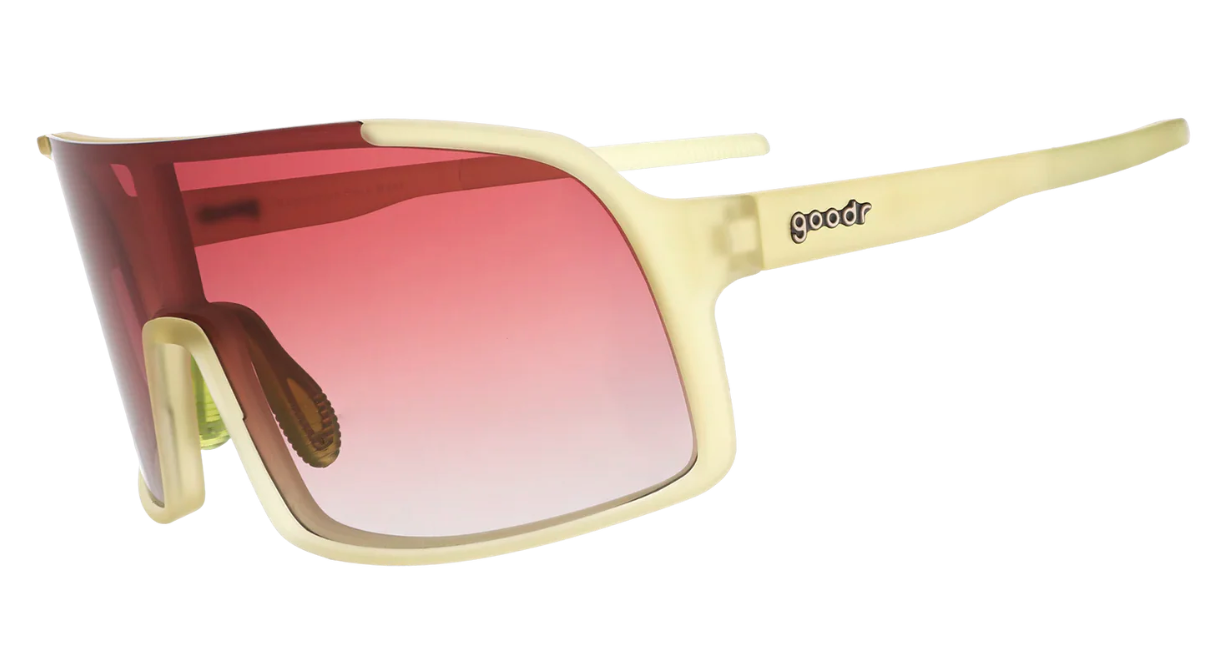
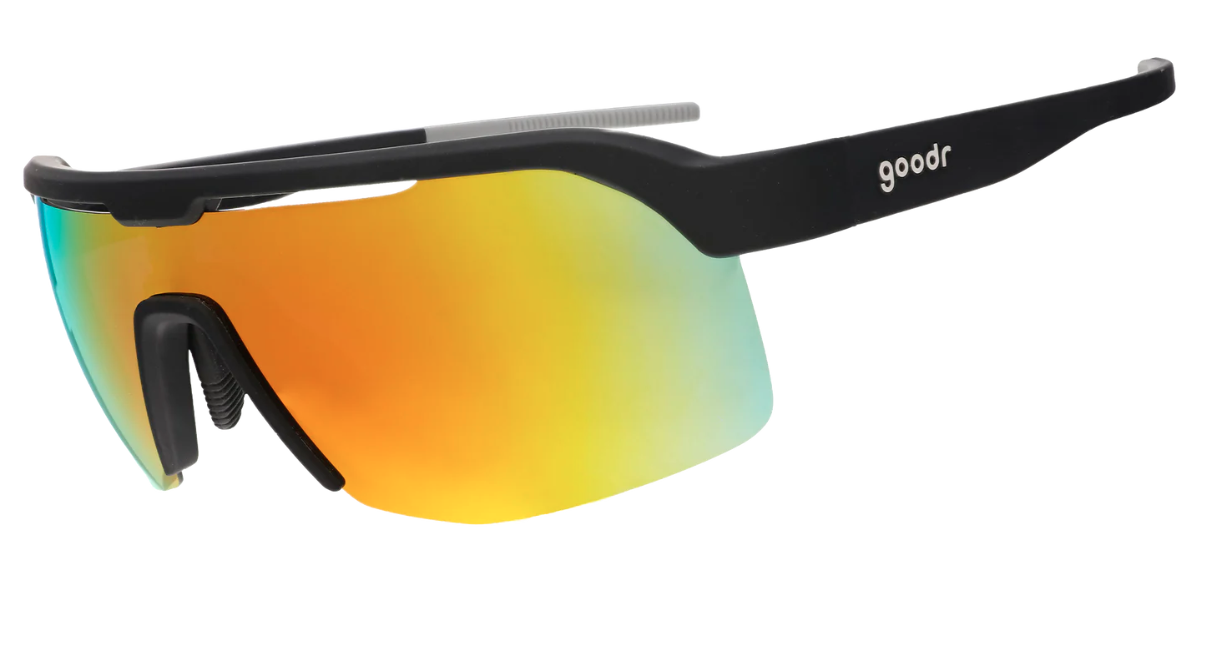
Goodr, the US-based brand known for fun and accessible eyewear, has stepped further into performance territory with these two models than the price suggests. The colour names also stay true to their quirky personality – my Astro Gs arrived in “Guacamole Face Mask”, while the Bolt Gs came in “Do It for the Victory Dance”.
Build quality and lens performance
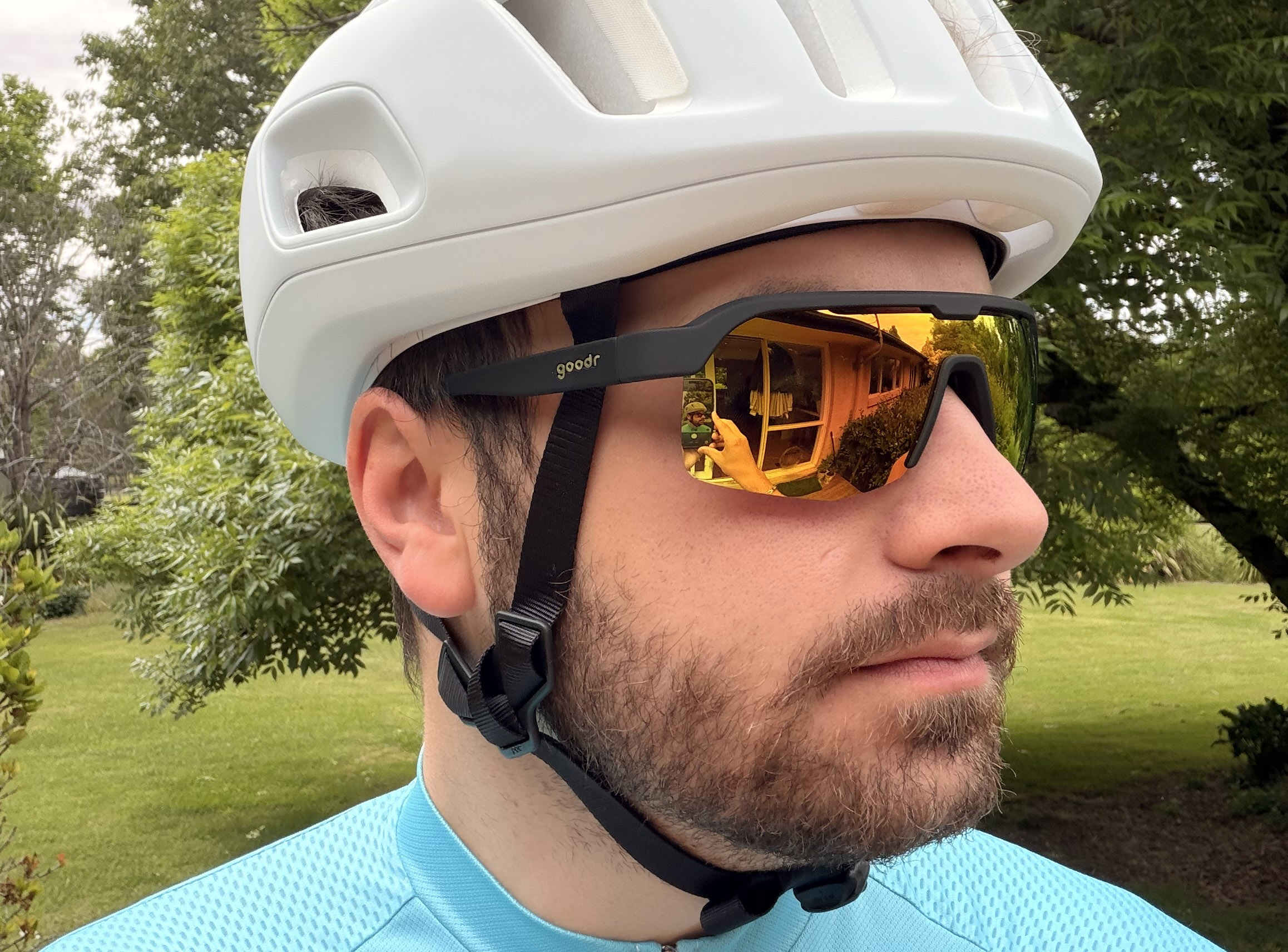
Despite the price, both models feel far better built than expected. The Astro G uses a full shield-style wraparound lens that offers a wide field of view and excellent coverage, while the Bolt G takes a half-rim approach with venting along the lens line to improve airflow. In the hands, both feel stable and surprisingly robust. The hinges aren’t sloppy, the frames don’t flex in a brittle way, and the arms bend without that “I’m about to snap this” sensation common in budget eyewear.
On the bike, the lenses were another pleasant surprise, both being fully polarised with UV400 protection. There’s no odd tint shifting or colour distortion when you move your head, and clarity stays crisp across changing light conditions. They won’t compete with the ultra-premium optics of $300+ brands, but they deliver reliable, distortion-free performance that’s more than adequate for everyday riding.
Comfort and fit
Comfort is where these glasses really punch above their weight. Both models include adjustable nose pieces – a major advantage for cycling. A single fixed nose shape rarely suits everyone, and poorly fitting glasses can slide, pinch, or bounce around. I’ve had premium eyewear become uncomfortable purely because the nose bridge couldn’t be adjusted.
The Astro G uses a soft, flexible nose pad and Goodr’s no-slip coating on the arms, which keep everything secure even during hot, sweaty rides. The Bolt G goes a step further with a more adjustable setup that lets you fine-tune the frame’s position. On rough roads, out-of-the-saddle efforts and fast descents, both pairs stayed impressively stable. After a while, I genuinely forgot I was wearing them – which is exactly what good riding sunglasses should achieve.
Limitations
At this lower price point, there’s one notable trade-off: neither the Astro G nor the Bolt G offers interchangeable or replacement lenses. Many premium cycling brands use lens-swap systems to offer versatility – clear for early mornings, photochromic for mixed light, and darker lenses for mid-summer sun.
With Goodr’s performance range, what you get is what you ride. If you often pedal at dawn, dusk or in heavy shade, the lack of flexibility is worth noting. For most daytime road riding, though, the included lenses work perfectly well.
Final verdict
Overall, the Goodr Astro G and Bolt G deliver performance, comfort and clarity that far exceed their price tag. They’re sturdy, comfortable, adjustable, stable at speed, and the polarised lenses handle Australian conditions well. You don’t get interchangeable lenses or premium-brand polish, but for everyday road rides or commutes, they’re excellent value.
For riders wanting performance without paying a premium, these two models are genuinely impressive options.
See the full range at Goodr’s Australian website.

Harry Kooros
Harry Kooros - As a former Advertising Manager of Bicycling Australia, Harry is a keen roadie who has stepped up as a contributor to share his riding and product experiences.