
When I first heard about TriEye’s cycling sunglasses with a built-in rearview mirror, I expected a clever idea that would ultimately feel like a gimmick. Still, curiosity got the better of me, and I had to try them out for myself.
First impressions
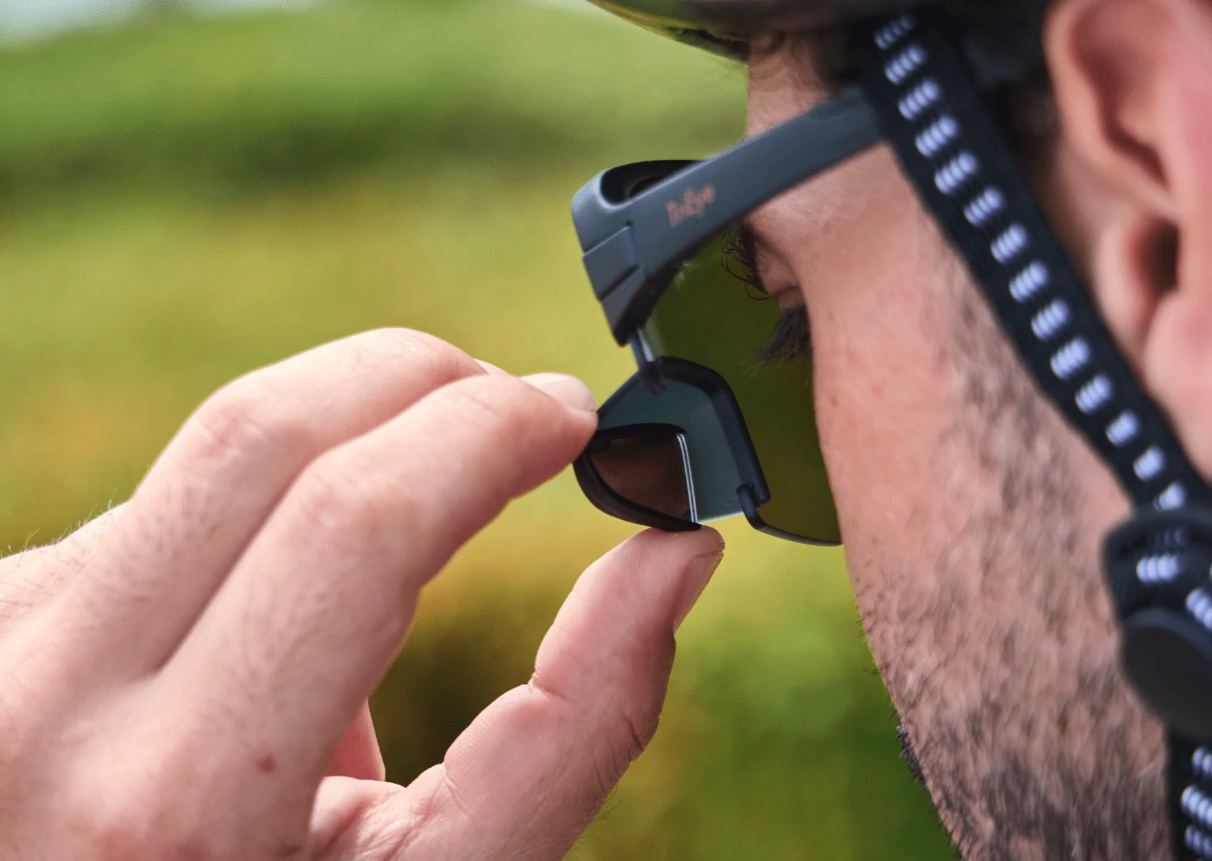
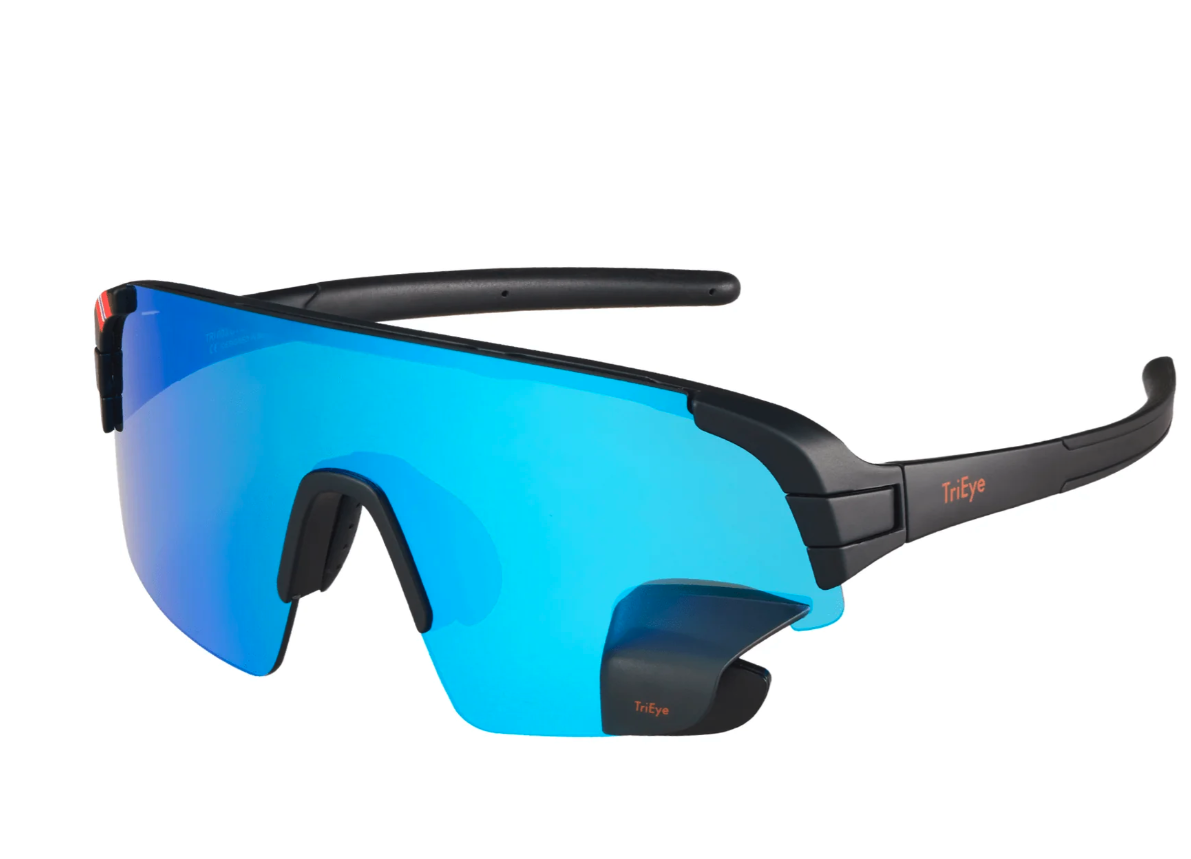
Straight out of the box, it’s clear these sunglasses are built to a high standard – exactly what you’d hope for at this price. The mirror integration is genuinely impressive. You can see the raised section where the mirror sits, but it’s not overly bulky or intrusive and doesn’t detract from the overall look.
The frame feels robust yet lightweight, sitting comfortably with no pressure points, and the lens quality is excellent: clear, distortion-free and offering plenty of coverage. All View Sport models feature full UV protection (UV400). The mirror itself is crisp and more usable than I expected, providing a surprisingly wide rearward view without interfering with forward vision.
Adjusting the mirror angle is straightforward, though dialling it in to match your riding position perfectly does take a little experimentation. Once it’s set, it stays exactly where you need it.
Ride experience
It took a ride or two to adjust to the rearview mirror, but once I did, it genuinely changed my awareness on the bike in a way I didn’t expect. Instead of turning your head and drifting off your line, a small tilt is all it takes to check what’s happening behind you.
In traffic, it’s excellent. You instantly know if a car is approaching, sitting too close, or moving out to pass. Paired with a radar tail light, the glasses become even more useful – you get the alert from the radar and can immediately confirm what’s behind you with a glance.
Comfort during the ride is strong, too. The glasses stay put over rougher roads, ventilation is good, and they resist fogging well. The mirror remains clear and doesn’t intrude into forward vision unless you intentionally look for it, which is exactly how it should be.
Caveats
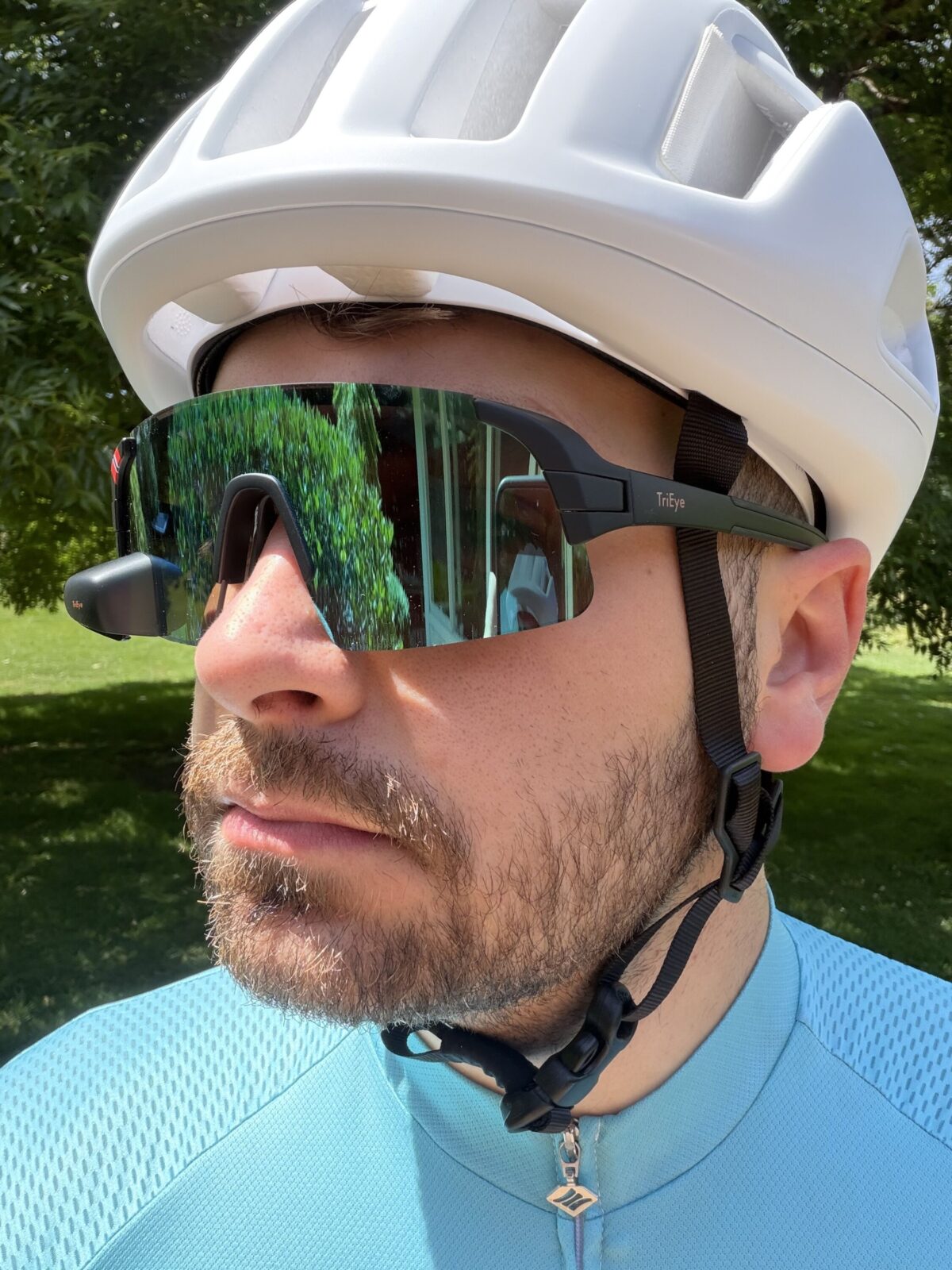
- Dialling in the mirror position takes some fine-tuning, and because the mirror is quite small, you do need to move your head to the right angle each time you want to look behind. It becomes natural after a few rides, but there is an adjustment period.
- Riders who change handlebar positions frequently may need to adjust the mirror angle more often.
- Due to the small size of the mirror, any water droplets reduce visibility and clarity significantly.
The verdict
What I expected to be a gimmick turned out to be one of the most surprisingly effective features I’ve seen in cycling eyewear. The rearview mirror genuinely boosts confidence, improves situational awareness, and adds a level of safety you don’t get from standard sunglasses – especially when riding in traffic.
These suit commuters, solo riders, and anyone who spends time in traffic and wants an extra layer of awareness without resorting to bulky helmets or handlebar mirrors.
If you value increased awareness and safety on the bike without compromising style, this system is a far more useful upgrade than you might think.
Price
TriEye View Sport Revo Max – $182
View Sport Photochromatic – $228
See the full range at the TriEye website.

Harry Kooros
Harry Kooros - As a former Advertising Manager of Bicycling Australia, Harry is a keen roadie who has stepped up as a contributor to share his riding and product experiences.