

The My Cycology Podcast is a conversation with ordinary people doing extraordinary things on bikes. Rich Lyle’s story is adapted by My Cycology’s host Alan LeMay.
Cyclists know the feeling: You’re staring at the sky wondering WTF just happened. Crashes are part of the sport, but what they take from us and what they give back often goes far deeper than bruises and broken gear.
Recently on the My Cycology Podcast, I sat down with Rich Lyle, founder of Wheel Being, a personal coaching practice on Victoria’s Surf Coast.
Rich is a passionate cyclist, but he’s not a cycling coach. His work sits in the world of ontological coaching, a discipline centred on how language, emotion, and embodiment shape the way we experience our lives. And after a serious crash, Rich had to live his own philosophy in real time.
The crash that tested his mindset
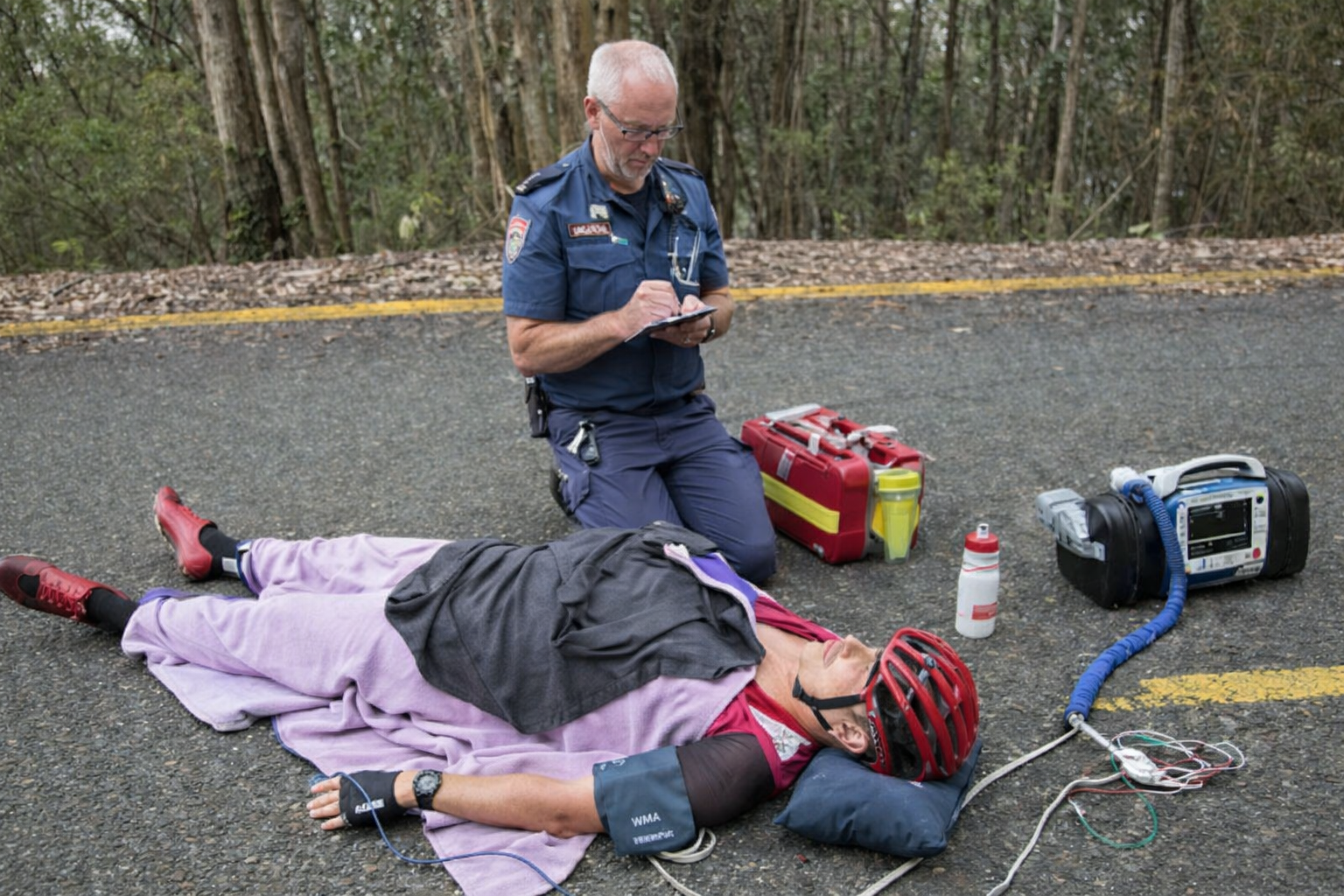
It’s important to understand the crash itself because it wasn’t the usual story of over‑cooking a corner or misjudging a line. It was something far stranger, and far more sobering.
I met Rich the day before the crash while attending a cycling retreat out of Bright, Victoria. We had climbed Mount Buffalo together and shared a chat at the top before commencing the descent. I had followed Rich through the bunch enjoying the twists and turns.
Rich got to the front of the group with me on his wheel when we entered a straight stretch of road, no technical turns, no reason for concern.
And then, in a moment that still feels improbable, a rotten tree on the side of the mountain decided to fall. Not minutes earlier. Not seconds earlier. A split second before Rich arrived.
He told me he heard the crack, I did too, that unmistakable sound of timber giving way but he couldn’t see the tree. I could. I watched it fall. It landed barely a metre in front of him. There was no time to react, no line to choose, no skill that could have saved him.
He hit the tree at around 60 km/h. Rich remembers being in the air and thinking, “This is really going to hurt.”
He didn’t lose consciousness, but he was clearly concussed, confused, and in shock.
The impact was brutal: Fractured clavicle, fractured ulna, smashed radial head (now replaced with metal), fractured scaphoid, four cracked ribs. But the physical injuries were only part of the story.
The recovery has been long and painful requiring patience and resilience, but what has struck me most was how instinctively Rich turned toward connection rather than isolation.
He reached out to people, inviting them for a walk, a coffee, a chat by the beach. It was something he had learned, and it became a lifeline. Not because he needed sympathy. Because he needed people.
Cyclists often pride themselves on independence, long solo rides, quiet roads, internal battles. But Rich reminded me that recovery, whether physical or emotional, is rarely effective when done alone.
The facts don’t change, but the meaning we give them does
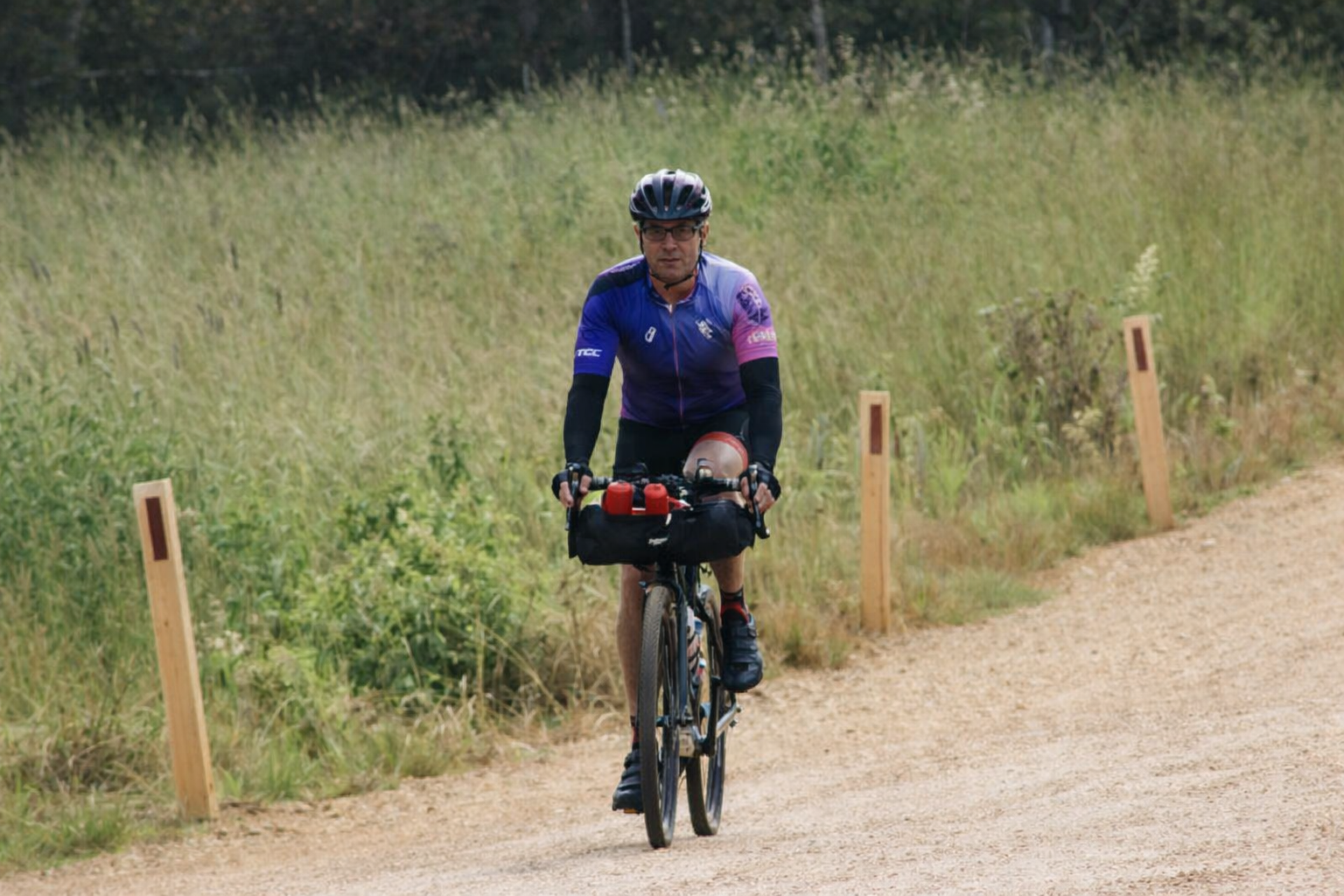
Rich shared other powerful ideas straight from ontological coaching: A crash is a crash. Pain is pain. A broken bike is a broken bike. But the story we tell ourselves about those facts can either trap us or free us.
Rich didn’t speak from frustration, anger, or blame. Instead, he chose acceptance, gratitude, learning, and optimism. Not in a forced “positive vibes only” way, but in a grounded, human way that acknowledged the hardship while refusing to let it define him.
The question that changed everything
Years previous to the crash, Rich experienced the darkness of depression and the exhaustion caused by anxiety. His lived experience struggling through poor mental health is what led him to ontological coaching. He was in a downward spiral that every cyclist will recognise.
He knew that riding his bike was important for his wellbeing but losing fitness meant losing motivation. There was a shared a moment with his counsellor.
They were talking about getting back on the bike, and the counsellor asked him: “Do you have to ride fast to enjoy it?”
It stopped Rich in his tracks.
Because for so many of us, speed becomes the silent yardstick. Average speed. Power numbers. Segments. Zones. The quiet pressure to perform, even when no one is watching.
Rich laughed, “There are two guys and one guy says to the other, how was your ride? And he looks at his Garmin and he says, fifty-seven kilometres, average of 30 kilometres per hour and 500 metres vert.
His buddy says, did you have a good time? He looks at his Garmin again and he says, Oh, it doesn’t say.” Garmin can’t measure what matters most.
It was in that moment with his counsellor that Rich realised that enjoyment needed to become the priority. Not performance. Not numbers. Not proving anything. Just the simple, human experience of being on the bike.
It’s funny because it’s true. It’s powerful because it’s rare. And it’s meaningful because it marks the shift from cycling as a test to cycling as a companion.
Rebuilding identity, one ride at a time
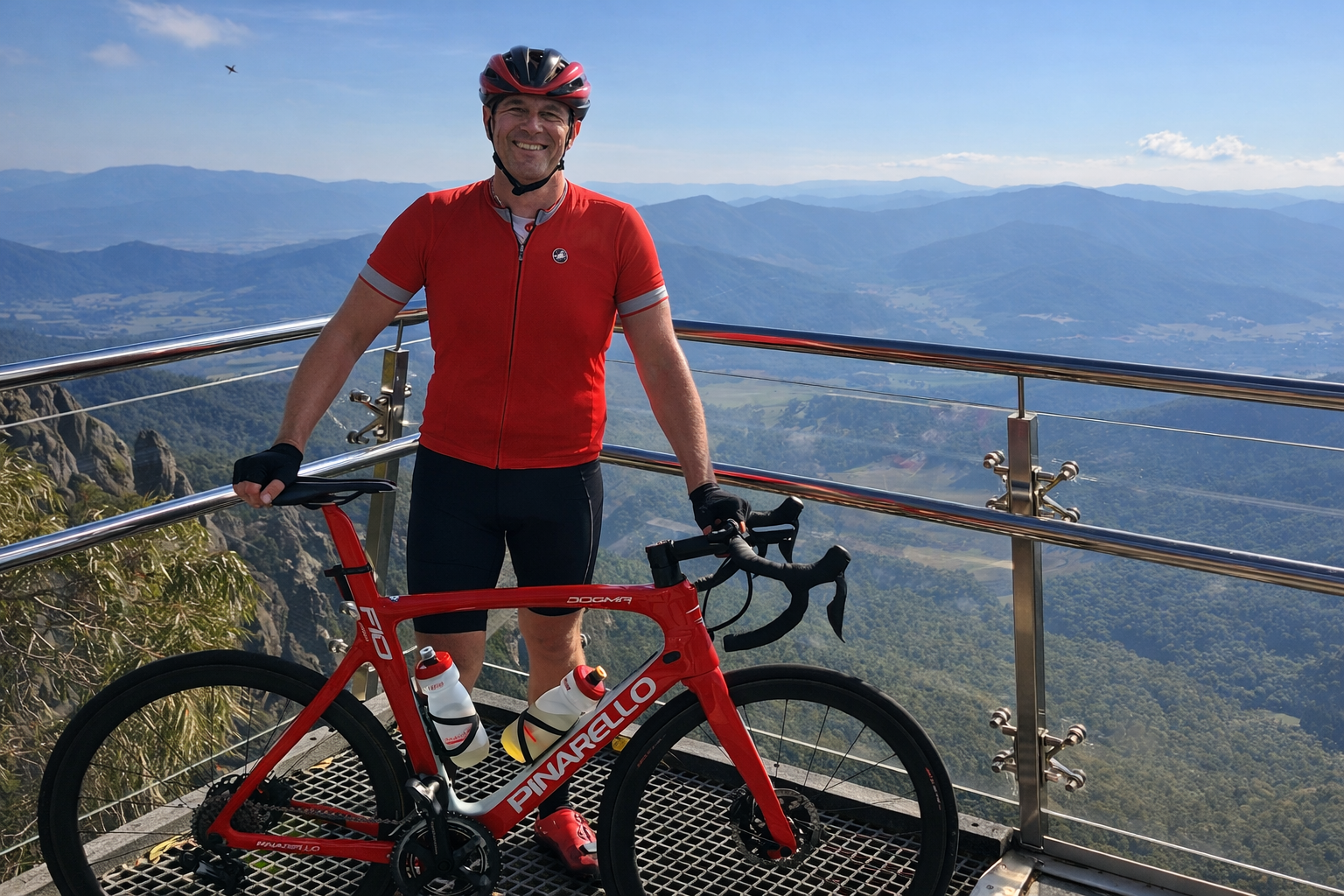
When I first met Rich, before the crash, I was struck by his positive mental attitude. It wasn’t loud or performative. It was steady. Genuine. The kind of mindset that makes you lean in and listen. After the crash, that attitude was tested, hard. But he didn’t abandon it. He deepened it.
Getting back on the bike after his crash wasn’t about chasing numbers. It was about reclaiming a part of himself, his wellbeing, his identity, his connection to the world around him. Cycling has that power. It gives us a way to build or rebuild ourselves, one kilometre at a time.
Where to Find Rich
For riders interested in the wellbeing side of performance, Rich offers a free 15‑minute discovery session to see whether his coaching approach is a good fit.
You can find him at www.wheellbeing.com.au
Yes, this article brought back some ‘painful’ memories of my crashes. However, on one such occasion, my welcome at the hospital emergency was ‘welcome back Mr Green’ which is one sort of customer loyalty program one would not really want to be a member of. It did bring a bit of a laugh though. I was wearing a new set of gear on the day too which was cut off, a good excuse to get more stuff!
In all these cases I really want to thank those Ambulance teams and the hospital staff for their professional/caring approach, not to mention that great pain relieving gear.