
 Harry Kooros
After what has been a turbulent few years for the global bike industry, China’s bike manufacturing sector continues to evolve at a staggering pace.
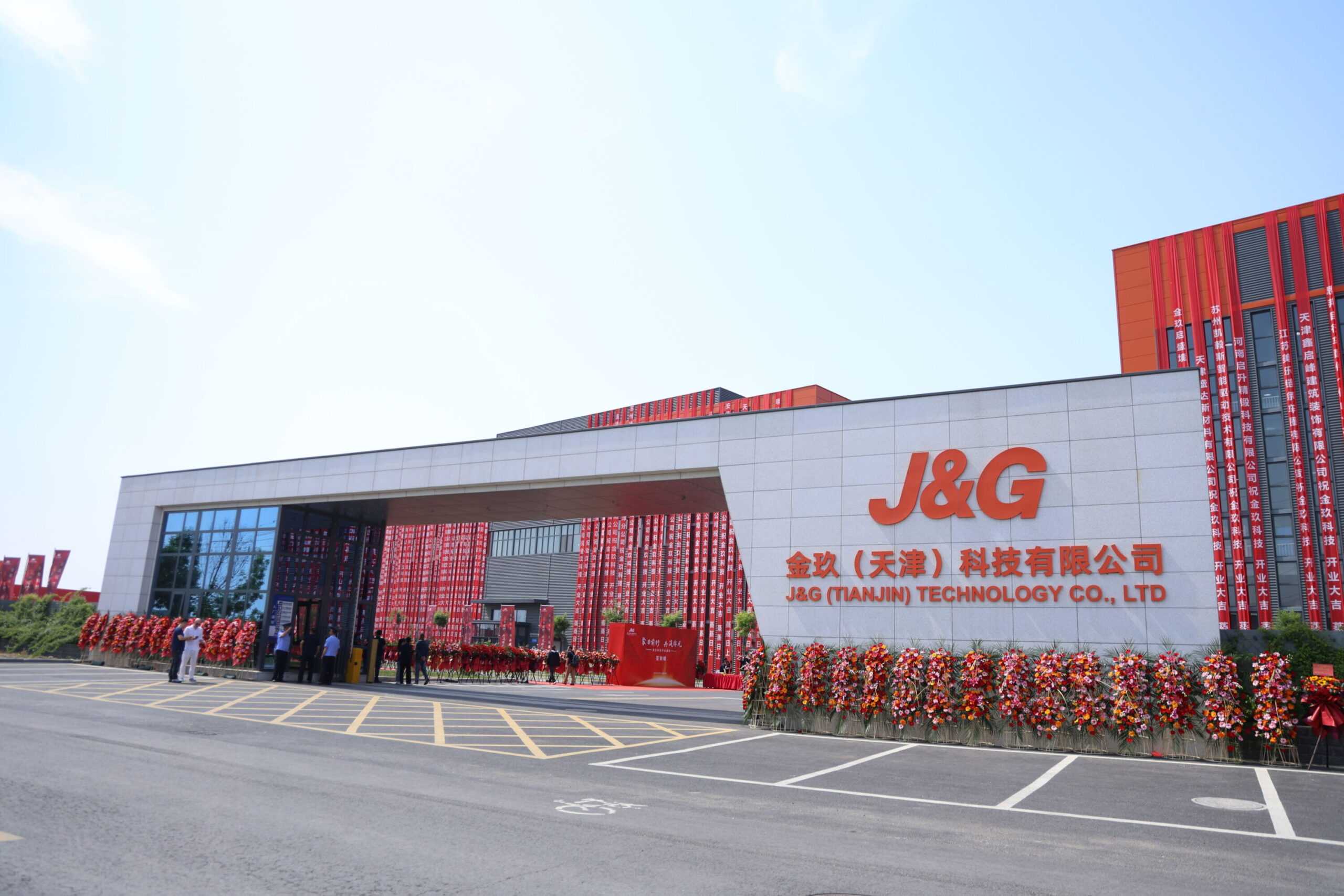
That was on full display recently in Tianjin, where two major cycling manufacturing players – Joykie Co., Ltd. and Golden Wheel Group – officially opened a huge new production facility under a joint venture called J&G (Tianjin) Technology Co., Ltd.
And while factory openings aren’t usually headline news for consumers, what’s happening behind the walls of this facility is worth paying attention to.
Because this isn’t just another bike factory.
Massive scale and global ambitions
The new J&G facility represents a major push into intelligent manufacturing, automation and large-scale premium bicycle and e-bike production aimed squarely at global markets, particularly Europe.
Located in Tianjin’s Ninghe District, the site combines the strengths of both companies. Joykie brings extensive international export and distribution experience, while Golden Wheel contributes large-scale manufacturing capability, deep supply chain integration and advanced production infrastructure.
Golden Wheel is also far from an unknown player in the cycling world. Beyond its own brands such as TOTEM and UPLAND, the company has existing ties to major international names including 3T, Lapierre, Cinelli, Bianchi, Storck and Pirelli through various distribution and business relationships.
The scale here is enormous.
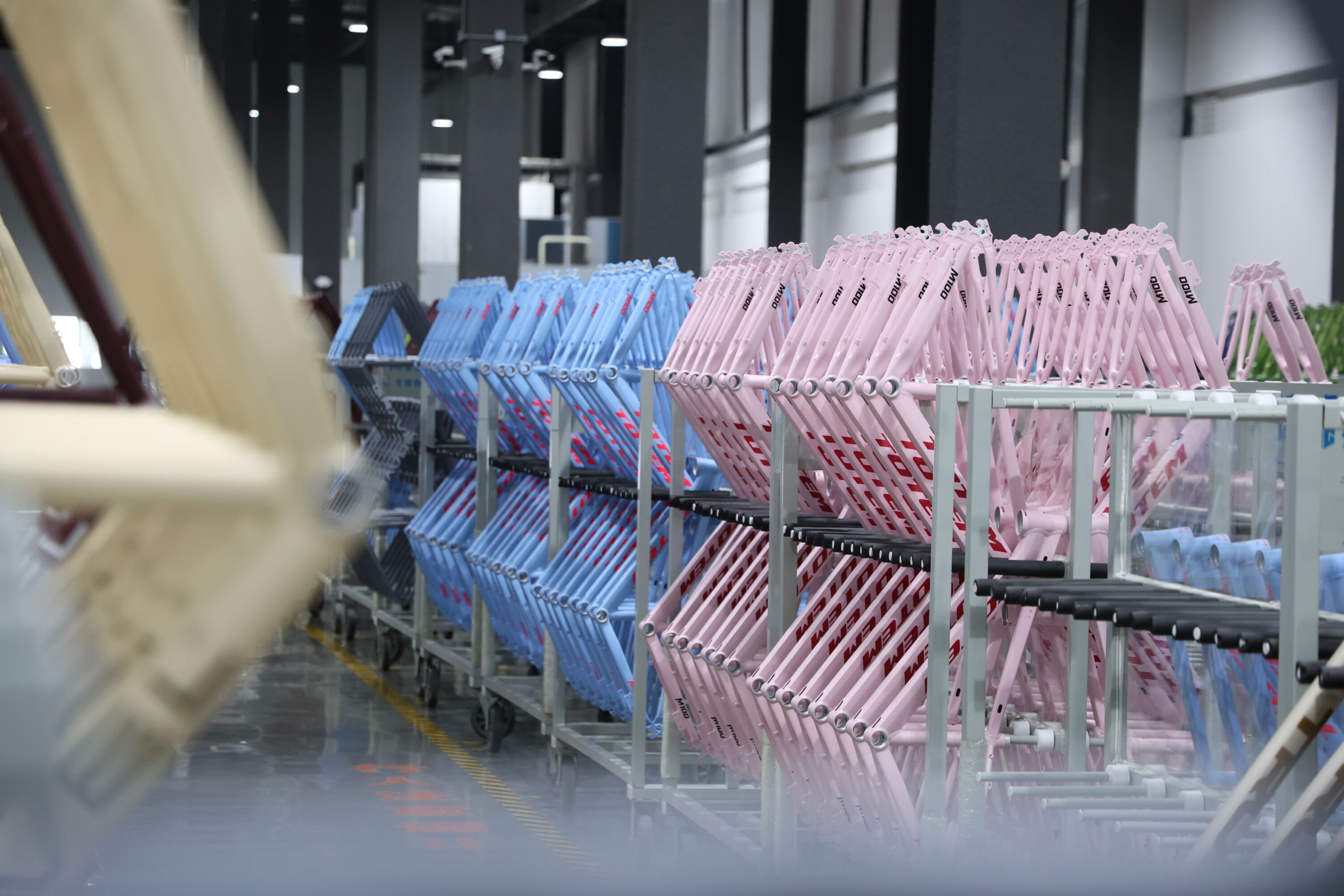
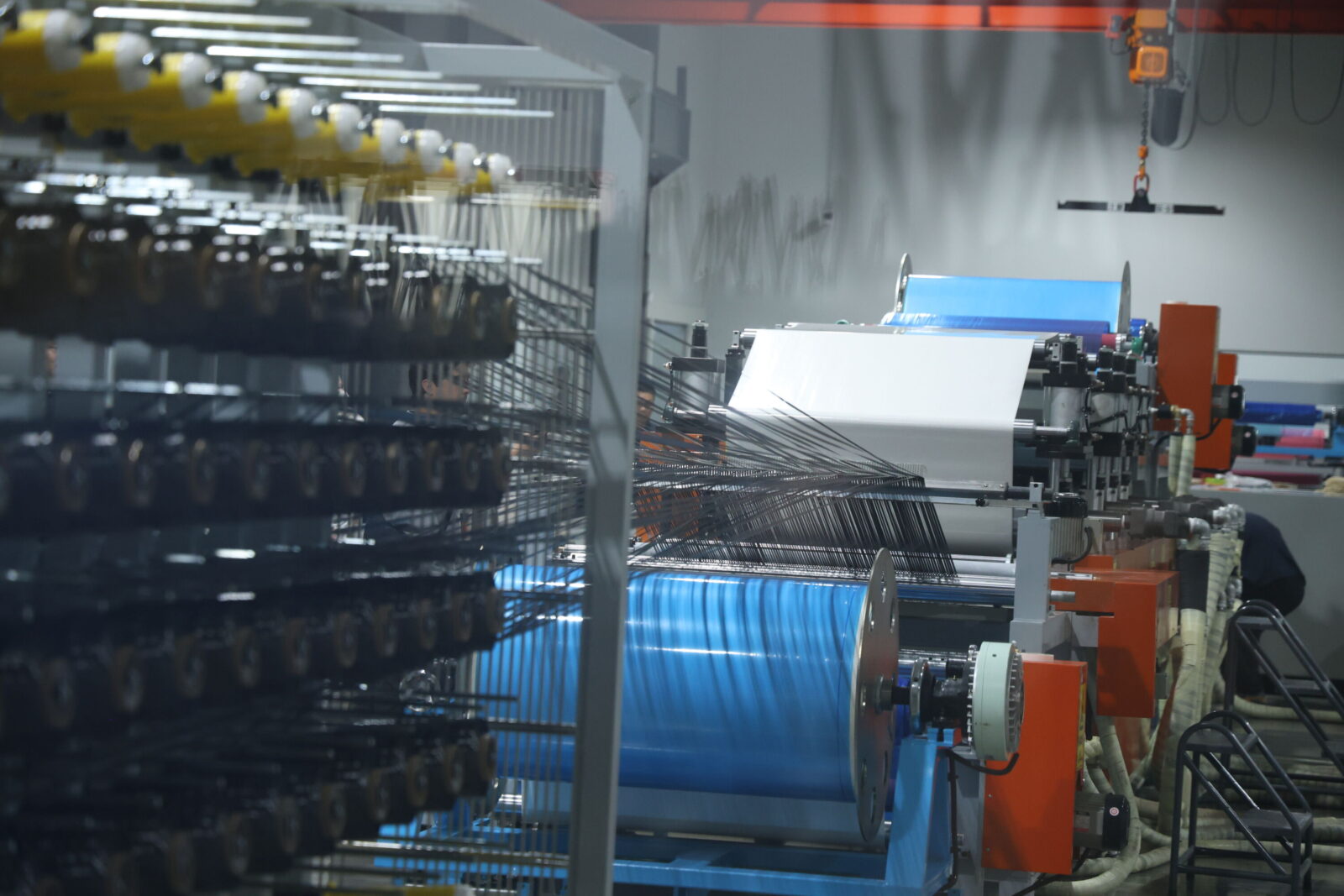
Planned annual production capacity sits at two million units, split evenly between traditional bicycles and electric bikes. The facility includes aluminium frame manufacturing, carbon fibre production, paint workshops, automated assembly lines and a dedicated testing centre.
A glimpse into the future of bike manufacturing
But the most interesting part is just how heavily automated the operation has become.
Walking through the factory floor, it feels far removed from the stereotypical image many people still hold of bicycle manufacturing.
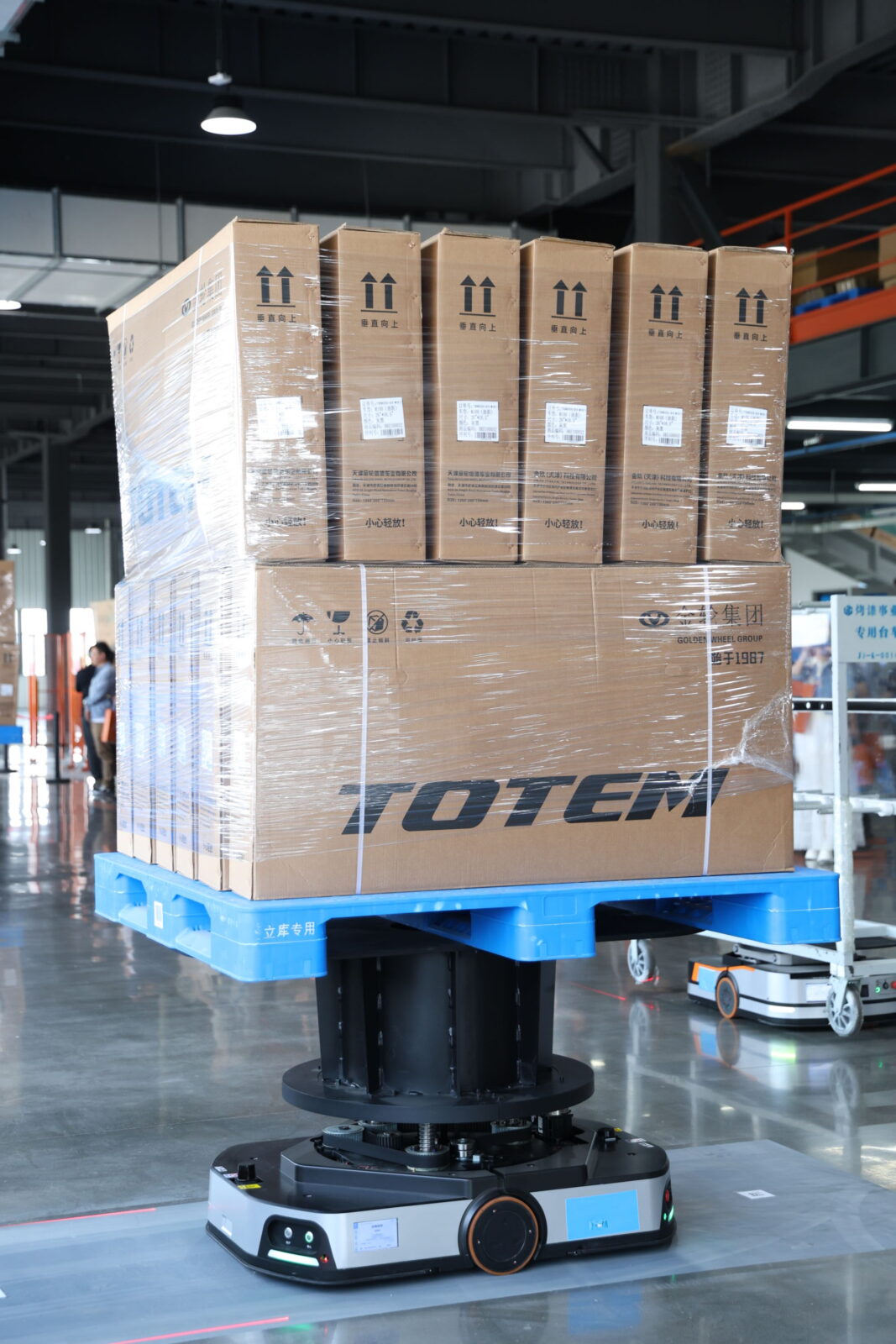
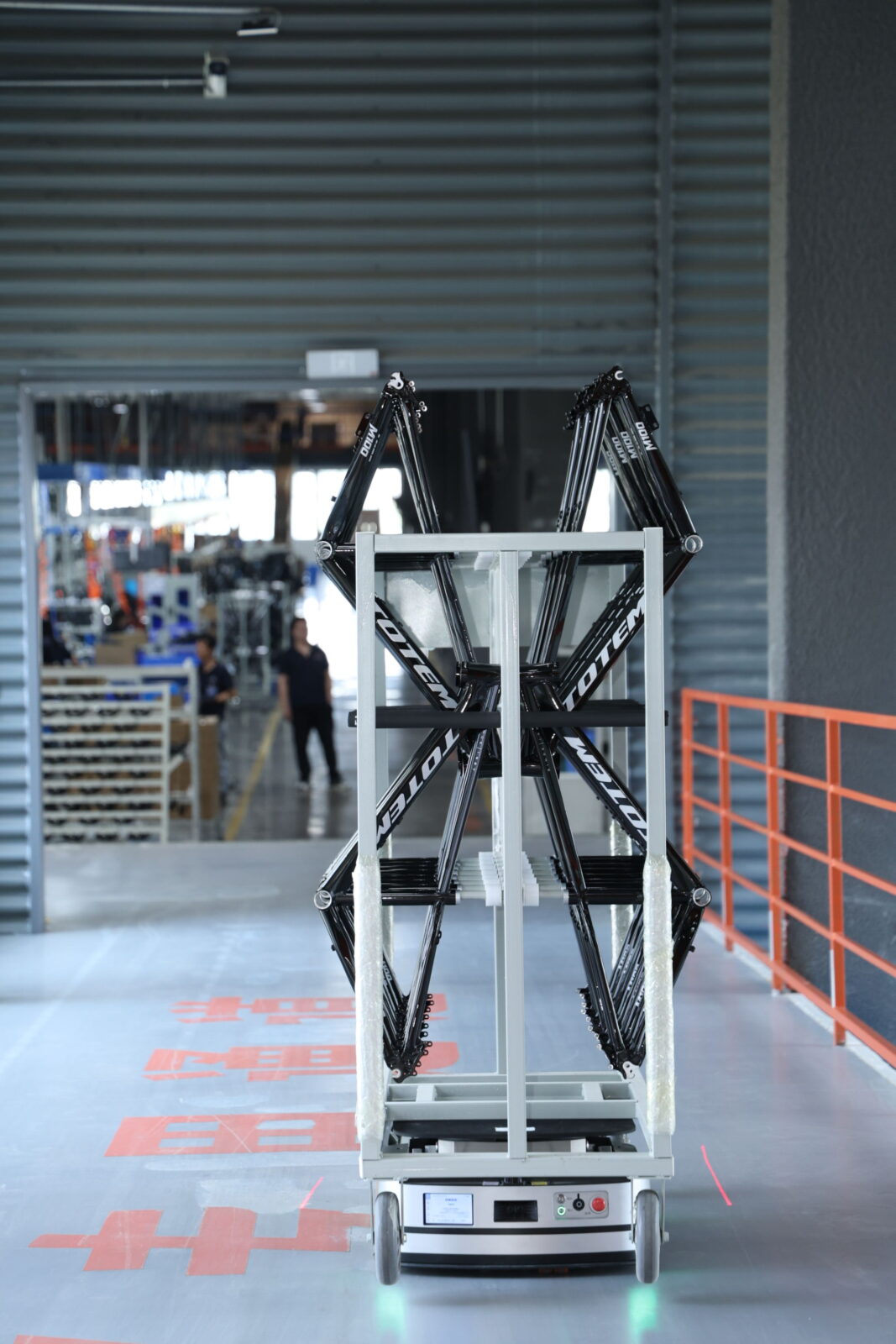
Laser-guided AGVs (automated guided vehicles) move products and components around the factory floor without human drivers. AI-powered visual inspection systems monitor production quality in real time, while robotic pallet systems handle warehouse movement and logistics.
There’s also a major emphasis on modern e-bike integration, with dedicated production capability for mid-drive systems, integrated batteries, internal cable routing and electronic shifting systems.
For international brands looking for OEM or ODM manufacturing partners, that matters.
Why this matters to the global industry
The global bike industry has spent the past several years dealing with supply chain instability, inventory oversupply and freight disruptions. As the market stabilises, manufacturers capable of delivering scale, automation and flexibility are becoming increasingly important.
And that’s very clearly the market J&G is targeting.
The entire facility has been built with export markets in mind, with strong focus placed on European compliance requirements and international production standards. Its proximity to the Port of Tianjin also gives it direct access to major global shipping routes.
Sustainability also features heavily throughout the project. According to the companies, the factory includes VOC-capturing paint systems, closed-loop water filtration and energy-efficient infrastructure designed to reduce environmental impact across production.
China’s manufacturing evolution continues
Of course, there’s still a degree of corporate optimism that comes with any major factory launch. But the bigger picture here is difficult to ignore.
China’s bicycle manufacturing sector is evolving rapidly.
Where older perceptions of Chinese manufacturing often centred around low-cost mass production, facilities like this show how quickly the industry is moving toward automation, intelligent manufacturing and increasingly sophisticated production capability.
For Western brands, this creates both opportunity and pressure. Many global cycling brands already rely heavily on Chinese manufacturing partners, particularly in categories like e-bikes, carbon frames and components.
And after seeing the scale, technology and level of investment involved, it’s hard not to come away thinking the next chapter of global bicycle manufacturing is already well underway.
Reporting for this story was conducted during a China Cycle 2026 trip hosted by the event organisers.