

 Mike O'Connor
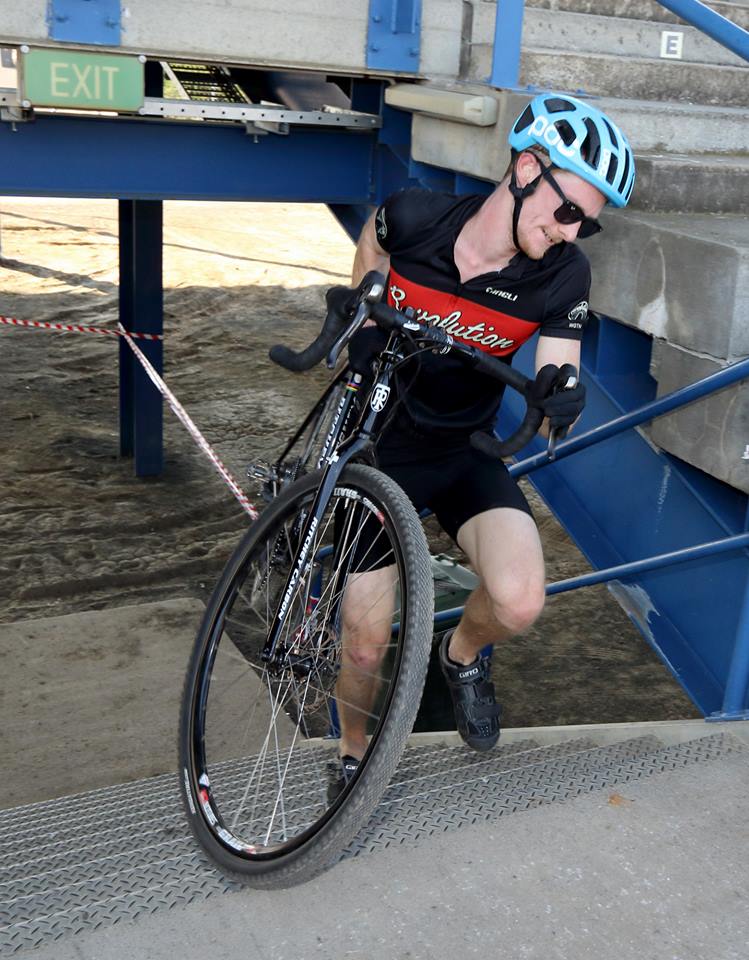
The first time I watched cyclocross, I thought it was complete, unabashed chaos. Mud, barriers, sand, tight corners and riders running up hills with bikes on their shoulders in what seemed like a weird mashup of cross country running and mountain biking.
At the same time, the bikes were weird too. This was the era of 32mm tyres and cantilever brakes, and those bikes and their narrow tubes seemed comically unsuitable for the task at hand.
But what years of competing in local cyclocross events has shown me is that the skills you gain from rolling round in the mud for 45 minutes have a real benefit to all kinds of riding, and the community round ‘cross is everything you could hope for in a small grassroots event.
Riding the rough stuff
What cyclocross teaches better than almost anything else is bike handling. On the road, conditions are typically pretty predictable. In cyclocross, every lap changes. One corner might be dry grass, the next loose gravel, then mud or deep sand. Combine this with the fact that the best lines change every lap as the surface degrades, and you have to learn to ride to the course in real time. Racing in these conditions forces you to become smoother, calmer and more adaptable on the bike.
And then there’s cornering. While the combo of narrow tyres and deep ruts will fill you with dread initially, it’s surprising how fast you can actually take corners if you push it.
Cyclocross also teaches you how to carry speed without over-braking, how to trust the tyres underneath you, and how to stay relaxed when grip disappears. For roadies, that confidence transfers directly to road riding, especially in wet bunch rides, technical descents and fast corners.
‘Cross also helps you become more comfortable riding gravel and other rough surfaces, where bike handling is arguably just as important as fitness. Cyclocross builds the exact skills gravel riding demands: traction control, line choice, balance and staying composed on loose surfaces.
And speaking of fitness, the hard punchy efforts that cyclocross demands are brilliant for improving your ability to ride hard at threshold.
I’ve also found that cyclocross improves awareness and control in ways I wouldn’t have expected. Riding through ruts, mud and uneven ground teaches better balance and body positioning, and it teaches you how to manoeuvre a bike with your weight over the top of it.
Even small things like recovering from a slide or adjusting quickly to changing grip levels can help you feel safer and more confident on the road.
In fact you could argue that there is a reason some of the best bike handlers in the world come from cyclocross backgrounds. Wout van Aert and Mathieu van der Poel, as just two examples, both developed through cyclocross, and you can see those skills every time they corner aggressively or handle difficult conditions in the biggest road races.
It’s probably one of the reasons they are so competitive at races like Paris-Roubaix, which draw on the skills needed to ride mixed terrain.

Get some culture in ya
If you’ve ever watched the Flemish cyclocross classics, you’ll know the sport is as much about atmosphere as anything. Fans pack tightly behind the tape, cowbells ringing through the mud, with riders sliding through corners only metres away. As a spectator, it’s brilliant stuff.
What makes cyclocross even better, though, is how accessible it feels once you get involved yourself. I’ve always found it a genuinely democratic form of racing. Kids can line up on almost any bike, mountain bikes are usually welcome in most grades, and there is far less focus on equipment or status than many people expect.
To me anyway, that grassroots culture is a huge part of why I love it. In many cases, riders of all levels race together, from experienced elites through to complete beginners just giving it a go for the first time. The atmosphere is competitive, but also welcoming and community-driven in a way that feels increasingly rare in cycling.
So, all this is a roundabout way of saying if you’ve got a cyclocross league near you, give it a go.
Where can you find a race?
The best place to keep track of updates is CX Down Under, and AusCycling’s events pages which are bang up-to-date with Australian cyclocross race calendars and entry information for all the events in (nearly) every state.
All this takes us to the biggest event of them all, the 2026 AusCycling National Cyclocross Championships, which are set to be held 14–15 August 2026 in Ballarat. This is the biggest cyclocross weekend on the Australian calendar and will crown the national champions of this truly brilliant sport.

Mike O’Connor – A keen cyclist, runner and photographer, Mike O’Connor is the Editor of Bicycling Australia. He manages the BA website and social media, and loves promoting the achievements of Australian cyclists.