

 Nicola Rutzou
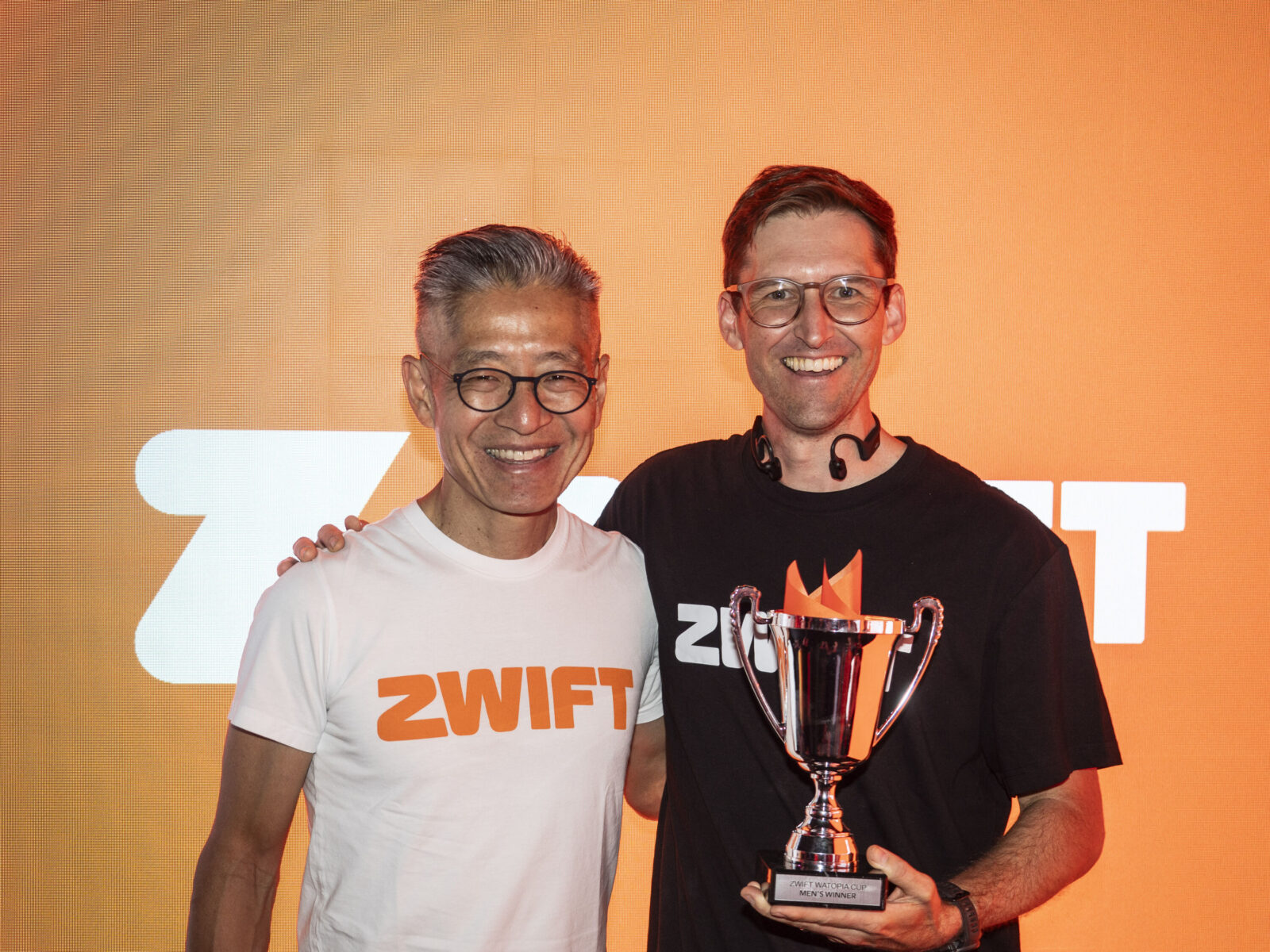
On the sidelines of the TDU, digital editor Nicola Rutzou caught up with many industry people, including Eric Min, one of the founders of indoor cycling platform Zwift, who was visiting Adelaide from his home in California.
BA: How important is the Australian market to Zwift?
Well, if I go back, we’ve been in business for over a decade. We had a huge following, initially in Australia and other English-speaking countries, so a lot of early adoption. And we had a dedicated team here for some time. We’ve kind of scaled that back, and I think it’s time for us to come back and really look after this market. There’s more competition. The market’s changed and the cycling industry has changed. We’re seeing different consumers show up, and it’s time to reinvigorate the market in Australia.
We need to do more in Australia. We’ve got this incredible community in Australia. I was blown away by the community in Melbourne. And of course, it’s so obvious here, where people are passionate about cycling. We want to lean into that and, in our own little way, help bring more people into this world.
BA: Have you got any specific plans for Australia, or is it a more general expansion plan?
I want us to get back to basics: spend more time with the community, with partners, with the media. So we are pounding the pavement and doing more community activities. We’re doing a lot of activations all over the world, and that’s what it requires.
BA: If the COVID pandemic had never happened, would you still be in the same position now, do you think?
COVID, net-net, was a positive for many businesses, including Zwift, but it took us on a roller coaster ride. I’m not glad COVID happened, but I think we benefited from COVID like many other companies.
Many companies that dealt in hard goods had to purchase items so far in advance and were stuck with the inventory. But what happened with Zwift was that we ended up hiring more people than we needed. And then when the demand wasn’t quite what we expected, we had to go through a series of cutbacks. And that’s really painful. And that hurts culturally. And so I’m glad Zwift is really financially healthy. We’ve got a great community.
BA: More recently, you’ve launched the Zwift Ride. How’s that been going for you?
We spent quite a lot investing in a product that we think consumers we’d want. And our version one of the bike was actually a more expensive bike. And this was during COVID. We realised this is too expensive. We need to think about how to cut that cost in half. So we paused that, cancelled that project, and started a new one. And I think we landed a product that met so many different needs; it was simple.
BA: What role is artificial intelligence playing at Zwift?
We’ve been using artificial intelligence for some time, with software development as a tool for software engineers. We prefer to deliver a great experience to our customers rather than talk about AI. But we’re using it to deliver the perfect workout, from our perspective, for each individual, which is highly personalised content. We have been capturing outdoor data since April, and we need it to understand holistically what riders have been doing. And are you tired? Are you fresh? And then we can serve the right content. Because if you do that successfully, you’ll come back for more. So that’s going to be highly personalised, using AI and all the data we have.
BA: What sort of feedback do you get from your customers on that type of thing? Do they know?
Yeah, so we’ve rolled it out to about 5% of our customers just because it’s early days. And the feedback so far has been that the workout was the right one; they completed it. So the alternative is either giving them a workout that’s not suitable or asking the consumer to figure out what to do. It’s like going to Netflix and not having any recommendations. The only thing you have is a search prompt. Can you imagine? I think consumers expect to be given relevant choices.
BA: Why have you chosen to focus more on women’s cycling as a sponsorship vehicle than on a broader base of men’s cycling?
As someone who is so passionate about cycling and what it offers, we want to just break down the barriers for women because we think they would find cycling extremely attractive. We can create an experience around the women’s community. And there are clubs, many clubs, that are just women-specific, which is great.
I think using the Tour de France as a showcase to promote cycling is about incredible athletes and the things that you can do with cycling. But for us, we simply want to have more people in the sport. in this activity. And if you look at the numbers, it’s probably 80% men, 20% women. So, in terms of growing this sport, this activity, and this community, that’s a clear opportunity for us. Our investment in the women’s Tour de France and everything we do with women’s cycling is a long-term one.
And if it’s easier for women to get started indoors and then eventually go outdoors because they’re fitter, they understand a bit more about the cycling culture, and they find their community, which, obviously, is smaller than the men’s community. Anything we can do to get more people, more women, will help the overall population. The sponsorship of the Women’s Tour de France is a great opportunity to showcase these incredible athletes.

Nicola Rutzou – a long-time contributor and, most recently, the editor of Bicycling Australia. Nicola is a keen Sydney-based road cyclist who writes reviews, news, and destination pieces.