
 Mike O'Connor
Australian riders enjoyed a successful UCI BMX Racing World Championships on home soil in Brisbane, but the event ended in controversy after Sunday’s elite finals were cancelled due to dangerous wind conditions.
The cancellations meant the sport’s biggest titles were decided without the traditional head-to-head finals, leaving several riders unable to race for the coveted rainbow jersey.
Strong gusts on Sunday forced organisers to abandon racing before the elite finals could take place, with the decision widely accepted as the only safe course of action on the eight-metre start hill.
Under UCI regulations, the elite world champions were instead determined by the fastest times recorded during Saturday’s knockout rounds after the finals could not be completed.
While the rule provided a clear method for declaring winners, it meant riders were unable to contest the world title in a winner-takes-all final.
Among those affected was Australian Olympic champion Saya Sakakibara, who had qualified for the women’s elite final on home soil but never got the chance to contest it. Instead, she was awarded the silver medal under the time-based classification.
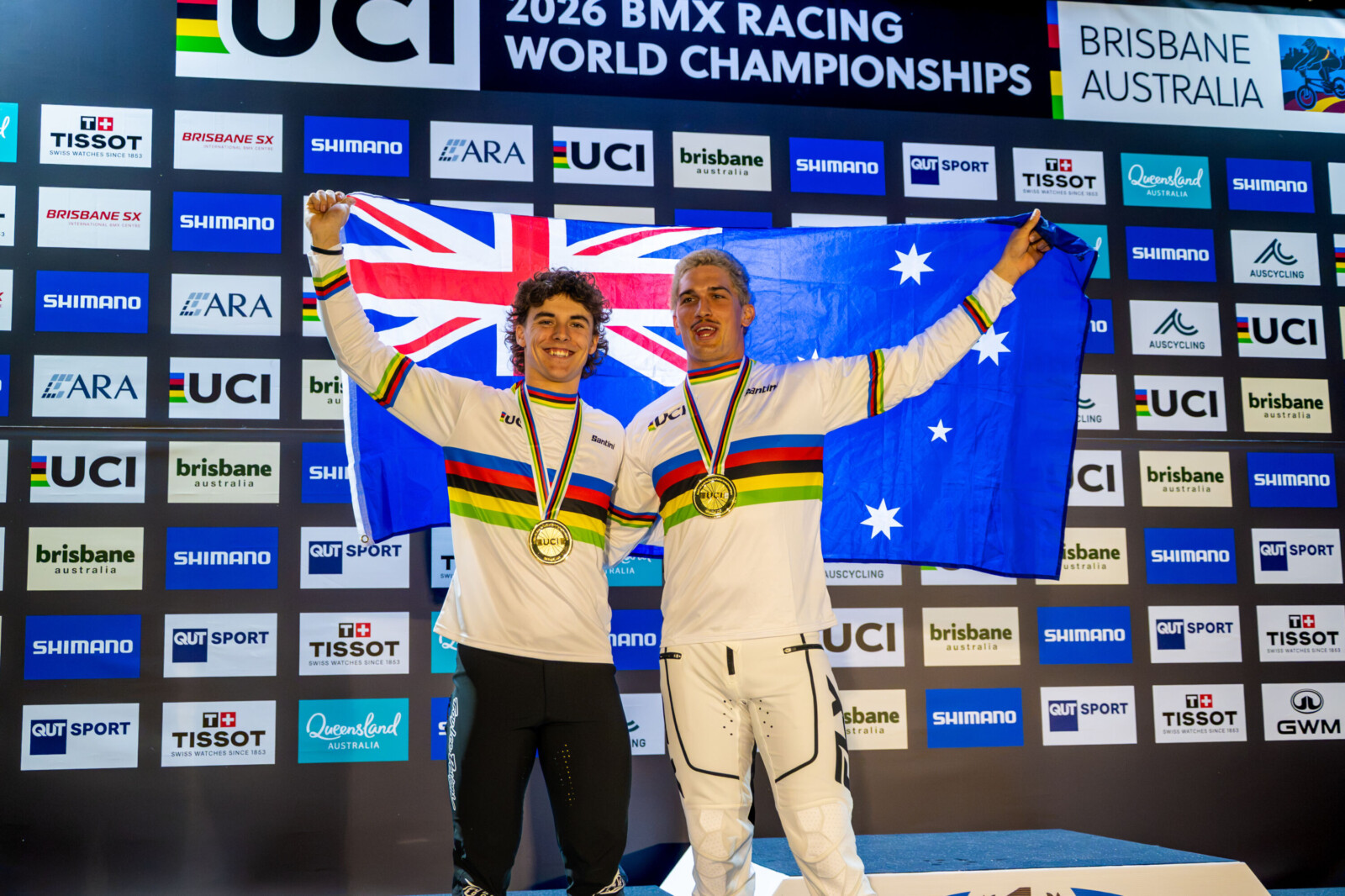
Despite the unprecedented finish to the championships, Australia still celebrated two world champions. Jesse Asmus claimed the elite men’s rainbow jersey, while Josh Jolly won the Under-23 men’s title.
Asmus earned the title after setting the fastest overall time in the men’s 1/8 finals.
The Nerang BMX rider admitted winning his first world championship in such circumstances was bittersweet.
“I feel like it’s not the way we all wanted it to go; but it’s still good to get it done. I’m feeling pretty grateful right now, and it’s pretty unreal at the moment,” Asmus said.
Australia’s medal haul also extended into the junior ranks, with Cameron Gatt claiming silver in the junior men’s event and Isla Basa taking bronze in the junior women’s competition.
The outcome has sparked widespread debate across the BMX community about whether qualifying times are an appropriate way to decide a world championship in a discipline built around direct racing.
Unlike time trial events, BMX racing is defined by tactical, wheel-to-wheel competition, where race craft, gate starts and split-second decisions often matter more than outright lap times. A rider can set the fastest time of the weekend yet still lose a final after a poor start or an aggressive move from a rival.
Among those critical of the outcome was American rider Cameron Wood, who said on Facebook he was left in “disbelief” by the way the championships concluded.
“I agree the conditions were unsafe to race today. Rider safety should always come first. But that doesn’t dismiss how poorly the situation was handled. A race of this magnitude needs to be raced, period,” he wrote.
Others, however, argued officials had little choice under the regulations.
With conditions making racing unsafe and no contingency day built into the championship schedule, organisers were required to apply the regulations already in place.
From that perspective, the decision was less about finding the perfect outcome than following an established process under exceptional circumstances.
Nevertheless, the incident has raised broader questions about how major BMX championships should deal with weather disruptions.
As cycling events increasingly contend with extreme weather, some have suggested the UCI should consider introducing reserve days or alternative contingency plans for future BMX World Championships, given the significance of the rainbow jersey.
Australian medal winners
🥉 Isla Basa – Junior Women
🥇 Jesse Asmus – Elite Men
🥇 Josh Jolly – Under-23 Men
🥈 Saya Sakakibara – Elite Women
🥈 Cameron Gatt – Junior Men

Mike O’Connor – A keen cyclist, runner and photographer, Mike O’Connor is the Editor of Bicycling Australia. He manages the BA website and social media, and loves promoting the achievements of Australian cyclists.