
When it comes to tyres – much like in other areas of life – cyclists tend to pick a camp and stay there. Brand loyalty runs deep, often stubbornly so. It simplifies things: fewer decisions, fewer variables, but not always an openness to new perspectives or options. In the world of road tyres, this feels especially true. For me, and for many in my riding circles, there has long been one brand that consistently delivered outright speed and a reassuring sense of reliability – if not always durability.
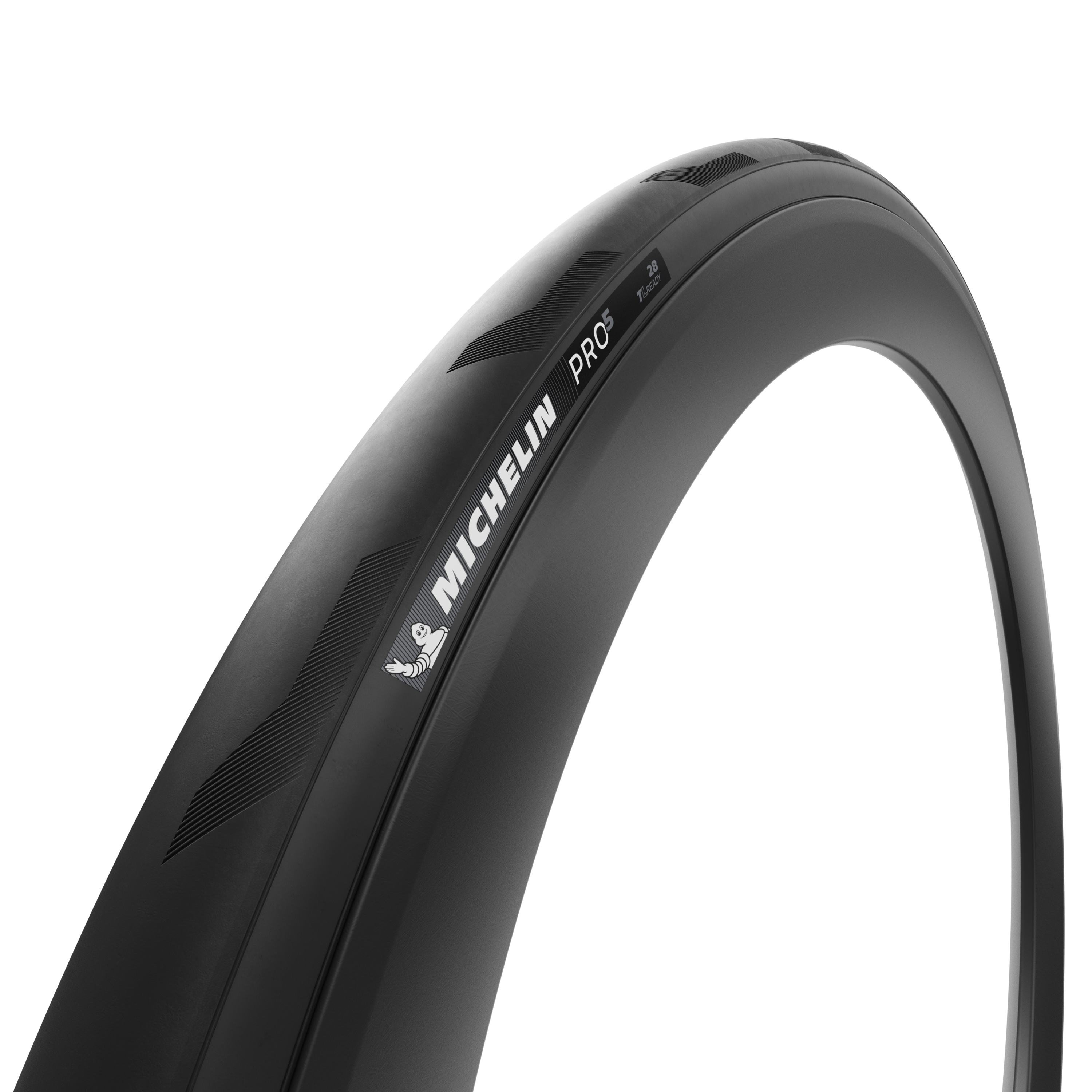
Meanwhile, over on another “continent”, Michelin has been quietly and steadily refining its road tyre range. Improved compounds, updated tread and sidewalls have all culminated in the latest iteration: the Michelin Pro 5 Competition Line. Positioned not as an all-out race tyre but as a performance-oriented endurance option, it promises efficiency alongside longevity—always an appealing combination.
Michelin claims a 35 per cent reduction in rolling resistance compared to the outgoing Pro 4, along with bead-to-bead puncture protection and a wider tread profile. On paper, that should translate to a tyre capable of handling long, mountainous days while still holding its own in high-speed racing. Of course, every new release makes similar claims. The real question is how they perform over time. After several thousand kilometres on a tubeless set of 28 mm Pro 5s, I’ve had ample opportunity to form a clear picture of their character and durability.
First impressions matter, and for tubeless tyres, that starts with installation. Anyone who’s wrestled stubborn tyres onto modern rims will know how quickly optimism can turn into sore thumbs and frayed nerves. Thankfully, the Pro 5s sit firmly on the user-friendly end of the spectrum. They mounted without excessive force and seated cleanly with a standard track pump—no compressor or C02 required. The satisfying crack as the bead popped into place was immediate reassurance.
At 305g, the Pro 5 is competitively light for an all-round tyre, comparing favourably to options like the Continental Grand Prix TR at around 340 g. In the hand and on the rim, they felt closer to a GP5000 in terms of suppleness and bead fit. Once sealant was added, there was minimal weeping around the bead and none through the sidewalls. Pressure retention was impressive too, with only minor top-ups needed every few days.
When it comes to grip and rolling resistance, I’ll be upfront: I haven’t tested these tyres under laboratory conditions. I haven’t deliberately pushed them past their traction limits (I don’t recommend it), nor measured rolling resistance at fixed speeds and pressures. For that, resources like bicyclerollingresistance.com are invaluable. What I can offer are real-world impressions across a wide range of riding.
I raced on the Pro 5s at smooth, fast criteriums, trained on rougher roads, tackled long climbs and technical descents, and even loaded them up for bikepacking. Across all scenarios, the standout quality was comfort. They strike an excellent balance between a plush ride and enough road feedback to inspire confidence when cornering. That confidence translated into sure-footed handling through high-speed bends and crit corners alike.
Durability has also been impressive. Over roughly 3000 km, I’ve experienced just one puncture—a slow leak picked up while bikepacking. A quick top-up with a hand pump got me through the day. When it continued to leak the following morning, I realised the issue was more likely to be ageing sealant than the tyre itself. Fresh sealant solved the problem immediately.
According to bicyclerollingresistance.com, the Pro 5 measures around 12.5 watts at 72 psi and 29 km/h. That places it a couple of watts slower than a GP5000, but faster than tyres like the Grand Prix and roughly on par with Continental’s All Season. Notably, both the GP5000 and All Season are significantly more expensive. These numbers reinforce Michelin’s positioning of the Pro 5 as an endurance-leaning tyre rather than a pure race option.
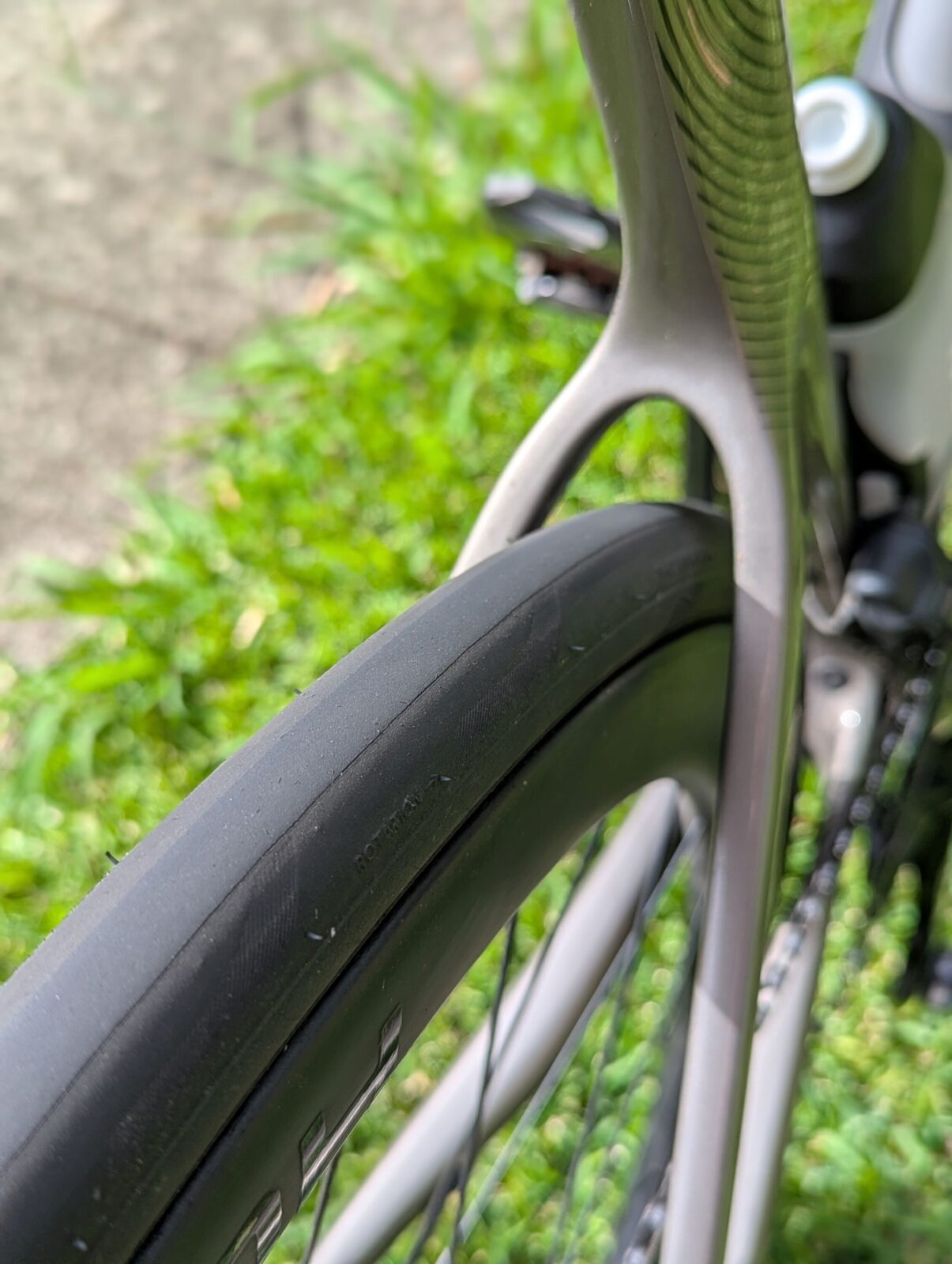
Crucially, wear has been minimal so far. At this mileage, I would normally expect to see noticeable flattening along the centre of the rear tyre. That simply hasn’t happened.
All told, the Pro 5 Competition Line has made me question my long-held tyre allegiances. At roughly $65–$90 AUD, they represent strong value—although availability in Australia does appear limited at present. With widths up to 35 mm on offer, they cater fairly well to modern preferences.
If you’re a dedicated racer chasing marginal gains, the Pro 5 may not top your spreadsheet. That said, they certainly feel fast. For riders looking for a genuine do-it-all tyre—training, commuting, bunch rides and the occasional race—the Michelin Pro 5 Competition Line is well worth serious consideration.
More info bikecorp.com.au

Luke Meers
Luke Meers - Wollongong-based writer Luke is a strong and competitive bike rider. He writes regular tech and gear reviews for Bicycling Australia and isn’t afraid to get his hands dirty.