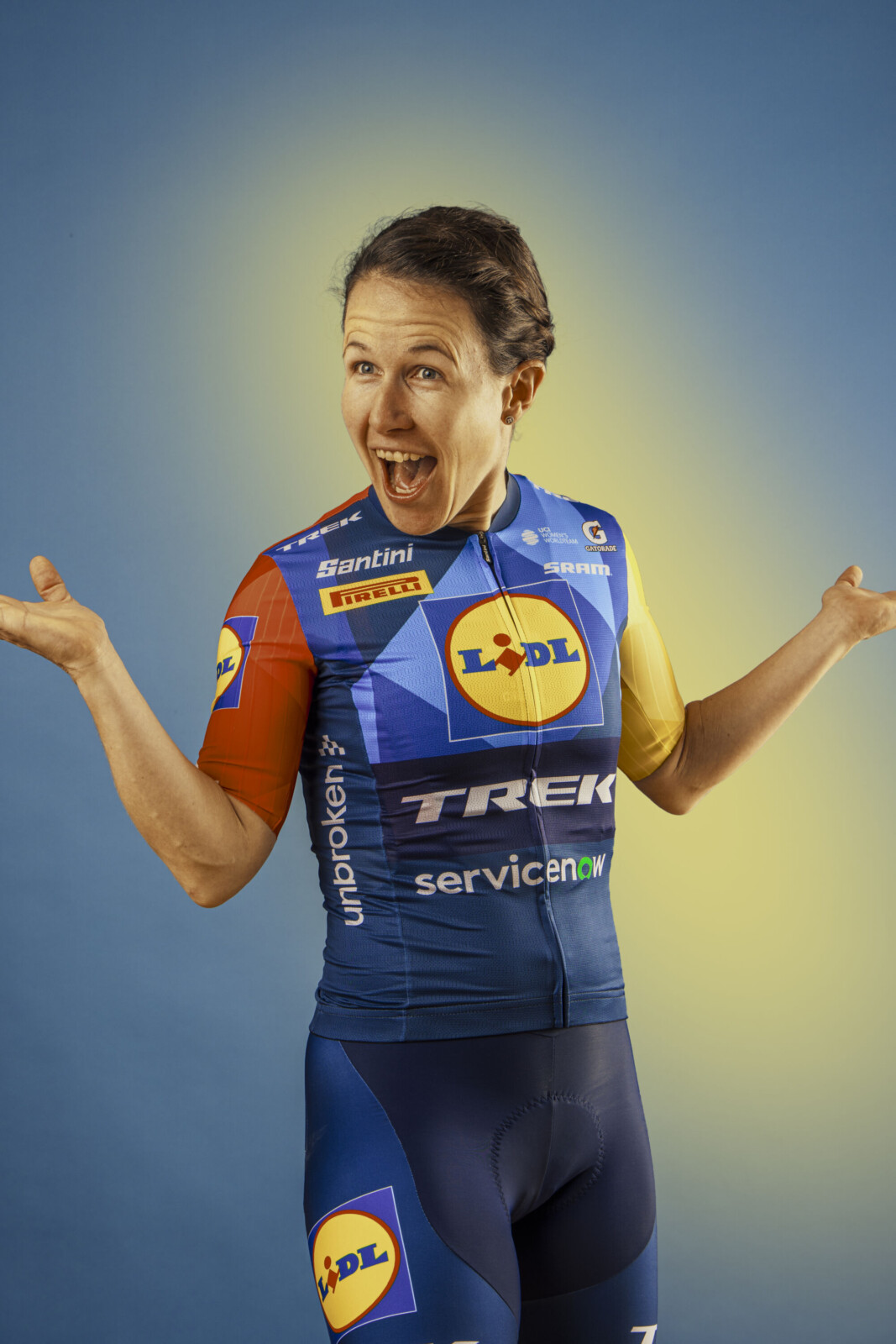
Aussie pro cyclist Amanda Spratt, affectionately known as Spratty, announced her retirement at the end of the 2026 season, after a storied career riding in Europe and representing her country for 20 years.
BA caught up with her at her home in northern Switzerland to reflect on her illustrious career and find out what is coming next for the Sydney rider.
Bicycling Australia: I believe you started competitive cycling at nine years old, in BMX. Sounds like a lot of fun! Do you still have fun when you’re riding your bike?
Spratty: Yeah, always. I don’t love every minute of it, but it still gives me a lot of joy and fun. I couldn’t have had such a long career if I didn’t enjoy it. So for me, that’s always the basis of why I do it. It’s fun, and I enjoy it, and then everything else comes on top of that.
BA: How quickly did you realise that you had talent for cycling? When did you think I could actually take this a bit further than just having fun?
Spratty: I was quite good at BMX, but I didn’t think then I was going to be an amazing cyclist, and there wasn’t that kind of pathway forward in the BMX world in the same way there was in road.
When I started road when I was 12 or 13, I wasn’t good at first, but I got good very quickly, coming through under-15s, under-17s, started to become quite good at winning the nationals and the state championships.
It was probably when I was under 19 and went to the Junior Worlds, and that was my first taste of racing against international competition.
BA: You have a very impressive Palmares with three TDU titles, three national road titles and lots of other podiums along the way. Is there one race that you wish you’d won?
I think I was capable of winning the Giro. That’s one race I would have loved to have won. I got a stage win there, and I wore the pink jersey for a day as Annemiek van Vleuten’s teammate in the years when I was on the podium there.
I was lucky enough to be in Italy for about six weeks before my first Junior Worlds, where I did some under-23 races and performed quite well. At that point, I thought, okay, this is something that I can be good at. I was third in the worlds in the time trial and was in the front group in the road race as well.
Getting that taste of international competition and seeing where I stood against other riders. I’m the same age as Marianne Vos, which was never easy, so going through, comparing yourself to Marianne, to Ellen van Dijk and riders like that.
At that point, I knew it was something I wanted to pursue. It was a bit different then because the next logical step was to go with the Australian national team rather than look for a professional team. After all, the sport was still in its early days of professionalism.
BA: You have a very impressive Palmares with three TDU titles, three national road titles and lots of other podiums along the way. Is there one race that you wish you’d won?
Spratty: I think I was capable of winning the Giro. That’s one race I would have loved to have won. I got a stage win there, and I wore the pink jersey for a day as Annemiek van Vleuten’s teammate in the years when I was on the podium there.
In some of the years afterwards, I think that’s a race that I had the potential to win. At that time, it was the only Grand Tour that we had. We didn’t have the Tour de France then. We didn’t have the Vuelta in the way it is now.
That was a race where everyone went there in their best form.
BA: Is there one victory that stands out above everything else that you’ve done?
Spratty: There’s not one single victory, but my first Australian national title in 2012, that was a really special one because I had a bad injury in 08 and 09 with Piriformis syndrome.
I had a couple of years out of the sport, and for me, that was the first big win after that period of not being able to ride or race. I had so many people support me through that, including the AIS in Canberra.
So, for me, that was really a huge moment of showing myself I could do it, and it was a way to thank everyone who had supported me through that time. From that point on, I just kept getting better each year. I look back on that moment as a really key moment in my career.
BA: You made the switch from the Aussie team four years ago to Lidl Trek. Has that worked out well for you?
Spratty: I’ve really enjoyed the change. I’m a crazy loyal person, and obviously, 11 years at GreenEdge shows I was happy there for many years.
Then it was just time for a change, time for something different. And since Lidl Trek had started, it had always been that big team that was there, really pushing forward the women’s professional side of the sport.
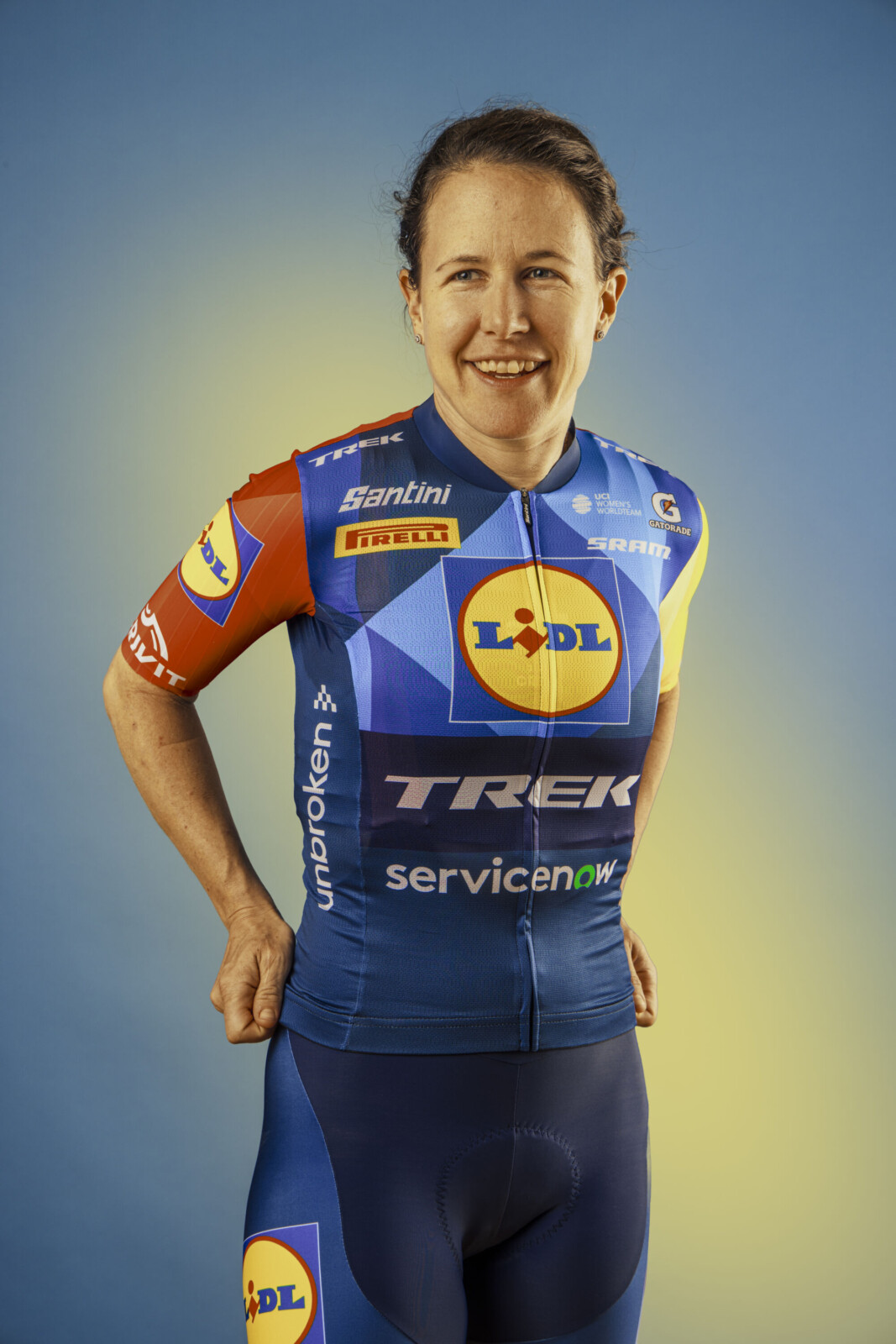
I started as the young one who knew nothing, then rode the front as a domestique, learned to conserve energy, became a leader, and now I’m back in this mentorship role.
Image: Jojo Harper
I joined more as a leader to start, and then I’ve moved more into that mentorship role and into supporting our leaders, which I enjoy. Not everyone who’s been a leader can return to that role.
You need to be able to put aside your ego and really embrace that. I’ve accepted that I’m not the one who’s in the finals, really going for the wins a lot of the time anymore. I know I’m strong enough to get results when opportunities present themselves, but for much of the time, it’s about supporting some of our younger riders to get the results.
And for me, that’s been really, really rewarding on this team, where I can start to give back some of my experience, and I’m really appreciative of what I can contribute.
It’s a bit like a full circle in my career: I started as the young one who knew nothing, then rode the front as a domestique, learned to conserve energy, became a leader, and now I’m back in this mentorship role.
It’s really nice to have all these different roles within one career.
BA: What are the key things that you’ve seen that have changed for female professional cyclists in the 20 years that you’ve been racing in Europe?
Spratty: So much, it’s completely different now. If I think back to my first years in Europe, there were maybe one or two teams that I would have wanted to be a part of. So everyone was trying to get into these two teams, which had maybe 10 spots each at most.
Most people weren’t racing with a salary or anything. I remember I got a bit of scholarship money from the AIS. And then, just year on year, it slowly started. A few teams are popping up here and there, but I think the biggest catalyst was the modern women’s Tour de France returning to the fold, and then sponsors really got on board. In the last four or five years, it’s just completely changed.
In my first years in Europe, we didn’t have buses. We just went with one car and one van. We had one director and one mechanic.
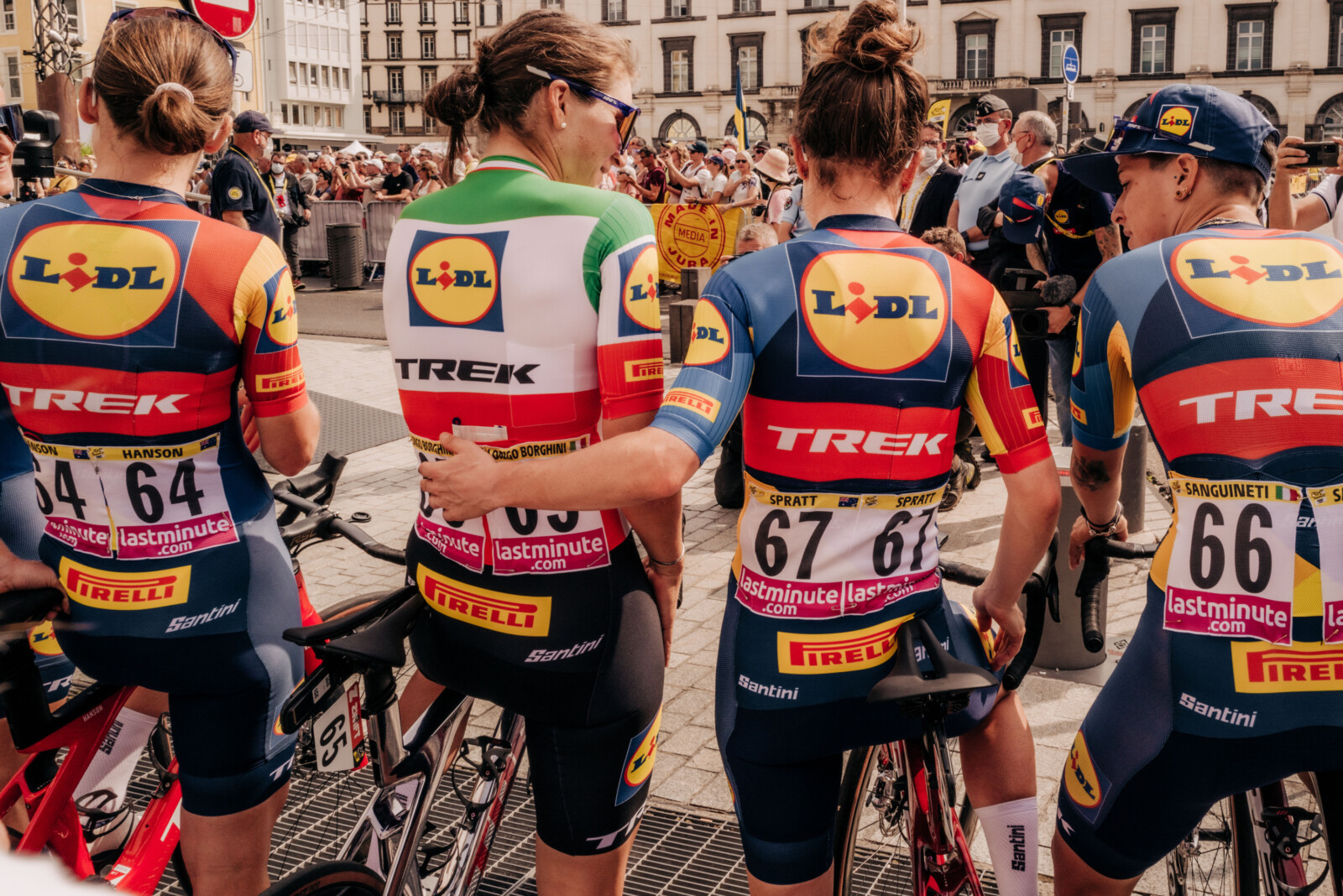
Now we go to races, and we have way more staff than riders. We have six riders and up to 20 staff for them. We have the buses. We have the amazing support. We earn a good salary now that we can live off. We don’t need to work on the side or try to earn money elsewhere. So that’s massively changed.
Image: LidL Trek
I’ve been involved with the Cyclist Alliance, and we’ve pushed for things like maternity leave. Now you see some riders stepping away, having children, and coming back to the sport, still winning races. It’s been really cool to be a part of it and to see how much it’s progressed.
You now see some of the world’s best riders want to come out for the TDU, and also, I think the big one has been the TV coverage of most of the races. I know in Australia it’s still a bit difficult to see many of the races, but in Europe, pretty much every race you can watch now on TV or online.
Gone are the days when mum and dad were sitting there scrolling Twitter, updating here and there, and then waiting after the race for a message.
BA: What’s your final race that you’ve slated for this year?
Spratty: So far, the European season hasn’t gone well, because I crashed in Strade Bianche, had a concussion, started Binda, crashed again on my head, and then I was out with a concussion. It feels like Brabantse Pijl will be the new beginning of my European season, and I’m hoping that all goes well.
Looking towards the end of the year, my last races will be in Italy. There are four one-day races: Tre Valli Varesine, Giro dell’Emilia, Veneto Classic, and one other. The name escapes me now because it’s a race I’ve never done. But I’m really excited. I also did the UAE Tour this year, which was another first race. It’s pretty cool that I’m still doing new races in my final year.
I really like that I can finish in Italy because for me, that’s where my international career started with the Australian team in Italy, so it feels like a nice way to round off the career.
Obviously, it was nice to be able to announce my final year before the Australian summer so that I could enjoy it with everyone in Australia, and now it’s nice to also finish in Italy, which was like my second home for a long time.
BA: Were you happy with your Australian racing block earlier this year? Did you enjoy the whole experience of having that farewell tour with your family, friends, and fans?
Spratty: I really enjoyed it, and I’m really happy I announced it beforehand. It was incredible to have the support there, to speak to so many people, and to see how happy people were for me or supporting me.
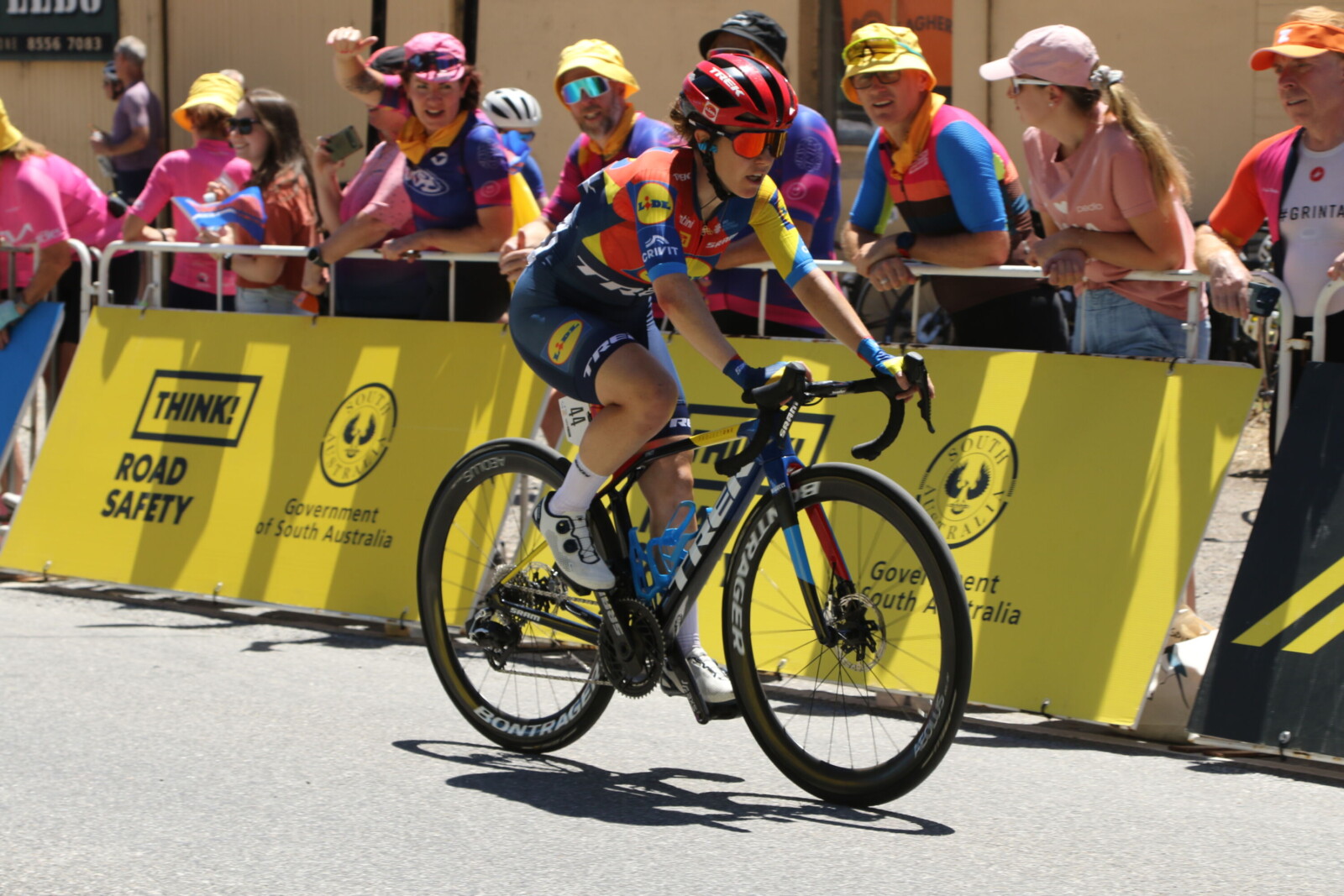
Tour Down Under has always been a race that’s been so special. Obviously, I’ve won it three times, but it’s where I go, and I have some of my European teammates saying how famous I am in Australia.
Spratt at the 2025 TDU. Image: Nicola Rutzou
I appreciated it so much having my whole family there supporting me. It would have been nice to get that fairy-tale win for sure. I was trying to aim for that, and I mean, I just wasn’t strong enough in the end. I wasn’t far off that front group in Down Under, but not far enough. I just was not good enough. I wasn’t strong enough, and that’s okay. There’s nothing I could really change.
My team were amazing. They supported me. They knew that I really wanted to give it a shot. So, I don’t really have any regrets, and I definitely took a moment to enjoy it.
My two youngest nieces had never seen me race before, so it was their first time racing and watching the racing, and I could see how inspired they were. And I went and visited my sister the week after. And one of my nieces (who is nine years old) interviewed me with a microphone, since she’d obviously seen it at TDU.
She said we’re talking today with Amanda Spratt, then she listed off some of my Palmares, and then she said, “Now we’re going to talk to Zoe Spratt (Amanda’s older sister), who has achieved nothing and has no record!”.
BA: You’ve mentioned your family. I know you’re very close to them. Will you be returning home to the Blue Mountains more often?
Spratty: Once I’m retired, I’d love to spend a bit more time in Australia and the Blue Mountains. I can imagine myself still being based within Europe as well, so splitting the two will be an ideal scenario. I’ve almost lived more of my life in Europe than in Australia, so they both feel like home, which is nice.
I’ve enjoyed following the ProVelo Super League and seeing the talent we have in Australia, and also seeing the young riders coming over.
Currently I’m in northern Switzerland, not far from Bern, in the German-speaking area – a beautiful area. My wife is German, so we’ll either stay in Switzerland or move across to Germany.
BA: You talked about mentoring and that sort of thing for the young writers. Have you noticed any emerging Aussie women we should be watching as our new stars that you’ve spotted in recent times?
Spratty: I’ve enjoyed following the ProVelo Super League and seeing the talent we have in Australia, and also seeing the young riders coming over. Someone who’s really, really impressed me already last year is Mackenzie Coupland.
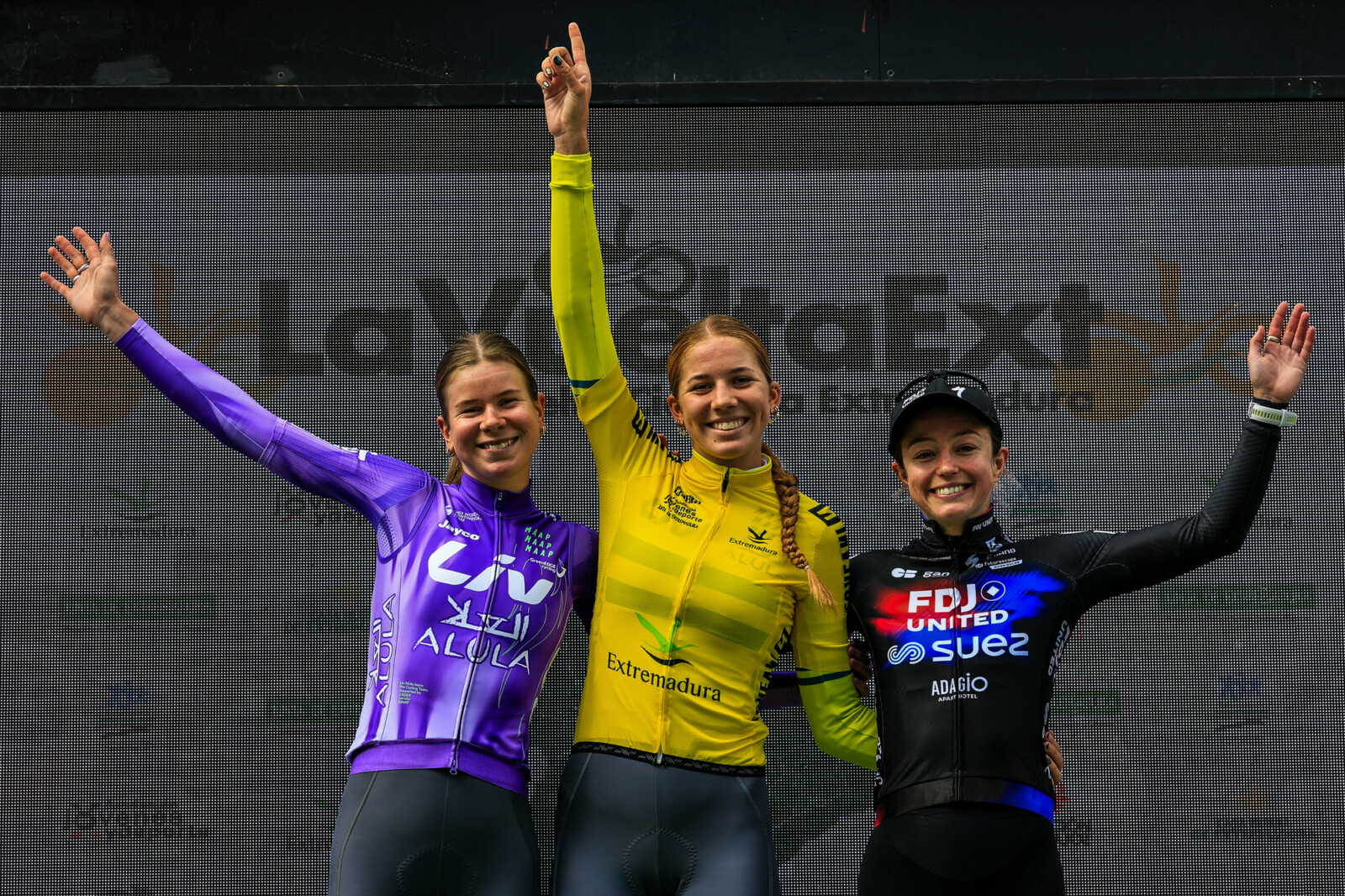
When I first raced against her in Valencia last year, she was still on the Conti team, but just the way she raced, I think, was very impressive. I saw that she’s someone who can navigate a bunch and has the right mentality. She really confirmed that with her national championship win this year and her win in Extremadura. She’s a really exciting young talent.
Also in the ProVelo Super League, I love what I’ve seen from a rider like Sophia Sammons. I was speaking to her coach, Nic Owens, at the Nationals in Perth, and she’s someone I’ve been keeping an eye on.
The way she’s won some of those stages there, and I saw she just won the Oceania time trial title, so she’s a strong time trialist as well. I heard on a podcast that she speaks Spanish, so she seems quite independent in that regard. She’s a rider that I’m definitely keeping a close eye on.
The other one I’ve noticed is Talia Appleton. She has been on the podium alongside my teammate Isabella Holmgren and Marion Bunel. I think she’ll be a big star of the future.
BA: What advice would you give to someone like Tahlia or Sophia about their next steps?
Spratty: You should never think that they’ve made it. Don’t be afraid to ask questions. That’s a big one.
There are a lot of Australian pros in Europe now, and most of us are really happy to answer questions or to help where we can. Patience is also important. It could be easy to want it all now and compare yourself to another person’s journey or to what another person your age has done.
I mean, I always compared myself to Marianne Vos, so I know what that’s like and how depressing that can be sometimes. Some riders take a couple more years to develop than others. The big thing is you need to be in Europe, and don’t be afraid to send emails or messages to teams or us asking about opportunities, because a lot of the time it’s about the people you have.
If you have the right people in your corner, there are always opportunities. At the moment, Australians are showing they’re really strong on the world stage, especially our younger group coming through, like Neve Bradbury, Sarah Gigante, Talia, Mackenzie, as I’ve said.
Teams are starting to look at that Australian talent as well.
BA: How do you overcome that sort of intimidation of racing against somebody like Marianne Vos, who’s quite famous?
Spratty: It’s normal to feel that intimidation when you line up against such a big rider, someone maybe that you’ve idolised on television or wherever. It’s normal to feel that, but at the end of the day, everyone has still come from the same place as you, from starting as a junior or whenever you started cycling, everyone’s had to go through that path.
Remembering that and sometimes even having a small conversation with that person. I remember with Marianne, for myself, it was just a small conversation, and then I thought, oh, actually, yeah, it’s fine.
She’s honestly one of the nicest people you could ever meet. And then we’ve worked together in the Cyclist Alliance, so we’ve had a lot more interactions.
In the end, everyone is there, just trying to be their best, and we’re all pursuing the same dream and moving forward the same way. I understand it’s intimidating for sure. So don’t be afraid to strike up a conversation either.
BA: What comes next for Amanda Spratt?
Spratty: That’s the million-dollar question. Everyone wants to know. I’m not sure right now. I know the first thing I want to do is breathe and have a break. I’ll finish by the end of October.
I know my parents are going to come over for my last race as well, so that will be really special. I’ll take some time to soak it all in and have a little break. After so many years of racing, I deserve that. And then I want to stay involved in the sport.
I did the Director Sportif course at the UCI last year, so I’m qualified for that role. I’d love to be a DS in some capacity, and I still love working with the younger riders.
Also, within the media would be an option. I definitely don’t have a plan yet, and I haven’t made any decisions. Everything’s on the table, and I want to take my time to decide.
Image: LidL Trek
BA: What are you looking forward to most after leaving your pro cycling career behind at the end of the season?
Spratty: Not having to eat so much plain rice! Just being able to wind down a little bit, not travel so much. I can be a bit more in one place and more present with my family, my wife, and my friends. That will be really nice. And not sharing a room with my work colleague all the time!
I love my teammates, but slowing down a little bit would be really nice.
Nicola Rutzou – a long-time contributor and, most recently, the editor of Bicycling Australia. Nicola is a keen Sydney-based road cyclist who writes reviews, news, and destination pieces.


 Nicola Rutzou