
 Mike O'Connor
The Tour de France is no stranger to hot weather, but this year’s edition has prompted fresh questions about whether the sport needs to rethink its approach to racing during Europe’s increasingly intense summers.
With temperatures regularly pushing into the high 30s, organisers have already shortened one stage, the UCI has introduced emergency measures to help riders stay hydrated, and teams have increasingly focussed on cooling strategies.
For race leader Tadej Pogačar, the conversation is bigger than this year’s Tour.
Speaking after Stage 9, the Slovenian suggested professional cycling may eventually need to rethink its calendar if Europe’s summers continue to become hotter.
“If I had the power I would change all the calendar and not race in July and August in hot places,” Pogacar said. “I’d do a completely different calendar, but it’s not something I can do.”
He also floated the idea of dramatically earlier stage starts to avoid the hottest part of the day.
Pogačar’s comments came after Stage 9 was cut by around 30 kilometres because of an official red heat alert in central France, although some riders felt it made little difference.
Belgian Tiesj Benoot was one rider who questioned the impact of the shortened stage, saying the reduced distance did little to ease the cumulative toll of racing in extreme heat.
“It’s 40 minutes’ less racing, but we’ve already been riding in this same heat for eight days,” he said. “I get the feeling ASO wants to make a statement, but other measures would benefit us more.”
While riders hoped the start time could also be brought forward, Tour director Christian Prudhomme said that simply wasn’t practical because of the logistical challenge of road closures, security and international television schedules.
The heat hasn’t eased since.
Even after the Tour’s first rest day, riders again faced sweltering conditions on Bastille Day’s mountainous Stage 10, where Pogačar powered to victory to extend his overall lead.
Riders have described this year’s conditions as some of the toughest they’ve encountered.
Stage 9 winner Mathieu van der Poel admitted the heat made an already brutal day even harder.
“It was incredibly hot,” Van der Poel said after his victory. “That definitely made the stage more difficult.”
It’s getting extreme…
The Professional Cyclists Association (CPA) has urged organisers to make greater use of the UCI’s Extreme Weather Protocol when temperatures become dangerous. The riders’ union wants officials to have greater flexibility to shorten stages, alter start times or make other adjustments when rider safety is at risk.
In a statement, the CPA urgently called for “discussions” ahead of the 2027 season.
“Given the increasing frequency of extreme heatwaves, the CPA reaffirms that summer race start times must evolve in order to protect athletes’ health,” the statement said.
The UCI has already responded by temporarily relaxing some feeding regulations during the Tour, allowing teams greater opportunities to hand riders bottles and supplies in an effort to reduce the risk of dehydration.
Keeping cool
Away from the race itself, managing body temperature has quickly become as important as pacing or nutrition.
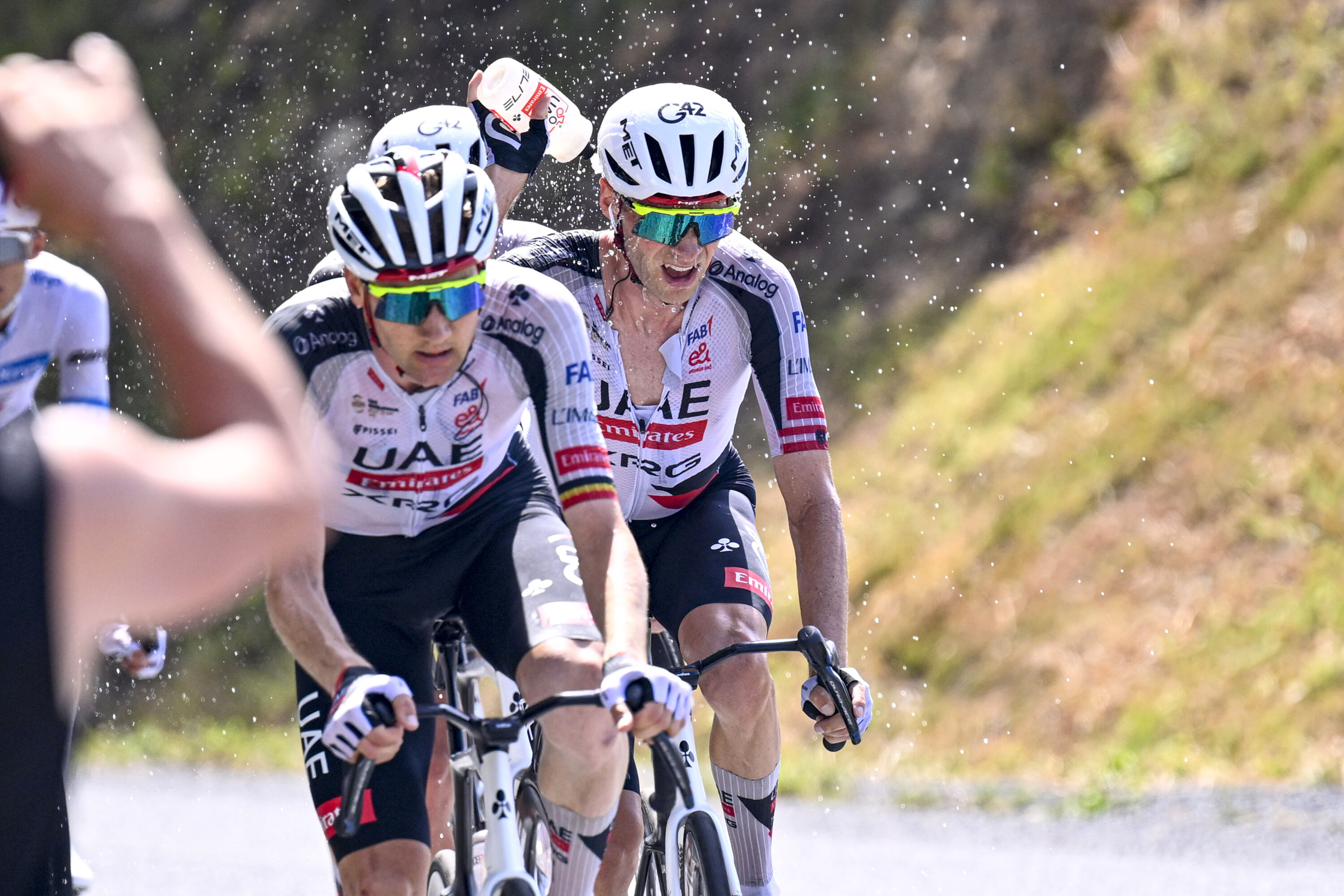
Cooling vests have become standard, and riders have been stuffing ice socks inside their jerseys before climbs, collecting extra bidons wherever possible and heading straight for ice baths after crossing the finish line.
Pogačar said those strategies have helped him cope with the conditions better than ever before.
“My body temperature is probably cooler than any Tour before,” he said, crediting UAE Team Emirates-XRG’s focus on hydration and cooling protocols.
Sports scientists increasingly view heat management as one of the biggest performance factors during Grand Tours, with even small increases in core body temperature capable of reducing power output and slowing recovery.
Meanwhile, the World Meteorological Organization has warned that Europe is warming faster than any other continent, with heatwaves becoming more frequent and intense, raising questions about whether cycling’s traditional calendar remains fit for purpose.
While moving the Tour from its long-established July slot would present enormous logistical and commercial challenges, more riders do appear willing to discuss the idea, with the debate unlikely to end when the Tour reaches Paris.

Mike O’Connor – A keen cyclist, runner and photographer, Mike O’Connor is the Editor of Bicycling Australia. He manages the BA website and social media, and loves promoting the achievements of Australian cyclists.