
 Mike O'Connor
What does it actually take to photograph the Tour de France Femmes as a professional cycling photographer? For Marcus Enno, better known as Beardy McBeard, the answer involves considerably more than pointing a camera at the peloton.
The well-known Tasmanian photographer has close to 20 Grand Tours behind him, along with plenty of experience with the logistics of covering stage races.
This year, being embedded with the Zwift team made things considerably easier, but independent coverage can involve weeks of planning, endless hotel searches and plenty of time spent studying maps.
“And have you ever tried booking 21 hotels in a row?” he laughs.
For a freelancer, every euro spent is one less in the pocket, while getting between photography locations presents another challenge.
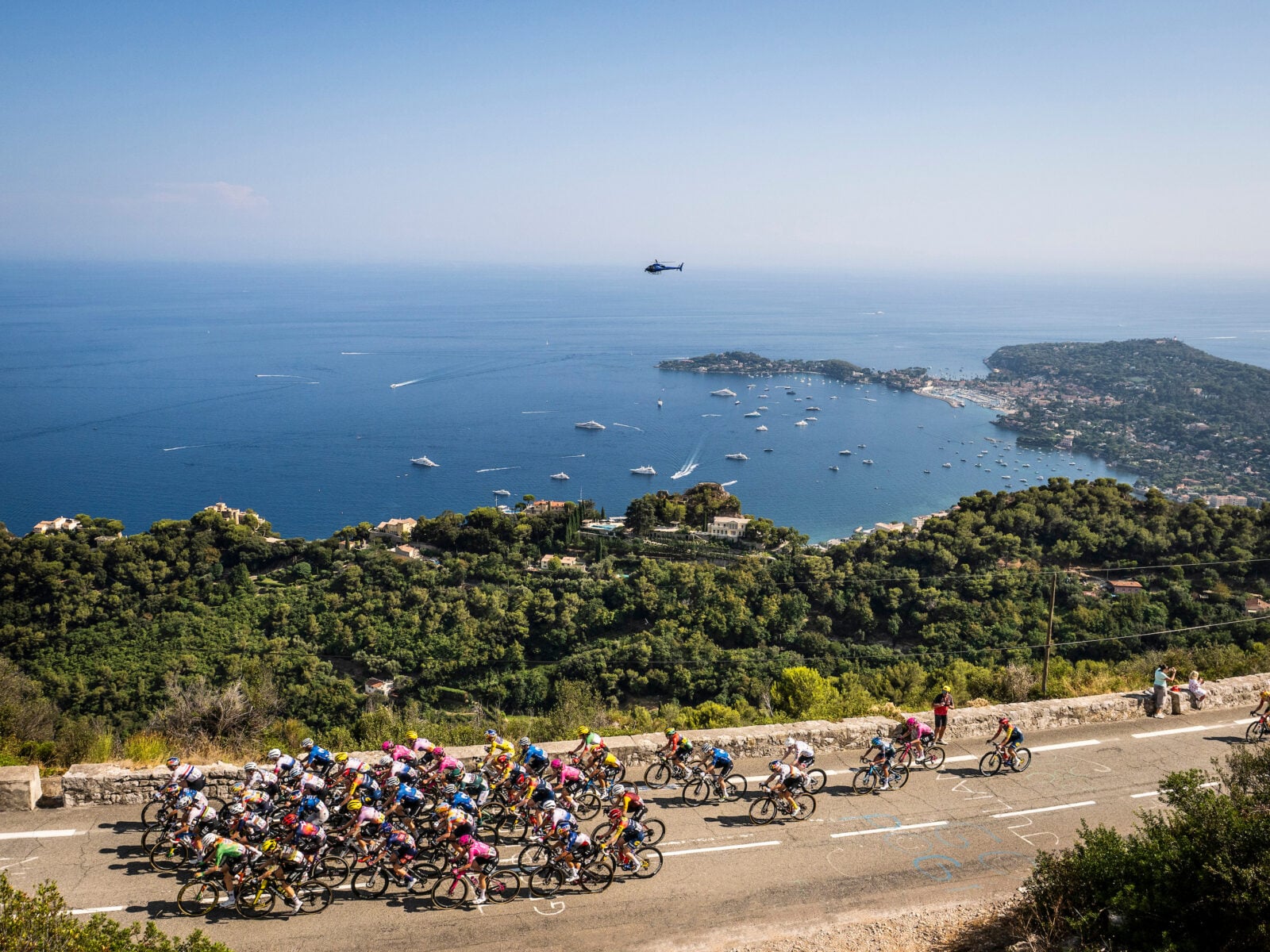
“You can’t drive backwards on a race course,” Enno says, meaning Google Maps Street View becomes an essential reconnaissance tool. He virtually travels thousands of kilometres looking for corners, climbs, descents, viewpoints and potential parking spots.
Then the race starts, and all those plans can quickly unravel.
“There’s definitely an element of planning, but you also have to be prepared to react,” he says. “Once the race starts, things rarely go exactly to plan.”
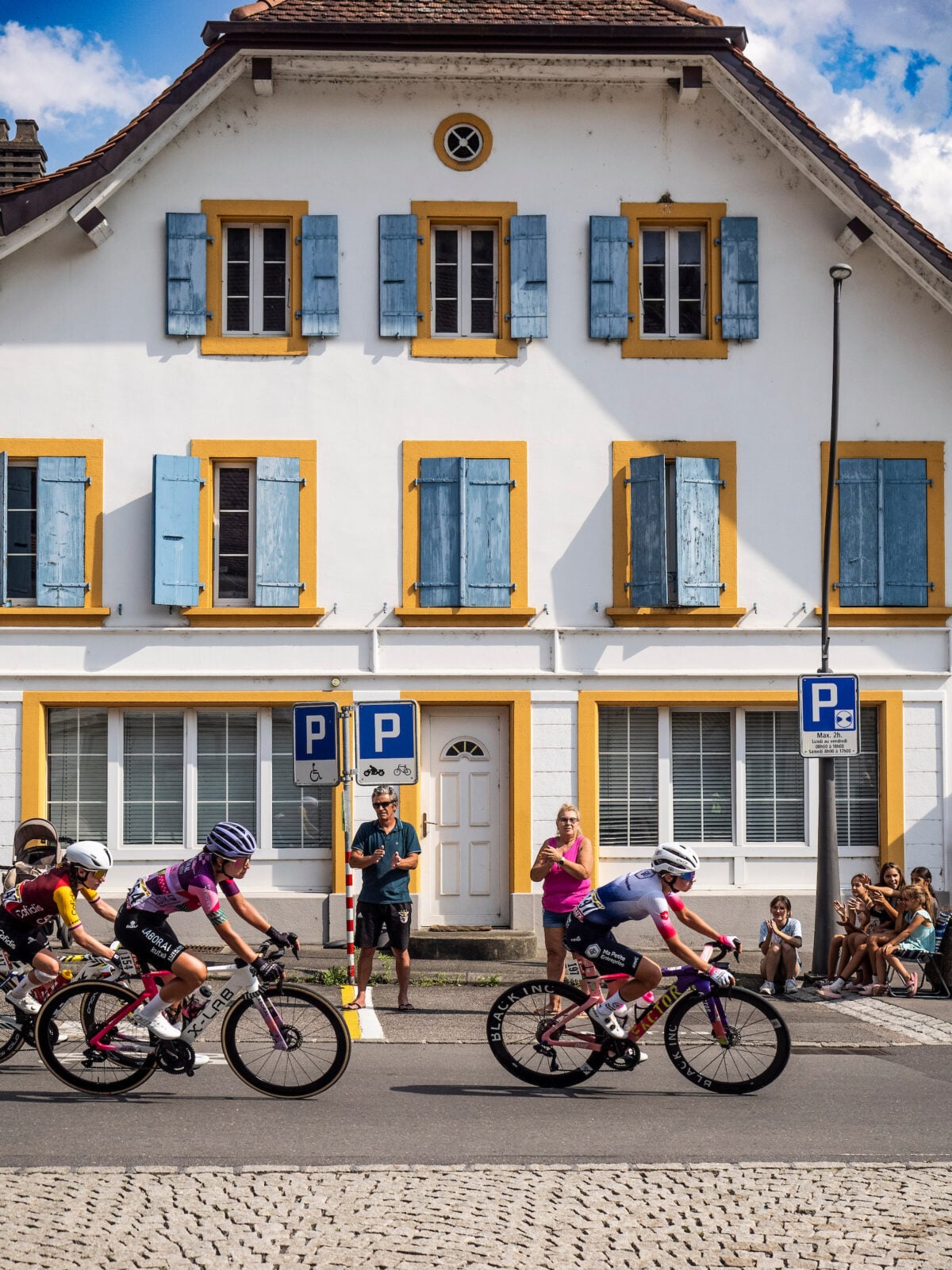
Finding a different view
With photographers everywhere at a major race, producing something distinctive is another challenge.
“At some points you literally have another photographer leaning over your shoulder, shooting exactly the same thing.”
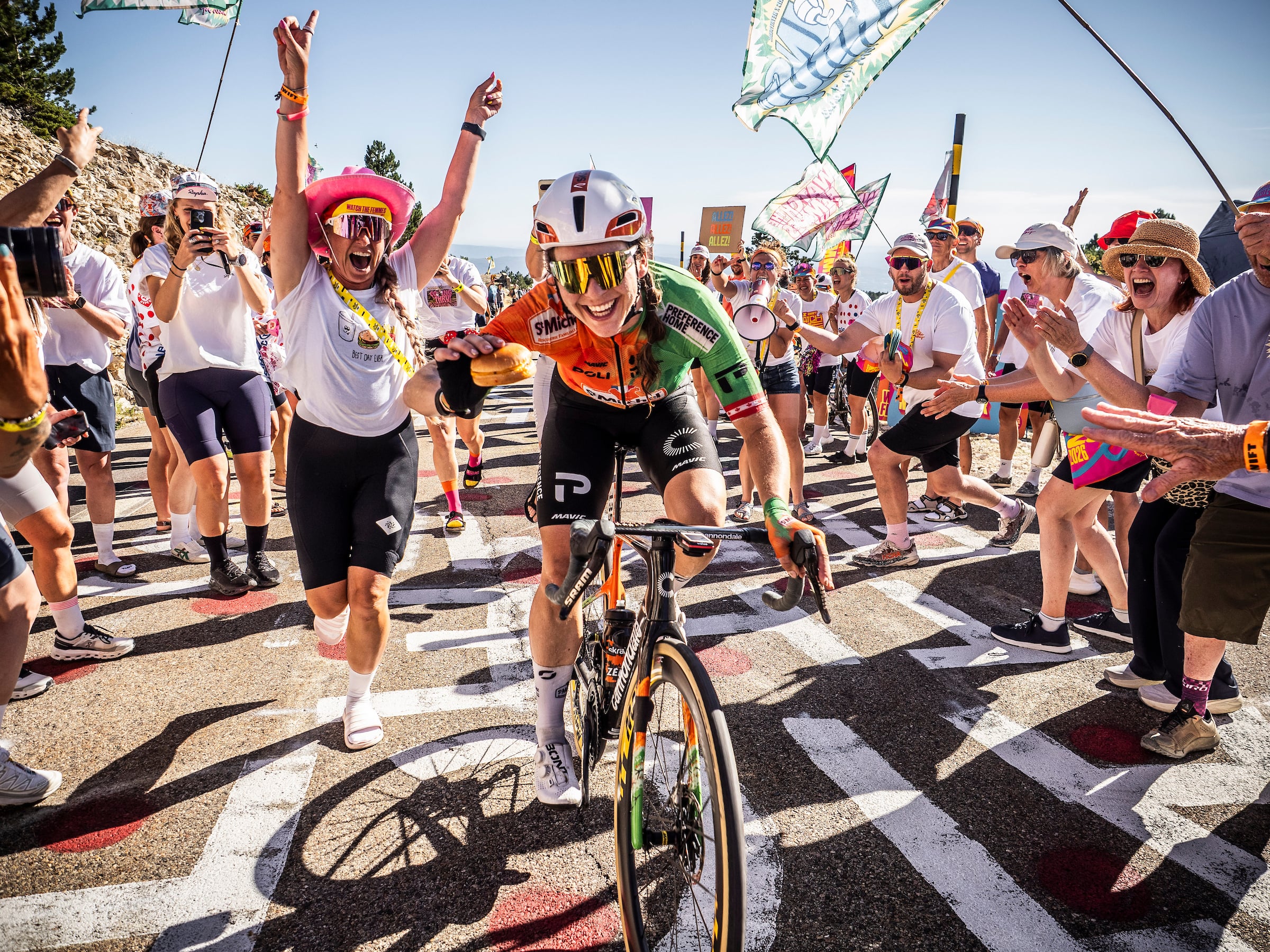
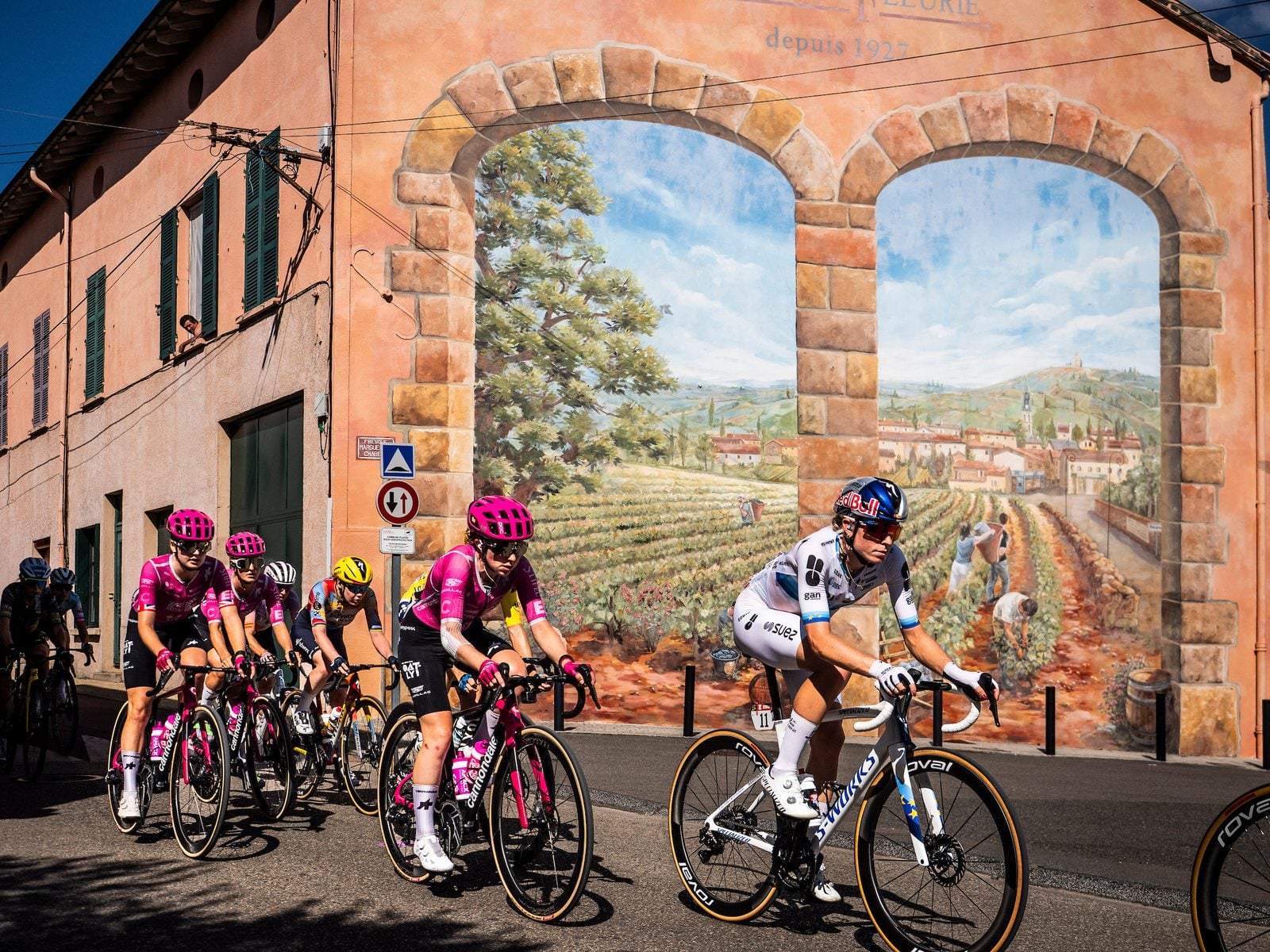
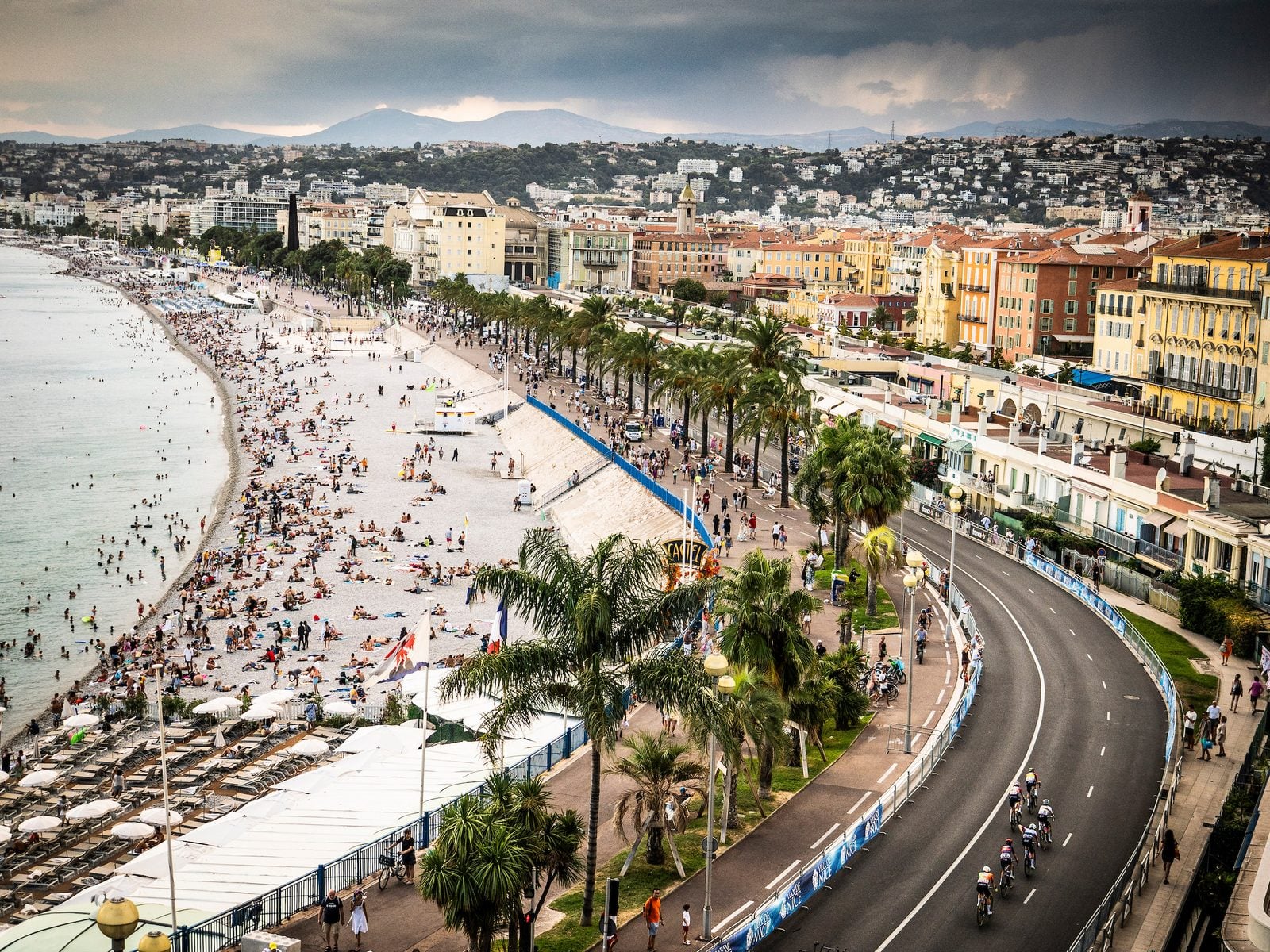
Enno says he deliberately looks for ways to get away from the obvious locations, whether that means finding a different angle, climbing a tree or scrambling up a hillside.
“Everyone knows where the best corner is, so if you stand there with everyone else, there’s a pretty good chance you’ll come home with the same photograph as everyone else.”
His philosophy is simple: “You’ve gotta risk it for the biscuit!”
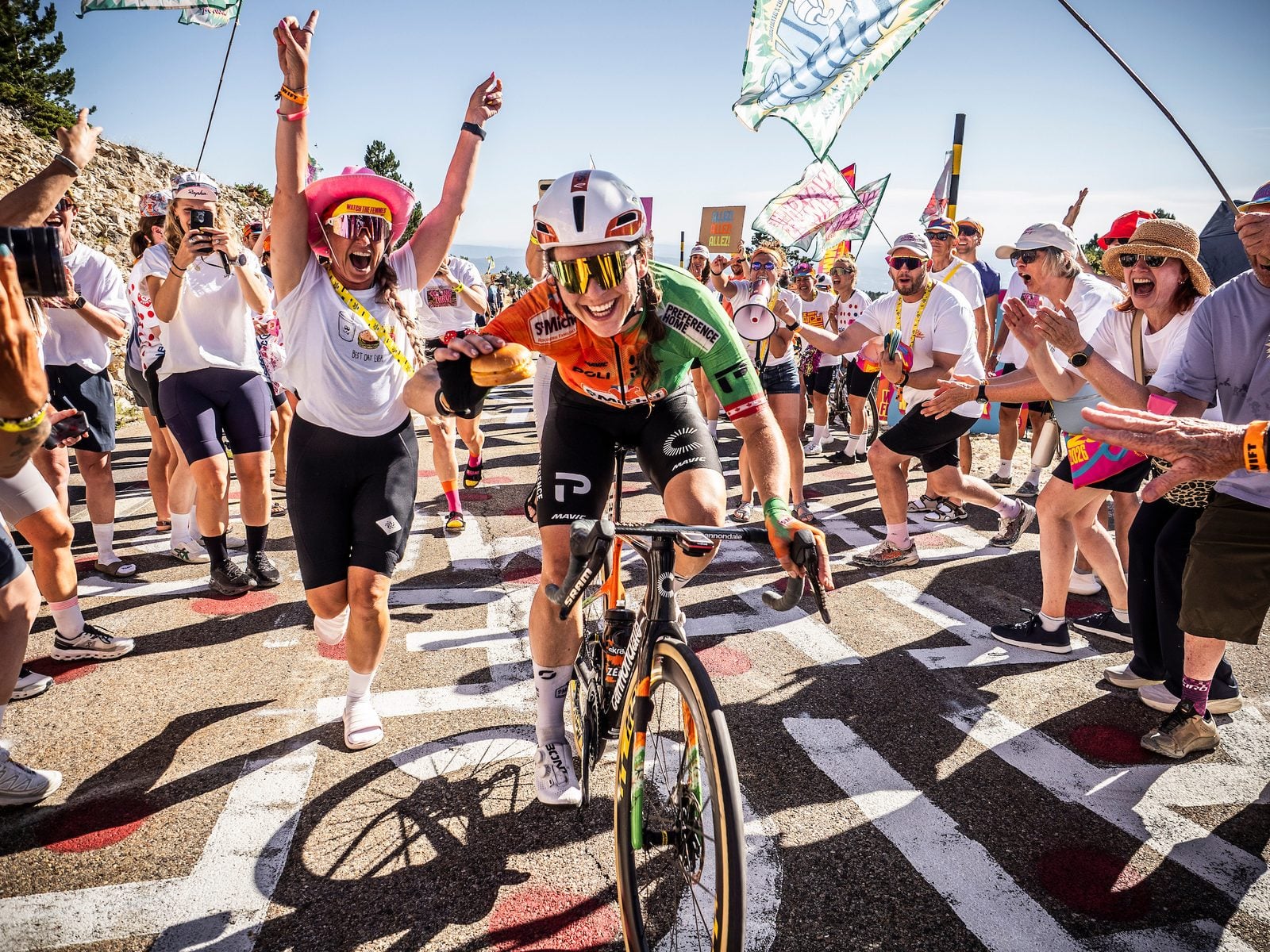
More than the action
Enno says he has found the Tour de France Femmes particularly rewarding to photograph.
“I have to say I prefer it.”
He describes the racing as dynamic and unpredictable, requiring photographers to stay alert because the moments they’re looking for aren’t always where expected.
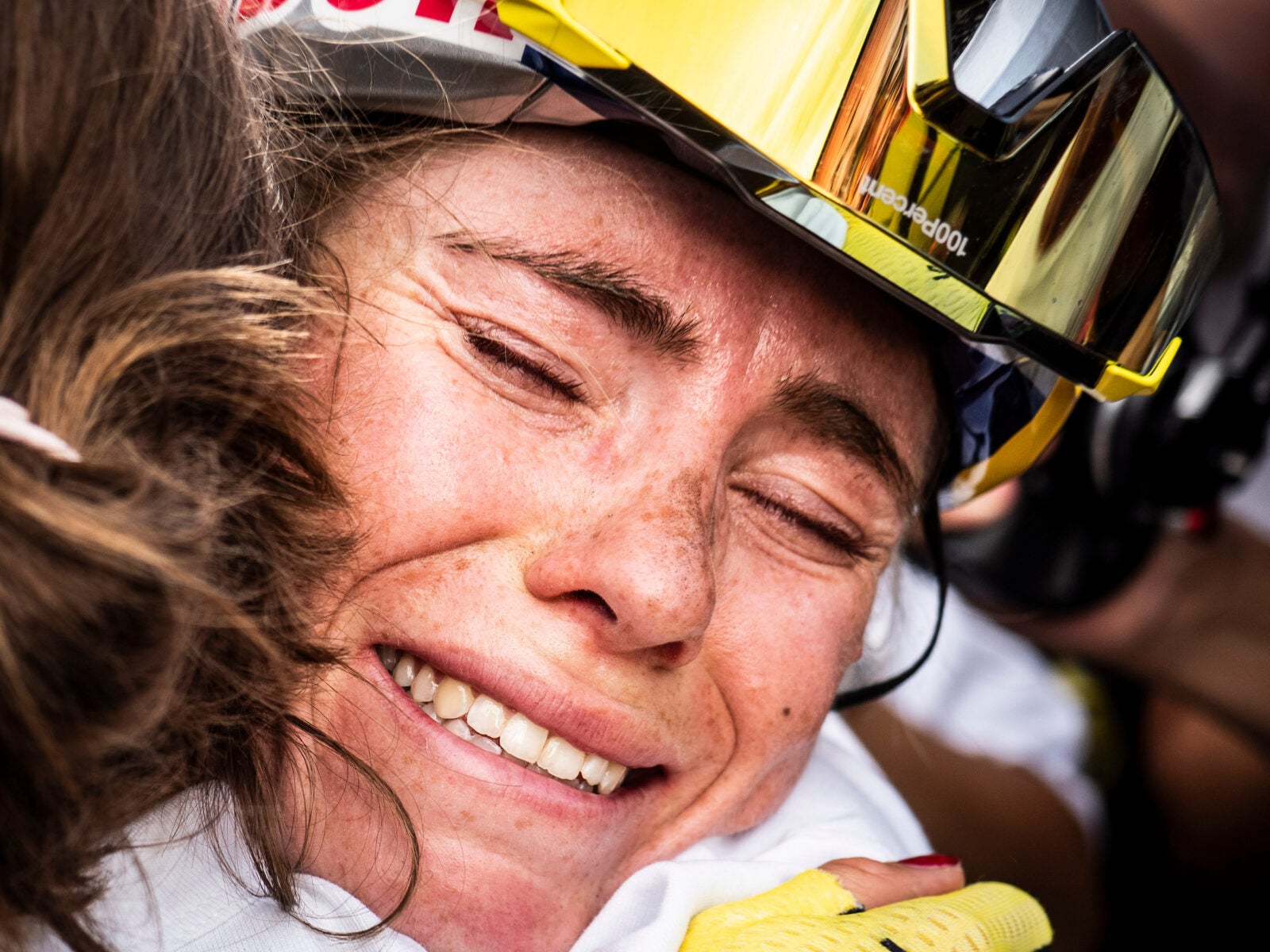
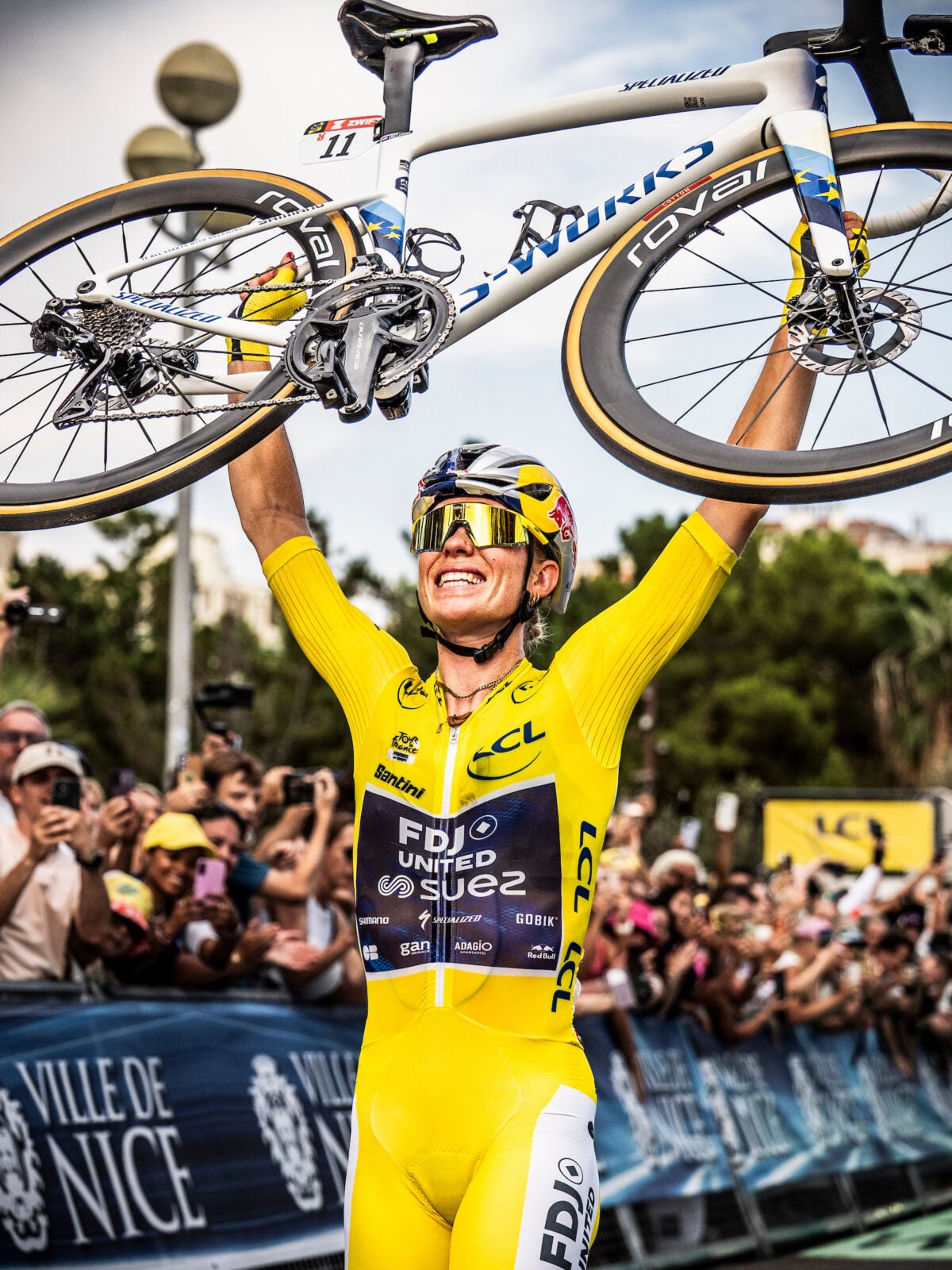
He also finds the emotion more evident, with his attention often moving beyond the racing itself to the personalities and small moments around it.
“I’m not just looking for who crossed the line first; I’m looking for the stories, the personalities and the moments in between.”
Three frames of magic
That approach produced his favourite image of the Tour.
During the individual time trial, Enno was photographing riders warming up around the start. It was brutally hot and he estimates he had already walked around 14,000 steps.
At the start ramp, he noticed Pauline Ferrand-Prévot sitting quietly among the photographers and television crews.
“She was completely zen, head down, almost as if she was meditating.”
When the media crowd briefly cleared, Enno found himself with a front-row view. He looked through the viewfinder and saw something extraordinary.
“There, sitting perfectly on Pauline’s knee, was a bright yellow butterfly.”
He fired three frames. Then it was gone.
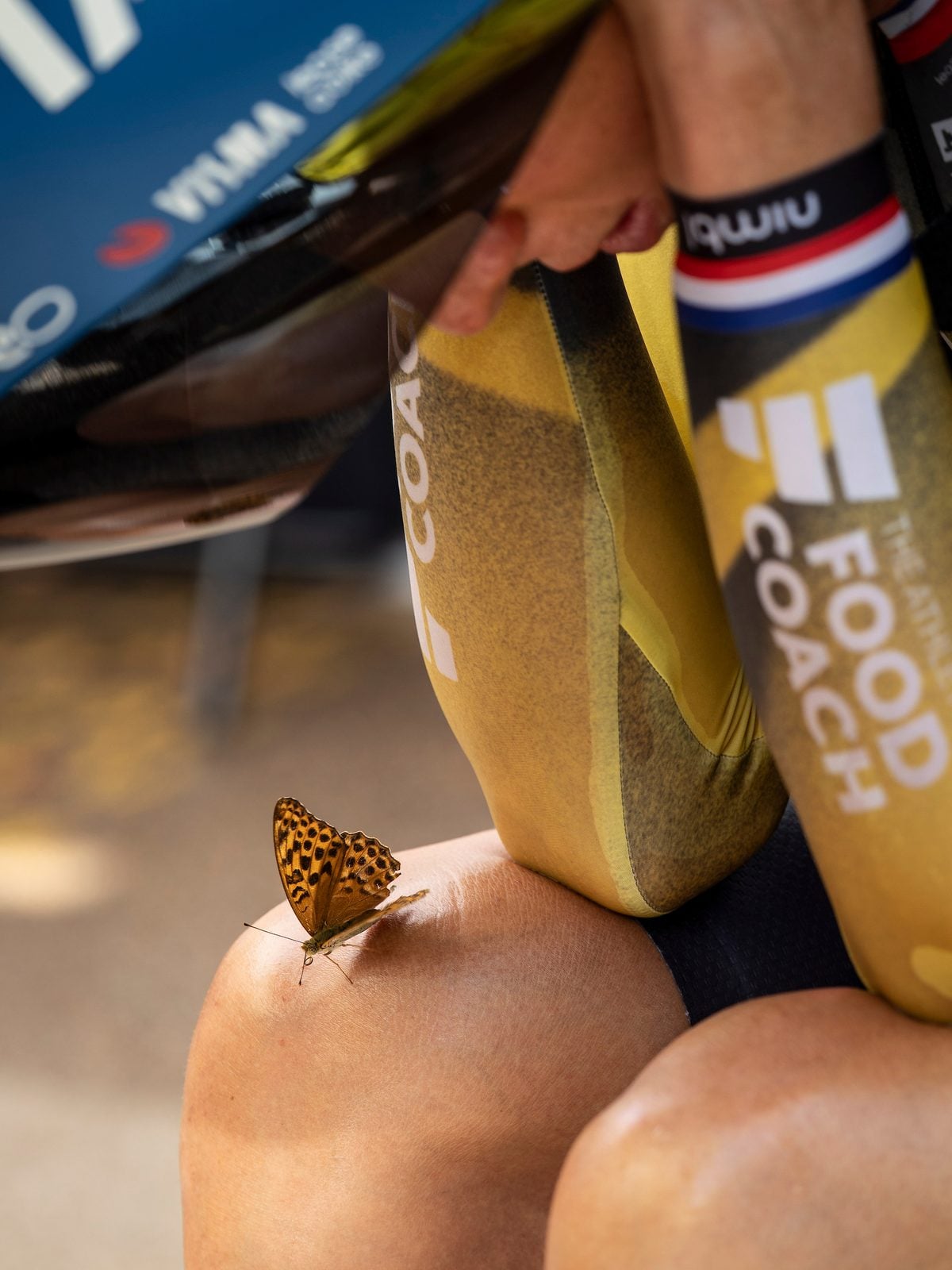
“I instantly knew I’d captured something pretty special — one of those completely fleeting moments that you could never plan for.”
For Enno, the image works because of the contrast: the noise and pressure of a Tour time trial surrounding Ferrand-Prévot, while she sits seemingly oblivious to it all, a tiny butterfly resting on her knee.
“Sometimes photography is about planning and positioning yourself in exactly the right place. And sometimes you just have to be there when a butterfly decides to land on someone’s knee,” he says.
The business of cycling photography
For photographers hoping to make a career from the sport, Enno says good images are only part of the equation.
With social media putting photographs in front of huge audiences, standing out visually is increasingly important. So too are continually practising, understanding your subject and knowing your equipment.
“Making your work individual and recognisable is definitely the goal, although that’s much easier said than done. I’ve been a photographer most of my life and working professionally for more than 20 years, and I’m still learning. Practising your craft, continually honing your skills, understanding your subject and knowing your equipment inside out are all essential.”
“There are a lot of people out there who want to do exactly the same job as you, so hard work is always going to be the cornerstone. You have to be prepared to put in the hours, take the opportunities when they come and keep improving.”
But perhaps most importantly, it’s about people.
“Photography is a people business,” he says. “People want to work with photographers they trust, enjoy being around and know will deliver.”
“The photographs get you through the door, but the relationships are what keep you there.”
And sometimes, of course, you just need to be in the right place, with the camera ready, when a butterfly decides to land.
You can see more of Beardy’s work on his website and Instagram.
Mike O’Connor – A keen cyclist, runner and photographer, Mike O’Connor is the Editor of Bicycling Australia. He manages the BA website and social media, and loves promoting the achievements of Australian cyclists.