
 Anthony Tan
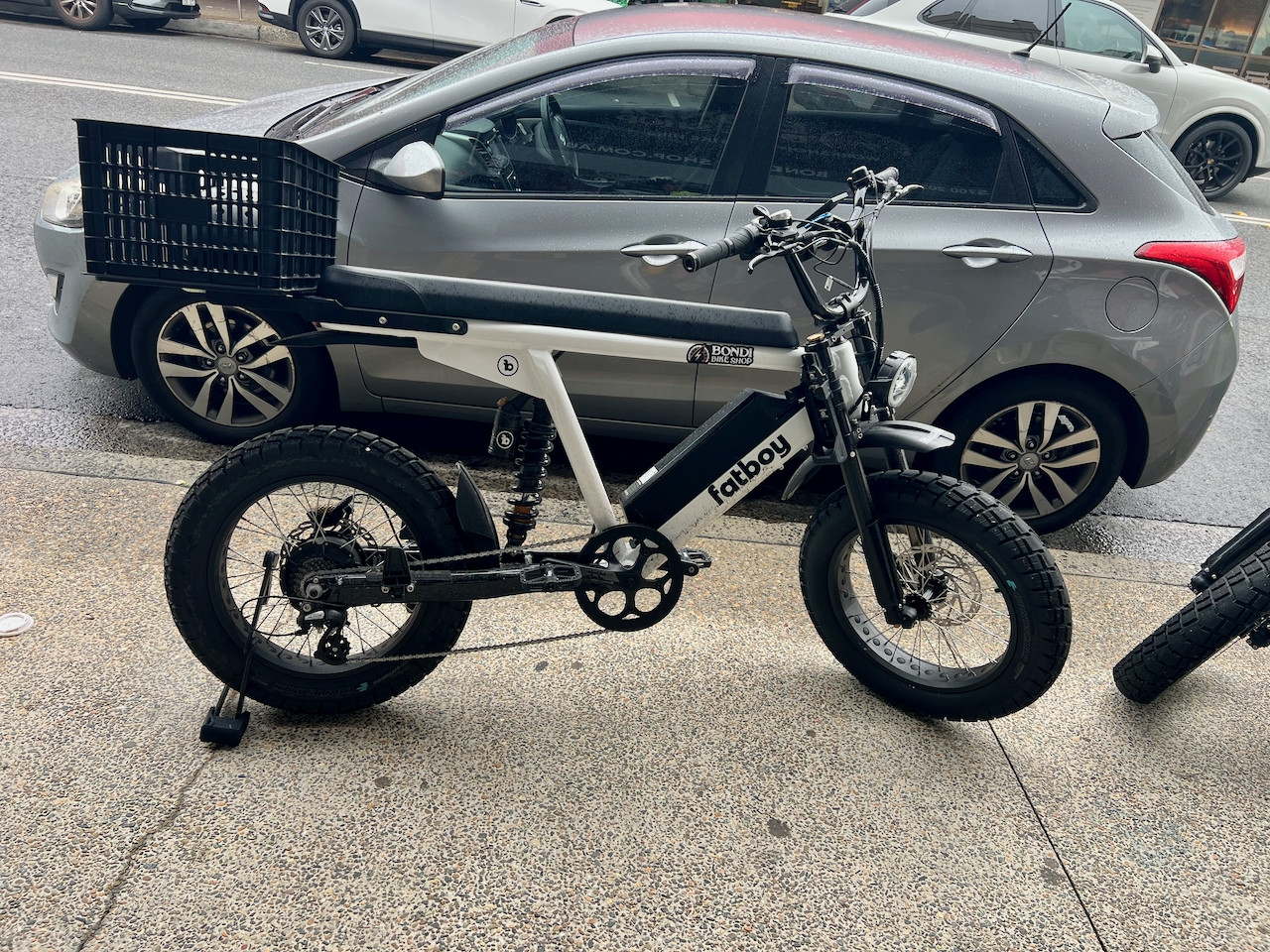
They’re fast – many too fast. They’re mostly ridden by teenagers. They call them bikes but they’re rarely pedalling. And they’re multiplying like cane toads.
What is your definition of cycling?
They pass me like I’m standing still – yet I’m pedalling at 25km/h, when electric assistance is supposed to cut out.
They’re often ridden by those too young to get a motorbike or car licence.
Yet they’re ridden like a motorbike, because most have a throttle, which appears to negate the need to use pedals when travelling on a flat or uphill stretch of road.
From what I’ve observed over the past few years, where their popularity has exploded in capital cities around Australia, they’re on the throttle way more than they’re on the pedals.
The children who ride them can often be seen doing wheelies – not the old-fashioned way, which requires a certain skillset to pedal and lift the front wheel of the bike simultaneously – by simply opening up the throttle and letting it rip.
The biggest seller in Sydney has this claim under a number of their advertised bikes for sale:
“Restricted to 25 km/h“
“Private property – unlock to 50 km/h“
Well, it appears many of these owners consider public roads and footpaths to be private property, then.
The retail stores selling these souped-up e-bikes are moving hundreds per month. They can barely keep up with demand, so they say.
And I believe ‘em. They’re spreading like the cane toad.
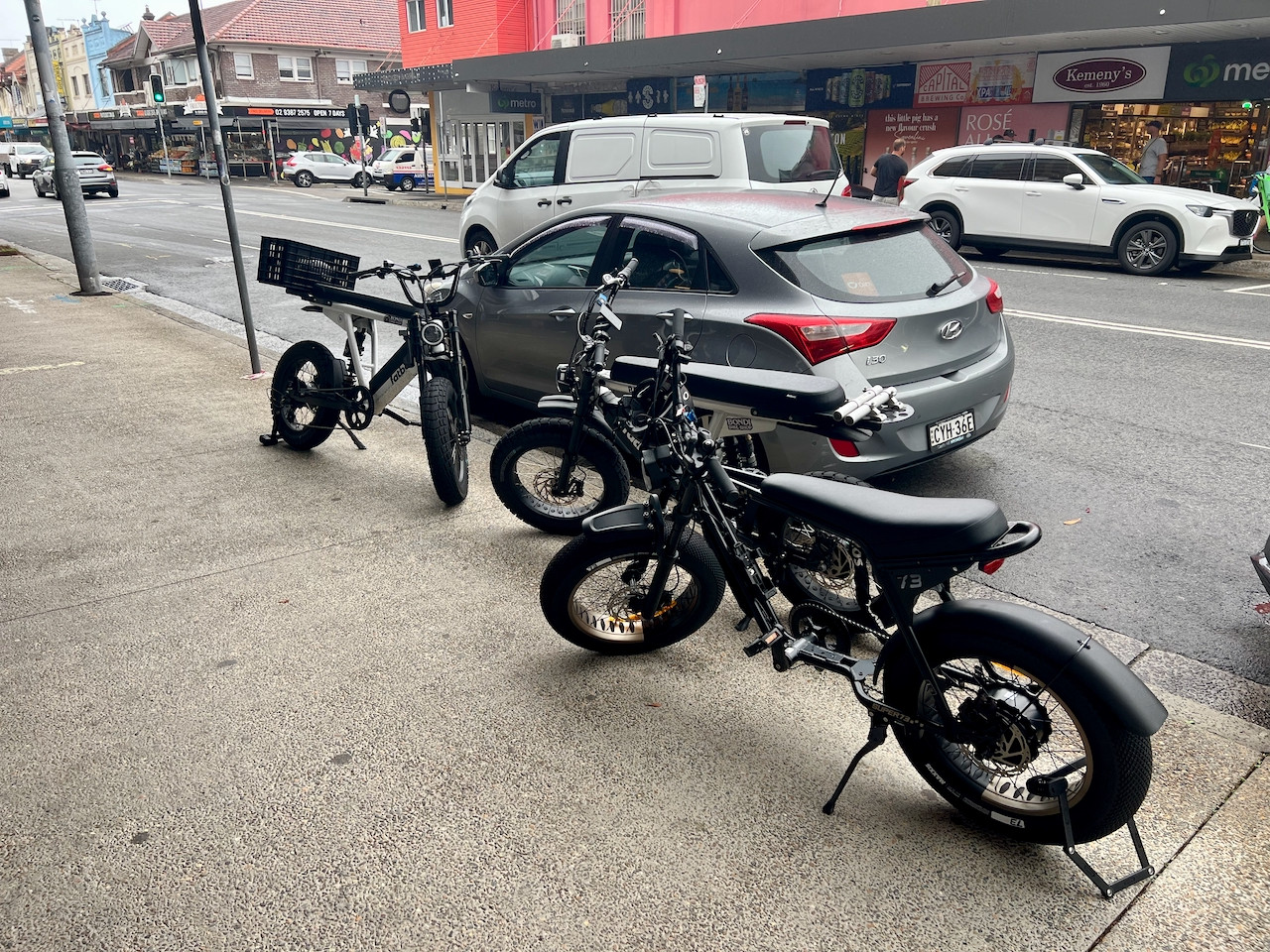
Don’t see ‘em coming…
But they’re also extremely dangerous – to both the rider and those around them.
You do not need a degree in physics to know that, the faster one travels, the more time it takes to slow down, and, should the need arise, the less time you have to react.
Even when I’m travelling at the legal speed limit, on my e-cargo bike with six-year-old kiddo on board, many people – particularly the elderly or hard of hearing – do not see us coming.
In New South Wales, where those under 16 can ride on footpaths (adults 18+ can also ride if supervising their child), you need above-average road awareness to avoid the many obstacles around you: pedestrians, random detritus that would send you flying A over T if you hit it, parked e-bikes, bollards, you name it.
On paths or roads, you often need lightning-quick reflexes to avoid a potential mishap. Does a 12-year-old – or anyone, for that matter – who’s had their bike modified to go 50km/h have the lucidity and skills to avoid such pitfalls?
Call me a fuddy-duddy (whatever, I’m cool with the moniker) but I continue to buy the newspaper every Saturday. I still enjoy the tactility of the paper, and reading stories I wouldn’t otherwise read if scrolling online.
On Saturday March 14, on Page 8 of The Australian, was this headline: Teens die in e-bike accident.
Yes, it’s a Murdoch-owned publication, but not what I’d call sensationalist. More factual than anything.
The story began: “Two teenagers died and a man was injured after an e-bike collided with a Harley-Davidson motorbike south of Brisbane.
“Police say the Harley-Davidson had overtaken another vehicle on Middle Road, Greenbank, when it collided with an e-bike travelling in the opposite direction at 9pm on Thursday.”
Chief Superintendent Mark Wheeler said the e-bike did not have headlights on at the time.
A 16-year-old boy. A 15-year-old girl. Dead.
They will never finish high school. They will never become adults. They will not get a chance to do a job they love. They will not get the opportunity to love someone outside of their family, or start a family. They will not grow old.
According to the paper, 14 people died in e-bike and e-scooter incidents last year. Superintendent Wheeler urged parents, “Please be across the rules”.
If you don’t pedal, are they even a bicycle?
Unlocked, the anomalous power that can be derived from these e-bikes puts them in a different category altogether.
They no longer are bicycles, because for me, e-bike or ordinary bike, the act of riding involves effort transmitted from body to pedals, which creates forward movement.
After all, didn’t we use to call them pushbikes or more coloquially, pushies?
These aforementioned fat-tyre e-bikes I speak of do not fall under that definition.
They are more motorbike than bicycle, and to have them proliferate our footpaths and roads will only, in my estimation, lead to to an exponential increase in injuries and deaths from their users and those in their vicinity – which could be any one of us.
They’re also making it more dangerous for those of us cyclists without such raw power on tap, because motorists now have to deal with such a wide range of speeds; not just of all ages and abilities, but of all levels of electric assistance.
It may only be anecdotal, but in the past year or two, I’ve also noticed a growing disdain towards cyclists from pedestrians (not that we needed any more animosity!), which I can only attribute to the hooliganism exhibited by the owners of these souped-up machines who operate with less a ‘BMX Bandits’ and more ‘Comancheros’ or ‘Hells Angels’ mentality.
My understanding is that, such is the threat they pose, police will soon be armed with the ability to quickly check an e-bike’s power potential, and, if necessary, issue fines and force owners to restrict their speed limit to the applicable laws of that state.
For the sake of the community at large, around Australia and wherever else in the world these overpowered e-bikes are appearing and multiplying, it can’t come quickly enough.

Anthony Tan
Anthony Tan - One of Bicycling Australia’s longest-serving columnists, ‘Tan Man’ has a deep passion for the sport and is a natural communicator.