
 Mike O'Connor
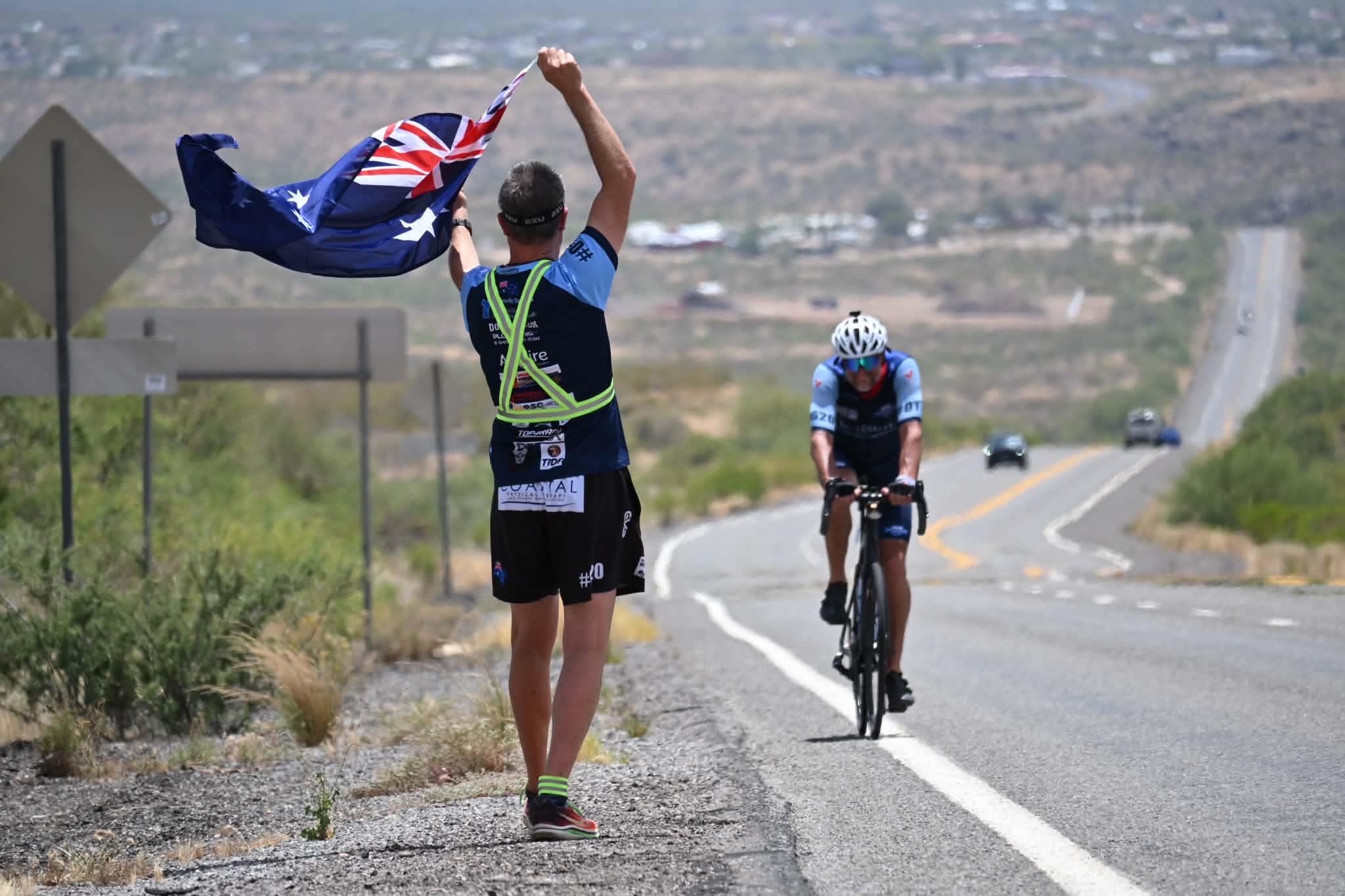
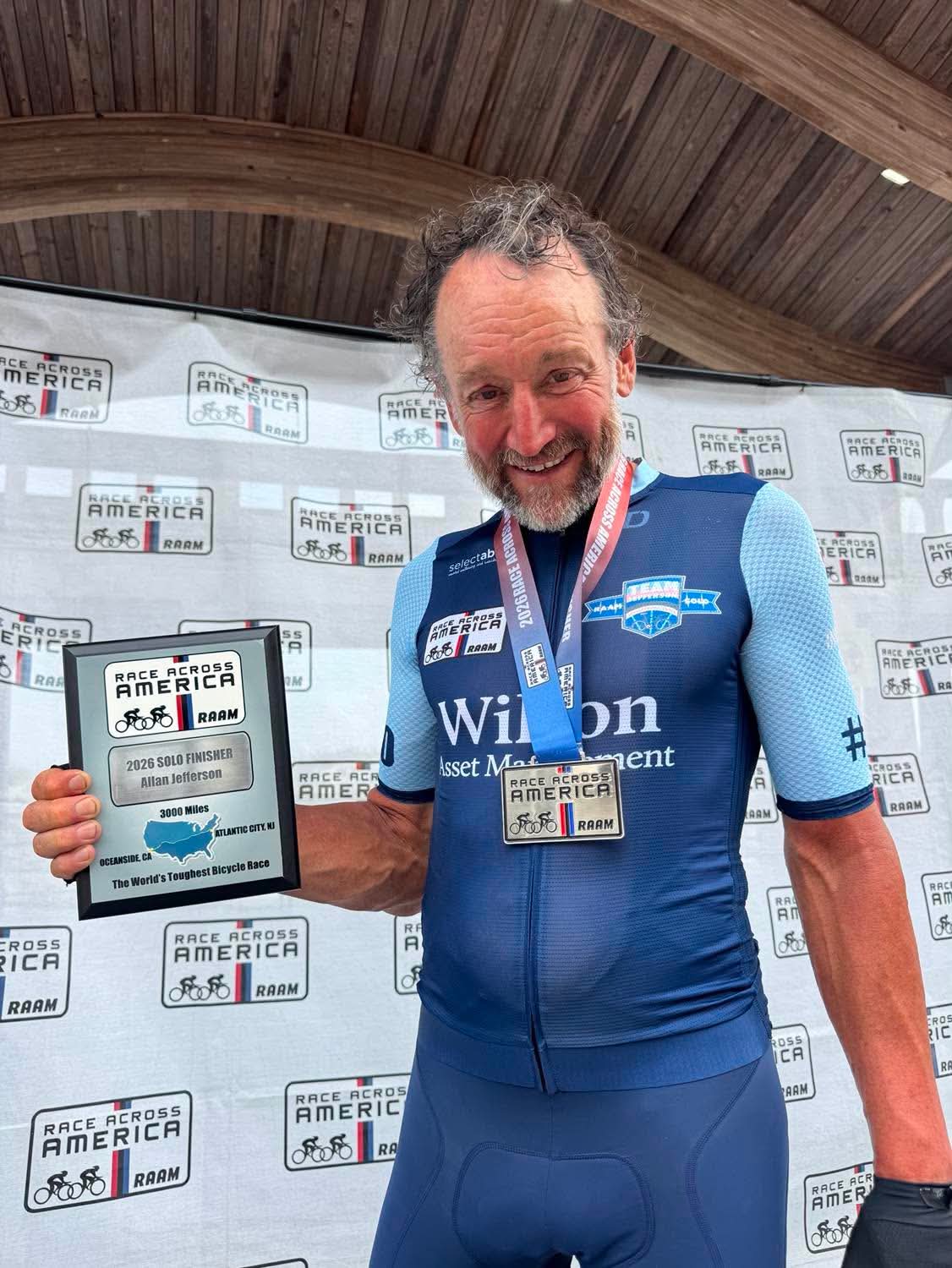
Townsville’s Allan Jefferson has added another remarkable result to his Race Across America record, finishing second overall after one of the toughest editions of the 5,000km ultra-endurance race.
Jefferson, who won the solo division in 2022, endured extreme heat, gastrointestinal problems, difficult weather and less than 24 hours of sleep across 10 days of racing.
Speaking to Bicycling Australia after the race, Jefferson said the 2026 edition was the hardest of his four starts.
“Given I’ve started this race four times I am comfortable in saying this year was the hardest,” he said.
“The extreme temperatures made life difficult for the first four days or so. The remainder of the time we were playing catchup.”
A race that never lets up
Jefferson’s result is particularly impressive given the problems he faced early in the race. The combination of extreme temperatures and gastrointestinal issues made it difficult to consume enough food and fluids, threatening to derail his campaign.
But Jefferson says he never considered abandoning the race.
“Never at any point did I think the campaign had been derailed,” he said. “Yes, it had gotten challenging but never derailed.”
Much of the credit, he says, belongs to his support crew, who worked to minimise the impact of the problems while keeping him moving.
“The crew did an amazing job of dealing with those challenges and making sure their impact was as minimal as possible.”
The turning point came when his gastrointestinal problems eased enough for him to increase his effort.
“RAAM just keeps throwing things at you and it’s okay. You just deal with them.”
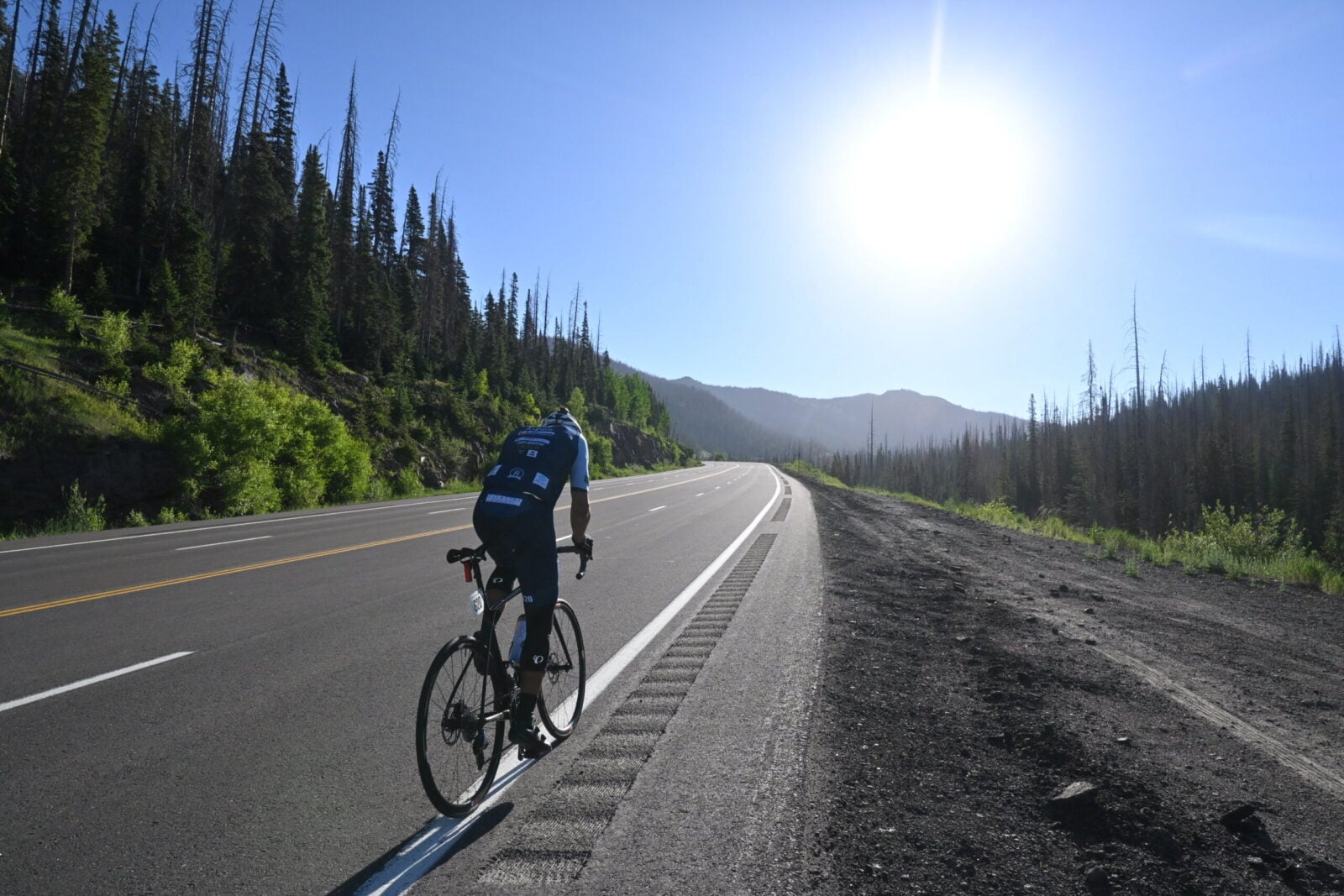
It is a philosophy that has served Jefferson well since he first became involved with RAAM.
We spoke to Jefferson in 2024, ahead of what was then his third solo start. He had already experienced the event as a crew member and team rider before tackling the solo race in 2019.
That first attempt ended in a DNF, but the experience helped shape his successful 2022 campaign, when he crossed the country in just over 10 days.
In that 2024 interview, Jefferson described RAAM as being “1% the body, 99% the head” and stressed that the mental challenge was every bit as important as the physical one.
Two years on, that assessment hasn’t changed.
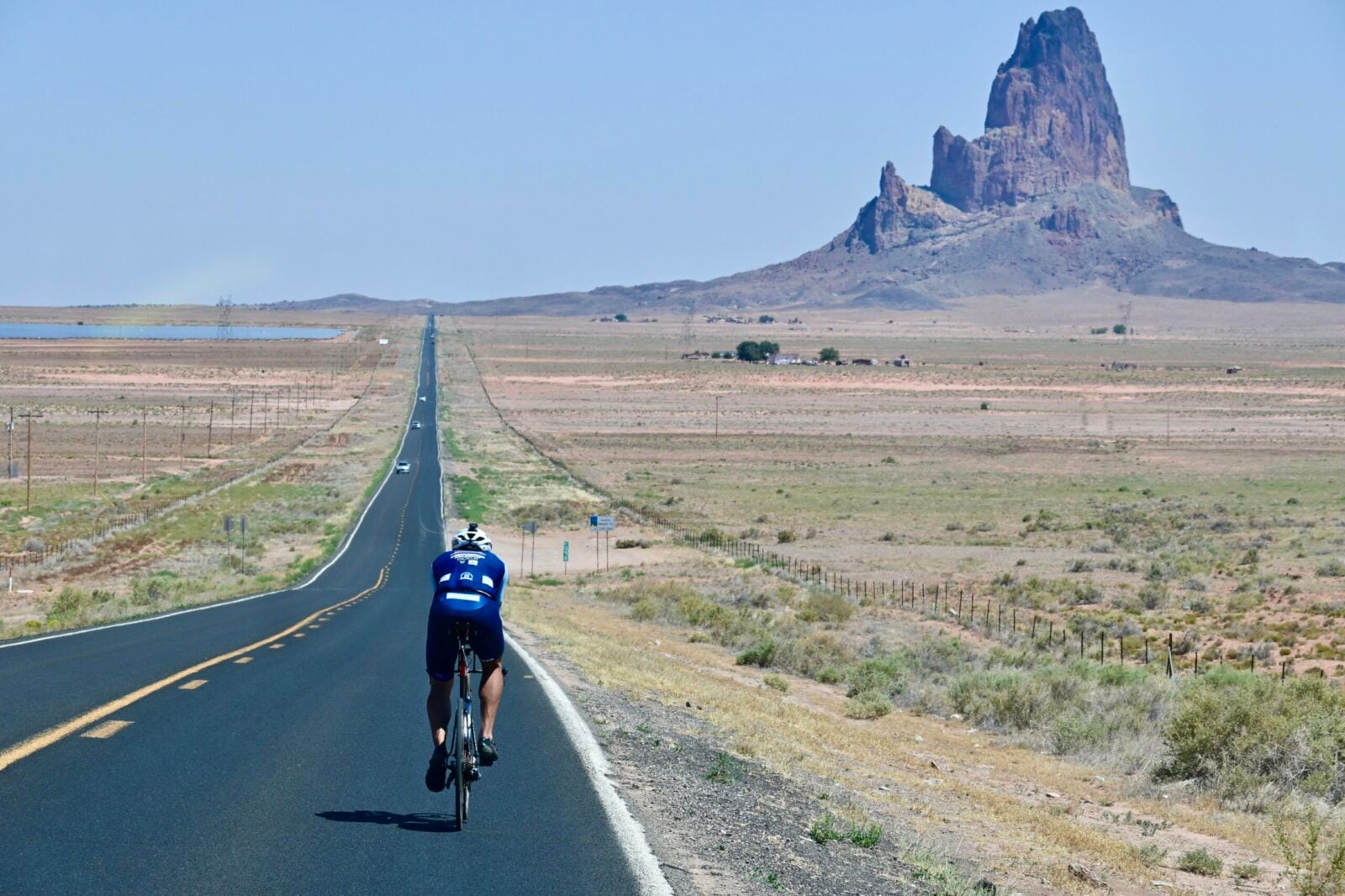
Almost 5,000km and 55,000m of climbing
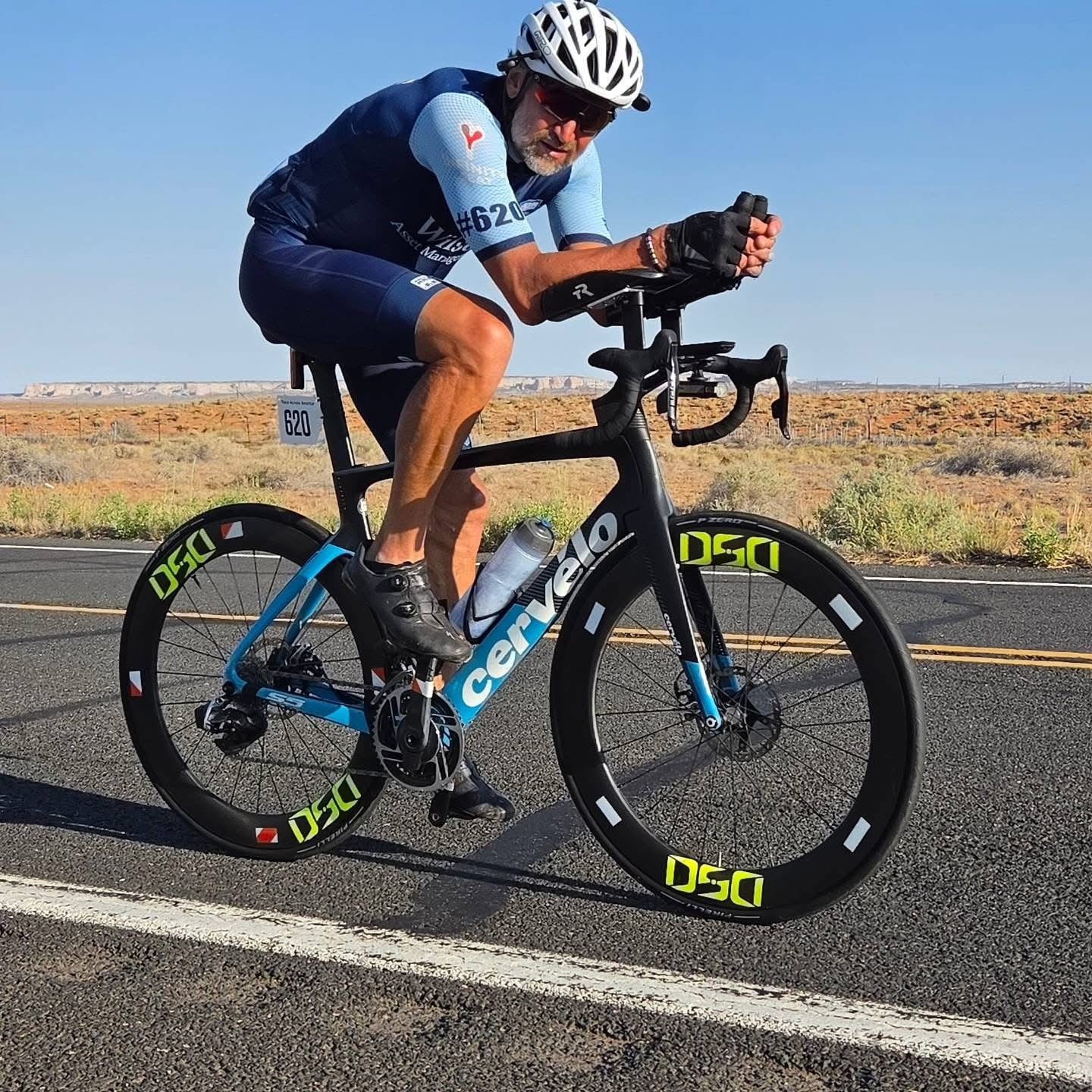
The scale of RAAM remains difficult to comprehend. Jefferson covered almost 5,000km, climbed more than 55,000 metres and slept for less than 24 hours over the 10-day race.
Asked what still surprises him about RAAM after multiple attempts, his answer was typically understated.
“I can’t believe they’re not lining up in the thousands to do this race,” he joked.
“This race is a good way to test yourself. It’s hard and brutal. The country and scenery is amazing and is constantly changing except for the last 100 miles where it is boring as hell.”
The route crosses the United States from the West Coast to the East Coast, with the majority of the climbing concentrated towards the latter part of the race. Jefferson previously told Bicycling Australia that the sheer volume of climbing is one of the event’s defining challenges.
The crew can help, but they can’t do the riding
For all the attention given to the solo riders, Jefferson is clear that RAAM is anything but a solo effort.
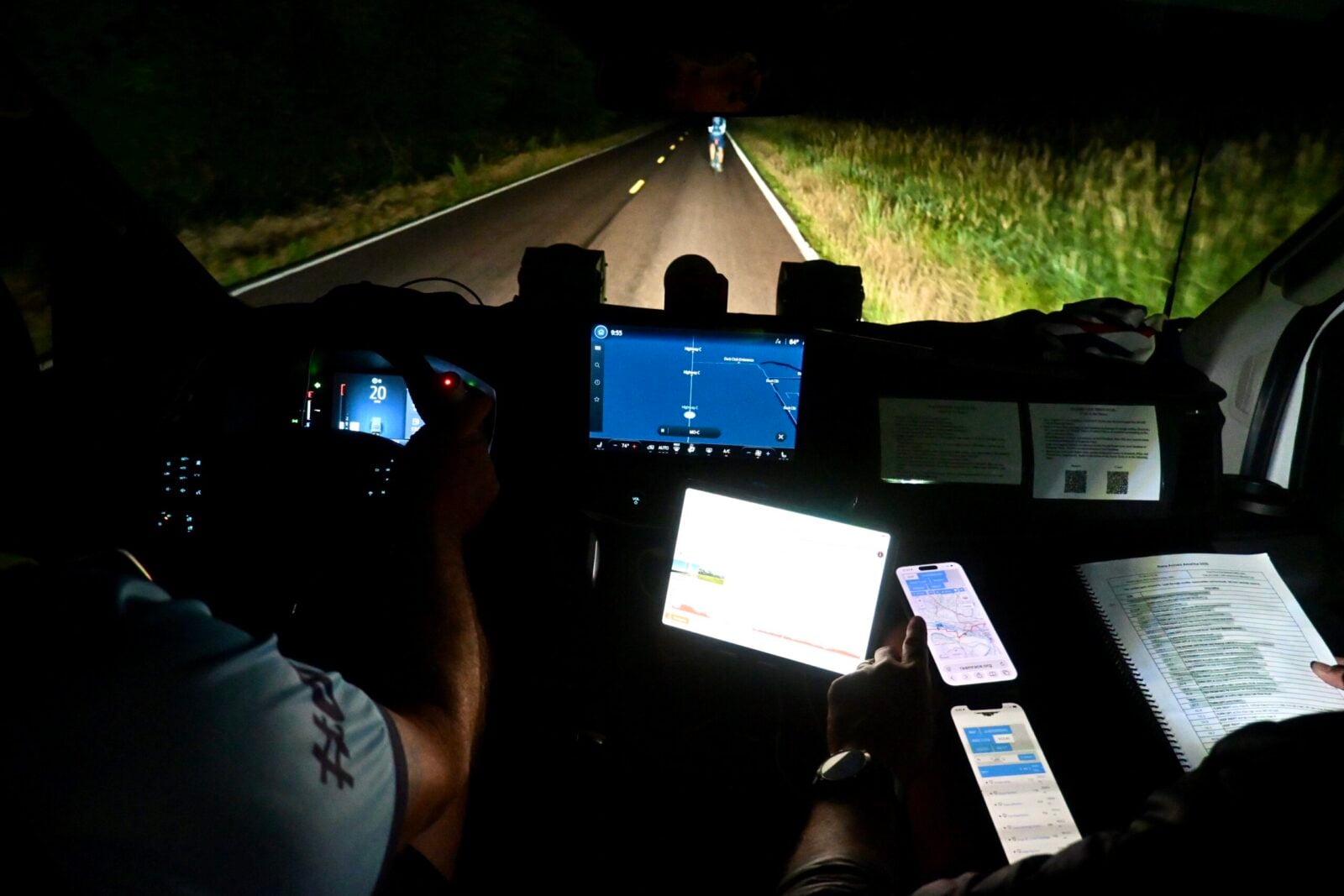
The rider may spend most of the race on the bike, but a large support team works around the clock, managing navigation, food and hydration, mechanical issues, sleep, recovery and the countless small problems that arise during more than 5,000km of racing.
In 2024, Jefferson told us his support crew included mechanics, drivers, navigators, massage and physiotherapy personnel, with everyone required to work seamlessly together.
This year’s experience reinforced that view.
“It is a team effort no doubt,” Jefferson said. “But the drive to continue must come from within the individual rider. No amount of crew encouragement can create that drive.”
He also highlighted the importance of knowing when to stop and reset mentally.
“Every now and then at a stop you need that extra two minutes to get your head sorted. It’s easier to sort things out while you’re moving rather than standing on the side of the road.”
His reasoning is simple.
“While standing the finish line isn’t getting one metre closer.”
What comes next?
After four RAAM starts, a win and now a second-place finish, it would be easy to assume Jefferson is already considering the next challenge.
Not quite.
“Get over this one first,” he said.
“You forget how long the recovery takes. RAAM takes everything you thought you had to give, and then it takes whatever is left.”
For someone who has already experienced the race from almost every possible perspective, as a crew member, team rider, DNF, winner and now runner-up, it’s fair to say Jefferson has little left to prove.
Mike O’Connor – A keen cyclist, runner and photographer, Mike O’Connor is the Editor of Bicycling Australia. He manages the BA website and social media, and loves promoting the achievements of Australian cyclists.