
 Mike O'Connor
For years, pro cycling has lived with a growing tension: Riders are going faster than ever on increasingly advanced equipment, and yet their protection has barely changed beyond a helmet and lycra.
But that equation is starting to change as a new wave of rider safety technology is emerging in the professional peloton, and unlike past efforts, this one is gaining momentum.
Airbags are no longer a concept
The biggest shift is probably the most radical, and potentially the biggest change to the sport in generations. Airbags, once confined to motorbikes and alpine skiing, are now being actively developed for road cycling.
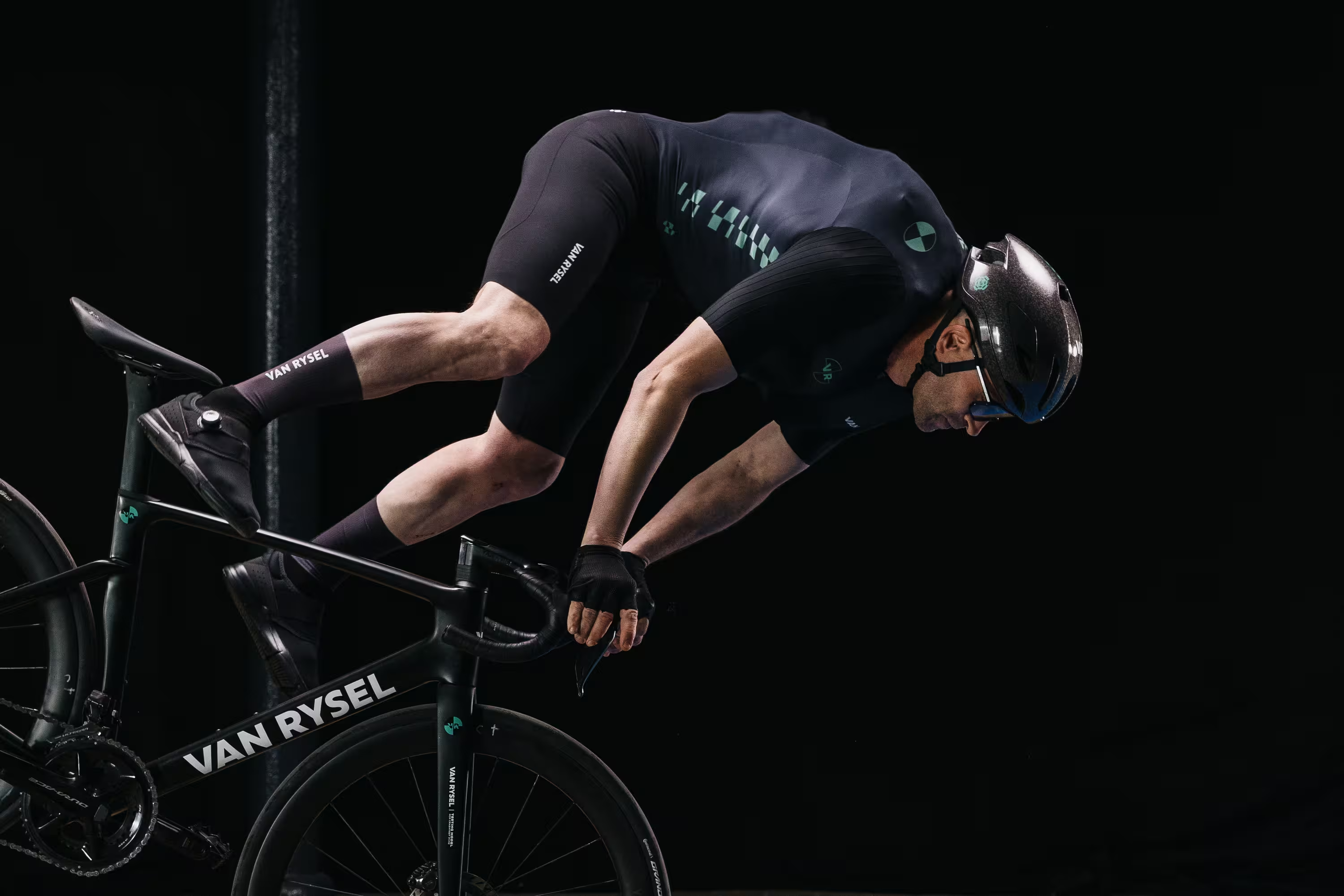
Recent prototypes from companies like Van Rysel with its “Project Airbag” skinsuit are designed specifically for road racing, with protection built directly into a race-ready suit rather than added on.
The idea is these built-in airbag systems deploy in milliseconds when a crash is detected.
They rely on motion sensors and algorithms trained on vast datasets of rider movement, allowing them to distinguish between normal riding and a fall.
When triggered, the airbags inflate around key impact zones such as the spine, neck and ribcage, targeting the injuries that most often sideline riders.
Other designs, Like that of Aerobag, take a modular approach, embedding inflatable tubes into bib shorts to protect hips, pelvis and collarbones.
Early versions are already in the testing stage by WorldTour teams in training, a clear sign that the technology is moving beyond theory and into practice.
The sport’s governing body, the UCI, is also getting involved. In February, it sought expressions of interest from companies relating to the development of protective equipment for riders in both the men’s and women’s pelotons, with the aim of enhancing their safety in the event of a crash.
At the same time, it says it is already working with manufacturers to establish standards and regulations, and plans for broad consultation in the form of working groups with both manufacturers and independent experts throughout 2026.
From reaction to prevention
While airbags deal with crashes after they happen, another layer of technology is also becoming more widespread. It’s focused on preventing incidents, or at least reducing their consequences.
Following several high-profile incidents where crashed riders were not immediately located, the most recent being Tom Pidock at the Volta a Catalunya, the UCI is pushing toward mandatory GPS tracking systems in races.
This would mean if a rider leaves the road or comes to a sudden stop, race officials can be alerted instantly, allowing medical teams to respond without delay. It’s one of those safety steps that feels like it’s been a long time coming.
Will all these changes slow things down?
It’s hard to say for sure.
If anything, there is a case that better protection could make riders more confident, especially in high-risk moments like bunch sprints or technical descents.
That does not necessarily mean more chaos, but it could mean fewer hesitations. Margins in pro cycling are tiny, and if riders feel just a fraction safer leaning into a corner or holding their line, speeds may stay high, or even creep higher in certain situations.
There is, however, one problem with all of this.
Cycling remains a sport obsessed with marginal gains. Any new technology must justify its place not just in terms of safety, but also weight, aerodynamics and comfort. Early airbag systems, for example, add several hundred grams and introduce new complexities around heat and fit. They’re also bulky, and let’s be honest, do look a bit weird.
There’s also the possibilities of the technology failing or triggering at a key moment in error – imagine a bunch sprint and an airbag going off, and then consider just how much damage it could cause.
Ultimately, like any major change to a sport, it’s likely riders and teams will be open to change if it gives them an advantage, but only if it doesn’t compromise performance.
A different future for the peloton
If helmets were the last true step change in cycling safety, the reality really is the next one is already forming.
Airbags, smart sensors, real-time tracking and tighter equipment rules are all converging toward a more protected peloton. And, the conversation is being driven by teams, manufacturers and the sport’s governing body in tandem, so it suggests it has real legs.
For a sport that has historically accepted risk as part of its identity, that is a significant cultural shift. And for the first time in a long time, pro cycling may also be becoming smarter about how it looks after its riders.

Mike O’Connor – A keen cyclist, runner and photographer, Mike O’Connor is the Editor of Bicycling Australia. He manages the BA website and social media, and loves promoting the achievements of Australian cyclists.