

 Peter Maniaty
Confession time. Before this review I’d never heard of GEOID. But having done my research – on and off the bike – I now know it’s a sister company of Magene and another emerging Chinese brand that packs a serious value punch when compared with its bigger and more established cycling tech rivals.
Specialising in GPS bike computers, heart rate monitors, power meters and smart trainers, GEOID was founded in 2021 and is headquartered in Qingdao, Shandong.
The CC700 Pro is currently its flagship touchscreen head unit and there’s plenty to like, especially given its sub-$150 price tag.
Let’s take a closer look.
First impressions
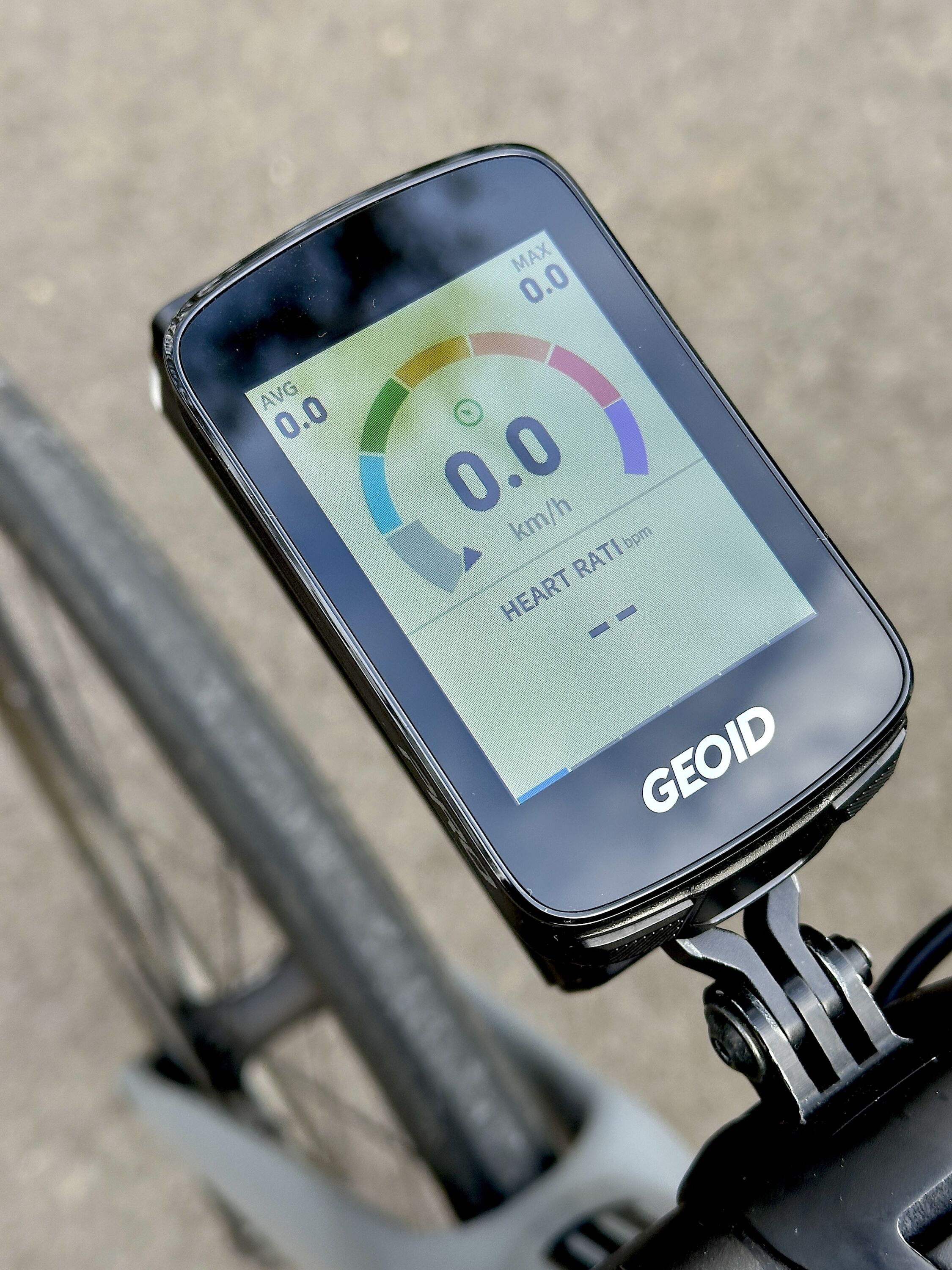
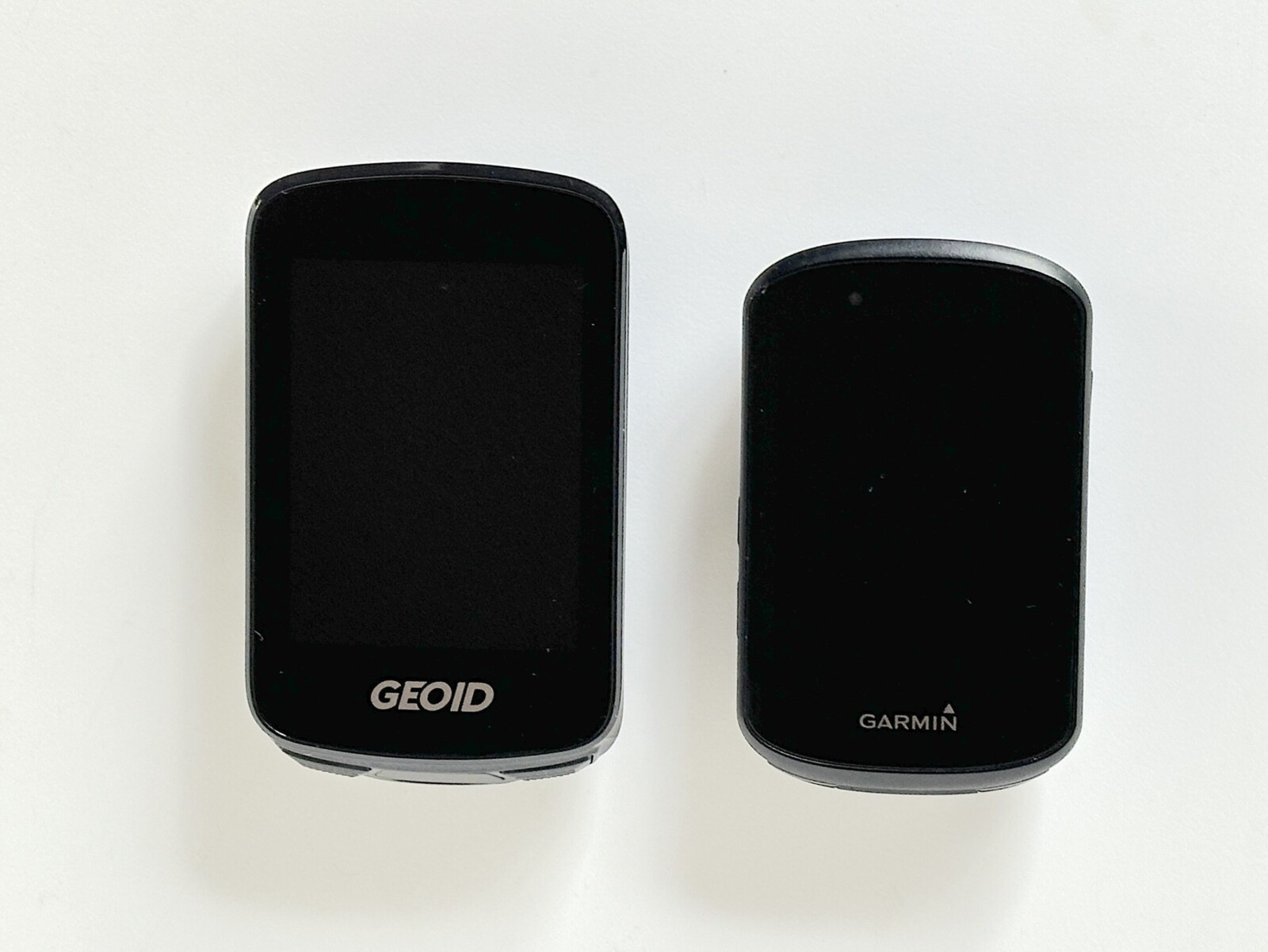
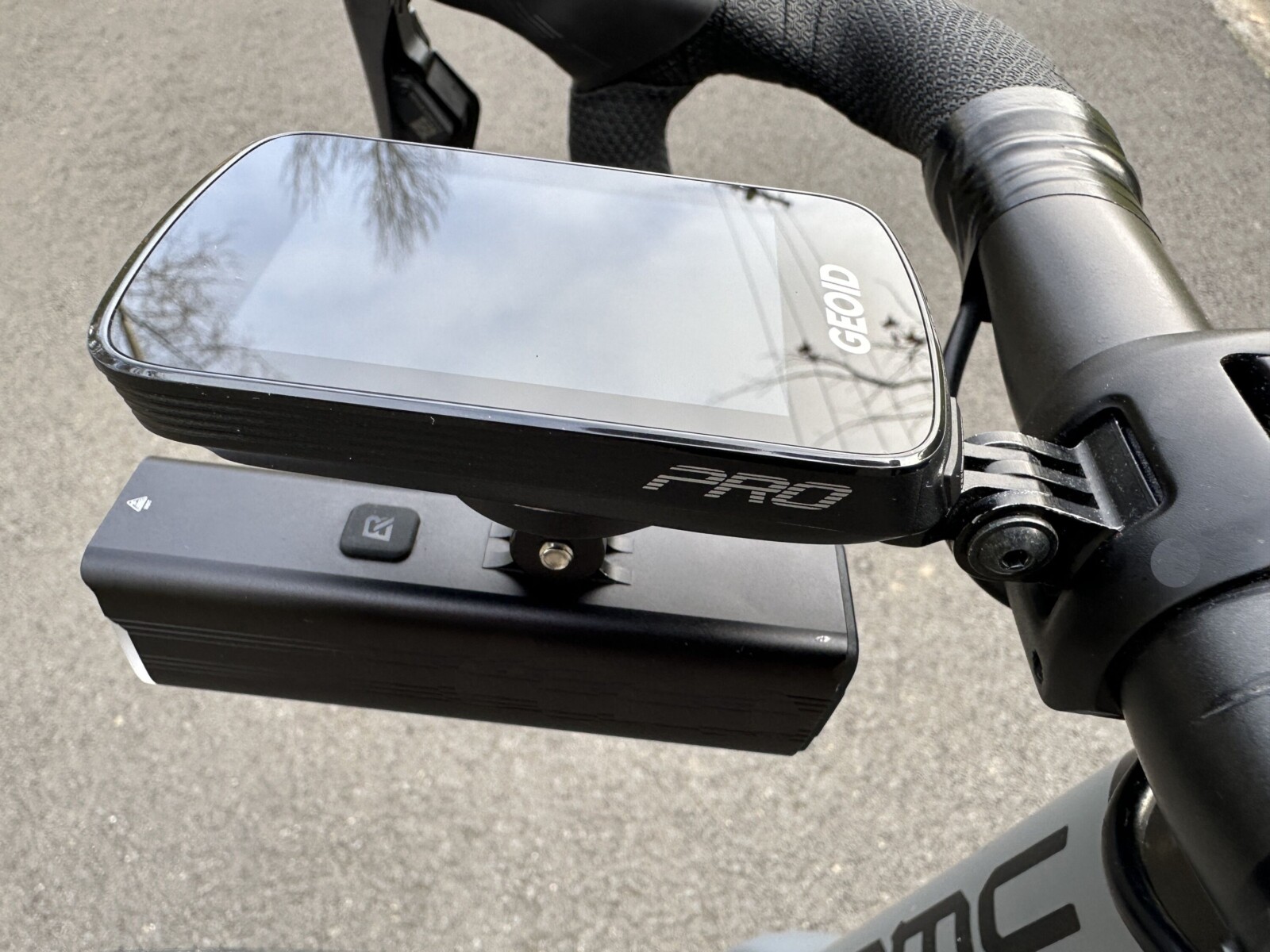
Measuring 95mm x 56mm x 14mm the CC700 Pro is a mid-sized head unit.
With a 2.8” colour touchscreen the display is slightly larger than the Garmin Edge 550 and on par with the Wahoo ELEMNT Roam. Out of the box my initial impressions are all pretty positive.
It’s well packaged. It’s a good size. The build quality feels solid. It’s generally easy to set up and pair with external sensors like HRM, power meter, Di2 and radars.
At 110 grams (as measured on my home scales) the weight is also in line with most of its mid-sized rivals. The interface is reasonably basic but simple to use and intuitive.
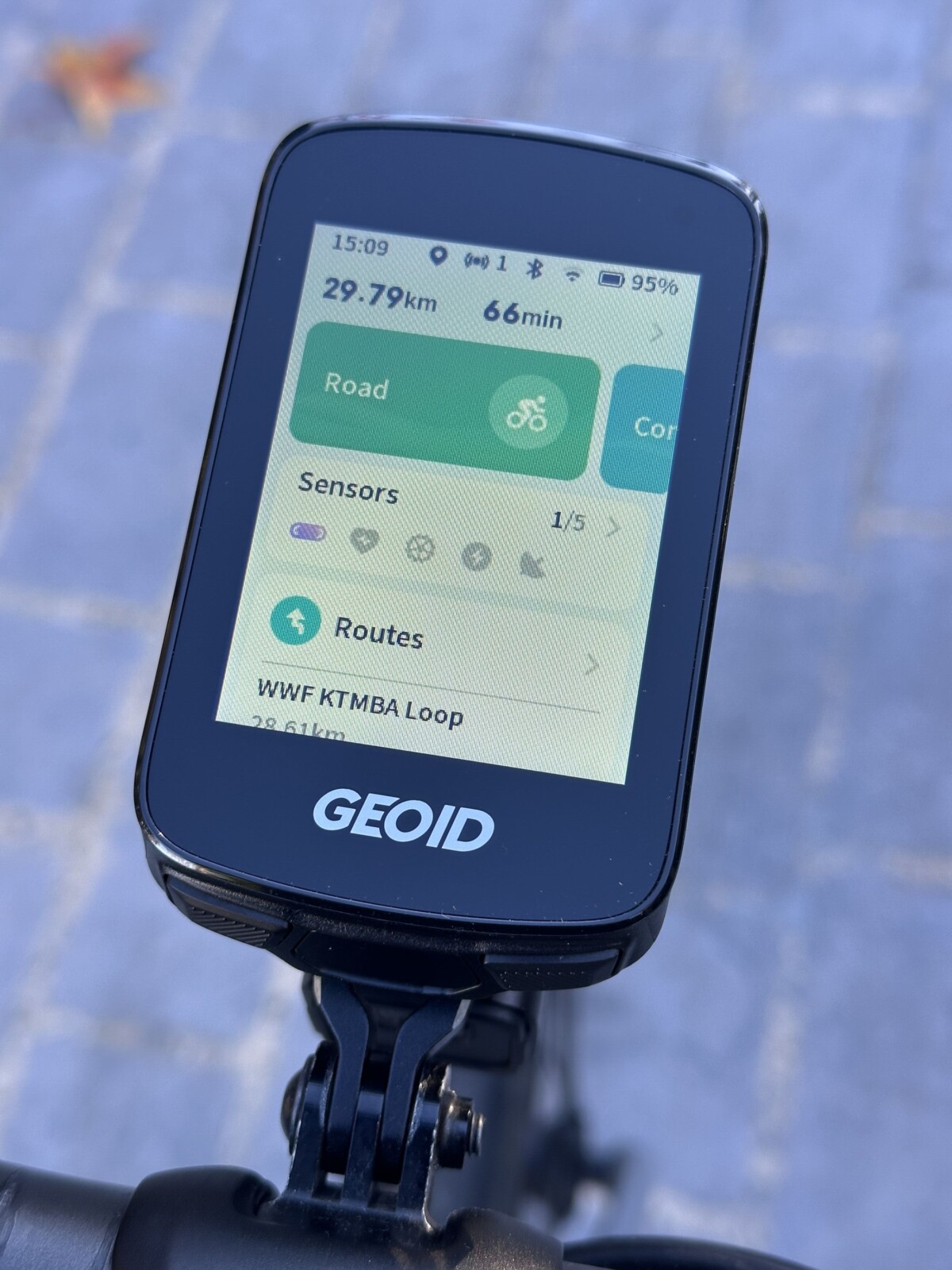
The data screen customisation is done via the OnelapFit smartphone app (if you’ve ever used Magene products you may already have this).
It’s a little fiddly at first, but to be fair so are most of its rivals until you get the hang of things. The unit also arrives pre-loaded with the latest firmware, no updates required.
What’s good?
Pretty clearly value for money at the very top of the list here – it’s outstanding.
While the CC700 Pro is by no means a class leading device in 2026, the touchscreen functionality and customisation is still very good with more than enough features and ride data options for the vast majority of everyday riders.
The map functions and navigation are easy to use and you can still receive SMS, call and email notifications when the unit is paired with your smartphone, although it took me quite a bit of trial and error to get this to work.
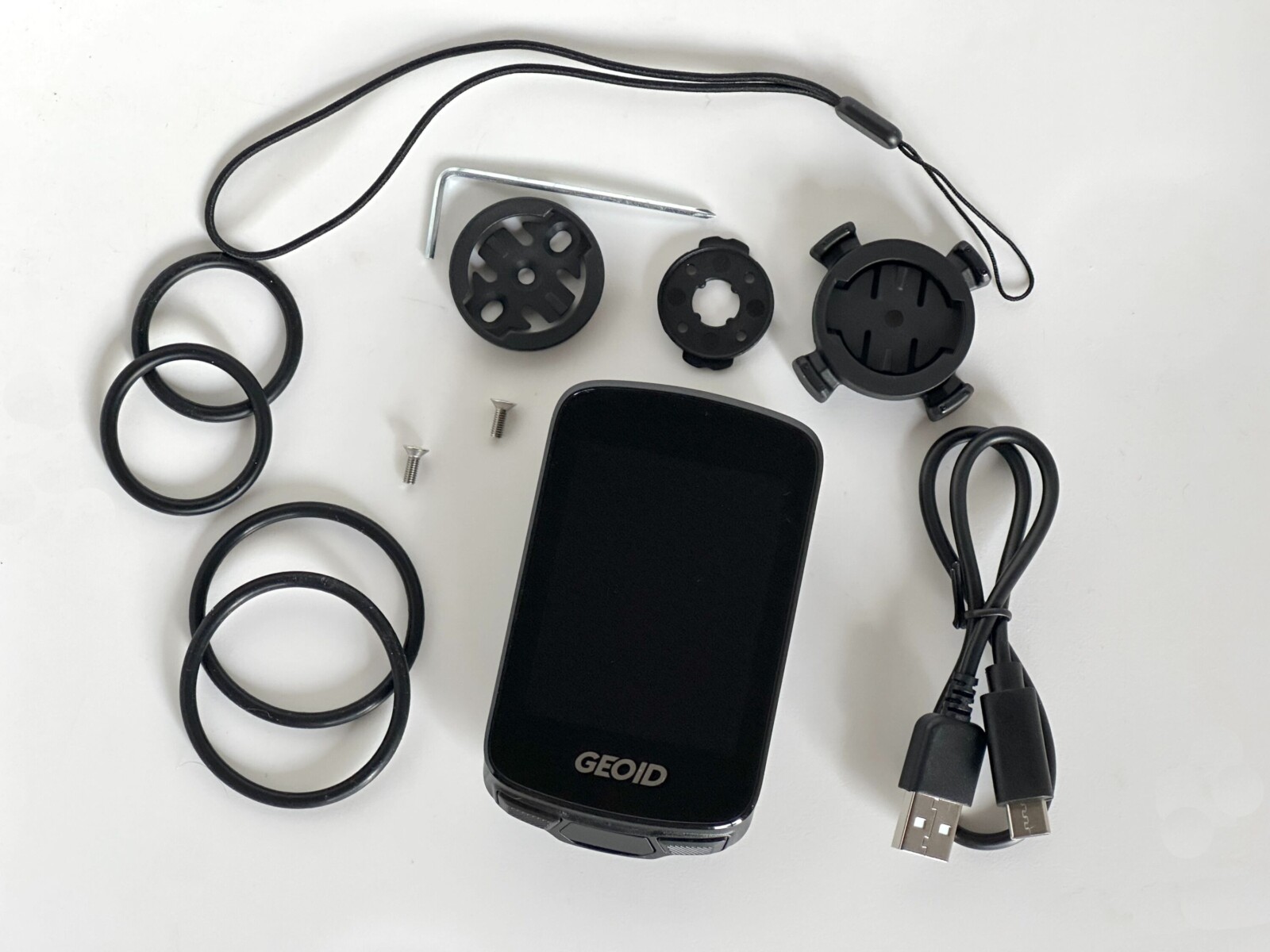
It’s pleasingly quick to boot up and overall I found the user experience smooth and reliable. The unit ships with an array of mounting options (Wahoo and Garmin mount compatible), a tempered glass screen protector and USB-C charging cable.
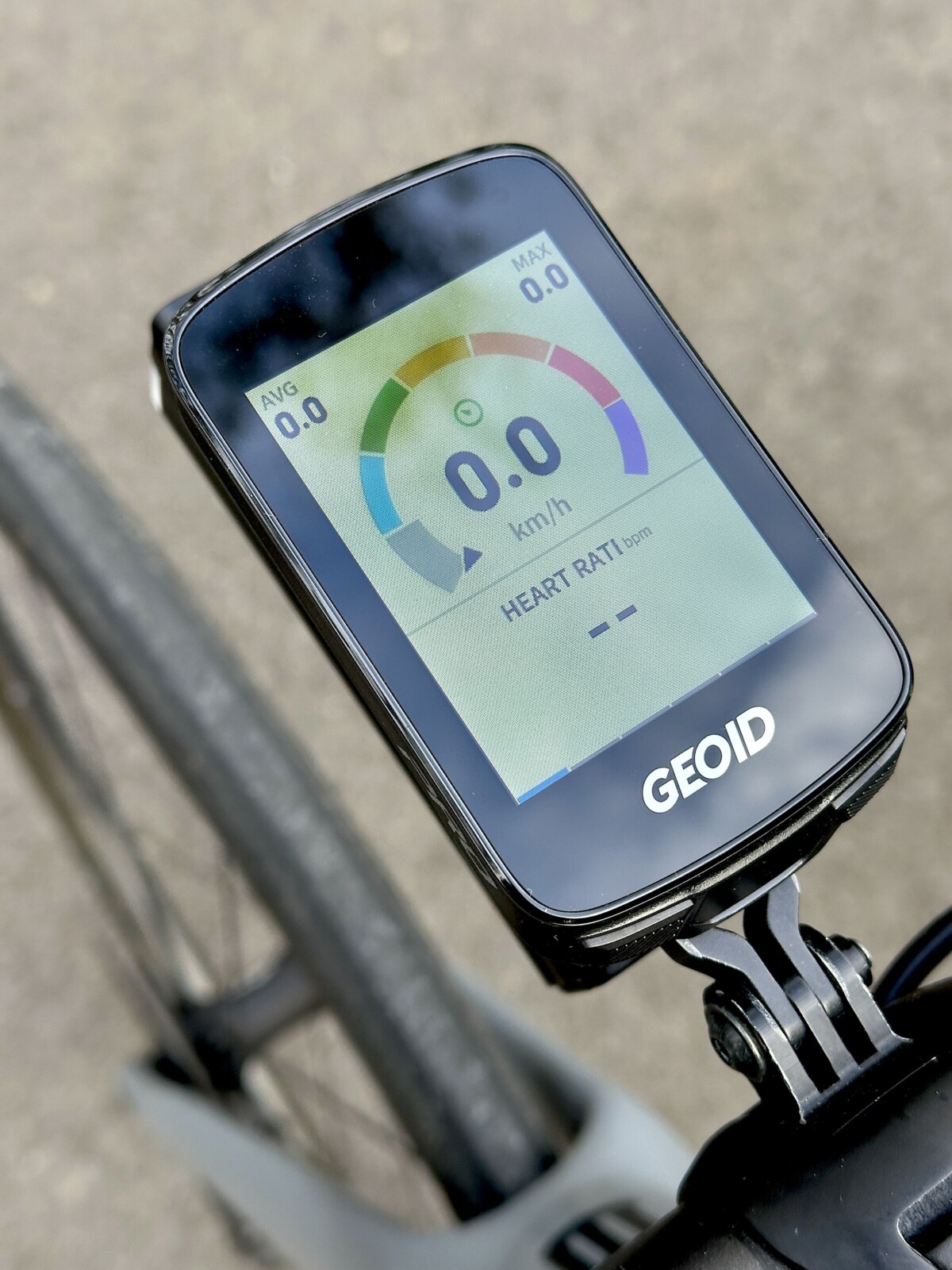
The CC700 Pro can also be set up to sync automatically with your Strava account via the OnelapFit app – something that makes it a breeze to upload rides and create new routes.
The scratch proof 6H-rated screen has a smudge resistant nano coating while the unit body comes with an IPX7 waterproof rating.
What’s not so good?
For me one of the main drawbacks of the CC700 Pro is the modest 240 x 320 pixel screen resolution and similarly average contrast levels.
For a lot of riders this won’t be an issue at all, particularly if you do most of your riding in the low light conditions of early mornings and evenings, but I’ve definitely experienced much better displays on rival devices in recent times such as the Garmin Edge 550 (420 x 600), Wahoo ELEMNT Ace (480 x 720) and Hammerhead Karoo 3 (480 x 800).
If you want razor sharp high definition graphics you might be left feeling a little disappointed. Then again for around $150 the display quality is still pretty good.
While overall the level of functionality is more than acceptable, it’s definitely some way below the advanced features now available with the top-end units from Garmin, Wahoo and Hammerhead. For example, there’s no live tracking, incident detection, weather alerts or bike alarm options.
Nor is there currently the ability to view live Strava segments or take advantage of real-time climbing analysis such as provided by Garmin’s ClimbPro feature. At just 4GB the storage is also a bit limited.
In bare fingers the touchscreen is excellent, but having reviewed this unit in the depths of winter I can vouch it struggles with long fingered gloves.
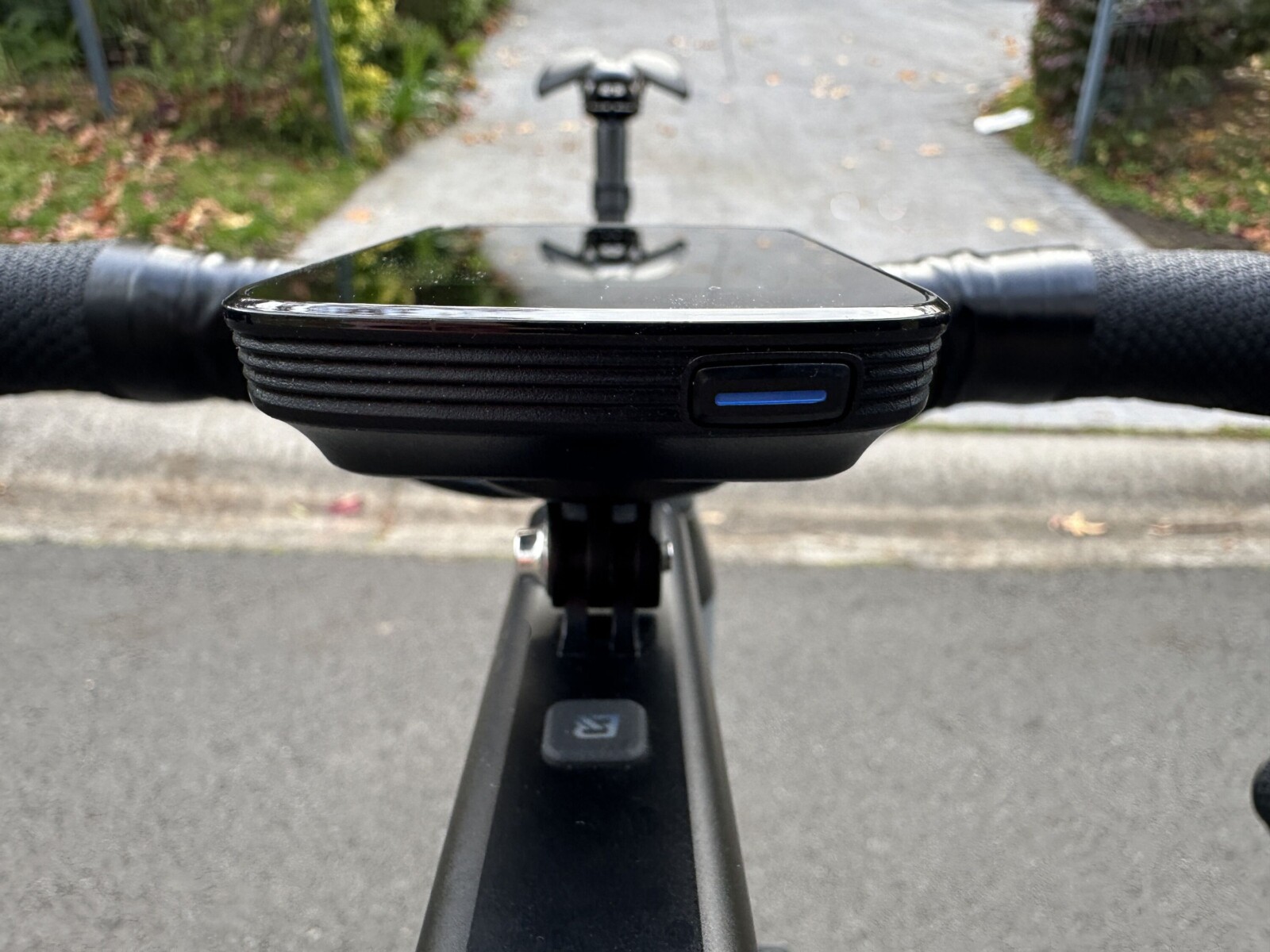
Thankfully there are also old school buttons that allow you to toggle through the display screens. The other thing I thought was lacking a little were instructions for some of the finer points relating to the device set up and also trouble shooting.
There are instructional YouTube videos and an online user manual for download, but the content is quite basic meaning you’ll need to work a lot of things out for yourself – fine if you’re tech savvy, less so if you’re not.
Navigation
Finding my way with the CC700 Pro was a significantly better experience than I was expecting with free maps available to download for most corners of the world as required.
Tech-wise GEIOD says the device uses a five-satellite global system combined with AGNSS for accurate 5-second positioning. Riding-wise the colour coded map display and turn-by-turn navigation prompts are simple to follow with the added option of audio prompts should you wish.
Select a route and it also supports automatic rerouting if you stray off course – but only when you’re connected to the OnelapfFit app.
You can sync routes from other platforms, as well create and upload your own routes directly in the app by dropping pins on a map.
You can also use the app to type in a search destination – e.g. ‘Bondi Beach’ – and it will instantly create a route to get you there which you can then upload directly to the head unit with the touch of a button.
Battery
Powered by a USB-C rechargeable lithium-ion battery GEOID claims you’ll get 15-25 hours of battery life out of the CC700 Pro depending on factors such as your preferred screen brightness, power management settings and the number of sensor connections you’re running.
In real world conditions I was comfortably getting 12+ hours between charges with multiple sensors and the brightness cranked up as high as it would go, ample for my needs.
Using a standard wall outlet and the USB-C cable provided the unit was taking a little over two hours to recharge from nought to 100 percent.
The wrap up
The GEOID CC700 Pro certainly isn’t a Garmin or Wahoo killer. Not yet anyway. But if you’re in the market for a mid-sized touchscreen head unit with more than enough features for most amateur cyclists it’s a rock solid option offering seriously good value.
All in all, the CC700 Pro feels a few years behind the top units in 2026.
But at this price, who cares – right?
(Footnote: I was so impressed I actually bought one for myself after the review. Let’s see how it goes in the long term…!)
GEOID CC700 Pro
Size: 95 x 56 x 14 mm
Display: 2.8” diagonal
Resolution: 240 × 320 pixels
Weight: 110 grams
Connectivity: WiFi, Bluetooth, ANT+
Charging: USB-C (cable included)
Waterproof Rating: IPX7
Storage: 4 GB
RRP: ~$145.00 (US$99.00)
GEOID offers a 30-day return policy and 12-month warranty.

Peter Maniaty
Peter Maniaty - Peter is Bicycling Australia’s senior journalist, and highly respected in the world of cycling. From bike reviews, to destination features and nitty gritty opinion pieces, he’s a gun writer.


I’m new to bike computers but I saw a friend open a route in OS Maps on their smartphone and then hook it up to their bike computer. Can you do this with this item? Grateful for any comments and help.