
Have you ever returned to your bike outside a cafe to find a mysterious fresh scratch on the frame? Or carefully packed it into the car for a road trip, only to discover later that it had been rubbing against something for hours?
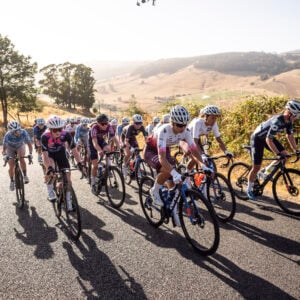
Or been ripping into a race, only to have a touch of wheels three bikes in front of you cause a domino effect, leaving your bike interlocked with the one next to you?
No? Maybe it’s just me…
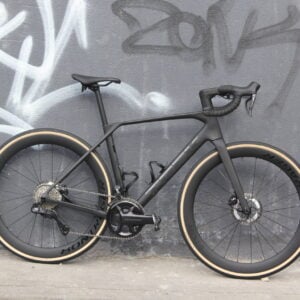
For the last two scenarios above, I had my bike wrapped with RideWrap, which helpfully took the brunt of the damage, protecting my less-than-12-month-old frame.
RideWrap is a protective film that can be applied to your frame, cranks, fork and wheels, putting a layer between your investment and the nefarious elements out there trying their darndest to damage it.
The concept is relatively simple: put a clear sacrificial layer on that can be replaced if damaged, while also making your bike easier to clean.
RideWrap has developed its proprietary LotusPro™ film. This is pretty cool; it is made from at least 77% landfill-diverted recycled materials and is “superhydrophobic”.
That’s right, it is very, very scared of water. Hydrophobic materials repel water, so in a bike context that means they should generally stay cleaner and be easier to clean when they do get dirty.
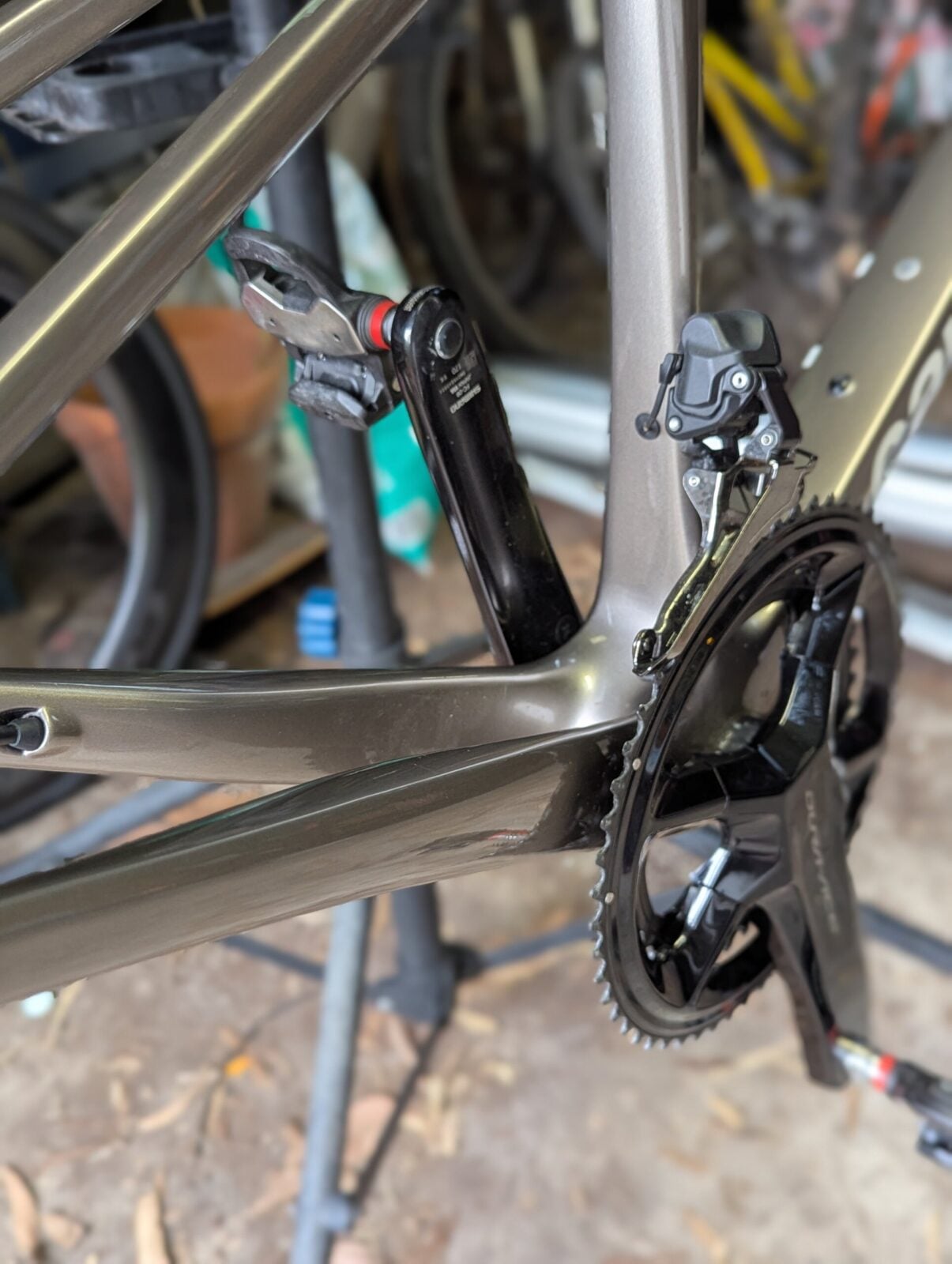
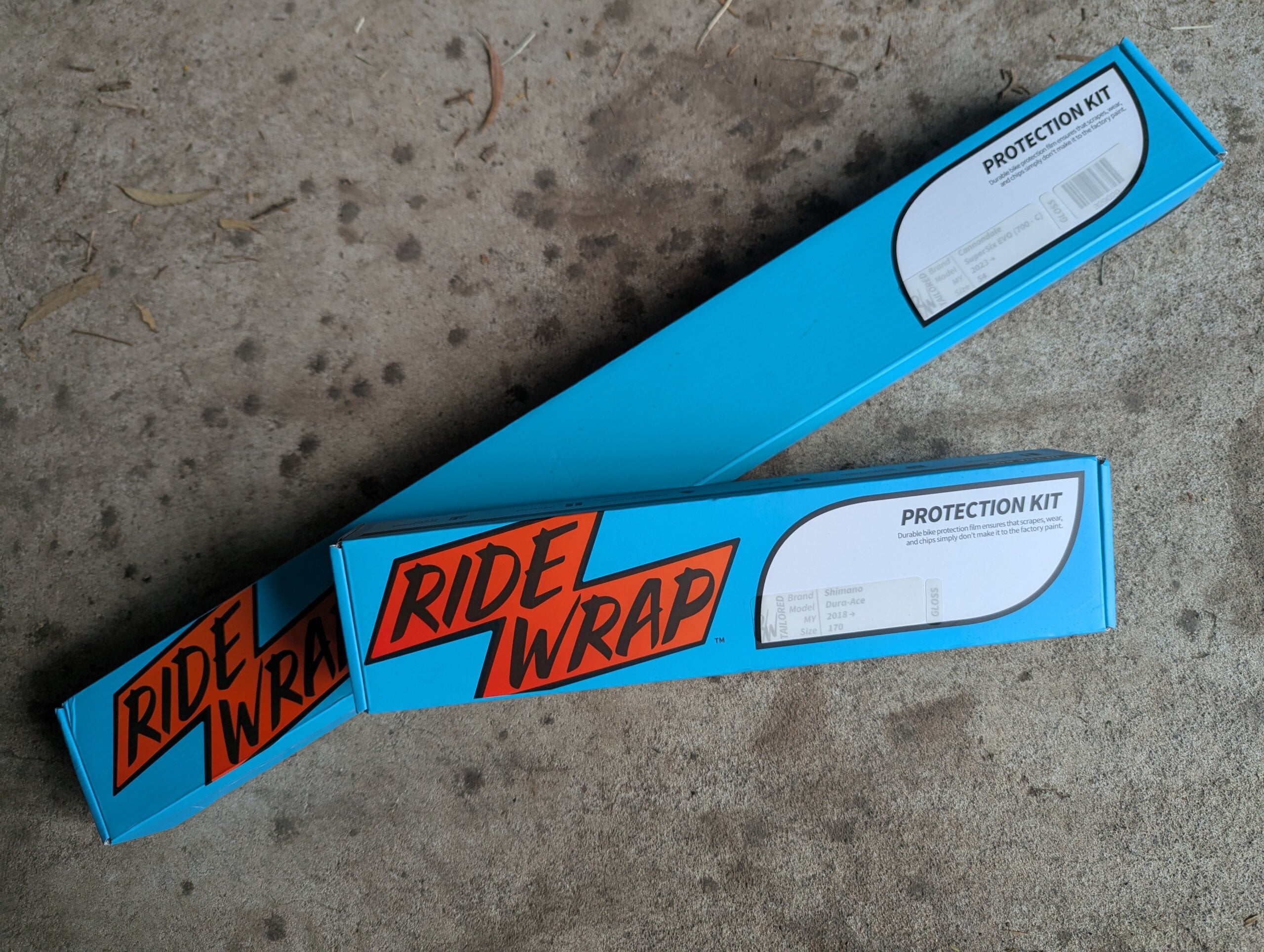
RideWrap is available in three coverage levels. Essential Protection covers around 30% of the frame, focusing on high-impact and wear-prone areas such as the lower downtube and chainstays.
Covered Protection increases this to around 65%, while the Tailored Protection kits are designed for specific bike models and sizes, offering near-complete coverage of the frame (99%). RideWrap claims more than 370,000 kit variations and offers them with a 10-year warranty. Wild.
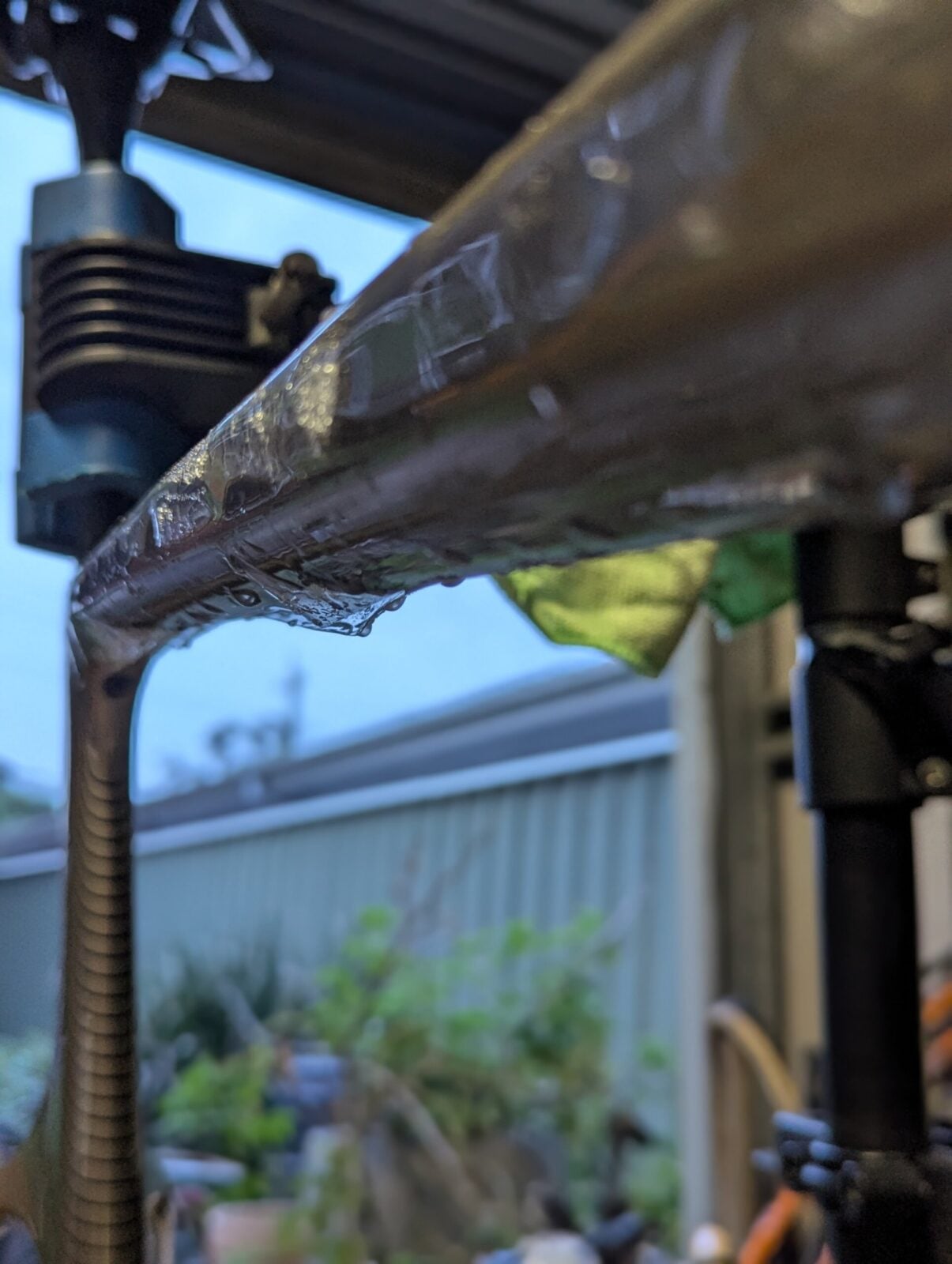
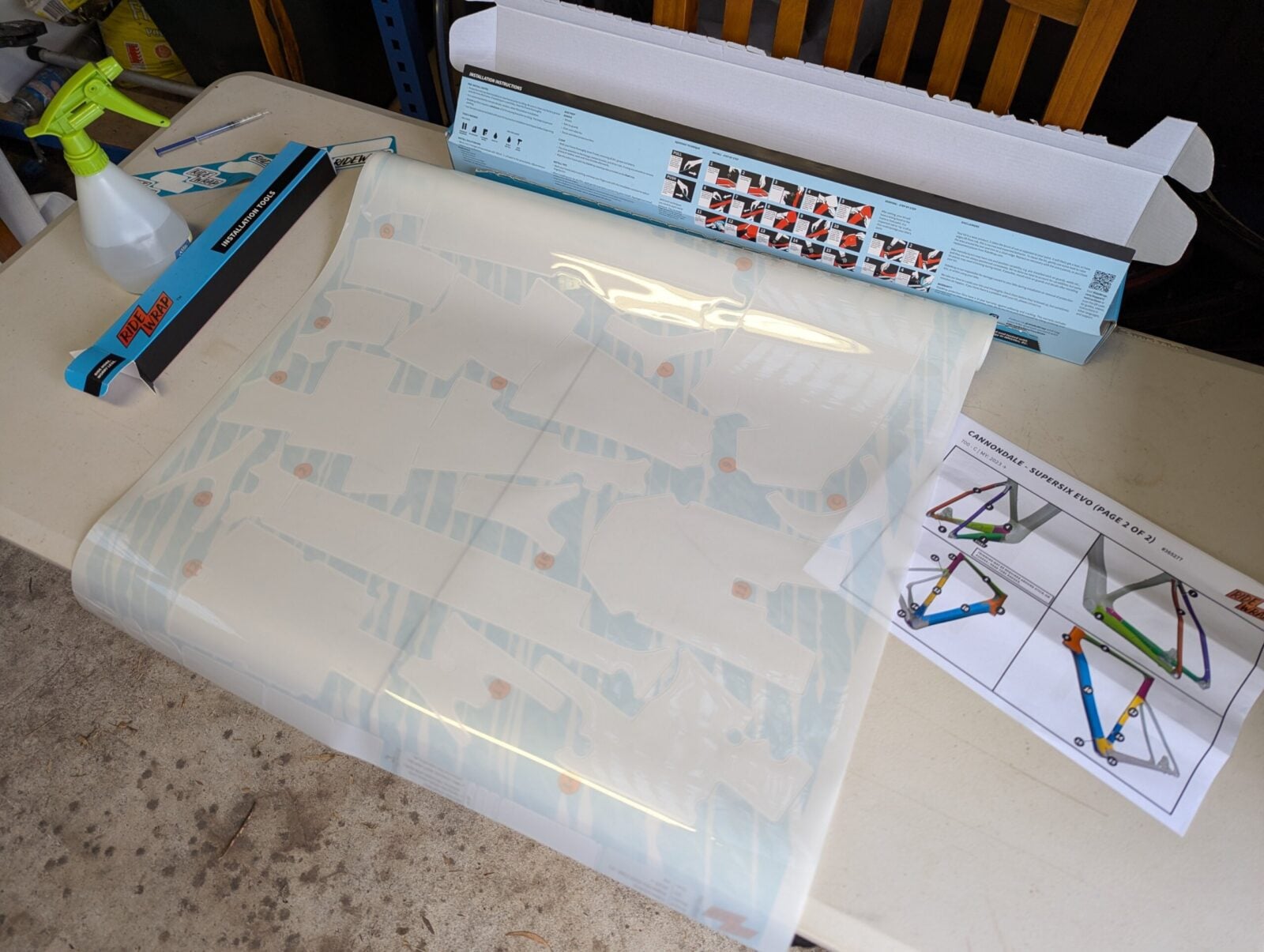
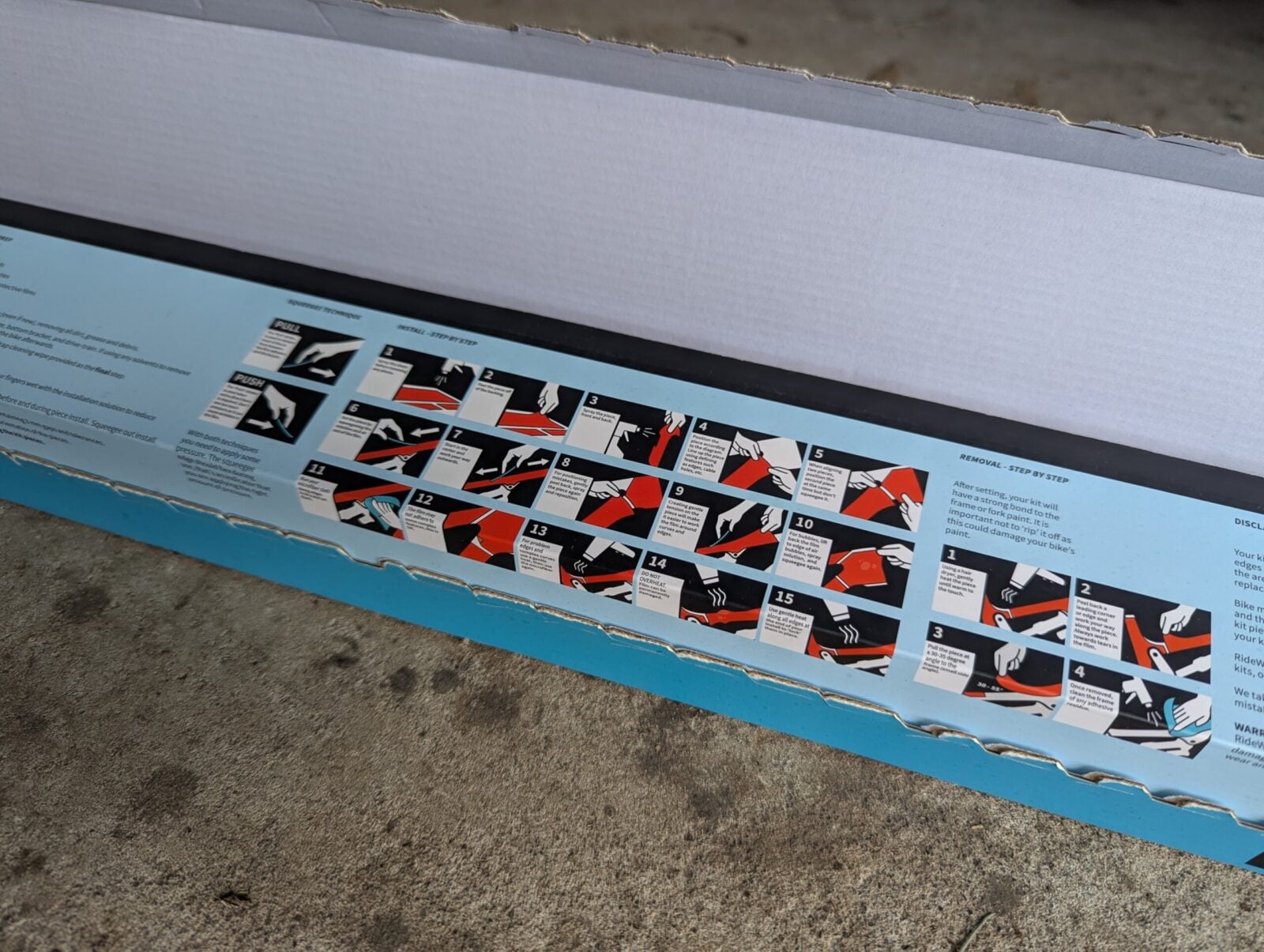
I was super curious to see how it worked and get it on my bike. The installation process involves wetting down the wrap with water and a special solution designed to allow the film to move into place without air gaps or bubbles.
You then apply heat via a hair dryer or heat gun to help the edges conform and the solution evaporate.
I found the installation a little more involved than I expected, and it definitely rewards a steady hand and a bit of patience.
Despite following the YouTube tutorials, I found it took some time to get everything sitting just right. I’d definitely advise practising on some of the smaller, less critical pieces first to get a feel for the process. I did that too, but still wasn’t quite able to get my downtube wrap completely bubble-free.
That may simply be user error on my part, but I couldn’t write this review without mentioning it.
In saying that, the RideWrap instructions, videos and diagrams are all really well done and nicely detailed. Perhaps I’m just not patient enough!
And, there is also a RideWrap Melbourne shop offering professional installation services if you want to outsource the whole thing.
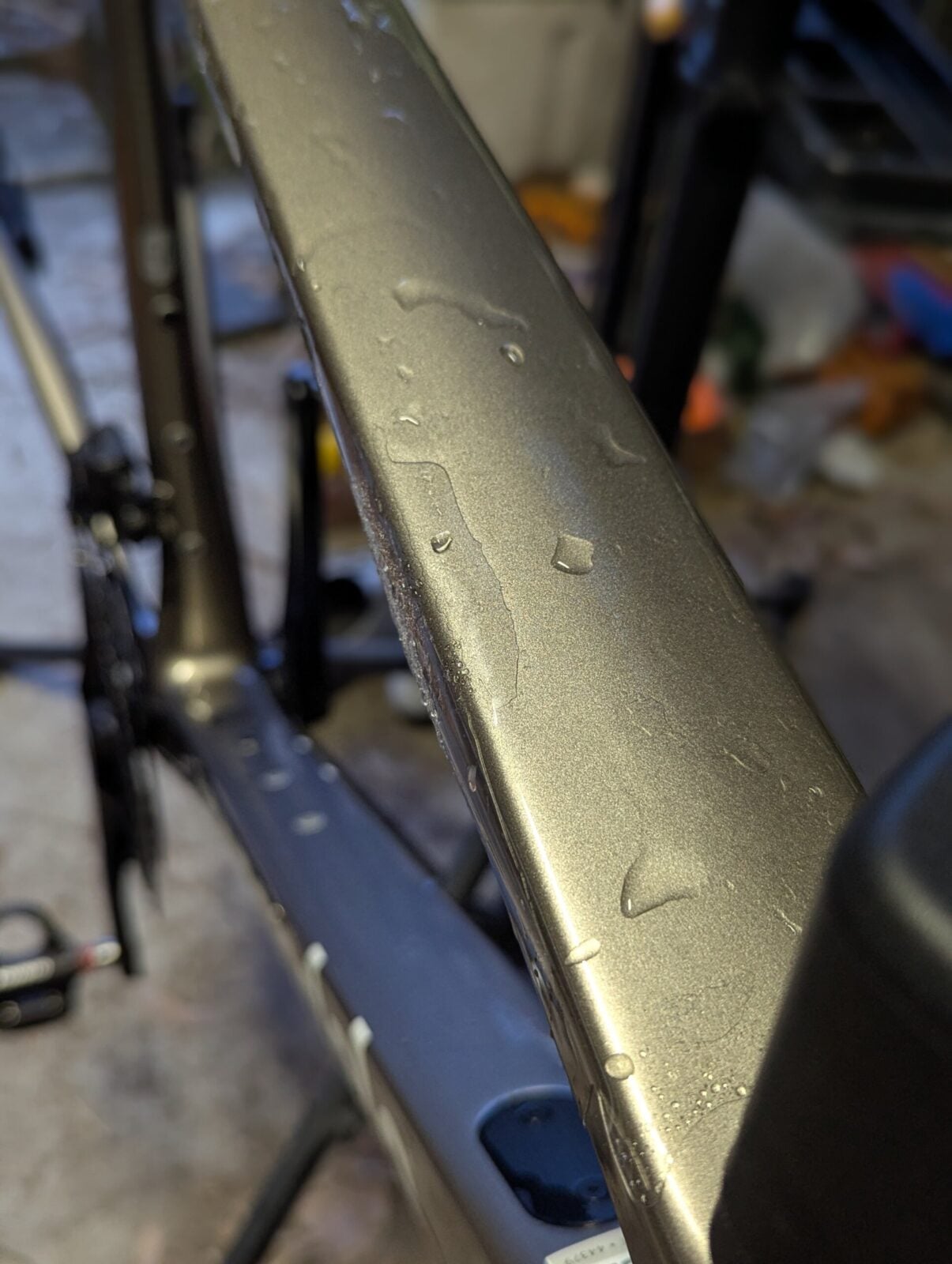
Once installed, the film is essentially invisible. In everyday use, I’ve rarely noticed it’s there, except when it has prevented scratches and scuffs that would otherwise have marked the frame. It has also been relatively easy to clean.
I’d say possibly a little easier than standard frame paint, but not by a huge margin.
Prices range from about $65 AUD for the Essential Protection packages up to around $325 for the fully specced Tailored frame kit. While installation requires a little care and patience, RideWrap delivers on its core promise of protecting an expensive bike from everyday damage.
For riders who want to preserve the appearance and resale value of their frame, it represents a worthwhile investment, particularly when compared with the potential cost of repairing or repainting carbon fibre.

Luke Meers
Luke Meers - Wollongong-based writer Luke is a strong and competitive bike rider. He writes regular tech and gear reviews for Bicycling Australia and isn’t afraid to get his hands dirty.