 Mike O'Connor
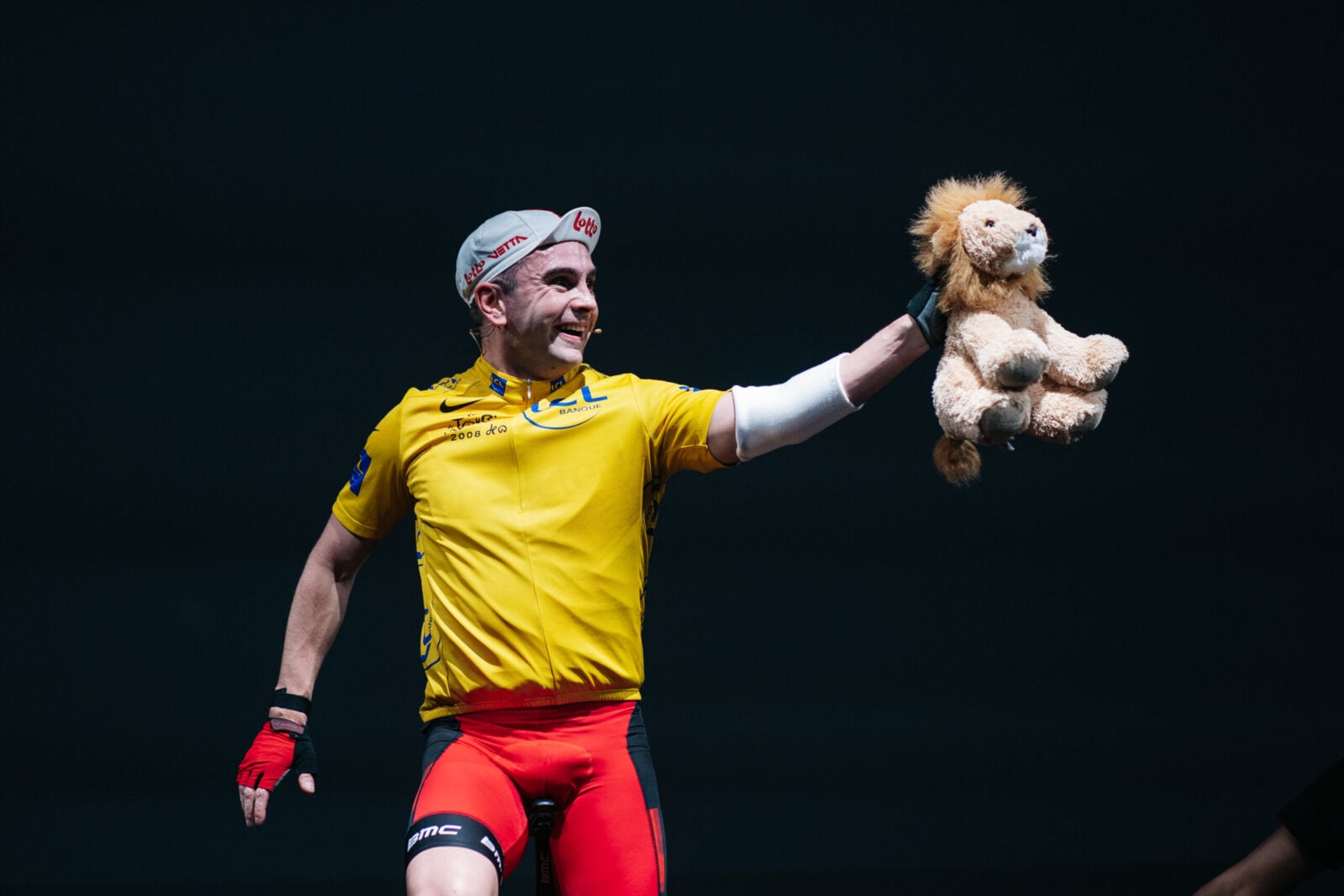
Connor Delves grew up surrounded by cycling, but it took a move to New York and a career in acting to combine his two passions. The result is Cadel, a one-man stage show recreating Cadel Evans’ historic 2011 Tour de France victory, complete with period BMC bikes, race kit and a demanding physical performance.
Now approaching its 100th show, the production is returning to Australia in early 2027 with Delves hoping to bring cycling and theatre audiences together.
A story made for the stage
For Delves, turning Evans’ Tour de France victory into a stage show was a natural fit.
“Cycling is a really theatrical sport,” he says. “It’s made for television, really. That’s how most people around the world watch it.”
Delves grew up in his parents’ bike shop in South Perth. His father was a mountain biker who raced in the same World Cup as a teenage Evans, while his mother was a triathlete who coached him during his junior years.
Sport remained a constant throughout his life, whether he was cycling, running or playing Australian football. But when he moved to the United States to pursue acting, he felt sport was rarely represented convincingly on stage.
“The effort and skill were removed, dramatised and stylised, and I was like, that is not the sport,” he says.
He wanted to capture the physical effort and emotional intensity of competition without losing the details that make sport what it is.
“You look on Alpe d’Huez, and there are half a million people on the mountain, screaming and losing their minds. That’s what we try to get on the stage.”
Evans’ 2011 Tour victory provided the perfect story.
“I just remember thinking, he’s never going to win. It’s not going to happen. And when he did, it was just like, holy shit, the world has changed. Cycling has changed forever.”
After years of near misses and setbacks, Evans became the first Australian to win the Tour de France, aged 34, sealing the title with a one-for-the-ages performance in the final individual time trial.
For Delves, the combination of sporting achievement, personal adversity and national significance made the story an obvious choice.
“It’s the most Australian thing of all time,” he says. “Gritty, the last minute possible, 34 years old, and in the time trial. It’s box office!”
The bikes, the kit and the details
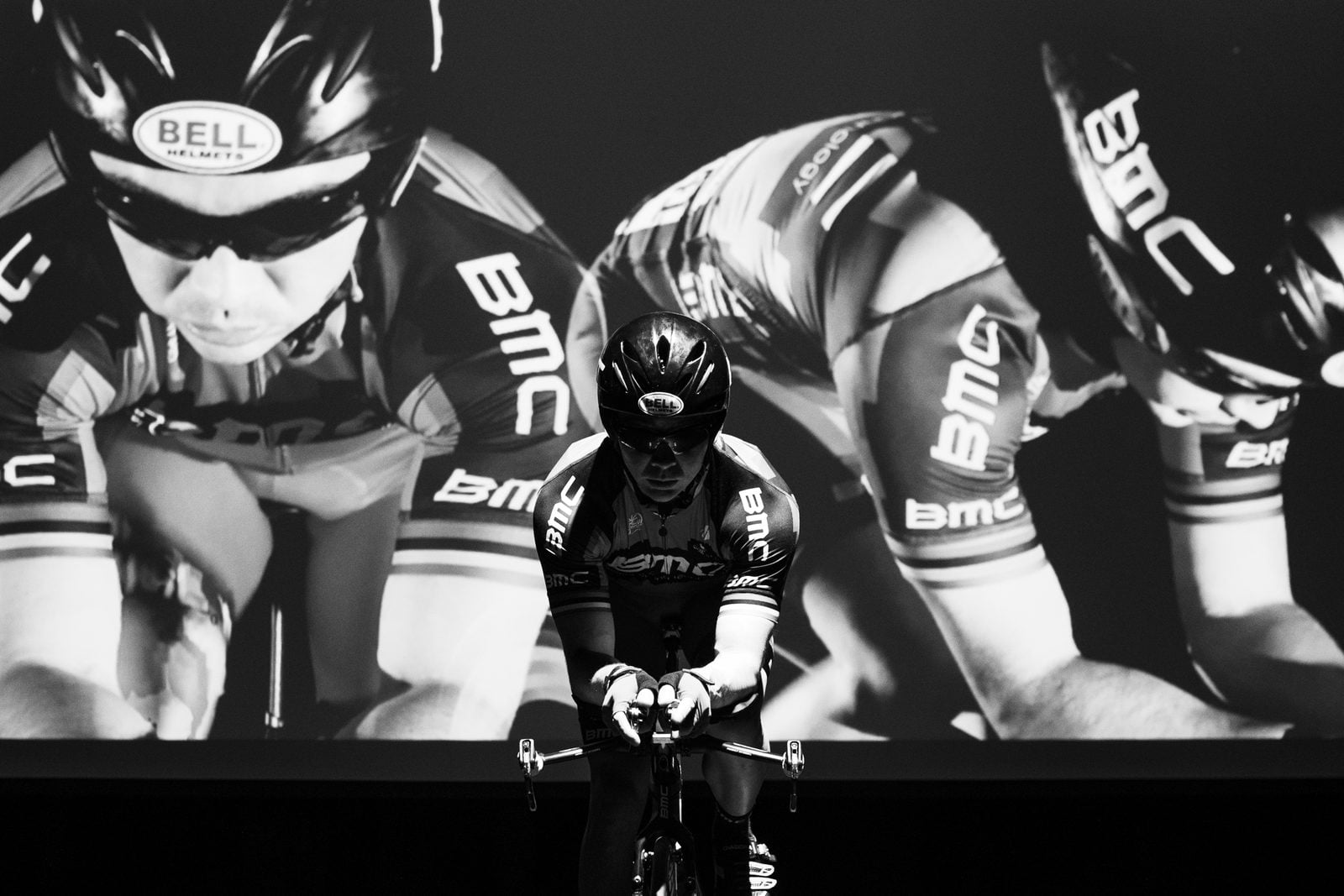
Authenticity is central to the production. Delves performs much of the show on a stationary bike, recreating the physical demands of racing while telling the story of Evans’ campaign.
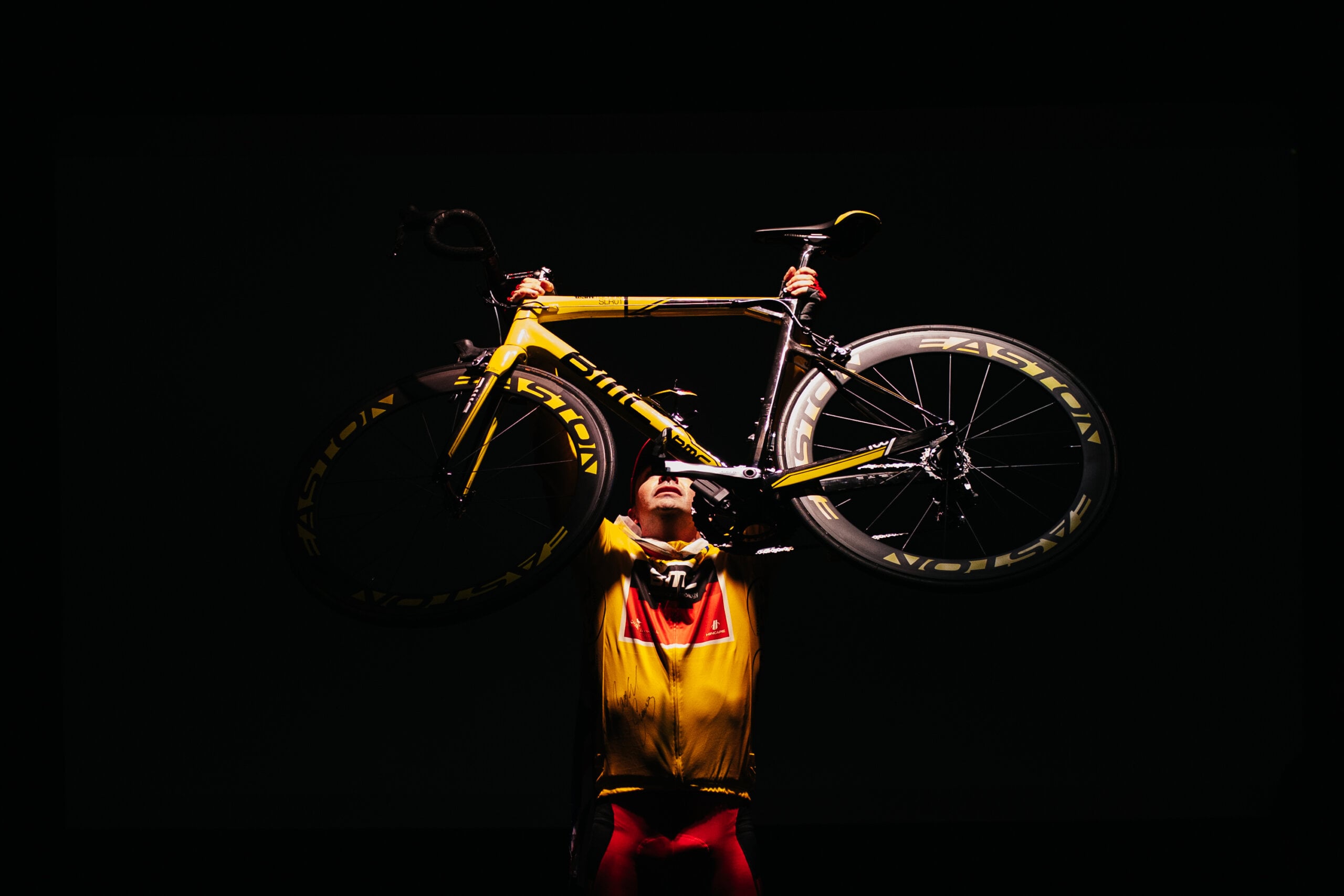
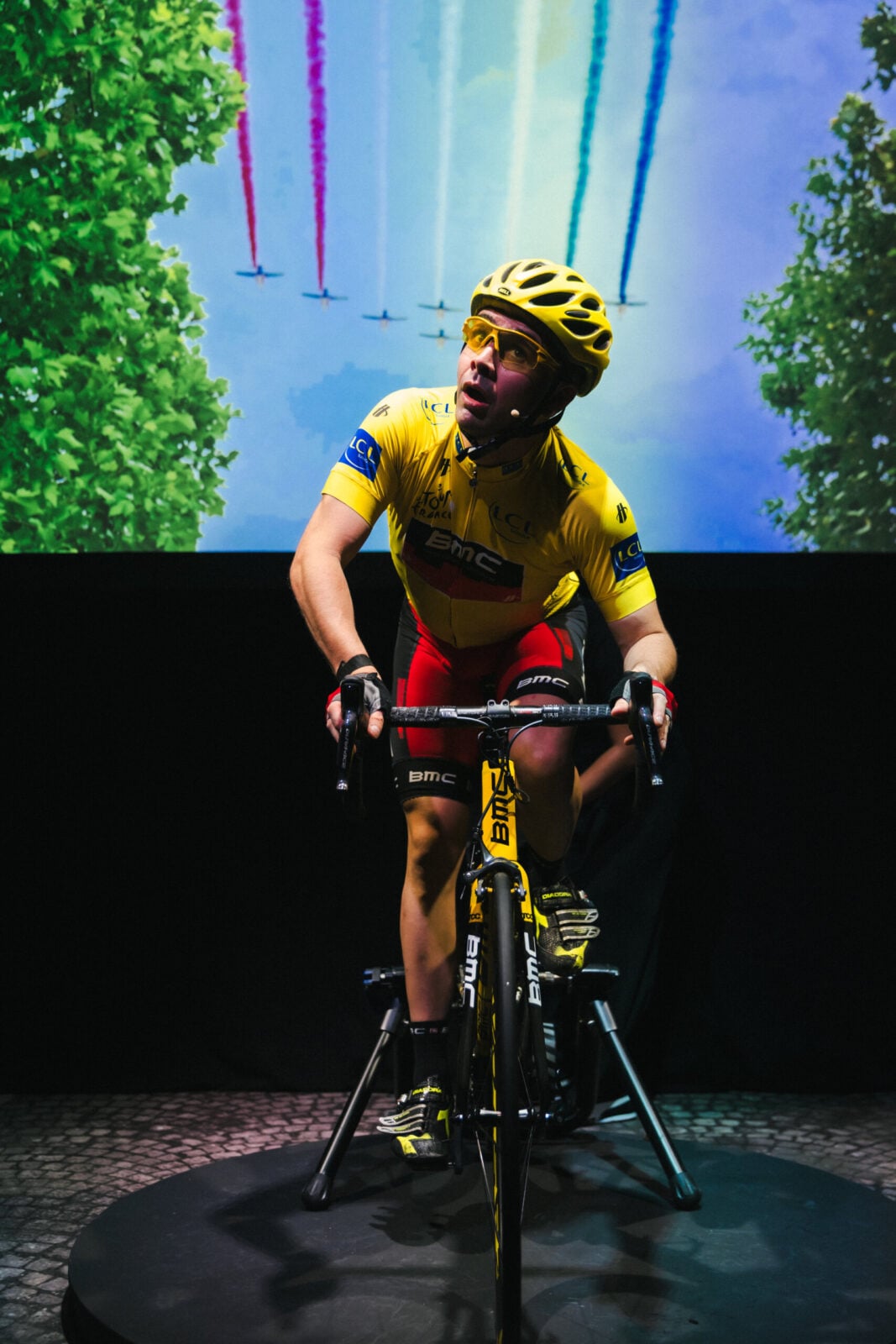
The production features three actual bikes from the 2011 Tour, including Evans’ yellow BMC team bike and a BMC time-trial machine.
“For me, as a bit of a bike nerd, we were finally going to electronic gearing,” Delves says.
“Disc brakes were coming into the picture, and it was the last year of rim brakes, but also Di2. It was a funny time.”
The bikes were among the first pieces Delves secured while developing the show. He pitched the idea to who helped him access equipment stored in Switzerland. Other bikes came from the company’s California warehouse and Australia.
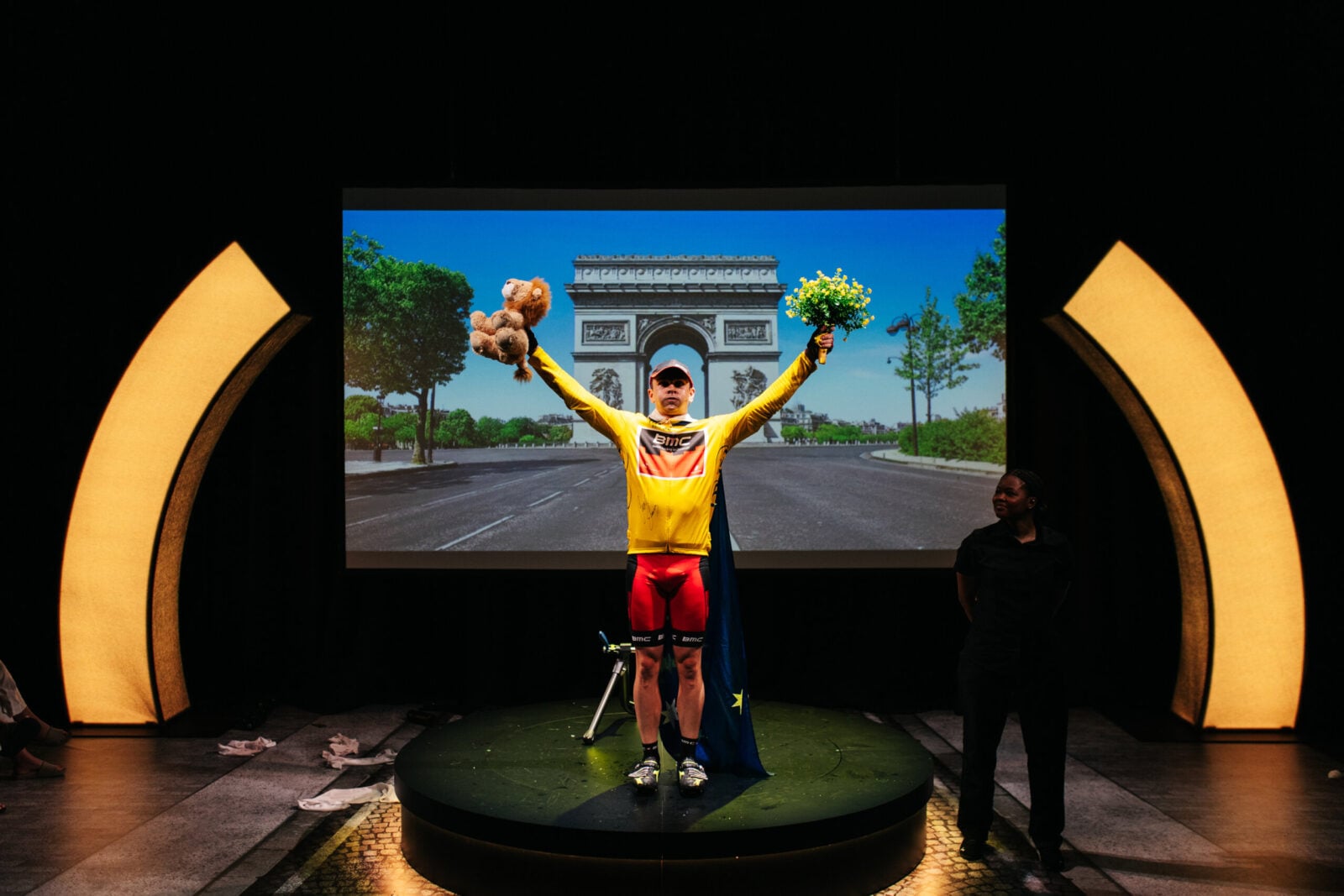
Delves also wears actual kit from Evans’ 2011 campaign, including the time-trial outfit and the yellow jersey featured at the end of the show.
“I’m pretty big on detail,” he says.
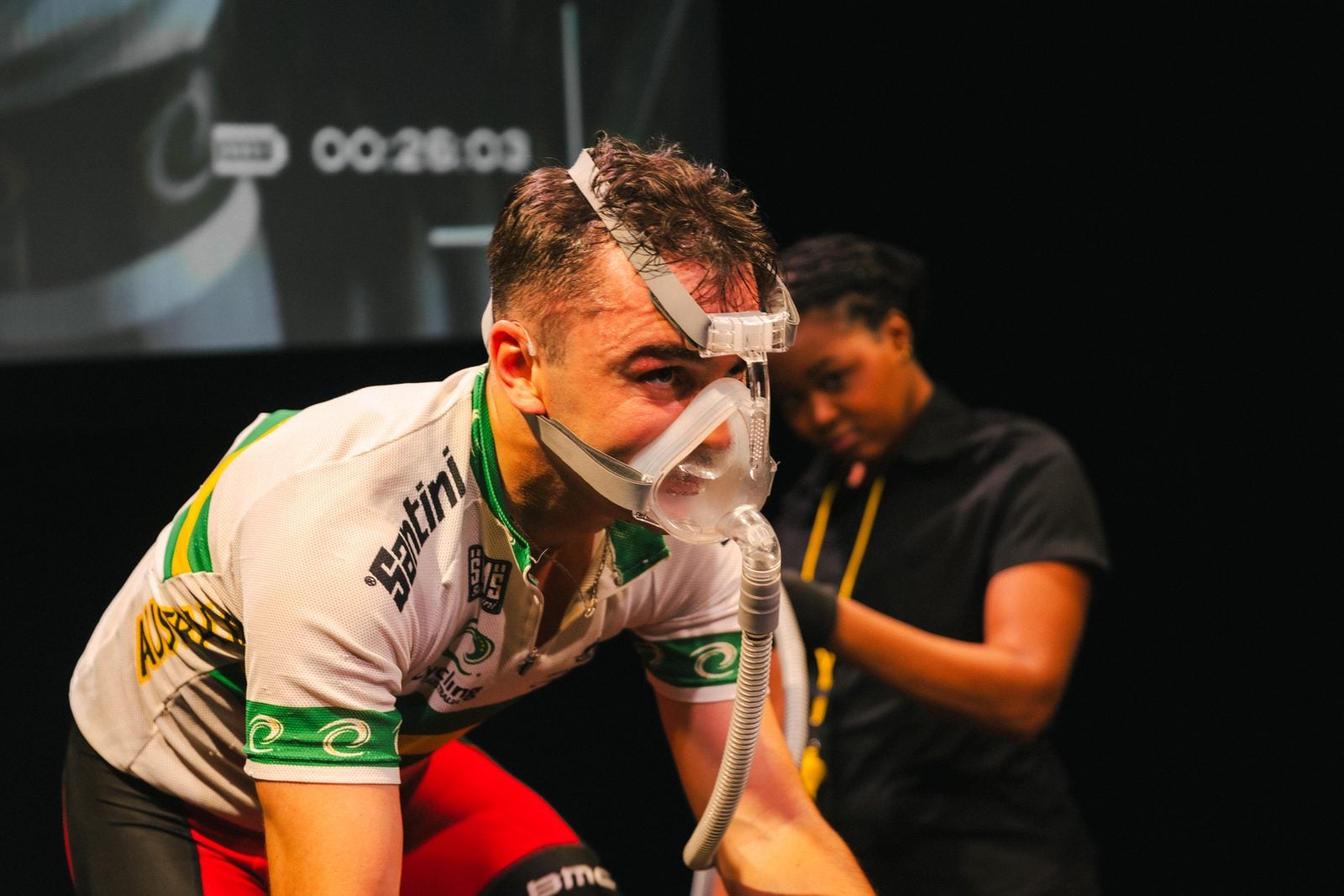
Evans himself became involved early in the process. When Delves first contacted him, the Australian was surprised that someone wanted to make a play about his career.
“He was like, ‘I don’t know why. I don’t think I’m deserving of a play about me.’ I’m like, Cadel, everyone thinks of you’re a hero.”
Evans offered something that research and race footage alone could not provide: insight into his own thought processes during the Tour.
“What he gave me is something that’s not in any of those,” Delves says. “It’s how he speaks to himself, and that was his biggest contribution.”
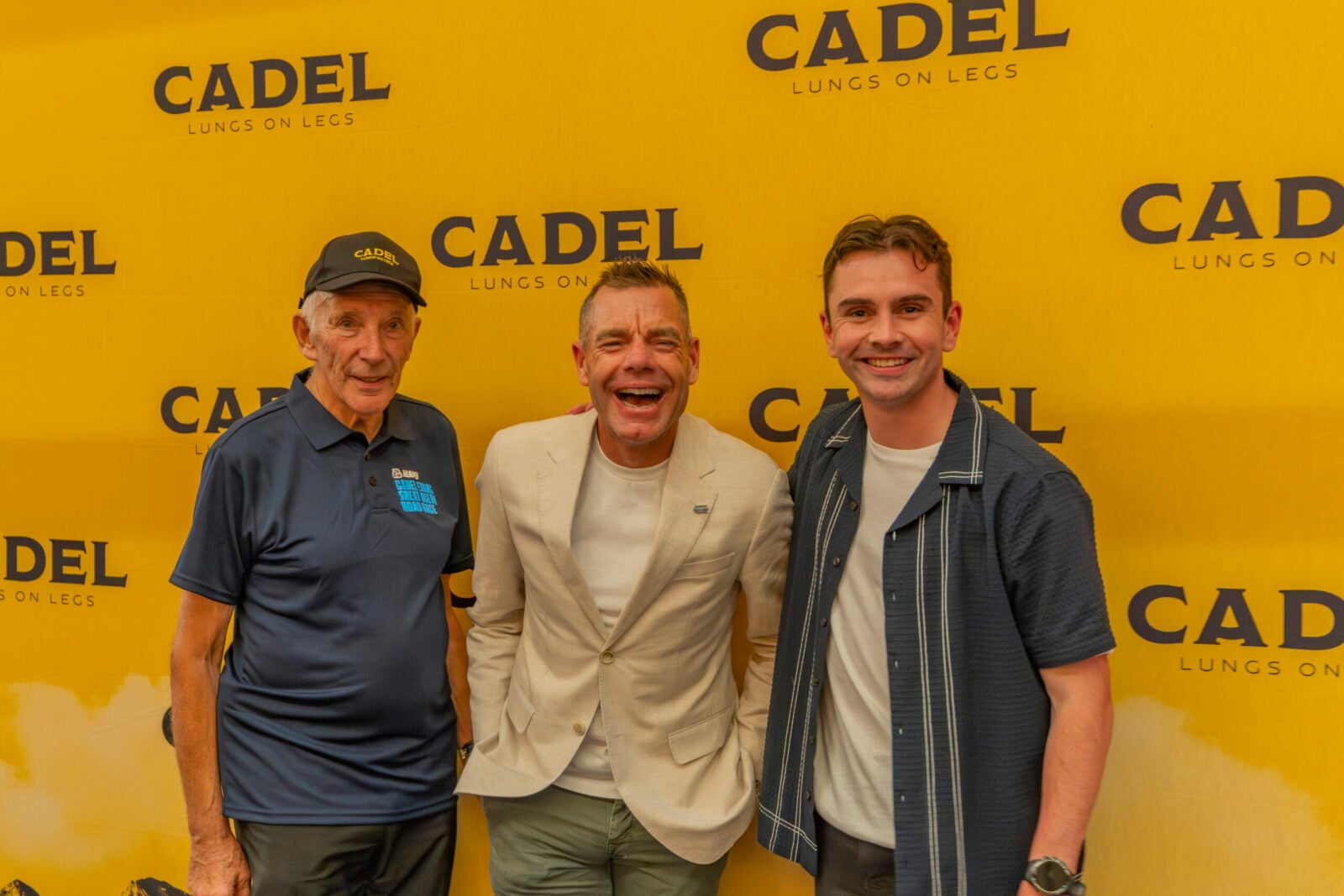
Evans has remained supportive of the production, attending its Australian opening in Geelong last year. The event included a question-and-answer session with appearances by other cycling figures, including Phil Anderson and Caleb Ewan.
A physical challenge
The physical demands on Delves are considerable. He rides approximately 27 to 28 kilometres during each performance, completing repeated high-intensity efforts under stage lights without a fan.
“It’s like doing an indoor interval session without a fan every day,” he says. “It could be up to 35 degrees Celsius on stage.”
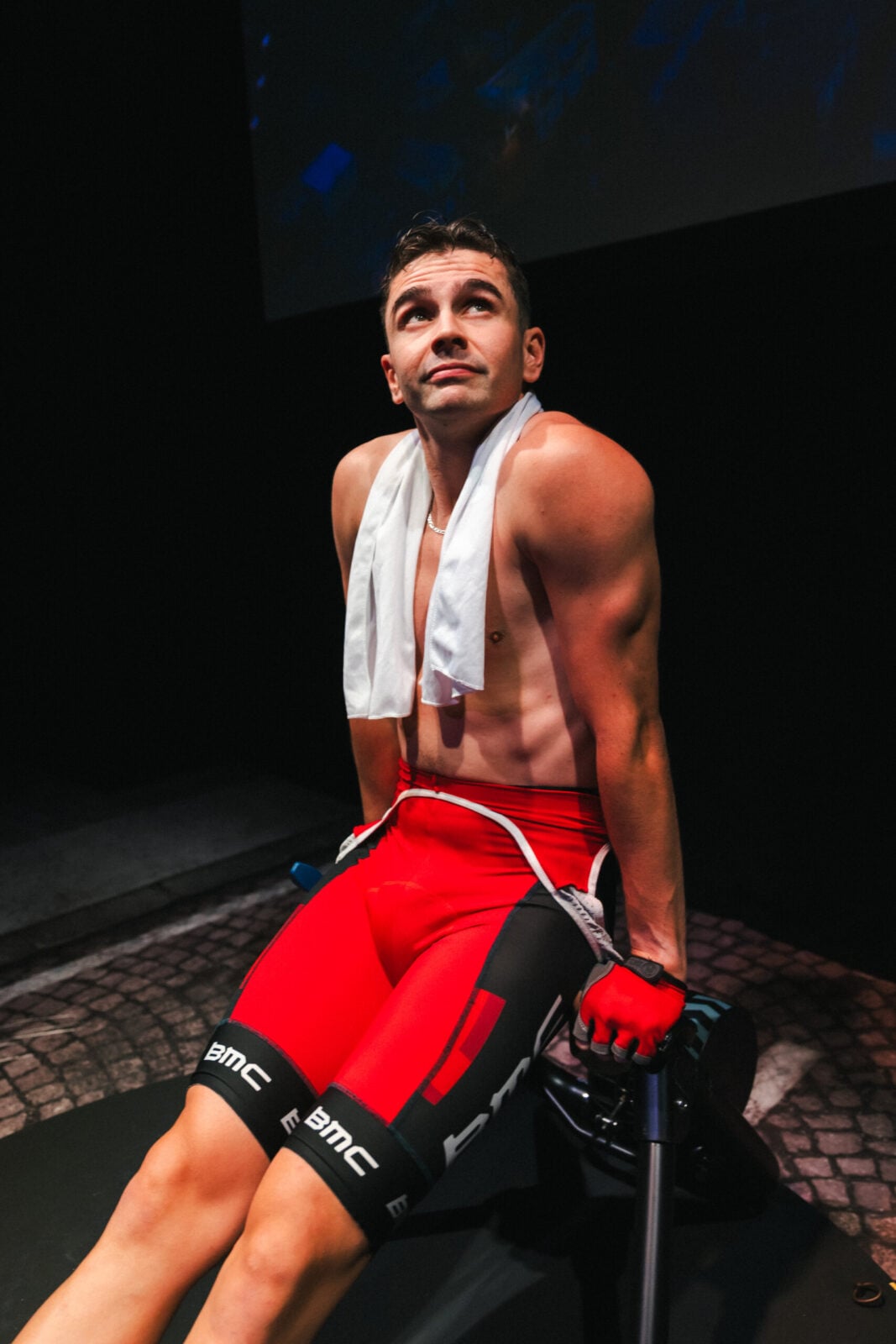
Delves spends much of the show in heart-rate zones four and five, with several maximal efforts built into the performance. During one section, he has recorded around 700 watts for a minute.
Delves rehearses his lines while cycling, sometimes running through the entire show during long rides across New Jersey.
“I read this amazing thing about Beyoncé, that when she was training for her concert she would rehearse on the treadmill,” he says. “I was like, well, I have to do that. I have to train and speak.”
He also works with a nutritionist after losing around three kilograms during the show’s first run.
“I’m now much better at fuelling in between runs of the show and during,” he says.
His routine includes a warm-up before each performance and around an hour of easy riding afterwards to help with recovery. He also rides on his day off, with a team helping manage his training and nutrition.
Avoiding injury is a priority, particularly given the crashes and other physical sequences built into the performance.
“I know I do the crashes on stage, and there are moments that are dangerous,” he says. “If I did my Achilles or something, that’d be really bad news.”
Bringing cycling into the theatre
The show first premiered at the Edinburgh Festival Fringe, where it attracted an audience beyond the traditional theatre crowd. Delves says people respond to the experience of watching a major sporting event unfold in front of them, even when they already know the outcome.
The production includes roadside-style seating on stage, placing some audience members alongside Delves as he rides. A rotating platform, commentary and footage help recreate the atmosphere of the race.
“People scream along, they ring bells, they clap,” he says. “They know that he wins, but they’re gasping that he might die or lose.”
The Australian performances added another dimension, with audiences responding to the national significance of Evans’ achievement and references to events such as the Julia Gillard moment during the 2011 Tour.
One of the most rewarding aspects for Delves has been seeing cyclists embrace a form of entertainment they might not otherwise consider.
“We have a lot of non-traditional theatre-goers, and that’s probably the biggest thing,” he says. “Cyclists come and they get cycling.”
The Australian run was also a homecoming for Delves, who had not performed in the country for 15 years.
“To tell this Australian story to Australian audiences that embraced Cadel when a lot of the rest of the world didn’t is really special,” he says.
After performances, audience members regularly approach him to share their memories of Evans’ victory. Some were on the roadside in France; others watched from home or followed the race from Australia.
“Everyone has that Cadel story from the time,” he says.
The response helped convince Delves to bring the production back for another Australian run, despite the logistical and financial challenges of touring an international show.
The upcoming tour is scheduled to include Geelong, Melbourne, Sydney and Brisbane. Delves says demand during the initial Perth run was strong enough that performances were extended several times.
“It’s not a financial decision,” he says of returning to Australia. “It’s for the Australians that can see it. And there’s such a demand.”
Taking an Australian story to the world
Following the Australian tour, Cadel will return to New York, where Delves hopes to continue building its international audience.
He hopes the show will encourage Australians to see sport and theatre as complementary forms of entertainment rather than separate worlds.
“People stay in their lanes a little bit too much,” he says. “There’s so much more opportunity for us to all enjoy and embrace together.”
For Delves, the production’s success would mean more than a successful stage show. It would demonstrate that an Australian sporting story can resonate with audiences around the world.
“I’m so proud every time I see an Australian swimmer or cyclist dominate at the world level in green and gold,” he says. “Cadel did that for us. If I can do that in the Broadway and theatre world, that’s the plan.”
For tour dates and tickets, visit cadeltheplay.com.

Mike O’Connor – A keen cyclist, runner and photographer, Mike O’Connor is the Editor of Bicycling Australia. He manages the BA website and social media, and loves promoting the achievements of Australian cyclists.