

 Harry Kooros
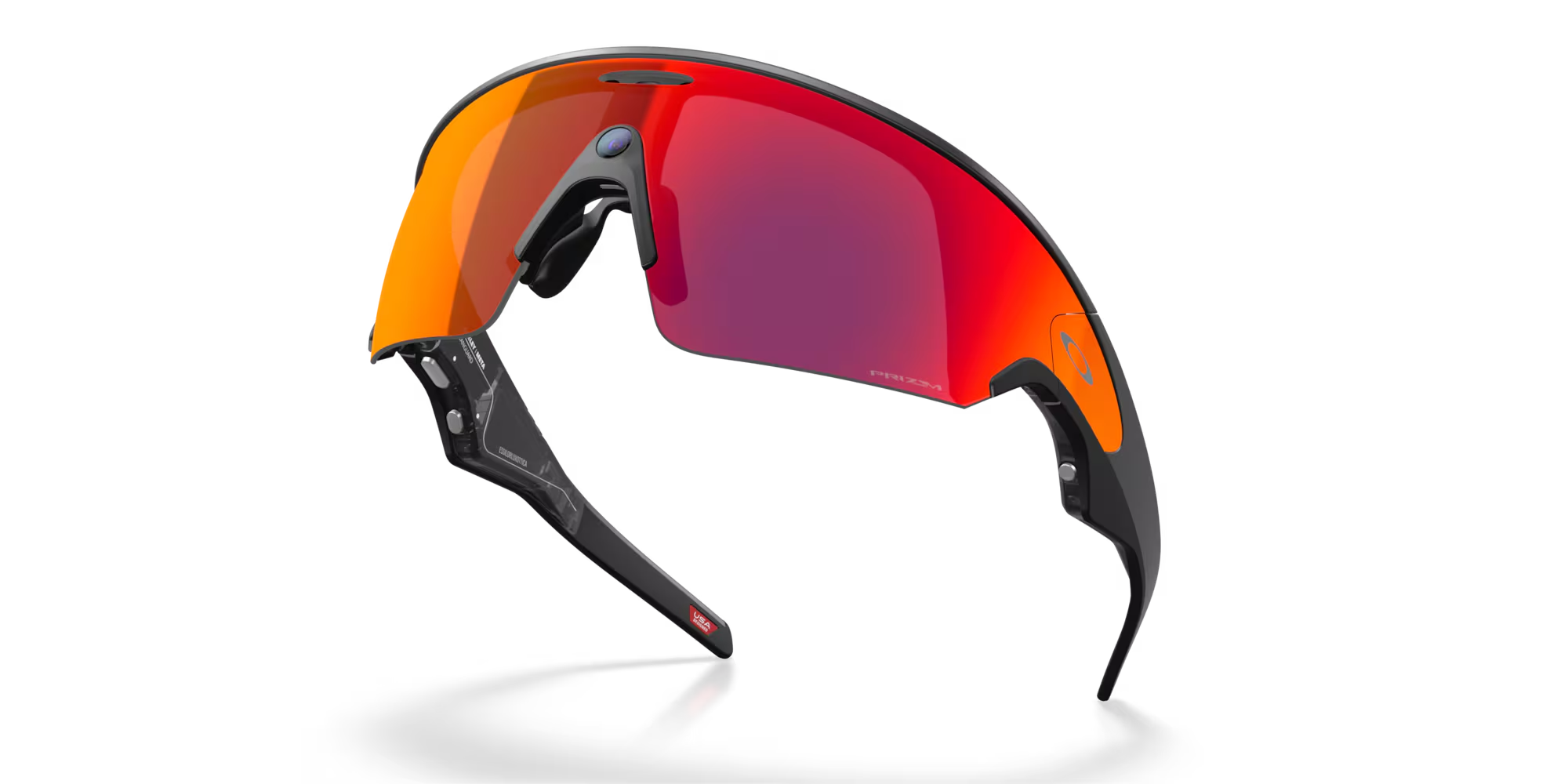
The Oakley Meta Vanguard is a rare thing – wearable tech that actually feels designed for riding, not just adapted to it. At its core, it’s a performance pair of cycling glasses with a built-in camera, open-ear audio, and voice-controlled smart features layered over the top.
It’s a collaboration between Oakley and Meta, and it shows. The optics and fit lean heavily into Oakley’s cycling pedigree, while the tech side brings hands-free capture, audio, and AI functionality.
At around $789, it sits firmly in premium territory. But given where high-end eyewear pricing has landed, it doesn’t feel outrageous – especially when you consider you’re effectively riding with a camera and mini computer built into your glasses.
Design & fit
First impression – these look like Oakleys first and smart glasses second.
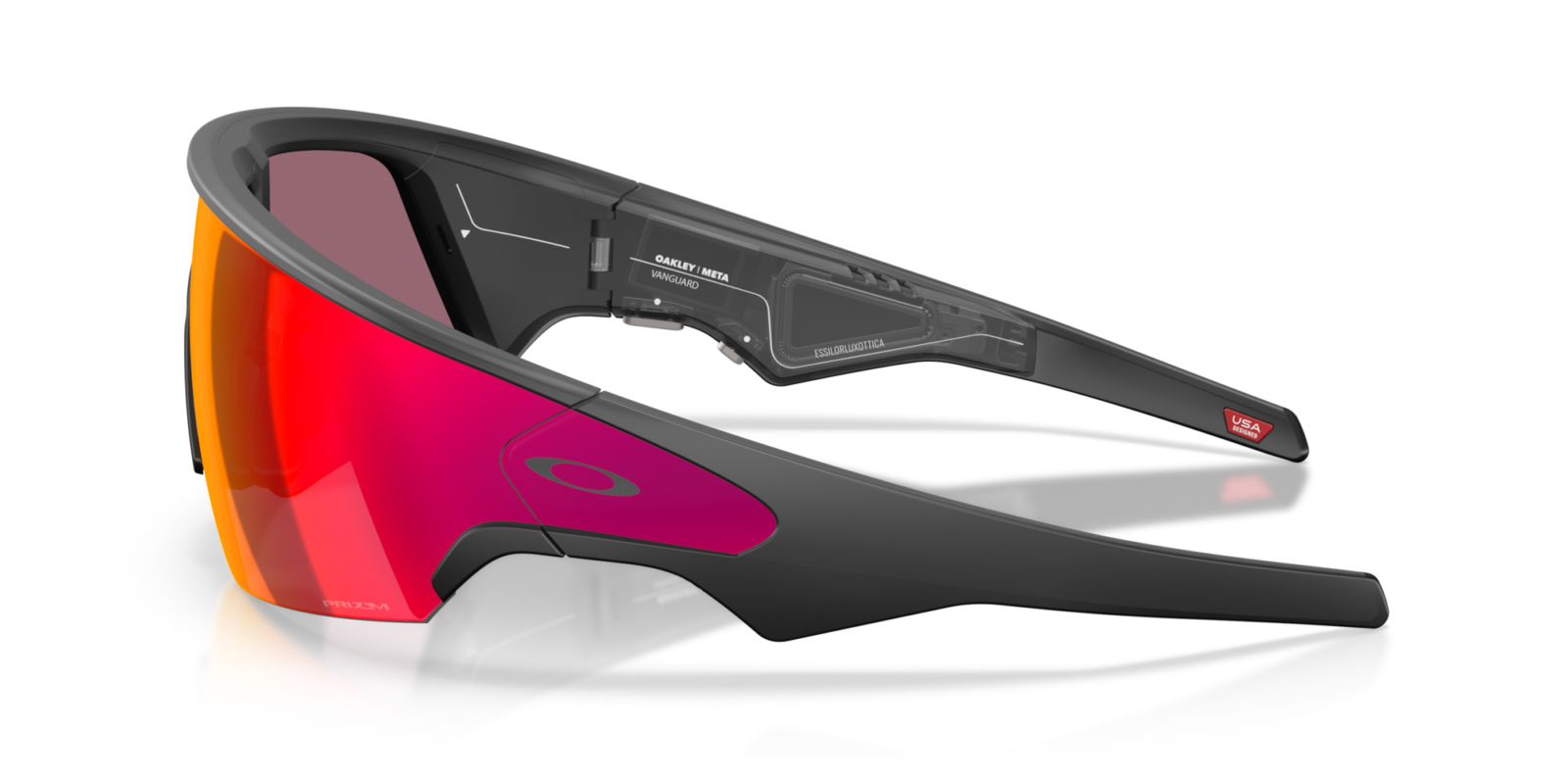
The Vanguard uses a wraparound shield design that sits close to the face and stays planted when you’re riding hard. There’s enough grip through the nose and arms to keep everything stable, even over rough roads.
The arms are thicker than a standard pair of sunnies to house the electronics, but it’s less noticeable than you’d expect. On the bike, they disappear surprisingly quickly.
Weight is slightly higher than a traditional pair, but it’s well balanced and easy to forget once you’re rolling. No pressure points, no bounce, no constant adjusting – exactly what you want from a performance pair of cycling glasses.
Lens performance
Lens performance is a standout. The Prizm Road lens boosts contrast in a way that genuinely improves visibility – sharper detail in shadows, better definition on tarmac, and more confidence when picking lines through corners or rough surfaces.
We recently reviewed Oakley’s non-tech Prizm-equipped sunglasses and found the same sharp, high-contrast clarity here.
Camera & POV capture
This is the feature that will either sell you on these or not.
Built into the frame is a small forward-facing camera that captures photos and video from your exact point of view. No mounts, no chest straps, no setup – just tap the frame or use voice control.
For cycling, it’s genuinely useful for:
- Capturing quick clips mid-ride without stopping
- Moments in a bunch or on a descent
- Recording incidents or close calls
It’s not a dashcam, though – always-on recording isn’t practical from a battery or storage perspective, so you still need to trigger clips when you want them.
The footage feels wide and immersive, though not at the level of a dedicated action camera. But that’s not really the point. The appeal is frictionless capture – you actually end up using it because it’s so easy, without needing to take your hands off the bars.
Stabilisation is surprisingly effective too, helping smooth out road buzz and smaller vibrations without making the footage feel overly processed.
Audio & connectivity
Speakers are built into the arms, directing sound towards your ears without blocking them.
That means you can listen to music, podcasts, or directions while still hearing traffic and what’s happening around you – a big advantage over earbuds on the road.
Sound quality is decent – not incredible, but clear and loud enough for riding. Wind noise does creep in at higher speeds, though it’s manageable.
You can also take calls and control everything via voice, which works surprisingly well once you get used to it.
Setup through the Meta app is straightforward, and transferring clips to your phone happens quickly in the background once connected. After the initial pairing process, the whole experience feels fairly seamless.
Smart features
The AI layer is where things start to feel a bit more optional – but also where the glasses become genuinely futuristic at times.
You can trigger recordings, ask questions about what you’re looking at, get translations, identify landmarks or objects, and have notifications read aloud without needing to pull your phone out mid-ride.
Some of the responses are surprisingly quick too. Asking for things like weather updates, nearby locations, current speed, or general information feels far more seamless than expected when it’s happening directly through your glasses mid-ride.
In practice, most riders will probably settle into using a handful of features consistently – mainly camera, audio, and basic voice controls – while only occasionally dipping into the more advanced AI functions.
Still, the fact these glasses can identify objects, answer questions, or translate languages almost instantly in real time is pretty impressive when you stop and think about it.
Battery & practicality
Battery life sits firmly in the “good enough” category.
You’ll comfortably get through most rides, with enough left over for some casual use off the bike. The charging case adds extra cycles too, which helps if you’re using them daily.
They’re also built to handle real-world riding – sweat, rain, and general day-to-day wear aren’t an issue.
One limitation is the fairly fixed lens setup. If you regularly swap lenses or rely on prescription inserts, this might not suit your setup.
On the bike
This is where the Vanguard really earns its place.
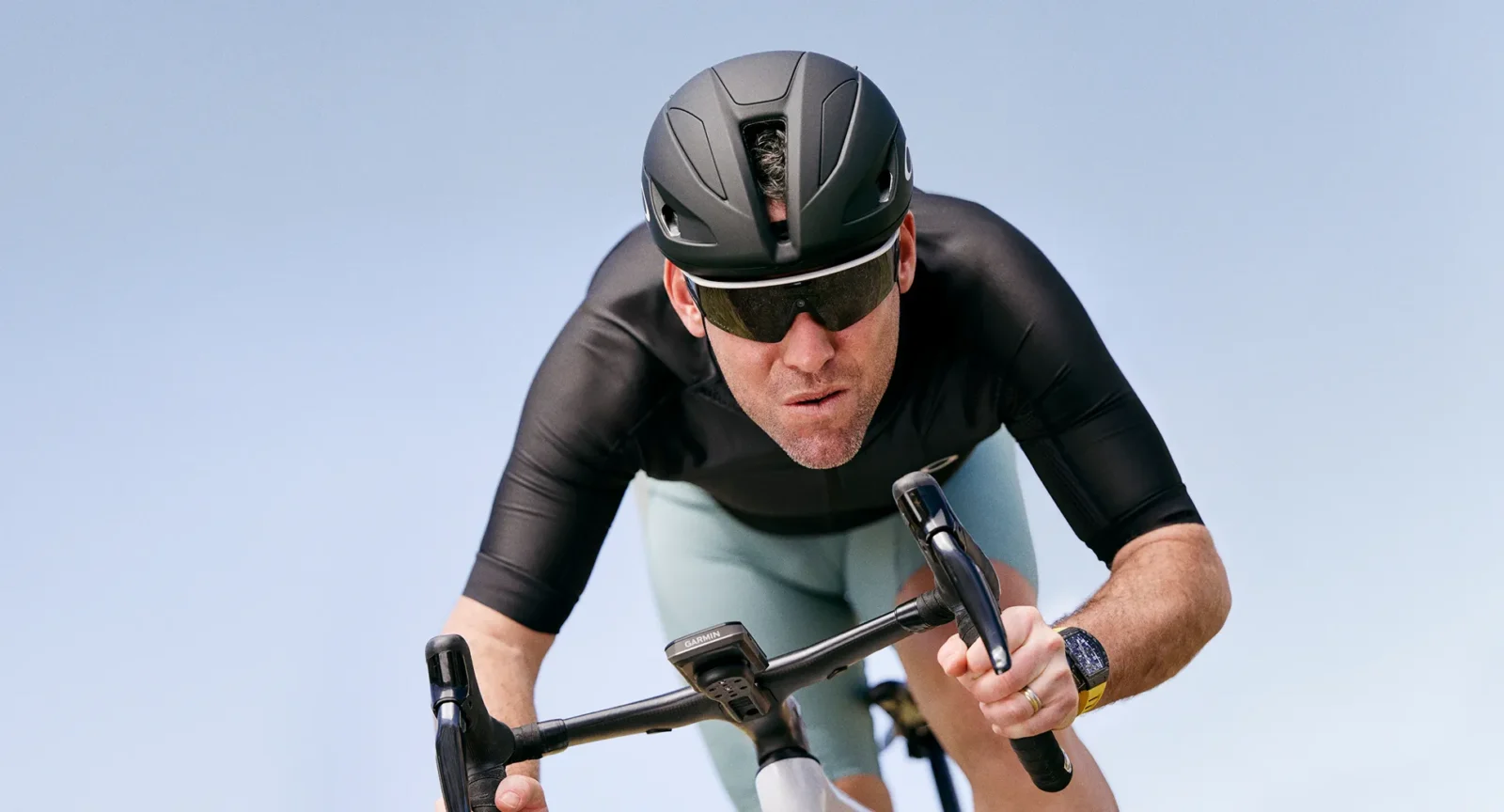
You’re not thinking about buttons, mounts, or extra devices. It just feels like part of your normal kit – and when something happens, you capture it instantly.
That’s the biggest shift. It removes friction.
Instead of weighing up whether something’s worth filming, you just do it. That alone changes how often you actually document your riding.
The physical controls are also easy to use with gloves on, with enough tactile feedback that you’re not fumbling around mid-ride trying to find buttons.
Everything else – audio, voice control, connectivity – fades into the background and lets you focus on the ride itself.
Verdict
The Oakley Meta Vanguard is one of the more convincing attempts at merging tech with cycling gear – and one of the most successful.
It works because it doesn’t get in the way. The fundamentals are strong – fit, lens quality, stability – and the tech layers on top without compromising any of that.
It won’t replace a head unit or a dedicated action camera, and it’s not trying to. But it does enough of both to make it genuinely useful, especially for riders who want to capture more of their time on the bike.
The price is high, and not every rider will care about the added features. But if the idea of frictionless, hands-free capture appeals, this is a smart and impressively well-executed piece of kit.
Not essential – but one of the more interesting and genuinely exciting developments in cycling tech in recent years.
Specifications
Frame – O Matter wraparound frame, approx. 66 g
Lens – Prizm Road, approx. 20% VLT
Camera – 12 MP photo / 3K video
Audio – Open-ear speakers and microphones
Connectivity – Bluetooth, Wi-Fi, Strava and Garmin compatible
Battery – Approx. 6-9 hours + charging case
Durability – IP67 rated
Price – Approx. $789 AUD