


 Mike O'Connor
The Giro d’Italia Women begins on Saturday night Australian time with nine stages across northern Italy and a route that looks set to reward climbers, all-rounders and aggressive riders willing to take their chances in the mountains.
You can stream all the stages in Australia on SBS On Demand, with the 2026 edition of the race scheduled to run from May 30 to June 7.
The route
At 1,177.7km, this year’s edition is the longest since 2001 and brings back a nine-day format, with organisers delivering a route that will combine sprint stages, an uphill time trial and some of Italy’s most iconic climbs.
The Giro tends to reward riders who can cope with a long accumulation of effort rather than dominate one type of terrain, and there’s plenty of variety over the nine day course that will prove this point.
The opening two stages are expected to favour the sprinters, with fast finishes likely into Ravenna and Caorle. Teams will be focused on positioning and avoiding early mishaps while the first maglia rosa is decided in bunch finishes.
The race then begins to change character from Stage 3 before a major early test arrives on Stage 4, an uphill individual time trial to Nevegal. That climb is expected to create the first meaningful gaps in the general classification.
From there, the race ramps up quickly. Stage 5 introduces more serious climbing, Stage 7 opens the door for aggressive breakaways, and then the race reaches its decisive phase in the final weekend.
Stage 8 to Sestriere via the Colle delle Finestre is widely seen as this year’s queen stage. Finestre is one of Italian cycling’s most iconic climbs, long, steep and partially gravelled near the top. It has a reputation for breaking races apart and producing large time gaps.
The final stage around Saluzzo is also expected to be selective, with the Montoso climb ensuring the overall race may not be settled until the final day.
The Australian riders to watch
Update 29/5 – AG Insurance Soudal has confirmed Sarah Gigante will not make the start line, with the Melbourne rider still recovering from a fractured femur suffered last August. See out story here.
With Sarah Gigante now officially out of the race, the team to watch – for Aussie fans at least – is likely to be Liv AlUla Jayco, which brings a balanced squad targeting both sprints and selective stages.
Launceston’s Georgia Baker, a multiple time top-10 finisher at the Giro d’Italia Women, will lead the team’s sprint ambitions. The Australian has been on good form this spring with a top-three finish on the opening stage of the Vuelta a Burgos. It’s likely her best hopes will lie in the early flat stages.
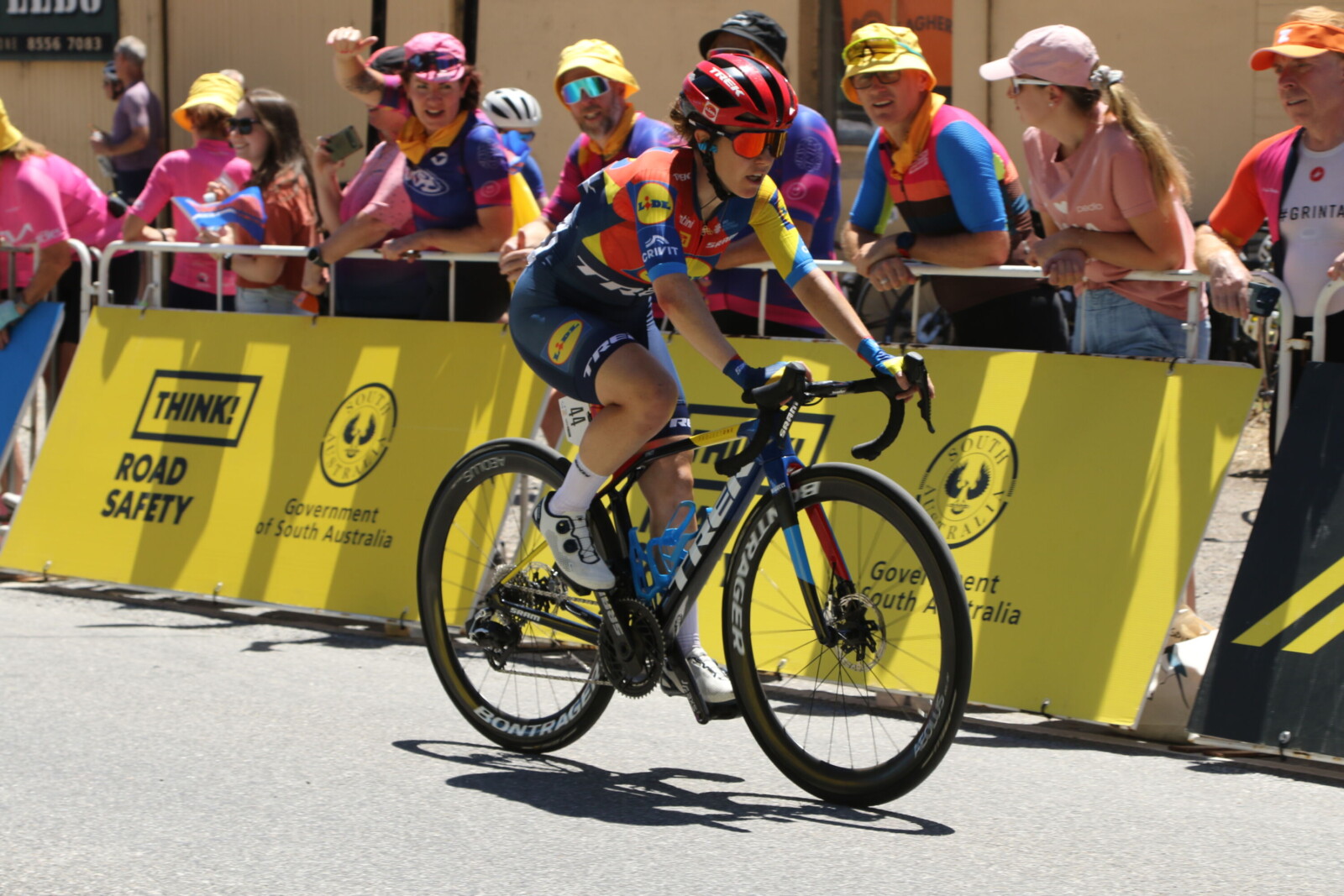
Beyond Baker, the other rider to watch is the great Amanda Spratt, who will be riding at her last Giro. It’s the event she told us last month she had always wished she’d won, although the veteran climber and former Giro podium finisher is likely to be used for mountain stages, breakaways, and team support in the hills this time around.
The other favourites
Outside of the Australian hopefuls, the main contenders for this year’s Giro d’Italia Women form a familiar elite group of all-rounders capable of handling sustained climbing, tactical racing and quick recovery across a demanding week.
Elisa Longo Borghini returns as the rider to beat after winning the past two editions in 2024 and 2025.
Racing on home roads, she combines climbing strength, race craft and consistency over multi-stage terrain, and she has repeatedly shown an ability to control GC campaigns.
The course suits her too, with her combination of skills making her the rider to beat again this year.
Her biggest rival is likely to be Demi Vollering.
The Dutch star remains one of the strongest climbers in the women’s peloton and has repeatedly shown she can dominate on long alpine ascents, but her win at Omloop het Nieuwsblad in Feb also shows she’s comfortable on the rougher terrain too.
In many ways, a Giro route that rewards riders who can climb well and recover quickly from one hard stage to the next should suit her perfectly, and we already know she has the pedigree to challenge for overall victory.
Last year’s second place finisher Marlen Reusser, making her return to racing following injury, is another one to watch.
Her 2026 has been full of ups and downs: she won Dwars door Vlaanderen in early April, beating her former teammate Demi Vollering, but just a handful of months later found herself recovering from a crash that caused a vertebral fracture in her lumbar spine.
Poland’s Katarzyna Niewiadoma also looks a serious contender. Niewiadoma is often at her best in aggressive racing and thrives when the pace is relentless and the race becomes unpredictable. If the Giro opens up in the mountains or turns tactical later in the week, she has the climbing ability and attacking instincts to put pressure on the favourites.
There are several other riders who could shape the general classification. Anna van der Breggen brings enormous stage-racing experience, including four Giro d’Italia Women overall victories and multiple podium finishes, but she is likely to be most effective in the mountain stages, while Germany’s Antonia Niedermaier is another emerging name.
Still early in her career, Niedermaier has already shown she can climb and time trial at a very high level, and stage races like the Giro feel like a natural fit.
So there you have it, a heap of elite talent all vying for the maglia rosa – we look forward to seeing how it plays out.
Our Giro D’Italia coverage is proudly brought to you by GradientBlue Cycling Tours – Delivering premium European Road Cycling Tours for over 15 years.

Mike O’Connor – A keen cyclist, runner and photographer, Mike O’Connor is the Editor of Bicycling Australia. He manages the BA website and social media, and loves promoting the achievements of Australian cyclists.