
Well, that’s the 113th Grand Shindig all done and dusted. Was it good for you?
“While there has been a lot of talk about whether a Pogačar procession is a compelling spectacle, the Tour is still proving to be a massive draw when it comes to attracting people to the roadside.” – Lionel Birnie, The Cycling Podcast, July 19
Le Tour is too multi-faceted to simply label this year’s edition a cakewalk.
How I perceive the race is obviously different to my editor, Mike O’Connor, my cycling friends, and you, the readers of Bicycling Australia.
There is also the Tour as a cycling race; the Tour as a spectacle; the Tour as a holiday destination (for those lucky enough to be in France in July); and the Tour as a business, which is, for organisers ASO, perhaps the most important consideration and how they measure its success or otherwise.
And they’re all interrelated.
Co-founder of The Cycling Podcast, Lionel Birnie, made the abovementioned observation in his 11.01 Cappuccino blogpost, the day after Stage 14 of this year’s Tour.
It was accompanied by two pictures taken by their photographer, Simon Gill: one from the 2014 Grand Départ in Yorkshire, England; the other on the Col du Haag, the final climb of the fourteenth stage from Mulhouse to Le Markstein Fellering.
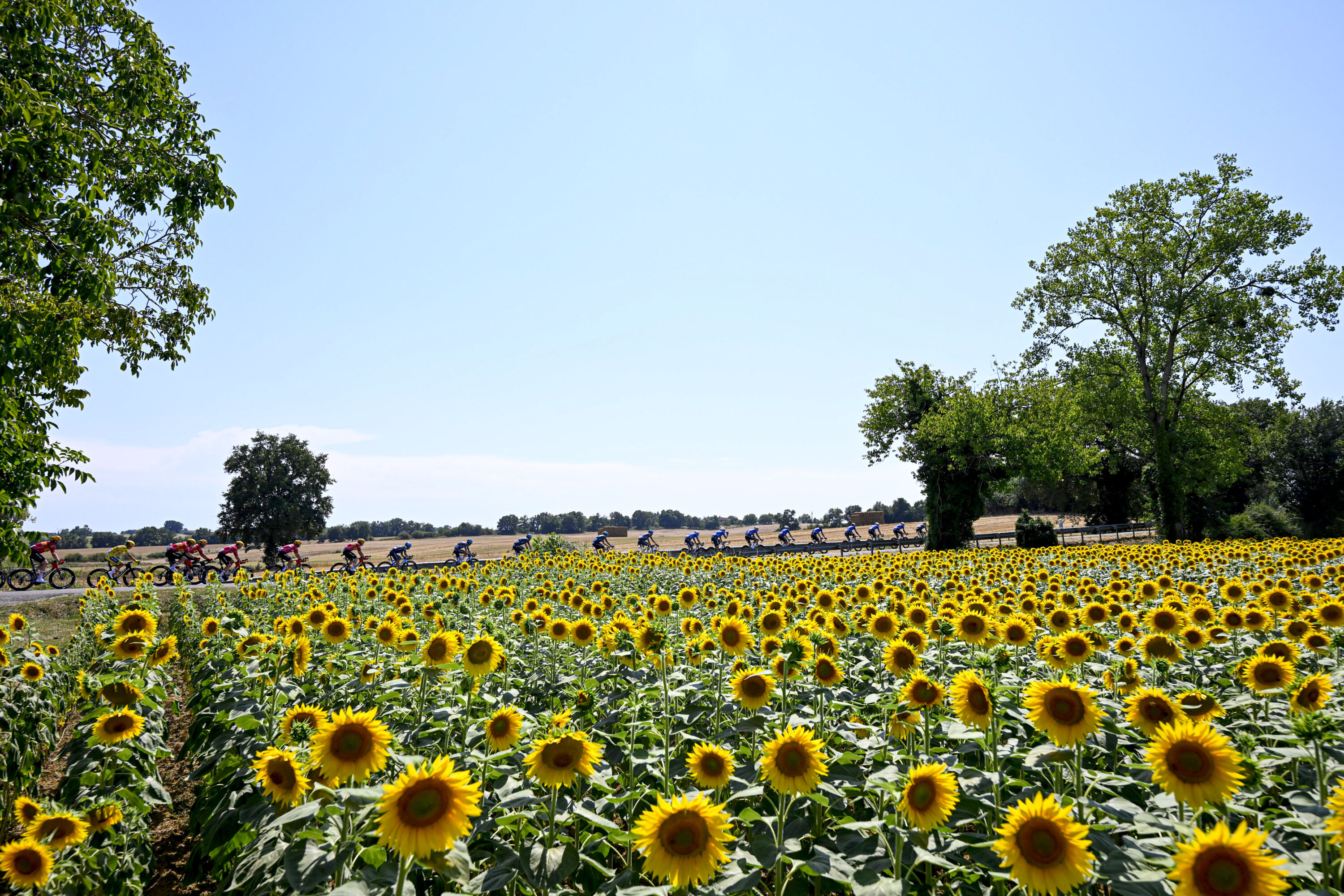
Despite being in two different countries, the similarity was uncanny: crowds of cycling fans so thick that, without closer observation, it was hard to spot the actual riders, or, in the case of the latter photo, rider – that being Tadej Pogačar.
By day’s end, the Slovenian had won his fourth stage and led arch-rival Jonas Vingegaard (Team Visma | Lease a Bike) by a sizeable 4’30. Remco Evenepoel (Red Bull-BORA-hansgrohe) and French phenom Paul Seixas were 5’04 and 5’19 back, respectively, in third and fourth on the overall classification.
In fact, second to seventh on GC were separated by just a minute and 20 seconds, leading many to say while the battle for yellow was a done deal, the remaining podium positions were very much up for grabs.
After Pogačar beat countryman Primož Roglič in 2020 in a nail-biting time trial on the penultimate day to win his first Tour by 59 seconds, the margins between he and Vingegaard have been far less close.
The closest was in 2022, when Vingegaard triumphed by 2’22. The largest was 2023, when the Dane beat Pogačar by a cavernous 7’29.
The Pog changed after that second defeat. He – and we – knew he was the most talented, but also that he was not the hardest-working, even if he did not publicly admit so. The Pogačar we have seen since 2024 is still happy-go-lucky – but now imbued with a work ethic he previously did not have, and, as a result, a physical fortitude and resilience without peer when it comes to three week races.
Pulling off the Giro-Tour double in 2024 (winning margins: 9’56 and 6’17) possibly made Vingegaard think he, too, could do the same this year. In Italy, Jonas didn’t appear to extend himself too much and seemingly won with the same aplomb as Tadej two years earlier, yet already by the sixth stage of this year’s Tour to Gavarnie-Gèdre, he was missing the spark of previous years.
Following Pogačar’s victory at Gavarnie-Gèdre and his return to yellow, Vingegaard was already bleeding time: 2’42 behind after Stage 6; 3’36 after Stage 10; and after a fortnight’s racing and Tadej’s fourth stage win at Le Markstein Fellering, he was 4’30 in arrears.
At that point, there was one more mountain leg to follow before the second and final rest day.
Unsurprisingly, being the true champion he is, Jonas had not given up.
After all, at that point, he was still the second-best rider in the race
“I mean, as I’ve said before, I will do absolutely everything I can to try and win this race. I’m not here for a second place – not even for a third place. I’m here to try and win it and that’s what we’re going to do,” Vingegaard, before the 183.9 kilometre stage got underway, declared, destination the hors catégorie-rated Plateau de Solaison.
Seixas, who had just climbed two places on GC the previous day, where he finished ahead of Vingegaard, was equally confident: “I know how to gauge my level when I’m in shape. I hoped I could maintain that level, and I have.”
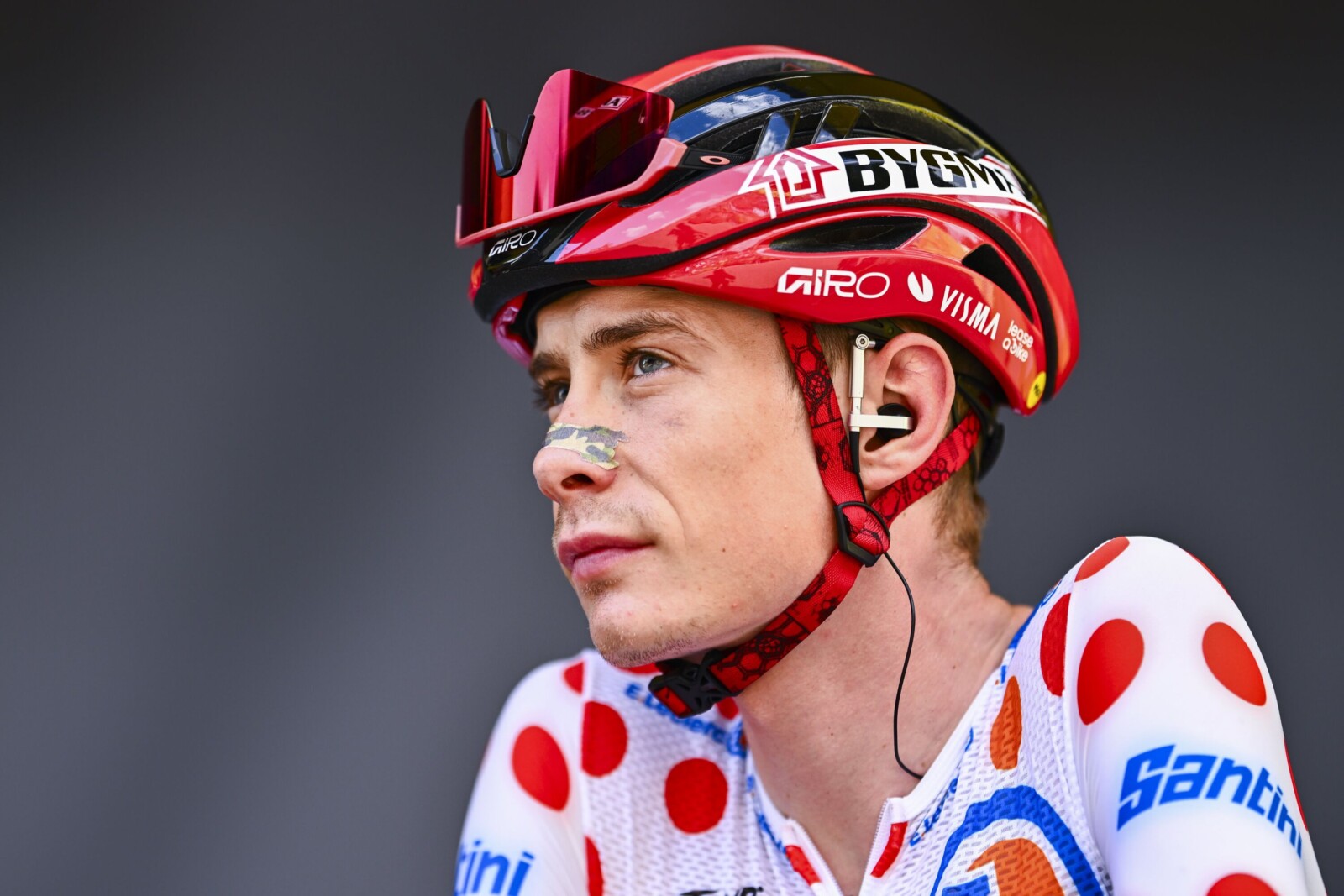
Sadly for Vingegaard, for his team, for the Tour and for cycling fans, we never got to find out if his efforts to win a third Grande Boucle would eventuate, because with 20km remaining he crashed on a roundabout in Bonneville and broke his collarbone.
“The Tour is not going to be the same without him,” Pogačar, who finished second to Evenepoel on the stage, lamented afterwards.
“This is what I’ve been saying to all the journalists who have been saying, ‘the Tour is over, the Tour is decided’ because I have a decent gap – look how fast the gap can disappear.”
The 27-year-old Slovenian then suggested the random doping control in the middle of the night (both he and Vingegaard were tested) may have affected Jonas’ lucidity at a moment he needed it most. “Maybe one night that your sleep is ruined, maybe (you’re) a little less concentrated in the descent and his Tour is ruined. I don’t (fully) blame (the drug testers) but maybe it could be a little bit connected.”
Pogačar seemed genuinely affected by the loss of Vingegaard, someone who he says he “didn’t have the best relationship” with at first but is now a “kind of friend”, which is understandable given their intense rivalry and history.
Evenepoel, not so much. “Oh, it’s amazing. I’m literally trembling from emotions. It’s been a hell of a day,” beamed the 26-year-old Belgian, who had just won his first mountain stage of the Tour and moved to second overall.
“You have to understand I’m racing against the best rider ever, and he’s been doing a hell of a climb to try and win the stage with Isaac (del Toro). For me, it’s a big step (up) to be able to follow because it was a crazy-hard pace. And you have to understand that I get so many critics, saying, ‘you cannot survive these steep climbs and this and that’. It feels amazing… it means a lot.
“For me, this is the first proper mountain stage that I win from the GC group. It shows I’ve put a step forward.”
Said Pogačar of Evenepoel: “He’s a rocket. And he’s going to be a pain in the ass next week.”
Remco’s step forward continued after the second rest day, winning the only individual time trial by 28 seconds from Pogačar.
The Belgian world TT champ was the only person to average more than 48km/h over the 26.1km course. However the margin between first and second was near identical to that between Pogačar and Vingegaard after Stage 14; with three mountain stages in favour of The Pog, only disaster would prevent him from realising a record-equalling fifth title.
The highlights package of Stage 19 to Alpe d’Huez opened with a Dutch couple who arrived on the fabled mountain in their campervan a week before. “It’s like a famous sports stadium and you’re part of it,” said the husband.
The tens of thousands who lined the 21 hairpin bends didn’t care that victory for Pogačar was a fait accompli; for them, success would be measured by how many beers they imbibed, how hard they partied, which riders they cheered on, and whether their friends back home saw them on TV.
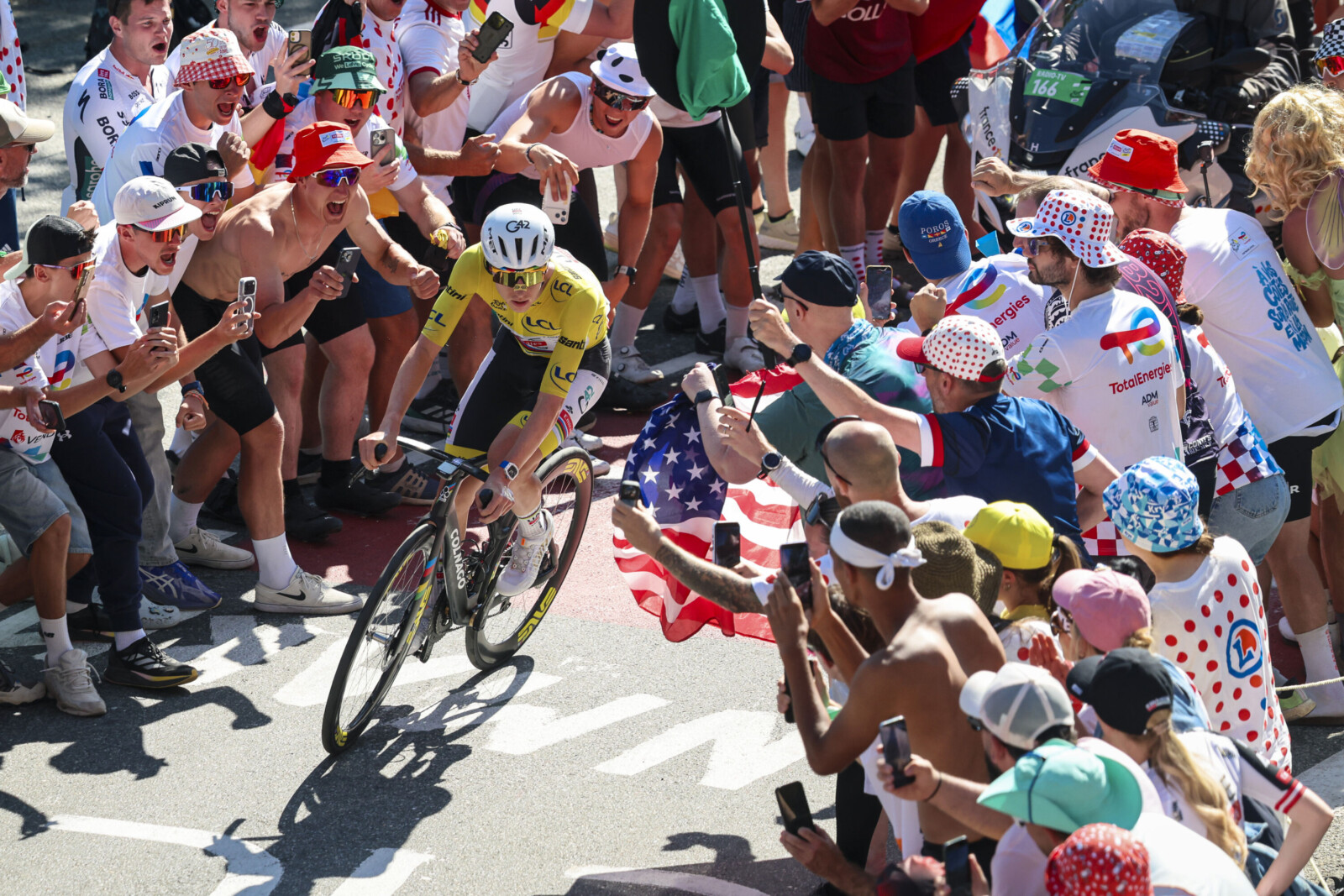
Nothing wrong with that. It’s a reminder that more than any other cycling race, Le Tour is a show on wheels and is enjoyed in a multitude of ways.
Someone who didn’t needed to be reminded was Richard Carapaz.
If it wasn’t for the Condor of Ecuador going in three breakaways in as many days, we may have labelled the last week as a procession. Instead, the EF Education-EasyPost leader made each of the remaining mountain stages binge-worthy reality TV of which he was the main protagonist in each episode, and twice came up trumps.
For me, the final week exploits of Carapaz and his fight with Soudal Quick-Step’s Valentin Paret-Peintre for the polka-dot jersey; a similarly engaging battle between Mads Pedersen and Jasper Philipsen for the maillot vert; and the white jersey for best young rider going down to the wire between del Toro and Seixas more than made up for a lack of suspense on the general classification, with the first three positions remaining unchanged since the end of Stage 15.
I mean, do we really expect Pogačar to ride slower to appease those who want a closer contest in the race for yellow?
“We don’t care about anybody else. We just stick together as a team and do our best as a team and see what happens,” he said after his victory atop Alpe d’Huez.
He already gifted the second stage to del Toro; he tried to do it again on Stage 15. In scenes I’ve never seen before, the maillot jaune then rode as a domestique – on the queen stage no less! – to secure third place and the white jersey for del Toro. “If you can see through (my) sunglasses, I was just crying and speechless,” said the Mexican following Stage 20, after both were secured.
He won five stages but it could easily have been seven, which now brings him nine short of Mark Cavendish’s record 35-stage haul.
“The whole team did super good but it was also some bad luck of the competitors. The Tour is three weeks (long) and a lot of shit can happen,” said The Pog on Saturday, in his typical matter-of-fact way.
As we did with Michael Jordan, Michael Phelps, Roger Federer and Lionel Messi in their prime, perhaps we should, like those on the roadside in France these past three weeks, take a step back and marvel at this once-in-a-generation (or should that be once-in-a-lifetime?) phenom that is Tadej Pogačar, and consider ourselves fortunate to bear witness to cycling greatness that for now has no peer.
“Seven Tours already and seven times on the podium… and five wins… It’s something you maybe wouldn’t even write in a storybook. It’s unbelievable for me.”
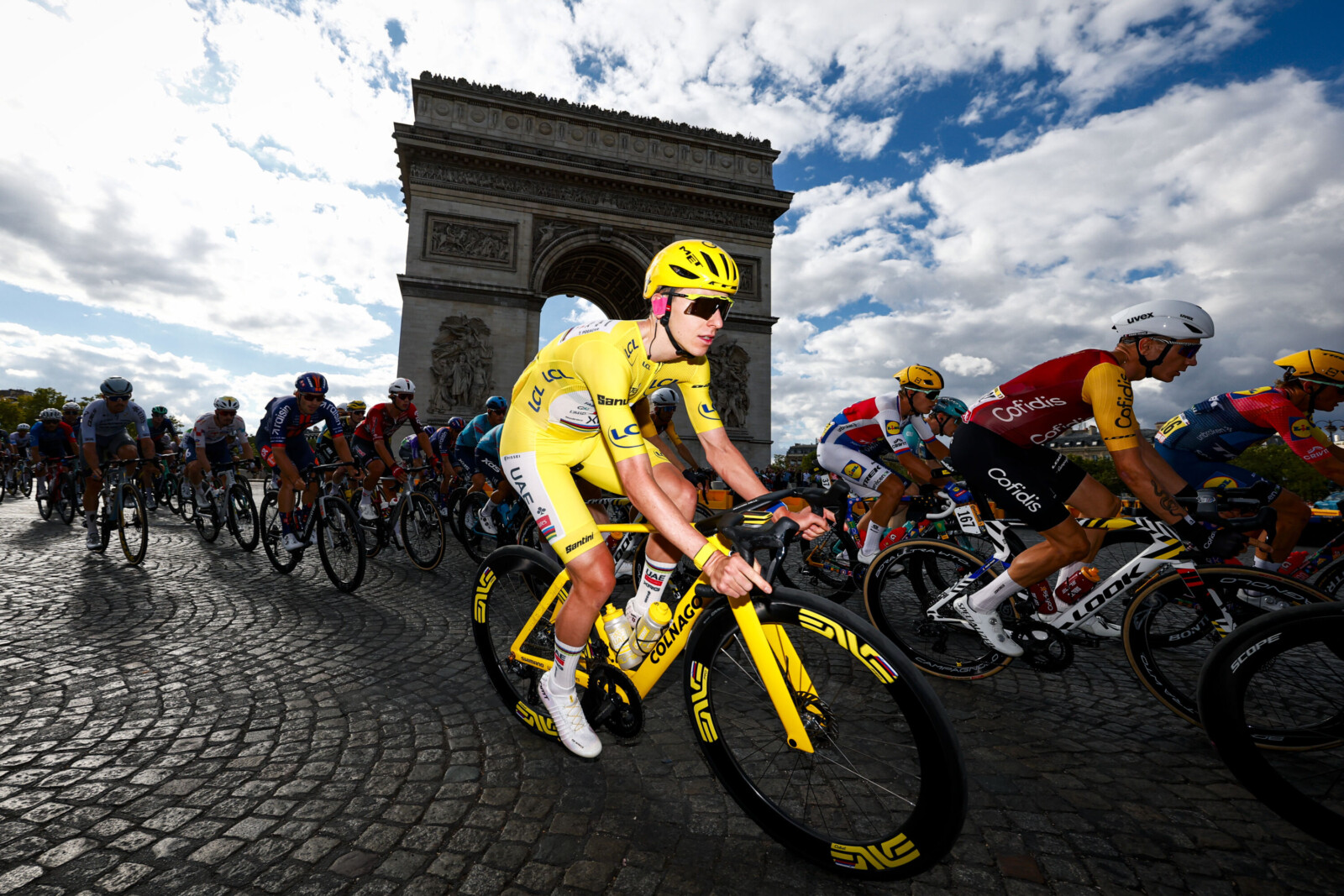
A word on the 11 Aussies…
We began with eleven and ended with nine.
Kelland O’Brien (Team Jayco AlUla) crashed heavily on the opening road stage and tried to soldier on, but finished outside the time limit on Stage 4, ending his TdF debut.
Crashing on the descent of the Puy Mary on Stage 10, Chris Harper (Pinarello-Q36.5 Pro Cycling Team) somehow managed to finish the stage with a severely wounded hand, which required partial amputation of his left thumb… Ugh! Not surprisingly, the 2025 Giro d’Italia stage winner did not start the next day.
While we didn’t get an Aussie on the podium, Mauro Schmid’s victory on Stage 13 was largely due to three Australians from Jayco AlUla in the break with him: Luke Plapp, Ben O’Connor and Michael Matthews.
The Swiss rider has been the team’s marquee man all season long – he’s half the reason why the team currently sit eleventh in the UCI WorldTour rankings – and truly deserved his leadership status on the day. Unfortunately for the team, he’ll be leaving to join Pinarello-Q36.5 Pro Cycling in 2027, reportedly signing a €2M/yr multi-year contract.
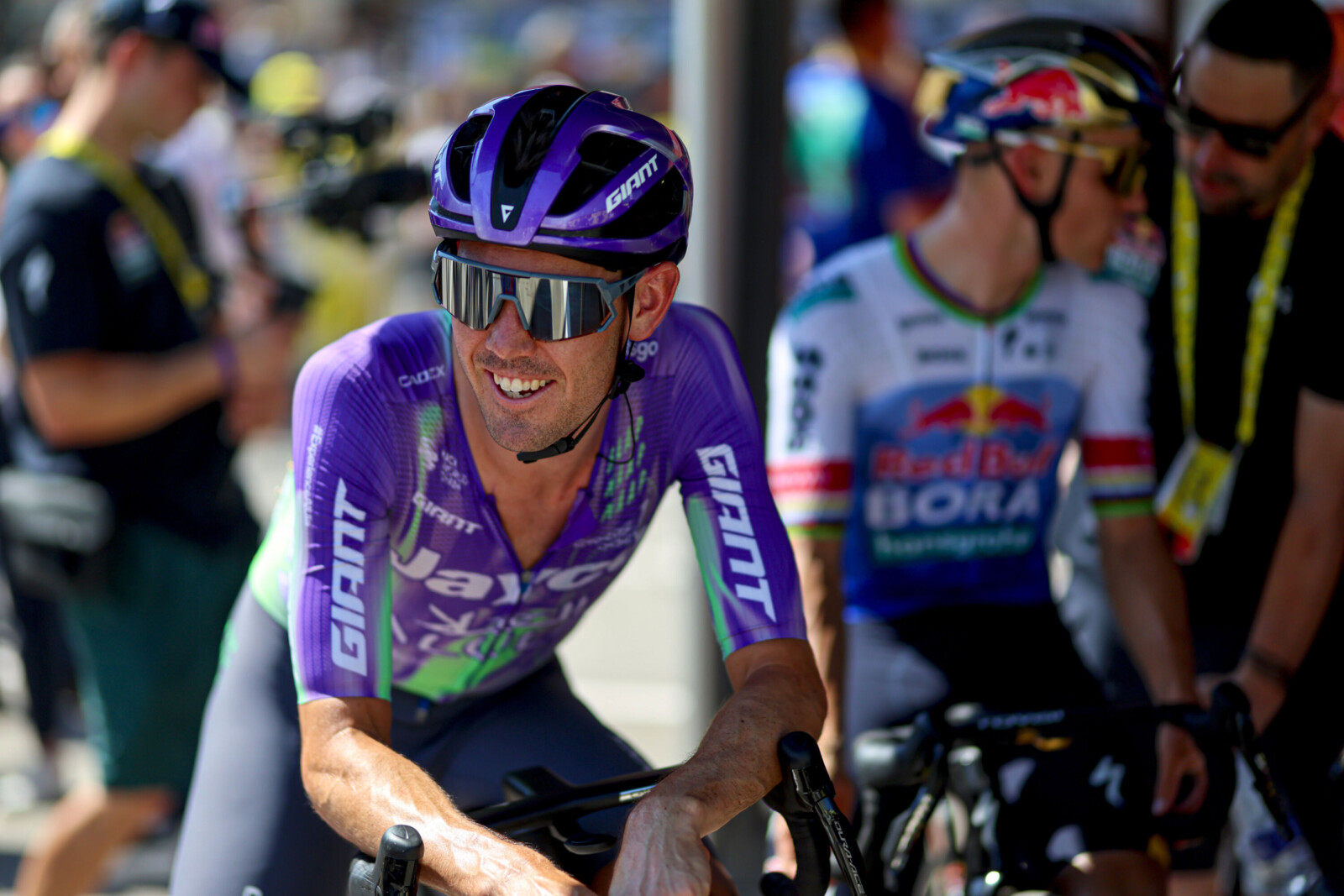
The fourth Aussie in the Jayco Alula TdF lineup, Luke Durbridge, rode his final Grande Boucle (he’ll retire on January 31 next year) and is probably as happy as his fellow West Australian, Jai Hindley (Red Bull-BORA-hansgrohe), that it’s all over.
Hindley was at the Tour in service of Remco Evenepoel and Florian Lipowitz (who crashed out on the Stage 16 individual time trial) and did a sterling job.
He was given the green light to go for the win on Stage 20, though unfortunately for Jai, he came up against a rampaging Richie Carapaz:
“It was a really hard day… Actually, every day of this Tour de France was pretty bloody hard,” he said with a chuckle afterwards, “so I’m pretty happy to wrap this up.”
That he still managed to finish 15th overall and help secure Remco’s best-ever GC result at the Tour – and this after finishing third at the Giro – is further testament to his qualities, and a big reason why his team have him on their roster till at least 2028.
Ending the race 63rd, 89th and 105th on the classement général, respectively, Michael Storer (Tudor Pro Cycling Team), Sebastian Berwick (Caja Rural-Seguros RGA) and Robert Stannard (Bahrain-Victorious) can now say they’ve ridden – and finished – all three Grand Tours.
I’d say that qualifies for the one percent club, wouldn’t you?
Storer and Stannard also rode the Giro (7th GC, 104th GC), so undertaking and completing two consecutive Grand Tours in a season will only make their bodies and minds more resilient in years to come.
2026 Tour de France: Stage Winners
Stage 1, July 4: Barcelona Team Time Trial, 19.6 km: Visma-Lease a Bike
Stage 2, July 5: Tarragona – Barcelona, 168.5 km: Isaac del Toro (UAE Team Emirates-XRG)
Stage 3, July 6: Granollers – Les Angles, 195.9 km: Tadej Pogačar (UAE Team Emirates-XRG)
Stage 4, July 7: Carcassonne – Foix, 181.9 km: Mads Pedersen (Lidl-Trek)
Stage 5, July 8: Lannemezan – Pau, 158.3 km: Olav Kooij (Decathlon CMA CGM Team)
Stage 6, July 9: Pau – Gavarnie-Gèdre, 186.2 km: Tadej Pogačar (UAE Team Emirates-XRG)
Stage 7, July 10: Hagetmau – Bordeaux, 175.1 km: Tim Merlier (Soudal Quick-Step)
Stage 8, July 11: Périgueux – Bergerac, 180.4 km: Tim Merlier (Soudal Quick-Step)
Stage 9, July 12: Malemort – Ussel, 185.5 km: Mathieu van der Poel (Alpecin-Premier Tech)
Stage 10, July 14: Aurillac – Le Lioran, 166.6 km: Tadej Pogačar (UAE Team Emirates-XRG)
Stage 11, July 15: Vichy – Nevers, 161.3 km: Søren Wærenskjold (Uno-X Mobility)
Stage 12, July 16: Circuit de Nevers Magny-Cours – Chalon-sur-Saône, 179.1 km: Tim Merlier (Soudal Quick-Step)
Stage 13, July 17: Dole – Belfort, 205.8 km: Mauro Schmid (Team Jayco AlUla)
Stage 14, July 18: Mulhouse – Le Markstein Fellering, 155.3 km: Tadej Pogačar (UAE Team Emirates-XRG)
Stage 15, July 19: Champagnole – Plateau de Solaison, 183.9 km: Remco Evenepoel (Red Bull-BORA-hansgrohe)
Stage 16, July 21: Évian-les-Bains – Thonon-les-Bains ITT, 26.1 km: Remco Evenepoel (Red Bull-BORA-hansgrohe)
Stage 17, July 22: Chambéry – Voiron, 174.7 km: Jasper Philipsen (Alpecin-Premier Tech)
Stage 18, July 23: Voiron – Orcières-Merlette, 185.2 km: Richard Carapaz (EF Education-EasyPost)
Stage 19, July 24: Gap – Alpe d’Huez, 127.9 km: Tadej Pogačar (UAE Team Emirates-XRG)
Stage 20, July 25: Le Bourg-d’Oisans – Alpe d’Huez, 170.9 km: Richard Carapaz (EF Education-EasyPost)
Stage 21, July 26: Thoiry – Paris (Champs-Élysées), 88.7 km: Mathieu van der Poel (Alpecin-Premier Tech)
Anthony Tan
Anthony Tan - One of Bicycling Australia’s longest-serving columnists, ‘Tan Man’ has a deep passion for the sport and is a natural communicator.