
 Mike O'Connor
Le Tour de France Femmes avec Zwift is still a relatively young race, but it is already becoming one of the most important events on the women’s calendar, with the 2026 edition set to be the biggest yet.
This year, the peloton will cover 1,175km over nine stages, travelling from Lausanne in Switzerland to Nice in southern France and taking in almost 18,800m of climbing along the way.
There is also a significant first: Mont Ventoux will feature as a summit finish for the first time in the history of the Tour de France Femmes.
That climb, along with a 21km individual time trial and several difficult stages through the Jura, Massif Central and Alps, means there will be few opportunities for the general classification contenders to hide.
But, as always, there are countless riders capable of taking the crown.
The contenders
All 14 Women’s WorldTour teams will take part, joined by seven ProTeams awarded wildcard invitations by race organiser ASO. Each squad can select up to seven riders, meaning the peloton could feature as many as 147 starters.
Demi Vollering arrives at the 2026 Tour as the rider to beat however.
The FDJ-SUEZ rider won the Tour of Flanders and Liège-Bastogne-Liège in the spring before producing one of the most dramatic finishes to the Giro d’Italia Women, overturning her deficit to Anna van der Breggen on the final stage to take the overall victory.
She now returns to the Tour looking to reclaim the yellow jersey she won in 2023.
Her record at the race tells its own story: second in 2022, first in 2023, second in 2024 and second again last year. Another runner-up finish clearly isn’t what she will have in mind.
Vollering won’t be doing it alone. FDJ-SUEZ have assembled a formidable supporting cast, including Juliette Berthet, Franziska Koch and French champion Célia Gery. Berthet finished fifth at the Vuelta this year and seventh at last year’s Tour while riding in support, demonstrating just how much strength Vollering has around her.
Her nearest rival could well be last year’s winner Pauline Ferrand-Prévot.
The defending champion hasn’t had the same stage-racing results as Vollering this season, with her most recent outing ending in 35th place at the Vuelta España Femenina. That makes her current form difficult to assess.
However, her spring included second at the Tour of Flanders and third at Paris-Roubaix, and she knows better than most how to prepare for a major objective. Twelve months ago, she arrived at the Tour and produced exactly the performance she needed to take the yellow jersey.
Now she gets another opportunity, this time with the weight of defending the title.
Plenty of challengers
Kasia Niewiadoma-Phinney will be hoping to reclaim the yellow jersey she won in 2024, after finishing third last year. The Canyon//SRAM rider has been remarkably consistent again this season, including podium finishes at Strade Bianche, Amstel Gold Race and Liège-Bastogne-Liège before taking third overall at the Tour de Suisse.
She has a particularly useful card alongside her in Antonia Niedermaier, who finished second at the Giro d’Italia Women. Canyon//SRAM therefore have the luxury of being able to put pressure on their rivals with two legitimate GC threats.
Anna van der Breggen is another rider who will be desperate to get her hands on yellow. The Dutchwoman has twice been left wondering what might have been this season, losing the lead on the final day of both the Vuelta and Giro. She eventually finished second and third respectively.
The time trial could be particularly important for Van der Breggen. A strong performance over 21km could give her some breathing room before the race reaches its biggest climbing test.
Then there’s Marlen Reusser. The Swiss rider will have the advantage of starting the race on home roads and comes into the Tour after winning the Tour de Suisse for a record third time. As the world and European time trial champion, she could make significant gains in Dijon before the race reaches the mountains.
And one of the most intriguing riders making her Tour debut is Paula Blasi. The 23-year-old Spaniard has enjoyed a breakout season, winning the Vuelta and adding overall victories at the Tour Féminin International des Pyrénées and Volta a Catalunya.
Don’t forget the sprinters
The yellow jersey might be the main prize, but some of the most spectacular racing could come on the flatter stages.
Lorena Wiebes remains the obvious name to beat. The Dutch rider has already collected 13 victories this season and has five Tour stage wins to her name. If her team delivers her to the final kilometre with the bunch intact, it will take an exceptional rider to beat her.
Marianne Vos remains one of the few riders capable of consistently challenging Wiebes, while Elisa Balsamo arrives after an impressive Giro in which she won three stages.
And don’t discount Puck Pieterse. The Dutch all-rounder is expected to target stages rather than the GC, making her particularly dangerous on the races where the terrain is too difficult for the pure sprinters but not hard enough for the climbers.
The Aussie hopes
Unfortunately Sarah Gigante is not expected to line up this year, while Neve Bradbury is also out.
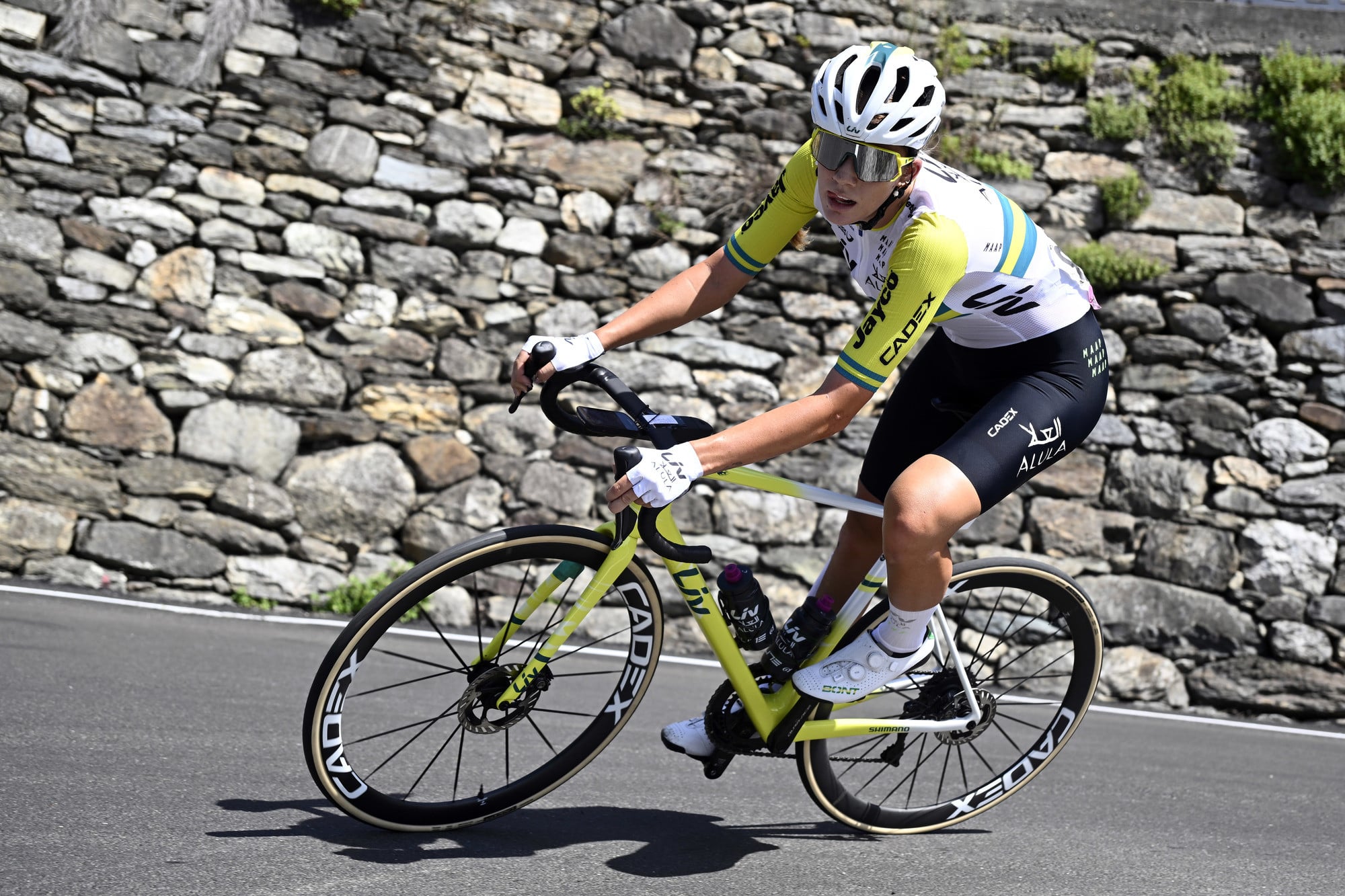
However, the biggest new name is Mackenzie Coupland, who has received a late call-up for her Tour debut after an impressive breakthrough season.
The 20-year-old from Kalamunda will also have the honour of wearing the Australian champion’s jersey on the biggest stage in women’s cycling.
“To be part of the biggest race of the year is something I didn’t see myself doing this year. It also being my first Grand Tour gives me a mix of excitement and nervousness, and I can’t wait to race with such a supportive and motivated group of people,” she said.
Coupland will line up alongside Melbourne’s Ruby Roseman-Gannon, making her fourth appearance at Le Tour, providing the team with options in the reduced bunch sprints and rolling stages.
Meanwhile, 25-year-old Lucie Fityus (Team Picnic Post NL) returns to the Tour de France Femmes for her second attempt, adding another young Australian to the lineup.
Amanda Spratt (Lidl-Trek) brings the experience of a rider who has been competing at the highest level for more than a decade. In the final season of her career, her experience could prove valuable when the race reaches the mountains.
Finally, Brodie Chapman provides another Australian option. The UAE Team ADQ rider is an experienced climber who has shown she can make the most of her opportunities, including a solo stage victory at the 2025 Tour Féminin des Pyrénées.
The route ahead
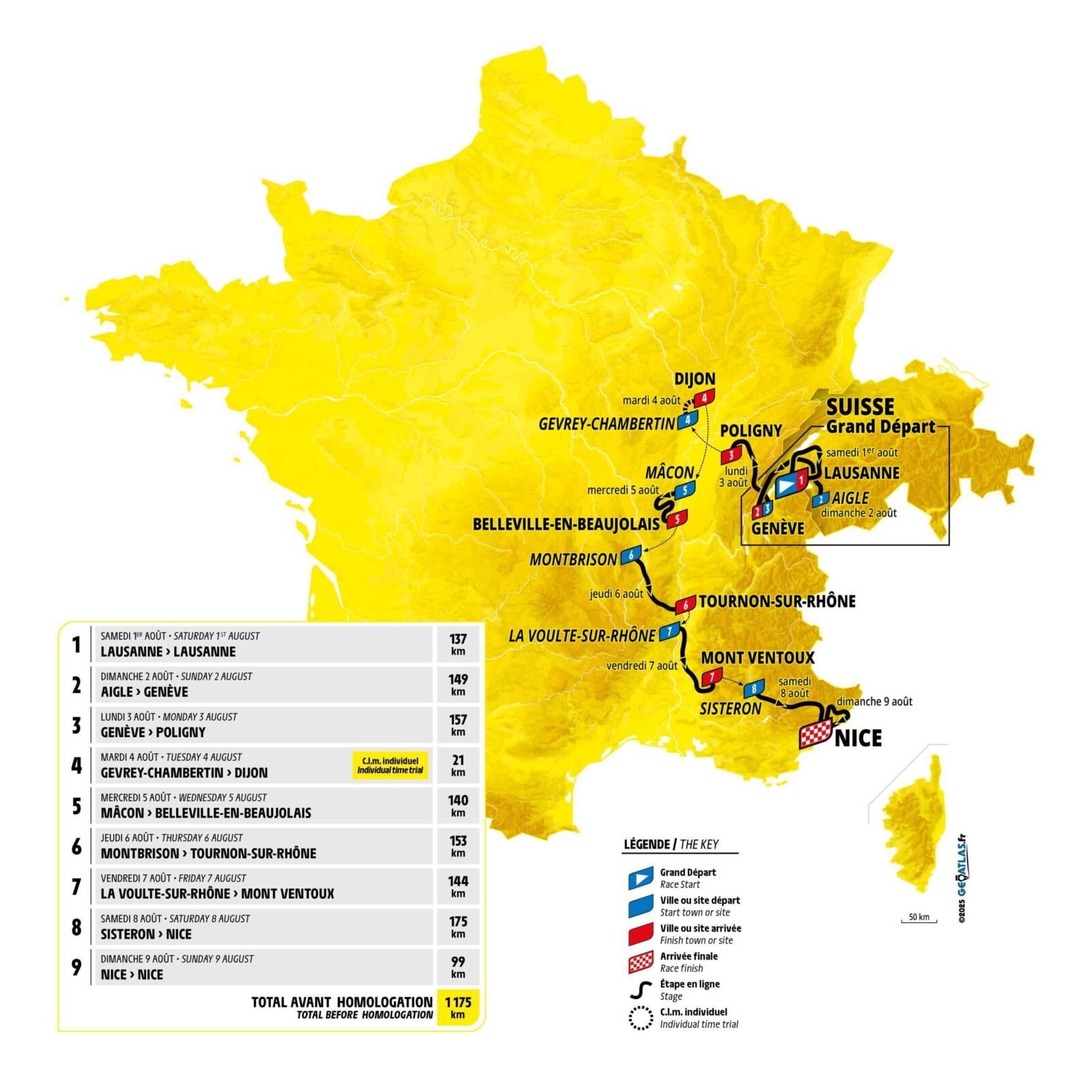
The race begins with a 137km opening stage around Lausanne. Although officially classified as flat, the finishing climb to the Côte Saint-François should make the fight for the first yellow jersey anything but straightforward. The short, uphill finish is likely to favour an explosive rider rather than a pure sprinter.
Stage 2: Aigle to Geneva – 149km
The second stage is the clearest opportunity for the sprinters. At 147.9km, it is one of the longer days of the race but carries relatively little elevation compared with what follows.
Stage 3: Geneva to Poligny – 156.5km
The peloton crosses into France for the first time, with the 156.5km stage featuring 2,413m of climbing. The Col de la Faucille and rolling terrain should provide the breakaway specialists with their first major opportunity, while the GC contenders will need to remain attentive.
Stage 4: Gevrey-Chambertin to Dijon – 21km ITT
The time trial returns to the Tour after being absent in 2025, and this is no straightforward test against the clock. The 21km course includes the Lacets de Marsannay climb, making it an important stage for the general classification.
Stage 5: Mâcon to Belleville-en-Beaujolais – 140km
The race moves into the hills with 2,880m of elevation gain. There is no summit finish, but the constant climbing and descending should produce an aggressive stage. It is the sort of day where a strong breakaway could stay away, while GC teams may also look to test their rivals.
Stage 6: Montbrison to Tournon-sur-Rhône – 153.4km
Another long and demanding stage, with more than 2,500m of climbing packed into 153.4km. Like Stage 5, there is no decisive summit finish, but the terrain lends itself to attacking racing.
Stage 7: La Voulte-sur-Rhône to Mont Ventoux – 146.8km
This is the stage everyone will be watching.
The Tour de France Femmes will tackle Mont Ventoux for the first time as a summit finish, with the climb stretching 15.7km at an average gradient of 8.8 per cent. The summit sits at 1,910m, making it the highest point of the race and potentially the defining moment of the 2026 Tour.
Expect the GC contenders to come to the fore here. For riders with ambitions of winning yellow in Nice, this is the day when simply following the favourites may no longer be enough.
Stage 8: Sisteron to Nice – 171.9km
At almost 172km, Stage 8 is the longest of the race and could provide the sprinters with their final opportunity. Two late climbs, however, could make the finish more complicated than a straightforward bunch sprint.
Stage 9: Nice to Nice – 99.2km
The final stage packs plenty into just 99km. Riders will tackle the Col d’Èze four times, with the final ascent coming from its steeper side before a technical descent back into Nice.
It provides one last opportunity to attack before the Tour concludes. If the yellow jersey is still within reach of several riders, this could be a spectacular final day.
Australian fans can watch every stage of the 2026 Tour de France Femmes live and free on SBS and SBS On Demand, with all nine stages covered from start to finish.
So, there you have it: 1,175km across nine stages, with everything from fast finishes and punchy climbs to a brutal mountain showdown. The Tour de France Femmes promises another fascinating battle for the yellow jersey.

Mike O’Connor – A keen cyclist, runner and photographer, Mike O’Connor is the Editor of Bicycling Australia. He manages the BA website and social media, and loves promoting the achievements of Australian cyclists.