
 Anthony Tan
Here’s what to expect on the 3,333 kilometre-long road to yellow between Barcelona and Paris.
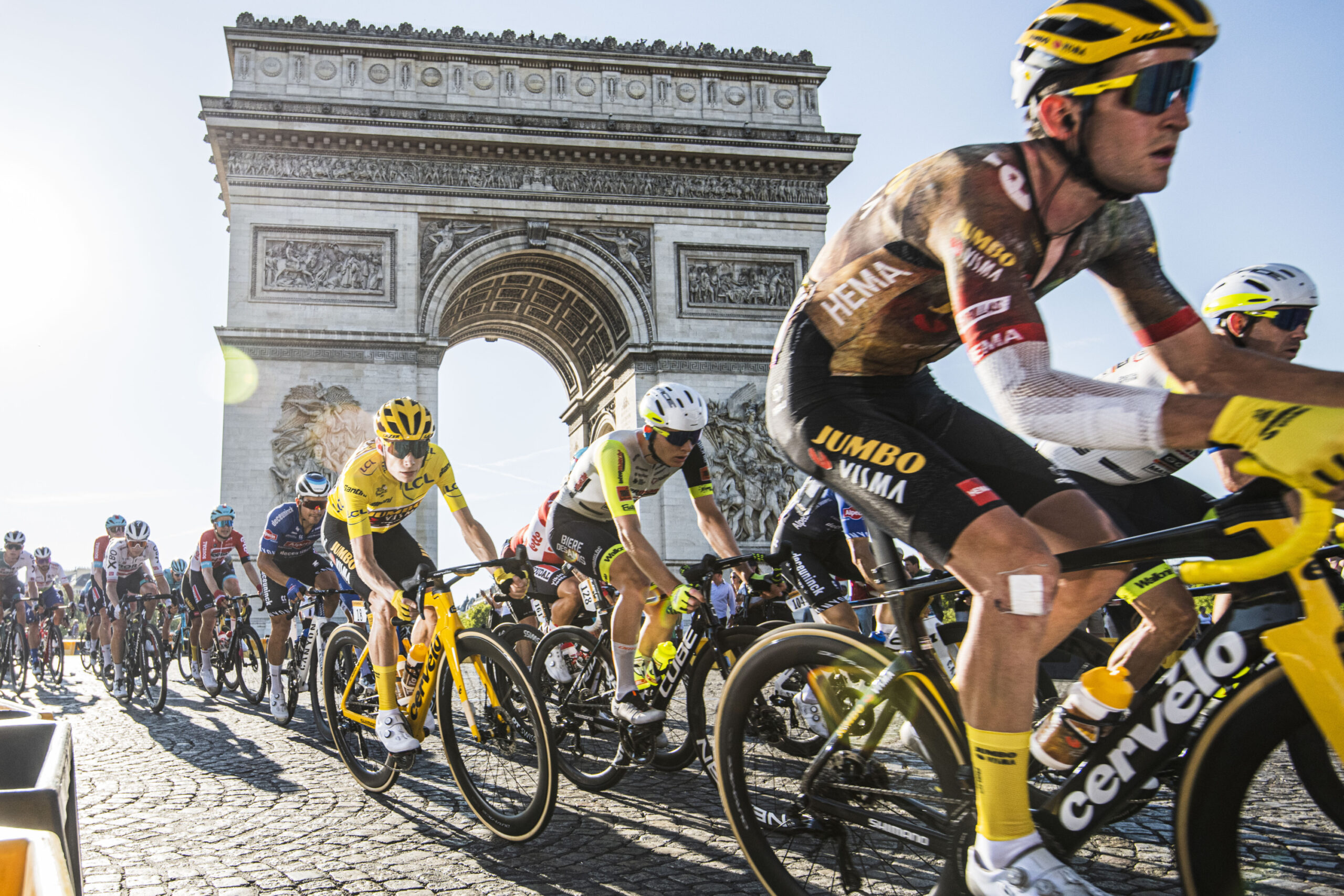
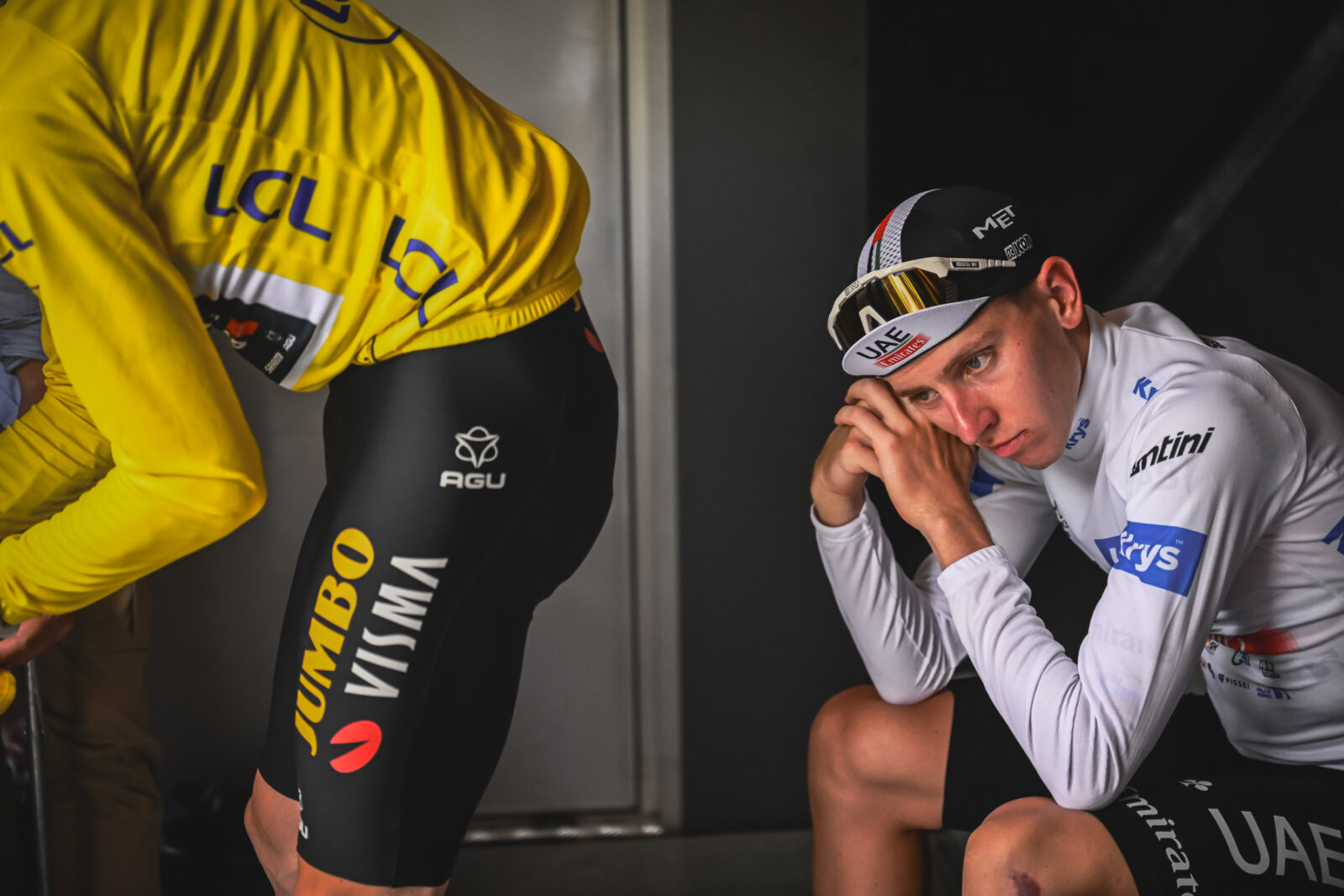
All the best riders. All in the best shape, or at least hoping to be. Competing in the most-watched cycling event in the world. Competing for the most recognisable, most sought after, most fiercely fought and most coveted item in this beautiful sport – le maillot jaune.
It is, of course, Tour time.
It has been just three years since we last had a Grand Départ in Spain but in 2023 Le Tour began in Bilbao in the Basque Country and on July 4 this year we start in the Catalonian capital of Barcelona.
For the days proceeding and the first two stages, the city will transmogrify from a cultural and historical to sporting mecca.
Not since the 2019 race have we had a team time trial as part of the 21-stage parcours (Stage 2, won by Jumbo-Visma) and not since 1971 has a TTT kicked off proceedings – 55 years previous.
For the 19.6km route that includes the famed Côte de Montjuïc climb (1.1km at 5.1%), organisers ASO has determined that each rider will receive individual times (as opposed to the time taken after the fifth rider finishes, as happened in the past), a rule first introduced at the 2023 Paris-Nice.
The first stage deemed ‘flat’ and suited for the sprinters does not come until Stage 5 – although the kilometre-long Cat. 3 that tops out 25.6km from the finish in Pau may deny them an opportunity till Stage 7 or 8, both virtual bunch sprint certainties.
What is left in between is a series of stages that will delight breakaway specialists and create opportunity for multiple changes of leadership – across yellow, green, polka-dot and white jersey classifications alike.
In the first nine days, even the two legs classified by ASO as ‘mountain’ are, according to this humble cycling pundit, aimed more at those seeking individual stage glory rather than to be the one in Paris with the least accumulated time.
Stage 3 on July 6, for example, contains a triplet of Cat. 3s and a Cat. 4 with the finish at Les Angles, a 1.7km slope at 6.5%.
And on July 9, Stage 6, while boasting the most elevation in the first nine days at 4,100 metres, ends at a place and on hill never used before: Gavarnie-Gèdre. At 18.7km it’s awfully long but with a 3.7% gradient it’s rated Cat. 2 and therefore pas difficile for les grimpeurs (the climbers) at heart.
In stark contrast the hors catégorie climb preceding it, the Col du Tourmalet (17.1km at 7.3%) and at 2,115 metres high offering the first to pass the Souvenir Jacques Goddet, is the cheese to Gavarnie-Gèdre’s chalk, and may bear greater influence on what unfolds by day’s end.
A rest… And then Bastille Day fireworks!
On Tuesday July 14 – Bastille Day – the third of eight mountain stages in this year’s Tour comes straight after the first rest day in Cantal. Historically, we know riders’ bodies are affected in different ways coming off a jour de repos; some like it, others detest it.
Stage 10 will be held in the region of the Massif Central; while it may not feature the high peaks of the Pyrenees that preceded it or the Alps to follow, seven categorised climbs in the final 100 kilometres of the 166.6km stage is an awful lotta up and down.
Its summit coming at Km 135.7, decisive moves are likely to be made on the Puy Mary-Pas de Peyrol (7.8km at 6%) and the final climb of the Col de Pertus (4.4km at 8.5%), which tops out 14.5km from the finish at Le Lioran.
Two years ago was the last occasion the race ended in Le Lioran, on Stage 11. The final 40km was near identical and an epic battle between Tadej Pogačar and Jonas Vingegaard unfolded; in a two-up sprint after 211km, the Dane won the day but by the time they reached Paris The Pog won the war by more than six minutes.
On July 17, Stage 13, as we move on from the Massif Central to the Vosges in northeastern France, the Cat. 1 Ballon d’Alsace (8.9km at 6.9%) presents the greatest hurdle – or opportunity – with its summit some 30km before the line in Belfort.
It features again the very next day and this time it is part of a four-climb fiesta with a hat-trick of Cat. 1s and a Cat. 2 to make for 3,800 metres of vertical elevation.
Like the Bastille Day tenth stage, at 155.3km it will be (relatively) short and (highly) explosive – and, topping out just 5.9km from home with no descent to follow, placement of the Col du Haag (11.2km at 7.3%) makes it a must-watch finale.
Making its Tour debut the following day, on Sunday July 19, will be the Plateau de Solaison, the final climb and endpoint for Stage 14.
This hors catégorie ascent is a bit of a misnomer, since when one thinks of a plateau it is usually associated with images of a broad, flat area of high ground – but in this instance it’s getting to the plateau that will provide the greatest obstacle.
At 11.3km long with a 9% average gradient, given what has to be traversed the previous thirteen stages, its placement on the parcours and the fact that the final rest day follows, it’s inarguably the toughest climb in Le Tour thus far.
It also has the potential to create the most significant time gaps – and with it, a change of leadership.
The back six begins with an ITT…
Do you get sick of hearing that the third week of a Grandie is the hardest?
Me too. But that’s because 99 times out of 100 it is, and this year is no different.
Like the preceding Giro there is only one individual time trial but in Italy that came on Stage 10; Le Tour’s ITT comes nearly a week later on Stage 16 and therefore presents differently.
Furthermore the ITT at the Giro, won double world TT champ Filippo Ganna, was a lengthy 42 kilometres and on Tuesday July 21 the peloton have just 26.1km to negotiate.
And, unlike the Giro, the race against the clock at the Tour contains a significant climbing section that begins right from the get-go: the Cat. 2 Côte de Larringes is 9.7km at 4.3%, so pacing will be critical and early stage blow-ups will result in significant time lost.
The next day, a smattering of four lower-grade ascents in the first 80km is clearly designed to provoke a successful escape before Stage 18, Thursday July 23, officially takes the peloton into the Alps – the fifth, final and best-known mountain range in this 113th edition.
It was on the fourth stage of the 2020 race that last featured a finish at the ski resort of Orcières-Merlette, won by the (other) Slovenian, Primož Roglič, the first in a front group of sixteen.
The route taken was not the same as this year, which is shorter and a little steeper (7.1km at 6.7%), though in light of the next two days ahead, I’m not predicting an all-out GC assault and a similar-sized group to contest stage honours.
Alpe d’Huez back on le menu…
Friday’s nineteenth leg features one climb less than the day previous and with 3,500 metres’ climbing, 400 less vertical metres. At 127.9km it’s also 57.3km shorter.
However its shortcomings are completely overcome by the final ascent of the day: the 13.8km, 21-hairpinned ascent that is Alpe d’Huez. On Stage 12 of the 2022 TdF, after a day-long breakaway, Briton Tom Pidcock pulled off a magnificent win atop the Alpe, while in a select group of three, Pogačar, Vingegaard and Geraint Thomas finished 3’23 back.
Ten days later it would be these same names who would stand on the Paris podium, though the Dane would ultimately prove triumphant.
The next day, Stage 20, Le Tour once again finishes atop Alpe d’Huez, though this time it’s via the easier southern side. However in terms of what comes before, no stage this year is as hard on paper – or, in all likelihood, on the road – as the one slated for Saturday, July 25.
It is indisputably the queen stage.
Over 170.9 kilometres, climbing begins almost immediately with the HC-rated, 24km-long Col de la Croix de Fer (which, incidentally, bears the same name as my cyclo-cross bike).
Cresting that after 33.7km, the long descent into the valley floor offers some respite before tackling the Cat. 1 Col du Télégraphe (11.9km at 7.1%) from which there is no let-up: the aforementioned Télégraphe leads directly into the fearsome 2,642 metre-high Col du Galibier (17.7km at 6.9%) and, being the race’s highpoint, the Souvenir Henri Desgrange for the first to pass.
Oui, Oui, it should go without saying the Galibier is of the hors catégorie variety, as is the following Col de Sarenne (12.8km at 7.3%). It would take a gutsy rider to go for gold on the Galibier, however, as its summit is a sizeable 60.4km from home; conversely, there are just 14.4km of undulating terrain from the top of the Sarenne to the finish.
And on Sunday July 26, in a twist to the usual cobblestoned laps of L’avenue des Champs-Élysées that almost always ends in a mass sprint, ASO, in the final 40 kilometres of Stage 21, has decided to spice up the finale with a trio of kilometre-long ascents of the Côte de la Butte Montmartre.
Located in Paris’ 18th arrondissement, the punchy climb averages 6.5% but has a section close to 10% and the top of the third ascension is just 10 clicks from the finish…
Breakaway or bunch sprint? Your guess is as good as mine!
2026 Tour de France: The Stages
Stage 1, July 4: Barcelona Team Time Trail, 19.6 km
Stage 2, July 5: Tarragona – Barcelona, 168.5 km
Stage 3, July 6: Granollers – Les Angles, 195.9 km
Stage 4, July 7: Carcassonne – Foix, 181.9 km
Stage 5, July 8: Lannemezan – Pau, 158.3 km
Stage 6, July 9: Pau – Gavarnie-Gèdre, 186.2 km
Stage 7, July 10: Hagetmau – Bordeaux, 175.1 km
Stage 8, July 11: Périgueux – Bergerac, 180.4 km
Stage 9, July 12: Malemort – Ussel, 185.5 km
July 13: Rest day #1, Cantal
Stage 10, July 14: Aurillac – Le Lioran, 166.6 km
Stage 11, July 15: Vichy – Nevers, 161.3 km
Stage 12, July 16: Circuit de Nevers Magny-Cours – Chalon-sur-Saône, 179.1 km
Stage 13, July 17: Dole – Belfort, 205.8 km
Stage 14, July 18: Mulhouse – Le Markstein Fellering, 155.3 km
Stage 15, July 19: Champagnole – Plateau de Solaison, 183.9 km
July 20: Rest day #2, Haute-Savoie
Stage 16, July 21: Évian-les-Bains – Thonon-les-Bains ITT, 26.1 km
Stage 17, July 22: Chambéry – Voiron, 174.7 km
Stage 18, July 23: Voiron – Orcières-Merlette, 185.2 km
Stage 19, July 24: Gap – Alpe d’Huez, 127.9 km
Stage 20, July 25: Le Bourg-d’Oisans – Alpe d’Huez, 170.9 km
Stage 21, July 26: Thoiry – Paris (Champs-Élysées), 133 km

Anthony Tan
Anthony Tan - One of Bicycling Australia’s longest-serving columnists, ‘Tan Man’ has a deep passion for the sport and is a natural communicator.