
 Anthony Tan and Mike O'Connor
Yes, barring mishap it’ll be the Pog vs Jonas show, but strange things can happen at Le Tour and, should events arise in their favour, there’s a handful of names ready to pounce – or at least trying to keep up…
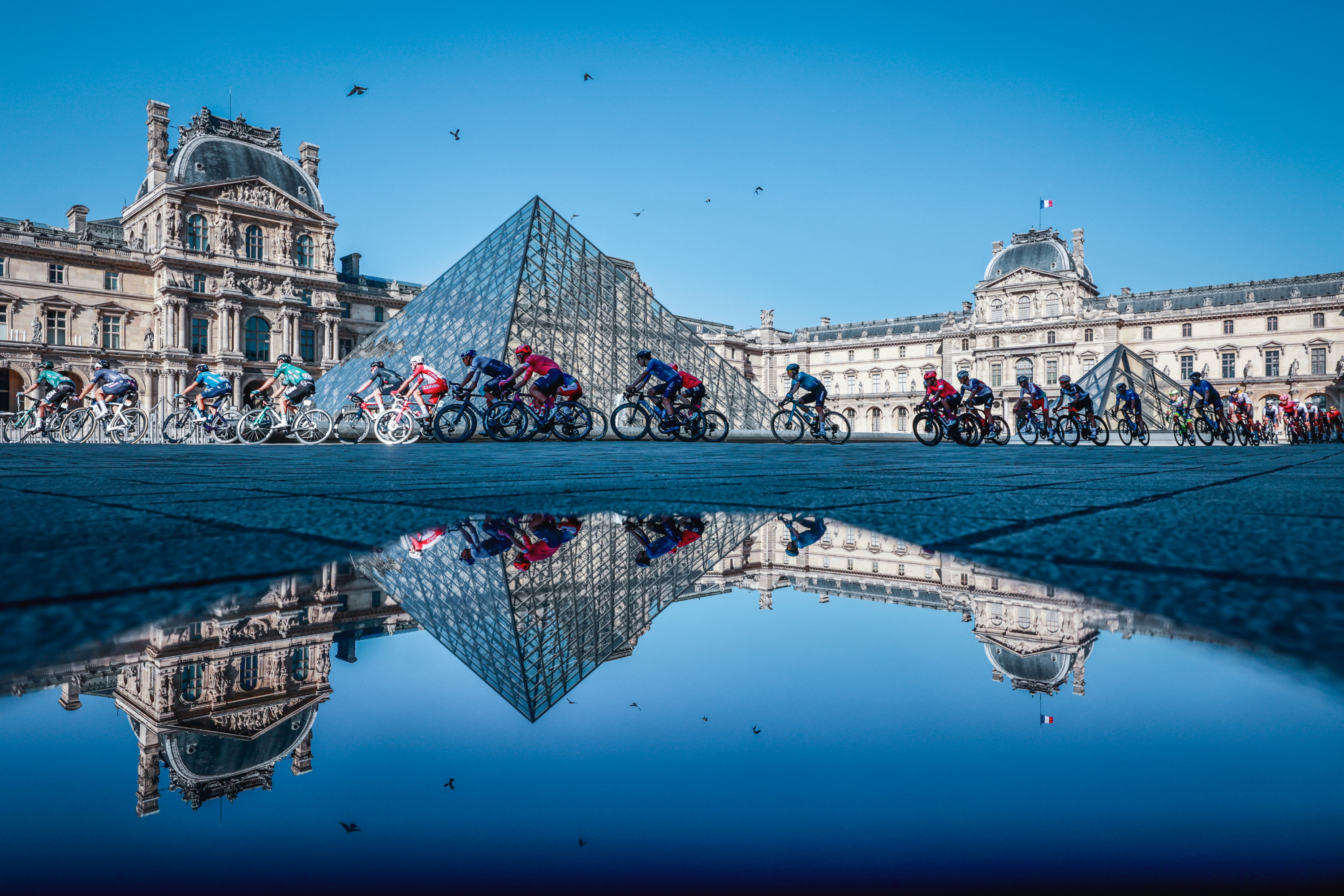
All 18 UCI WorldTour teams and five UCI ProTeams will front up for the Tour de France Grand Départ in Barcelona, Spain on Saturday, July 4.
Each of the 23 teams is permitted to field a squad of eight riders, totalling a maximum 184-strong peloton. (Corrections corner: In my Giro d’Italia preview I mistakenly wrote each team fielded eight riders at the Giro and seven at the Tour; in fact it’s eight riders apiece at all three Grand Tours – my bad!)
It goes without saying that the most hotly contested classification is the battle for the yellow jersey, le maillot jaune.
However that being said, when it comes to Le Tour there is a real fight for the other classifications, too: points (green jersey), mountains (polka dot) and young rider (white).
Furthermore, ever since Tadej Pogačar (UAE Team Emirates-XRG) and Jonas Vingegaard (Team Visma | Lease a Bike) waged their own ding-dong brawl for yellow and showed they’re in a class of their own, that fight for the minor classifications has only intensified.
To avoid turning this into a novella, however, I’ll stick to those individuals vying for a spot on the GC podium in the French capital come July 26.
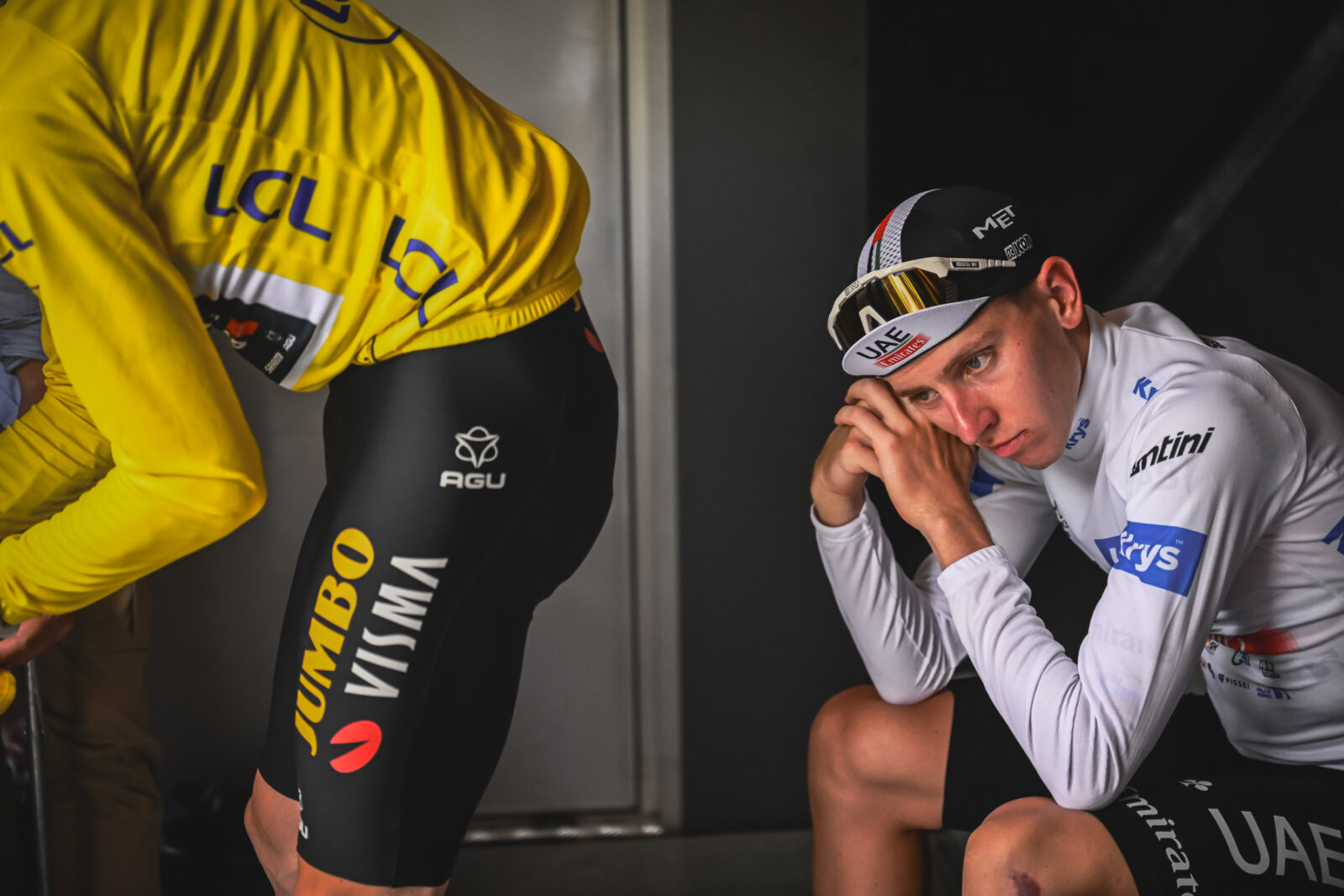
Tadej vs. Jonas
I’ve decided to write about these two in unison, because after Pogačar knocked countryman Primož Roglič off his time trial perch on the penultimate day of the 2020 race and won his first Tour, the battle for yellow has really been about Tadej and Jonas, or, more accurately, Tadej versus Jonas.
Funny thing is, whenever either has won, they’ve won by a relatively comfortable margin. The smallest gap was in 2022, when Vingegaard won by 2’43 over Pogačar; Jonas also boasts the largest winning margin between the two, when, one year later, he trounced The Pog by a cavernous 7’29.
Pogačar’s biggest buffer came in the 2024 edition, when 6’17 separated the pair by the time they reached Paris.
Sometimes there’s a clear reason for it, such as Vingegaard’s horror crash on the fourth stage of the 2024 Itzulia Basque Country, where he said afterwards ‘I thought I was going to die’.
It was a minor miracle he fronted up at that year’s Tour, let alone finished second. Equally, Pogačar’s entanglement with Mikkel Honoré on a descent at the 2023 Liège-Bastogne-Liège, which resulted in a fractured wrist, also put him well behind the eight ball prior to that year’s Grand Départ in Bilbao, Spain.
Some pundits also felt that Pogačar, after becoming the second-youngest Tour winner in 2020, days before his 22nd birthday, took his abundant genetic athleticism for granted, and did not train nearly as well or as hard as he has done for the past two editions.
Indeed, it does feel that the Tadej we see today (sorry, I had to use that pun at least once…) or since 2024 is different to the Tadej of 2020-23, even though he twice won and finished runner-up in those years.
Jonas, on the other hand, has always been disciplined.
It’s been well documented that, in his amateur days, he would work a six-hour stint at a fish factory, gutting and filleting from 6am to noon, before coming home, eating, then going out to train on his bike.
Those experiences have, in no small part, made Vingegaard who he is today and goes some way to explain why he’s a fearsome competitor.
Sure, the 29-year-old has, like Pogačar, oodles of talent on two wheels, but, unlike Pogačar, there has never been any doubt regarding his work ethic or taking life as one of the best paid cyclists in the world as a God-given right.
As far as personalities go they’re complete opposites. Tadej clearly loves the limelight and the majority of cycling fans can’t seem to get enough of the smiley Slovenian; by contrast, Vingegaard is the quintessential cycling introvert and if the opportunity was there to never do another broadcast interview in his life, he’d take it Tadej, er, I mean, today. (Okay, no more bad jokes!)
Where their thoughts align is their desire to win the Tour multiple times.
Another common thread: both have enjoyed unblemished build-ups to the Barcelona Grand Départ. But they have taken completely different routes to get there.
Pogačar began the season with Strade Bianche on March 7, but did not partake in a stage race till April’s Tour de Romandie. Instead he rode the first four Monuments in between and, after Romandie, took six weeks off racing before coming back with a bang at the Tour de Suisse.
Courtesy of a 70km solo effort, he took control of the race on the opening day, then scalped another two stages, and eventually won by 6’32 over Richard Carapaz of EF Education-EasyPost.
Actually, it’s easiest if I tell you the one race he didn’t win: Paris-Roubaix, where he finished second to Wout van Aert.
In stark contrast, Vingegaard only rode stage races to get ready for Le Tour.
Paris-Nice, Volta Ciclista a Catalunya, Giro d’Italia – he won them all. And the Giro he won by 5’22 over Felix Gall and never got out of third gear.
How close is it going to be between these two?
Real close – I hope.
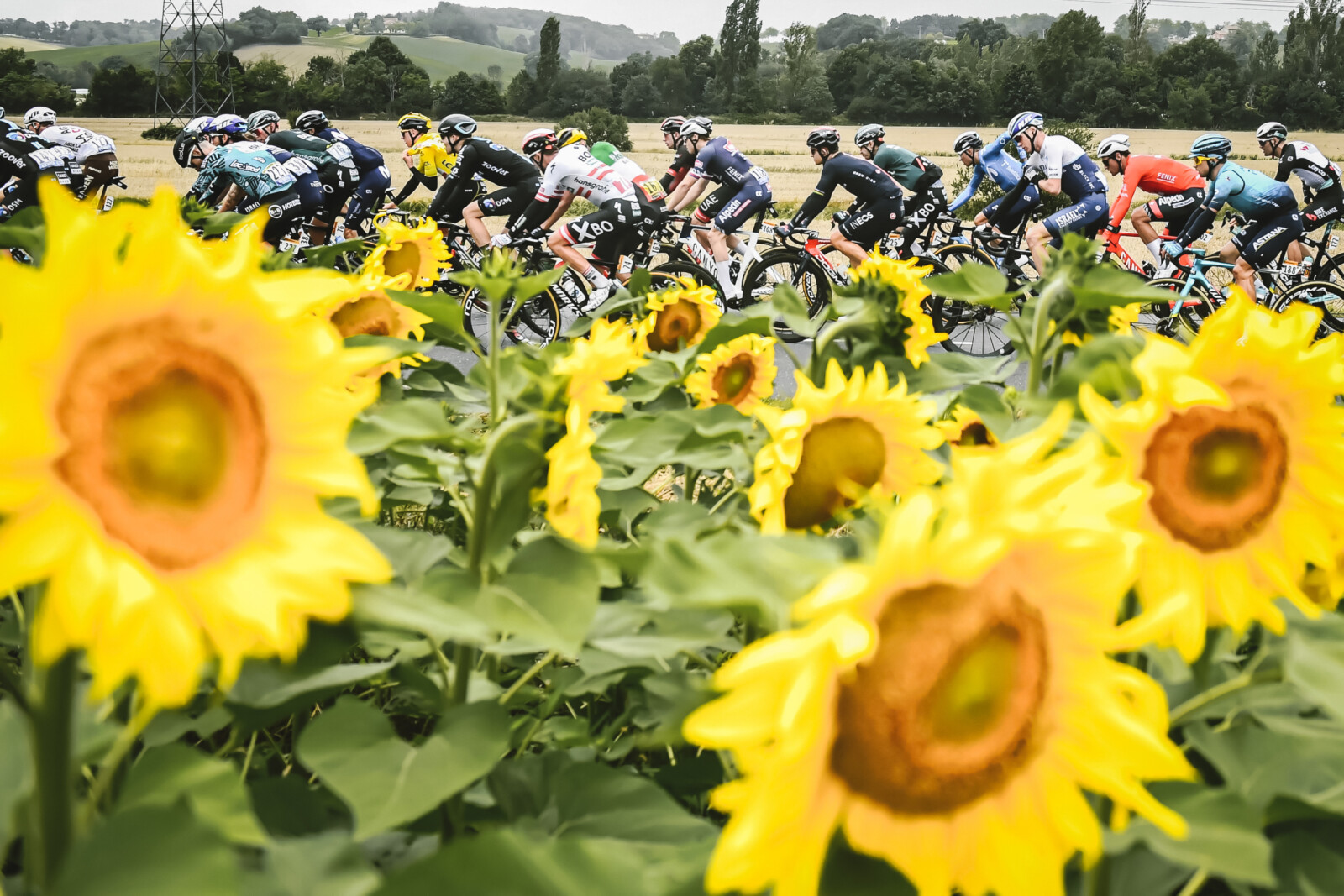
The rest racing for third?
I don’t think it’s disrespectful to say that, misfortune aside, it will be a race for first and then another for third, because if you look at the past five editions of the Tour, that’s how things have unfolded.
Over those years, the closest third has got to second was in 2021, when Carapaz, then riding for INEOS Grenadiers, was 1’43 away from Vingegaard, and in 2024, when Remco Evenepoel, riding for Soudal Quick-Step, was 3’01 off the Dane.
Since 2023, Carapaz has been an EF Education-EasyPost man and has done some fine work there; third overall at last year’s Giro his best Grand Tour result with them.
It feels like he’s been around forever though he’s a young at heart 33-year-old, and the polka dot winner from the 2024 Tour is a perennial fan favourite.
This season he was down to ride the Giro, a race he won in 2019, but was forced to withdraw a week out as he was not recovered enough following surgery to remove a perineal cyst.
His innate ability to reset and refocus saw him reach near-top form at the Tour de Suisse, a fortnight out from the Grand Départ.
2026 marks Evenepoel’s maiden season with Red Bull-BORA-hansgrohe; one would have to say things have gone as well as could be expected, though no better.
Like Pogačar, Remco likes to mix up competing in Classics and stage races and he’s tasted success at both: he won the Volta Comunitat Valenciana (2.Pro) in February and has racked up four one-day victories, the Amstel Gold Race his most noteworthy scalp.
Whenever he’s come up against Jonas or The Pog, however, just like virtually everybody else, he hasn’t fared so well. At the Volta Ciclista a Catalunya, for example, Evenepoel was fifth to Vingegaard, while at the Tour of Flanders and Liège-Bastogne-Liège he was third to a barnstorming Pogačar.
He’ll be sharing GC leadership with Germany’s Florian Lipowitz, third overall at last year’s Tour; given the immense expectation and pressure to perform from the Belgian press and public, I believe that can only be a good thing.
Since March, 25-year-old Lipowitz has enjoyed a rock-solid build-up to Le Grand Shindig: never off the podium in the four stage races he’s contested and finishing runner-up at Itzulia Basque Country (to French phenom Paul Seixas) and the Tour de Romandie (to Pogačar), as well as clocking up a win at the recent Tour of Slovenia.
Seixas: Destined for success or scrutiny?
Ah oui… Paul Seixas of Decathlon CMA CGM Team: 19 years young, hasn’t done the Tour – or any Grand Tour, for that matter – and already with the weight of France on his bony shoulders.
No pressure, mon ami!
In 2025, his first year as a professional, the cycling world took notice when he ran eighth overall at the Critérium du Dauphiné, despite being 8’25 behind Pogačar.
In August he won the ‘Race of the Future’, otherwise known as the Tour de l’Avenir, and at his first elite road worlds in Kagali he finished a very respectable 13th, again won by The Pog.
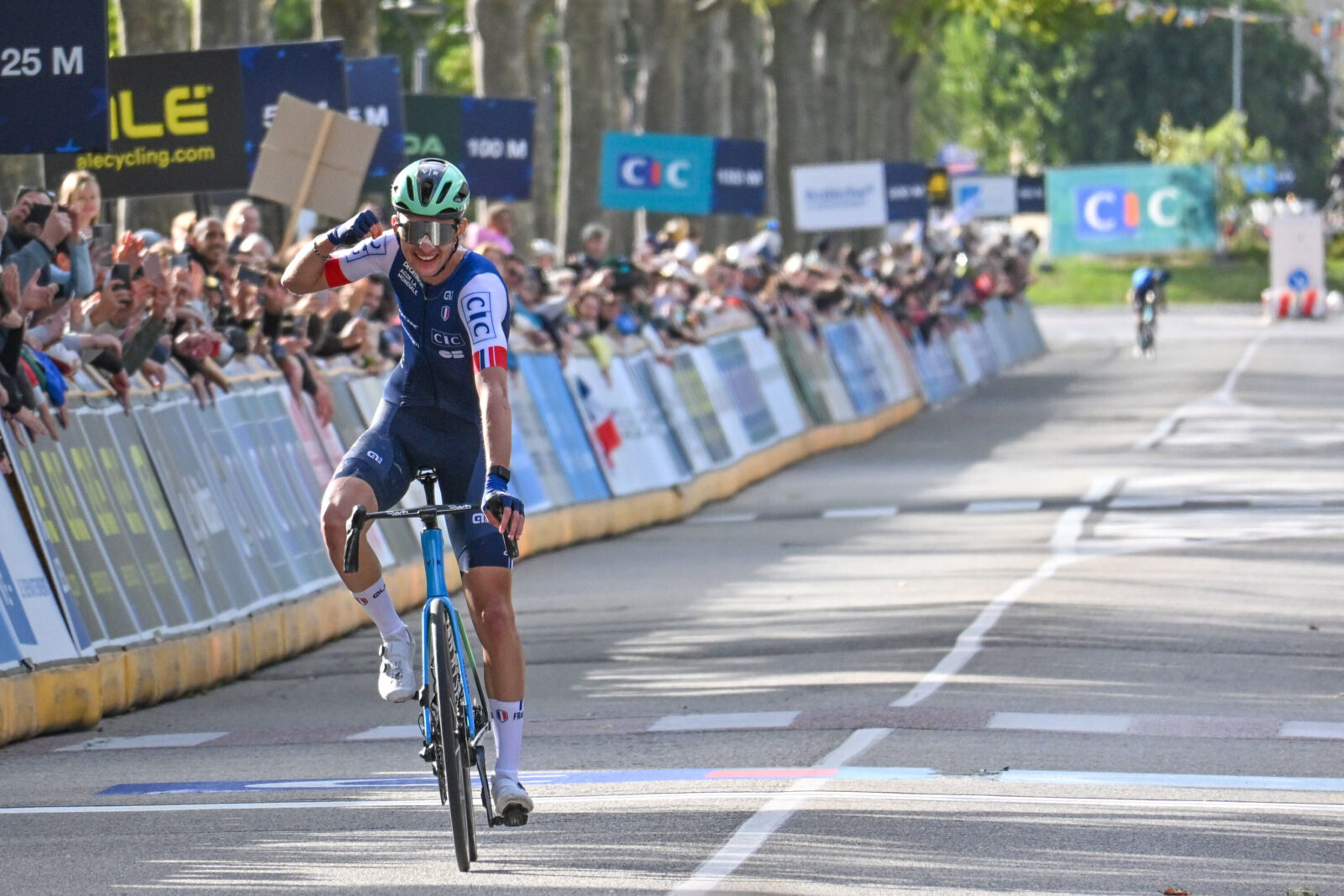
This season has gone even better: overall victory at Basque Country and a win at Flèche Wallonne; second at the Tour of Algarve, Strade Bianche and Liège-Bastogne-Liège.
But he still hasn’t ridden a Grand Tour. Yet for three weeks this summer in France so much is expected of him.
He crashed and pulled out of the Tour Auvergne-Rhône-Alpes in June but it shouldn’t affect his performance in July. If he can somehow pull off a stage win and/or finish in the top 10, I’d say that would be a resounding debut for the lanky Lyonnais.
Teams targeting general classification tend to work best when centred around rider and one strategy; UAE Team Emirates-XRG and Team Visma | Lease a Bike being prime examples.
However over three-and-a-half weeks and 3,333 kilometres anything can happen, and should something adverse befall Pogačar, his team-mate Isaac del Toro isn’t a bad back-up.
Other than Pogačar himself and Vingegaard, out of the other GC contenders lining up on July 4, the Mexican has had the best Season 2026 results to date, with overall victories at the UAE Tour, Tirreno-Adriatico and Tour Auvergne-Rhône-Alpes.
Of course, it won’t be discussed at the dinner table because it’ll be all-in for Le Pog at UAE Team Emirates-XRG, and the Slovenian is almost Teflon-like when it comes to making a misstep or incurring mishap.
Should both Pogačar and del Toro both make it to Paris in one piece, it’s entirely possible to see them side-by-side on the dais.
Still, accidents happen, particularly in a sport as dangerous as cycling – and in particular at the race with the highest stakes of them all.
Finally, I would probably give equal weight to two Spaniards, Carlos Rodríguez (Netcompany INEOS) and Juan Ayuso (Lidl-Trek), of finishing in the top five.
Two years back, Rodríguez did indeed finish fifth in his debut Tour de France and won a high mountain stage at the back end of the second week, also coming second to Pogačar in the youth classification.
For a few reasons, the rider from beachy Almuñécar on Spain’s Costa Tropical hasn’t made inroads since; now 25, while still young, he probably needs the same result or better to retain his status as a leader going forward. His results to date suggest a repeat of the summer of ‘23 will be a challenge.
Ayuso was one of the big buyouts from Season 2025, moving on from UAE Team Emirates-XRG to Lidl-Trek at considerable expense. His 2022-23 seasons showed plenty of promise with third and fourth overall placings at the Vuelta a España but he has scored only the ignominy of a DNF at the Giro and Tour.
This year has so far been a rollercoaster for Ayuso: a win at the Volta ao Algarve in February; consecutive DNFs at Paris-Nice and Basque Country in March and April, respectively; then, a fortnight out from the Grand Départ, finding his legs at the Tour Auvergne-Rhône-Alpes, finishing third overall with two second places on the final two stages.
Eighteen months younger than Rodríguez and full of promise, time is certainly on his side. But in light of what – or, more accurately, who – he’s up against in July, it would take a massive effort to finish in the first five and a gargantuan one to stand on the Paris podium.
What about the Australian hopes?
It’s fair to say there’s plenty of optimism for Australian cycling fans this year, with 11 Australians set to be at the start line on Saturday.
They arrive as one of the deepest and most versatile contingents in recent memory, and a group genuinely capable of challenging for stage victories across almost every terrain.
As expected, the largest representation comes from Team Jayco AlUla, which has selected five Australians in Ben O’Connor, Michael Matthews, Luke Plapp, Luke Durbridge and Kelland O’Brien.
The country’s best hope in the general classification likely remains O’Connor.
The West Australian has firmly established himself among the world’s elite Grand Tour riders, and if he can emerge from the often-chaotic opening week unscathed, a top-five finish is not beyond reach.
More realistically, O’Connor enters the race as a genuine top-10 contender, with the long climbs and demanding final week likely to suit his strengths.
Meanwhile, Luke Plapp’s aggressive style and willingness to attack from distance make him an exciting wildcard, particularly on rolling and medium-mountain terrain.
Then there’s Michael Matthews, returning for yet another Tour campaign with the experience and racecraft that have defined his career. The veteran all-rounder has made a habit of winning the stages others overlook, and his ability to thrive on punchy, unpredictable parcours means he can never be discounted, even with recent injuries.
Finally, Melbourne’s Kelland O’Brien, lining up for his first Tour, is definitely one to watch.
Beyond Jayco AlUla, Michael Storer, lining up for Tudor Pro Cycling, heads to his third Tour de France as one of Australia’s most intriguing prospects. A proven climber with a flair for the long-range attack, he shapes as a genuine contender for a mountain stage victory and could even emerge as a challenger for the polka-dot jersey.
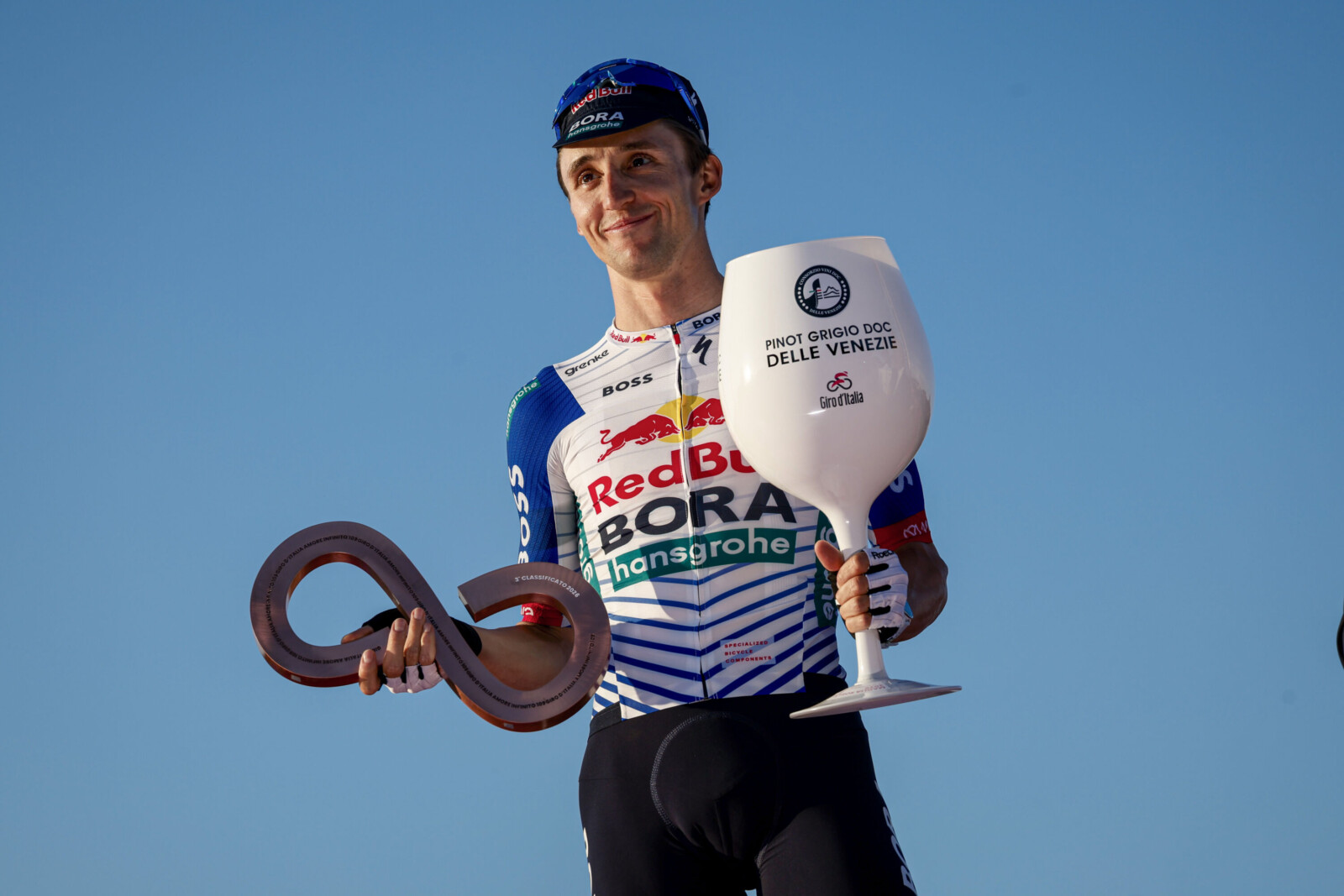
Jai Hindley also remains one of the peloton’s premier climbers and a proven Grand Tour winner, fresh from a hugely deserved third place at the Giro d’Italia.
While team responsibilities may influence his opportunities for Red Bull – BORA – hansgrohe at the Tour, few riders are better equipped to capitalise when a mountain stage opens up.
In addition, Chris Harper shapes as one of Australia’s dark horses for the race. He’s been selected alongside Adelaide’s Damien Howson in the Pinarello Q36.5 Pro Cycling Team squad built around Tom Pidcock.
Harper has the climbing ability and race craft to make an impact if afforded the freedom to hunt stages in the high mountain, while Howson is a proven climber.
Elsewhere, Robert Stannard lines up for Bahrain Victorious, a team expected to balance stage-hunting ambitions with support duties for general classification hopeful Antonio Tiberi.
Meanwhile, Brisbane’s Sebastian Berwick will make his Tour de France debut with Caja Rural-Seguros RGA, giving the Spanish outfit a strong option in the mountains as it embarks on its long-awaited return to cycling’s biggest race.
2026 Tour de France: Prize money
| Position | Total |
| 1st overall | €500,000 |
| 2nd | €200,000 |
| 3rd | €100,000 |
| 4th | €70,000 |
| 5th | €50,000 |
| 6th | €23,000 |
| 7th | €11,500 |
| 8th | €7,600 |
| 9th | €4,500 |
| 10th–20th | €23,200 |
Other classifications
Stage winners: €11,000 (2nd: €5,500; 3rd: €2,800)
Points (green jersey): €25,000 for the winner
Mountains (polka-dot jersey): €25,000 for the winner
Best Young Rider (white jersey): €20,000 for the winner
Best Team: €25,000
Combativity Award: The most combative rider of each stage receives €2,000. The most aggressive rider over the three weeks takes home €20,000.
Mountain passes and sprints: The first rider to cross a hors catégorie climb receives €800; intermediate sprints offer €1,500 for first to cross.
Anthony Tan
Anthony Tan - One of Bicycling Australia’s longest-serving columnists, ‘Tan Man’ has a deep passion for the sport and is a natural communicator.

Mike O’Connor – A keen cyclist, runner and photographer, Mike O’Connor is the Editor of Bicycling Australia. He manages the BA website and social media, and loves promoting the achievements of Australian cyclists.