Mike O'Connor
The 2027 Tour de France will feature 71km of individual time trialling, a challenging run through the Alps and a decisive final week in the Pyrenees, with Tadej Pogačar targeting a record sixth overall victory.
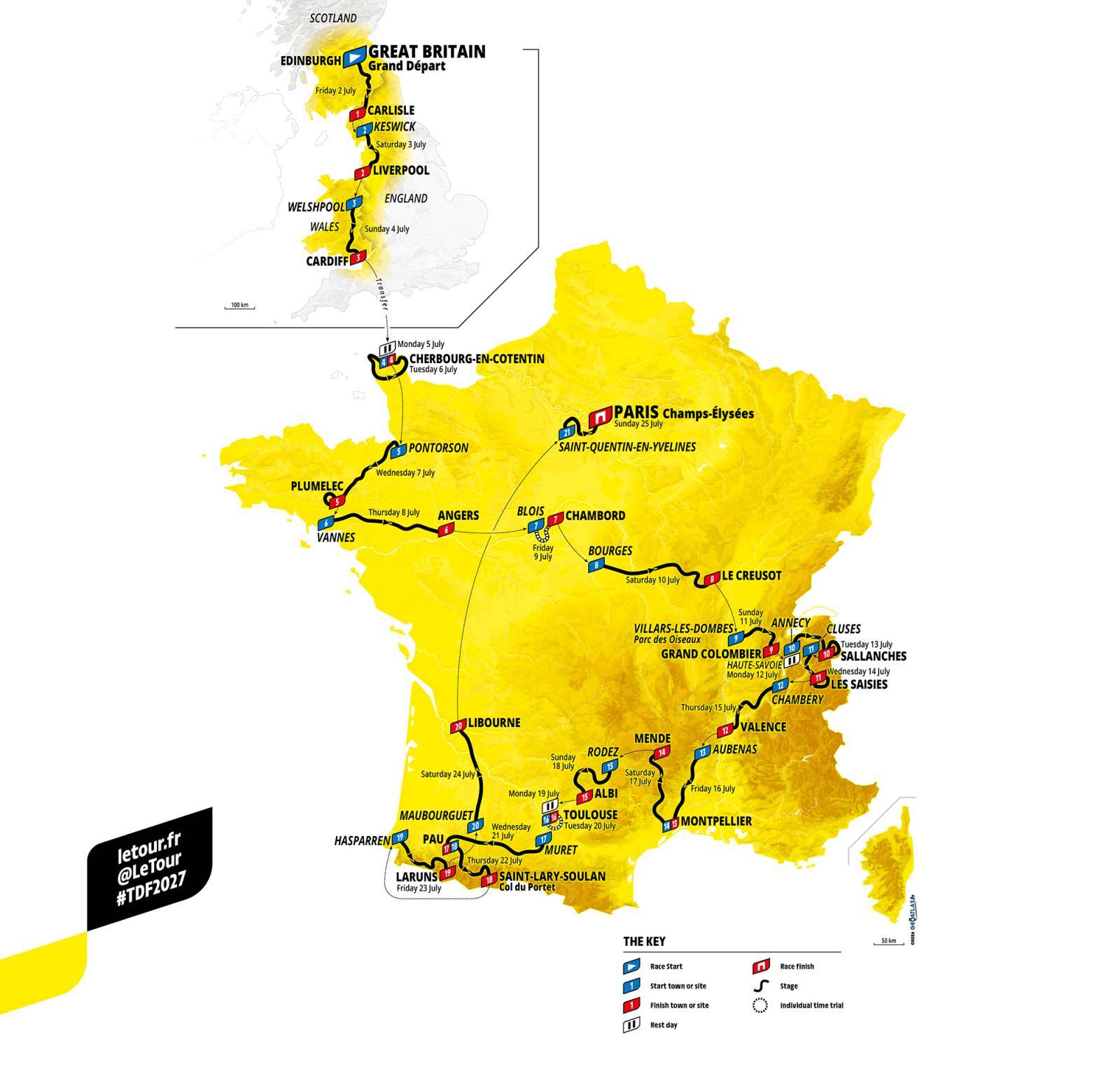
The 114th edition will run from July 2 to 25, starting in Edinburgh, Scotland, before travelling through England and Wales and crossing into France. Organiser ASO unveiled the full route in Paris on Thursday, October 22.
After starting in Barcelona in 2026, the Tour will head north for its most northerly Grand Départ in history, surpassing Copenhagen’s start in 2022. It will be the fifth time in six years that the race has begun outside France.
The opening three stages will take place in Scotland, England and Wales, with the rolling terrain expected to provide opportunities for aggressive racing before the peloton reaches the high mountains.
Tour director Christian Prudhomme described the Welsh stage as resembling Liège-Bastogne-Liège, the demanding Belgian one-day classic. The early racing, he said, is designed to keep the general classification unsettled, pitting the world’s best puncheurs against the overall favourites.
The race then crosses into France, where exposed coastal roads on the Cotentin Peninsula in Normandy could make wind a factor. The first major mountain test arrives on Stage 9, finishing atop the Grand Colombier in the Jura.
Time trials aplenty
The 71km of individual time trialling is the most at the Tour since 2012, giving specialists a significant opportunity to gain time before the decisive mountain stages.
Stage 7 features a 38km time trial from Blois to Chambord, while Stage 16 brings a further 33km test around Toulouse after the second rest day.
The distances should suit Remco Evenepoel, the Olympic and world champion in the discipline, who will be looking to gain time on Pogačar before the race reaches its toughest climbs.
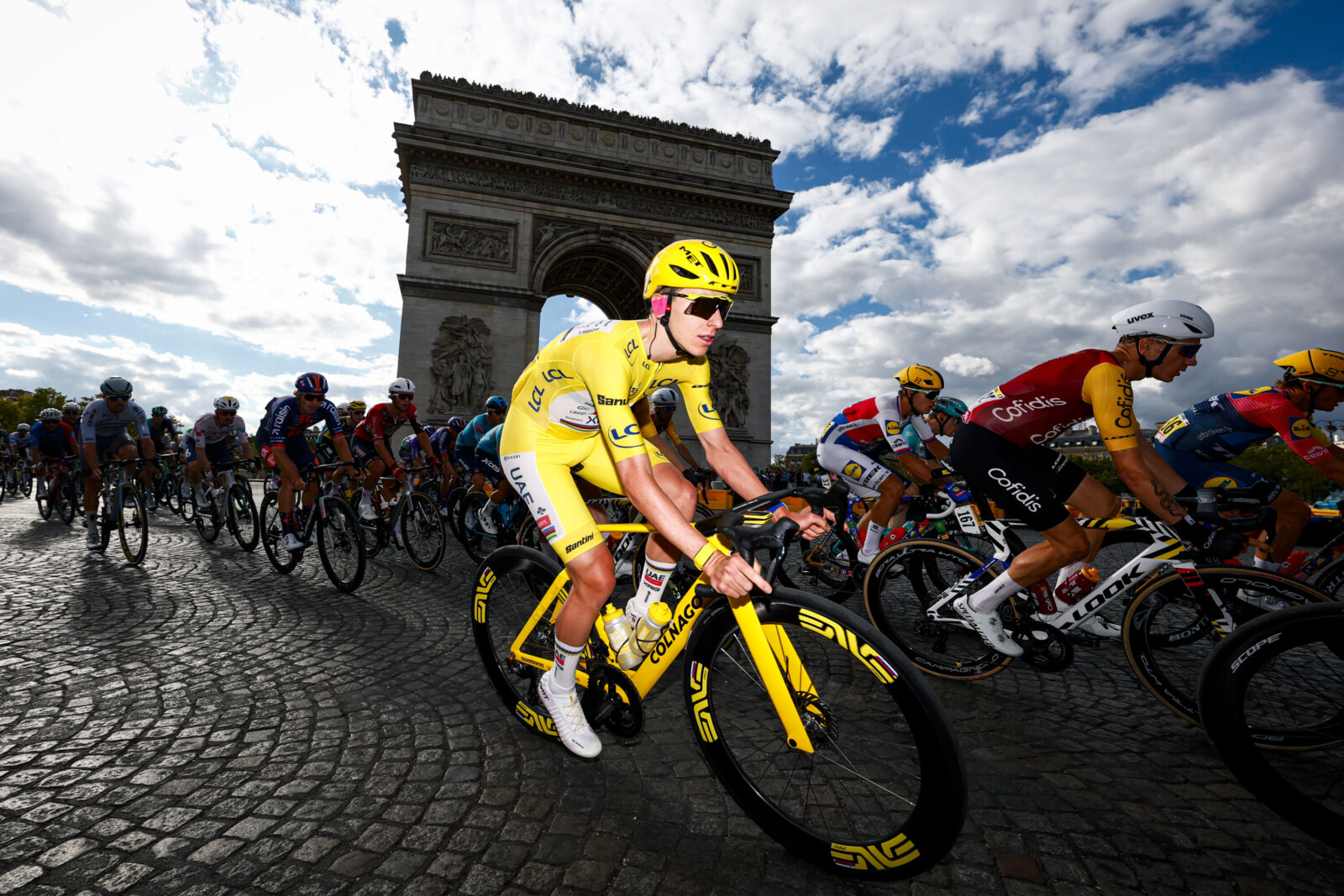
Pogačar, meanwhile, will be chasing a sixth Tour title to move clear of the five-time winners Jacques Anquetil, Eddy Merckx, Bernard Hinault and Miguel Induráin.
Despite the substantial time trial mileage, the mountains will ultimately offer the biggest opportunities to reshape the general classification. The route includes 28 categorised climbs and 53,450m of total elevation gain.
Pyrenees set to decide the general classification
The final week will be dominated by the Pyrenees, with two consecutive mountain stages on July 22 and 23 offering the last major opportunities for the overall contenders to gain time.
Stage 18, from Pau to the Col du Portet, is set to be the race’s queen stage. The 174km route finishes at 2,215m above sea level, making the Col du Portet the highest point of the 2027 Tour.
The following stage heads from Hasparren to Laruns over 160km, featuring the Basque climbs of Burdincurutcheta and Bagargui, which return to the race for the first time since 2023.
The back-to-back stages are likely to prove decisive, particularly for riders who have lost time in the time trials. With the Tour’s final major mountain tests packed into two days, there will be little opportunity to recover from a poor performance.
Several of the Tour’s best-known climbs will be absent from the 2027 route, including Alpe d’Huez, Mont Ventoux, the Galibier and the Izoard.
Instead, organisers have opted for a different combination of ascents, including the Tourmalet and Col du Portet. Prudhomme said showcasing less familiar climbs was part of the route’s appeal, with the two Pyrenean mountains linked for the first time in the race.
The Tour will also pass through Domancy, which will host the UCI Road World Championships the following month.
Sprinters get one last chance before Paris
The penultimate stage on July 24 is expected to offer the sprinters one final opportunity, with a 198km route from Maubourguet to Libourne.
The Tour concludes on July 25 with a 116km stage from Saint-Quentin-en-Yvelines to Paris. The route will again feature the climb of Montmartre, which has added an extra tactical dimension to the traditional Champs-Élysées finale over the past two editions.
Wout van Aert won in 2025, while Mathieu van der Poel held off the charging peloton in 2026, with assistance from eventual overall winner Pogačar.
Whether the final stage produces another surprise or a conventional sprint finish, the general classification should be largely settled by the time the riders leave the Pyrenees.
With substantial time trial mileage, varied terrain in the opening stages and a demanding mountain finale, the 2027 route offers a different challenge for Pogačar as he pursues a sixth Tour victory.
Tour de France 2027 at a glance
- Dates: July 2–25, 2027
- Start: Edinburgh, Scotland
- Finish: Paris, France
- Total distance: approximately 3,479km
- Total elevation gain: 53,450m
- Individual time trials: Two, totalling 71km
- Mountain stages: Six
- Highest point: Col du Portet, 2,215m
- Key stages: Grand Colombier (Stage 9), Col du Portet (Stage 18) and the Basque climbs (Stage 19)

Mike O’Connor – A keen cyclist, runner and photographer, Mike O’Connor is the Editor of Bicycling Australia. He manages the BA website and social media, and loves promoting the achievements of Australian cyclists.