
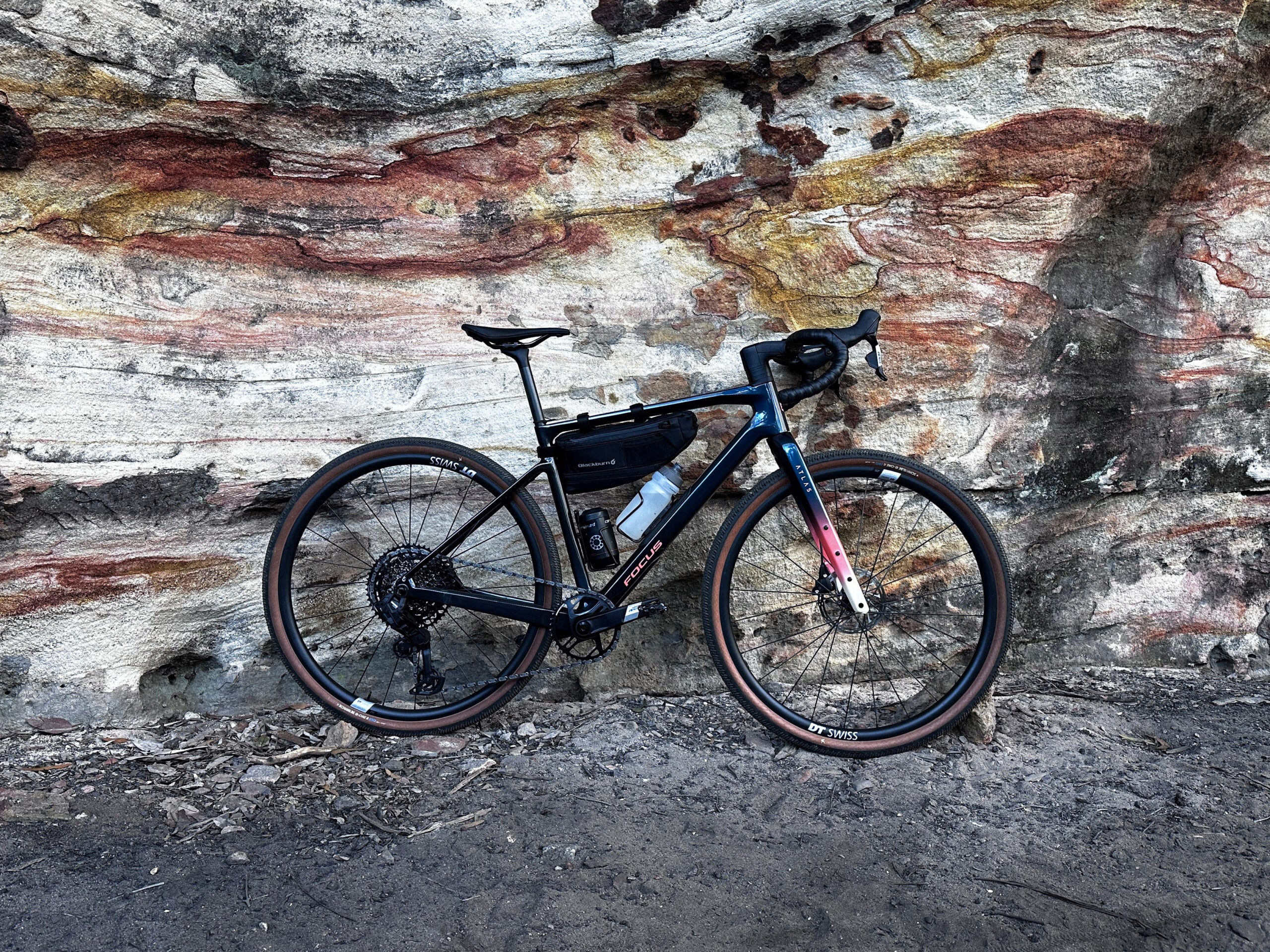
Proudly marketed under the slogan ‘Made to lose’, the Focus Atlas is a gravel bike very intentionally designed for all-terrain adventures rather than winning races.
It’s been around for about five years now, but with the release of the 2026 Atlas model it’s fair to say Focus has seriously upped the performance of its adventure platform – something that became very clear as I explored a variety of local trails on the all-carbon Atlas 8.8.
First impressions
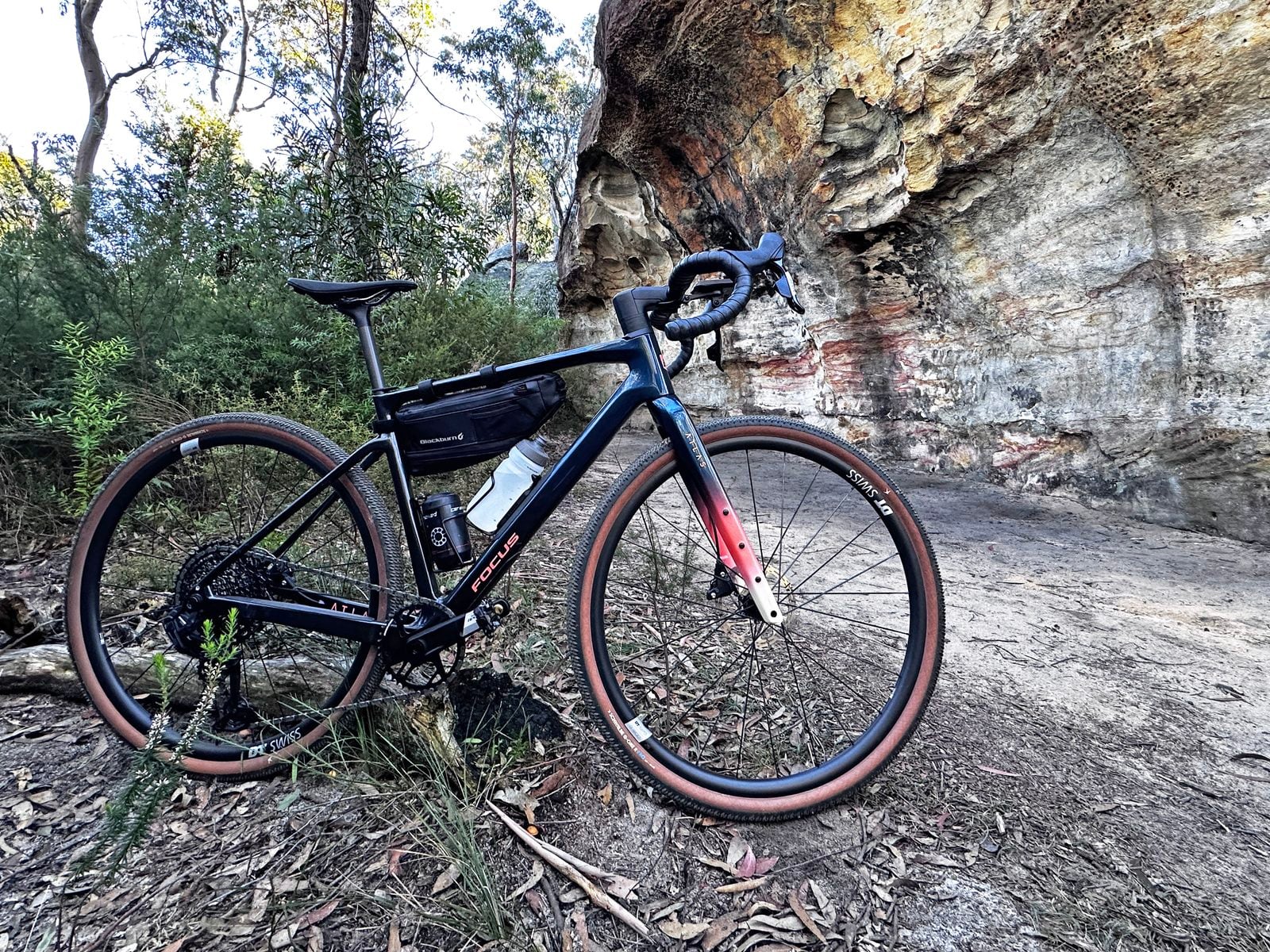
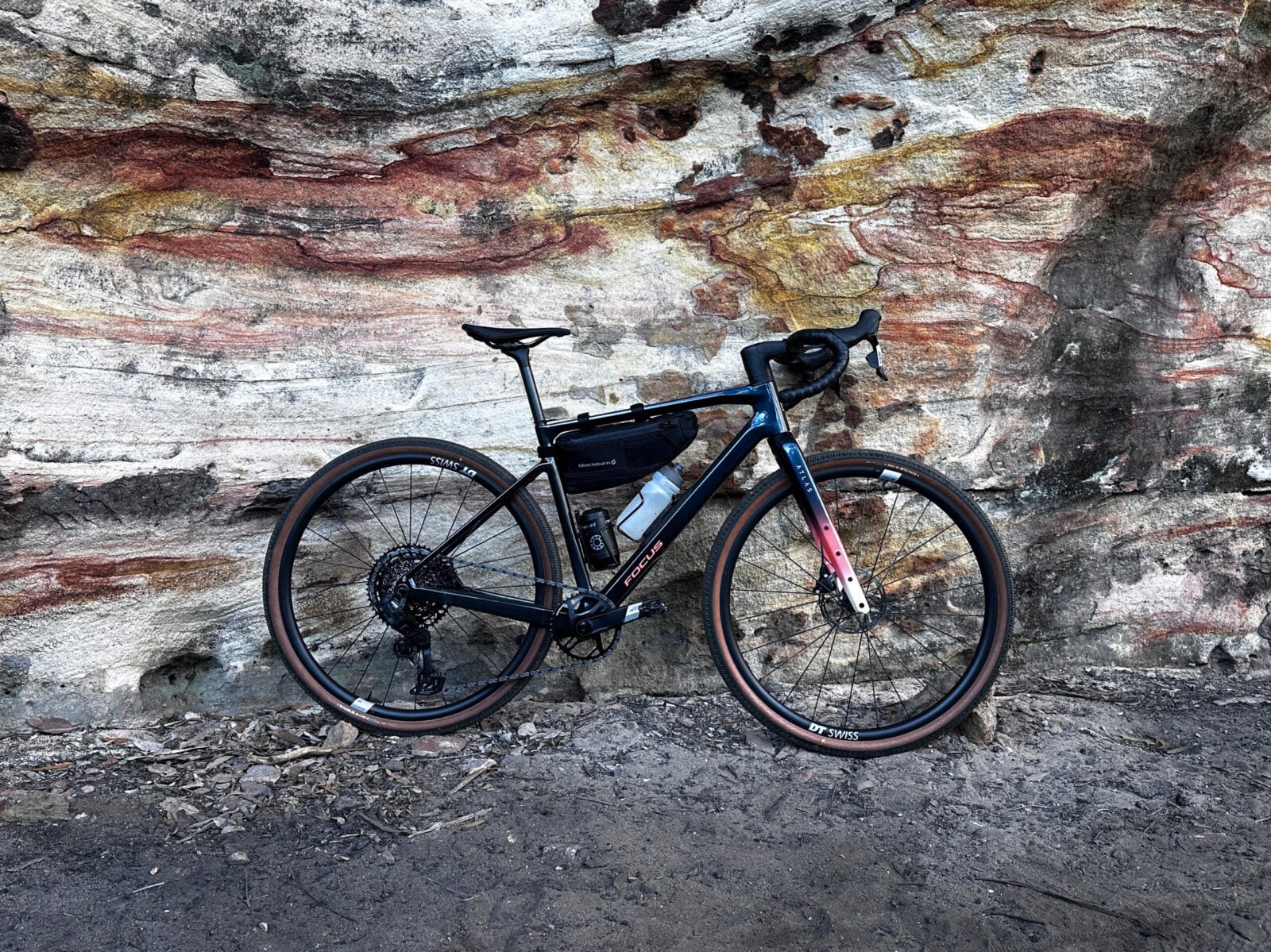
Robust and well equipped, the Focus Atlas 8.8 is as sturdy to look at as it is to ride. Even before you pick it up you know it’s going to be reasonably hefty, and it is.
Claimed weight is 9.7kg while I weighed the review build (medium frame) at 9.8kg without bottle cages.
It’s no whippet, but that also brings several advantages for more relaxed off-road riding as we’ll get to in a moment.
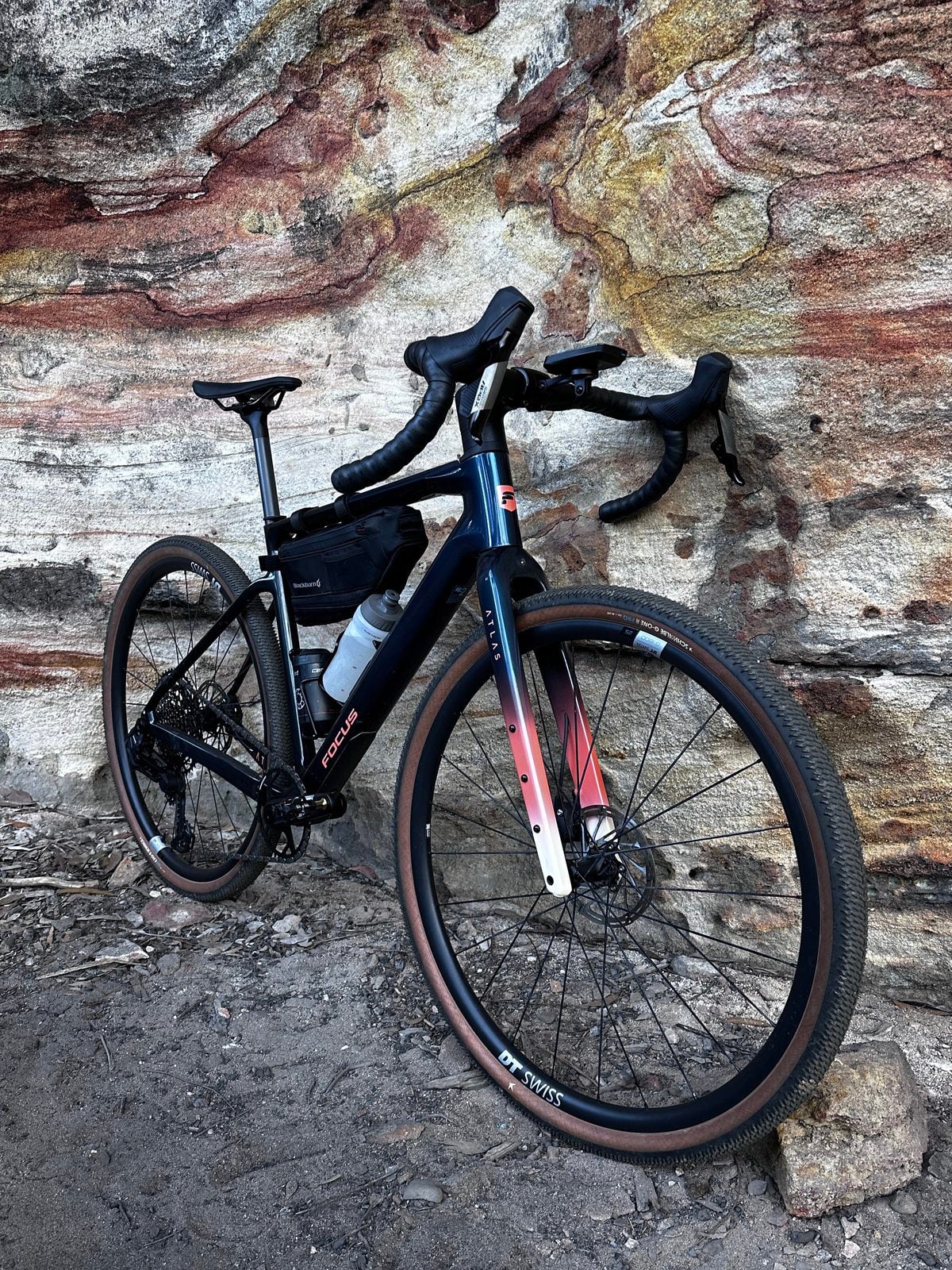
With largely internal cable routing the styling is quite modern and the silhouette is clean. All in all, it’s a good looking bike.
Frame and geo
Focus says the all-carbon frame geometry of the 2026 Atlas has been ‘sharpened’ but for me (someone who never rode the previous model) it’s still presents as a very comfortable endurance-oriented ride.
In a medium frame size the stack is 7mm shorter, the head angle is half a degree slacker and the wheelbase is 5mm shorter than the outgoing model.
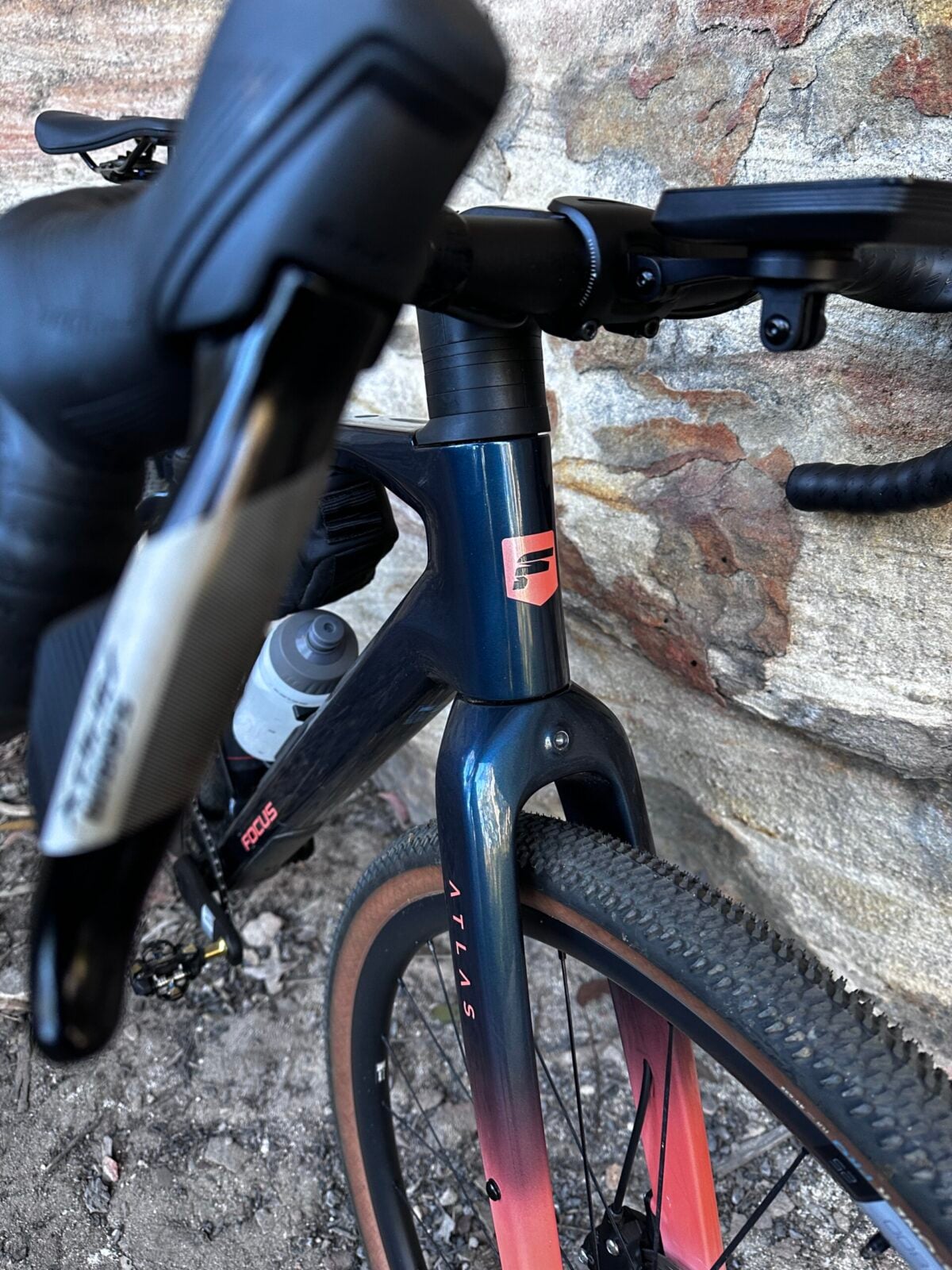
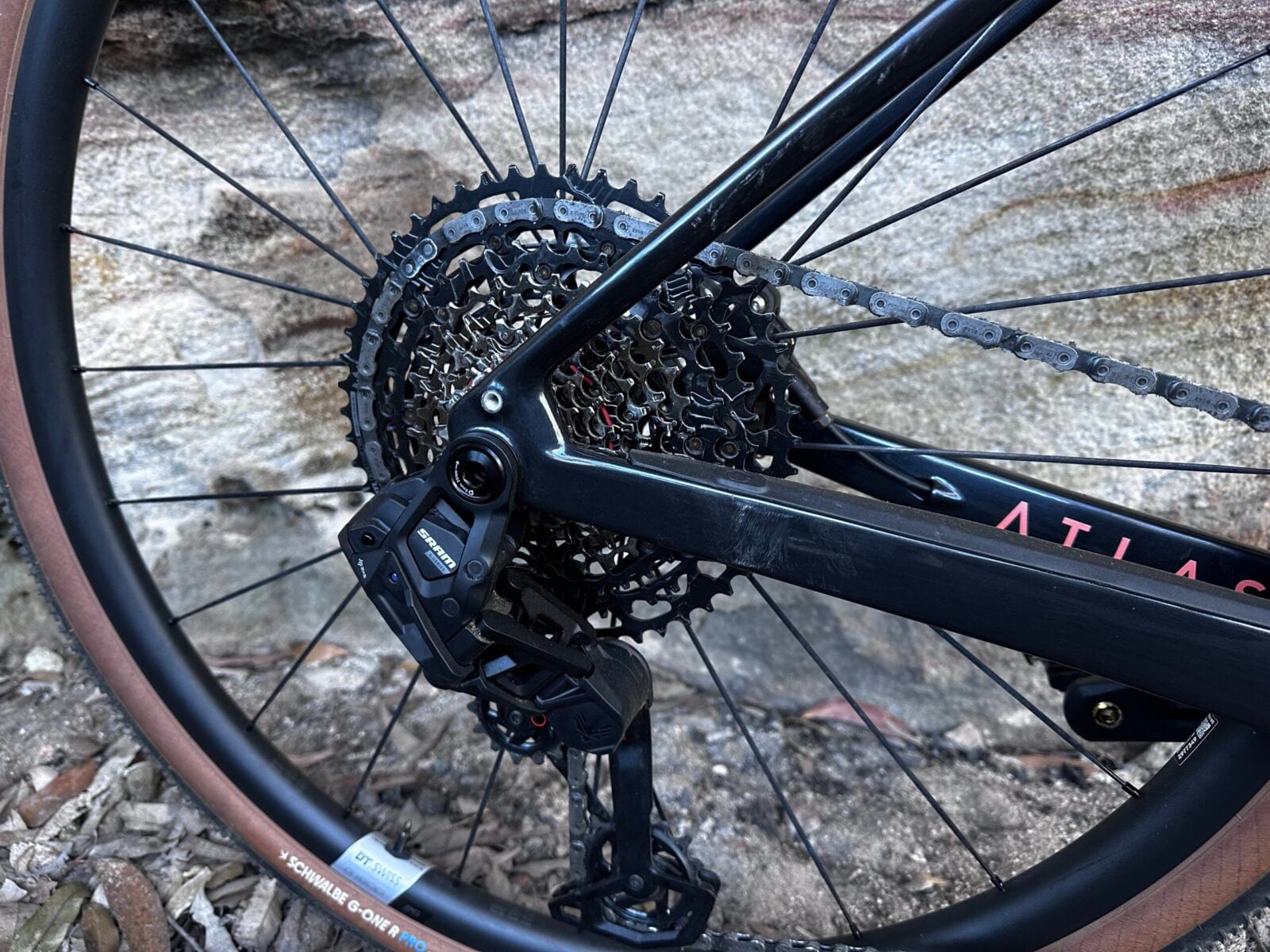
The top tube is also 17mm shorter which creates a more compact and, theoretically, more responsive riding position.
At a far more pragmatic level the new Atlas frame also features what Focus calls a ‘prep pocket’ in the down tube.
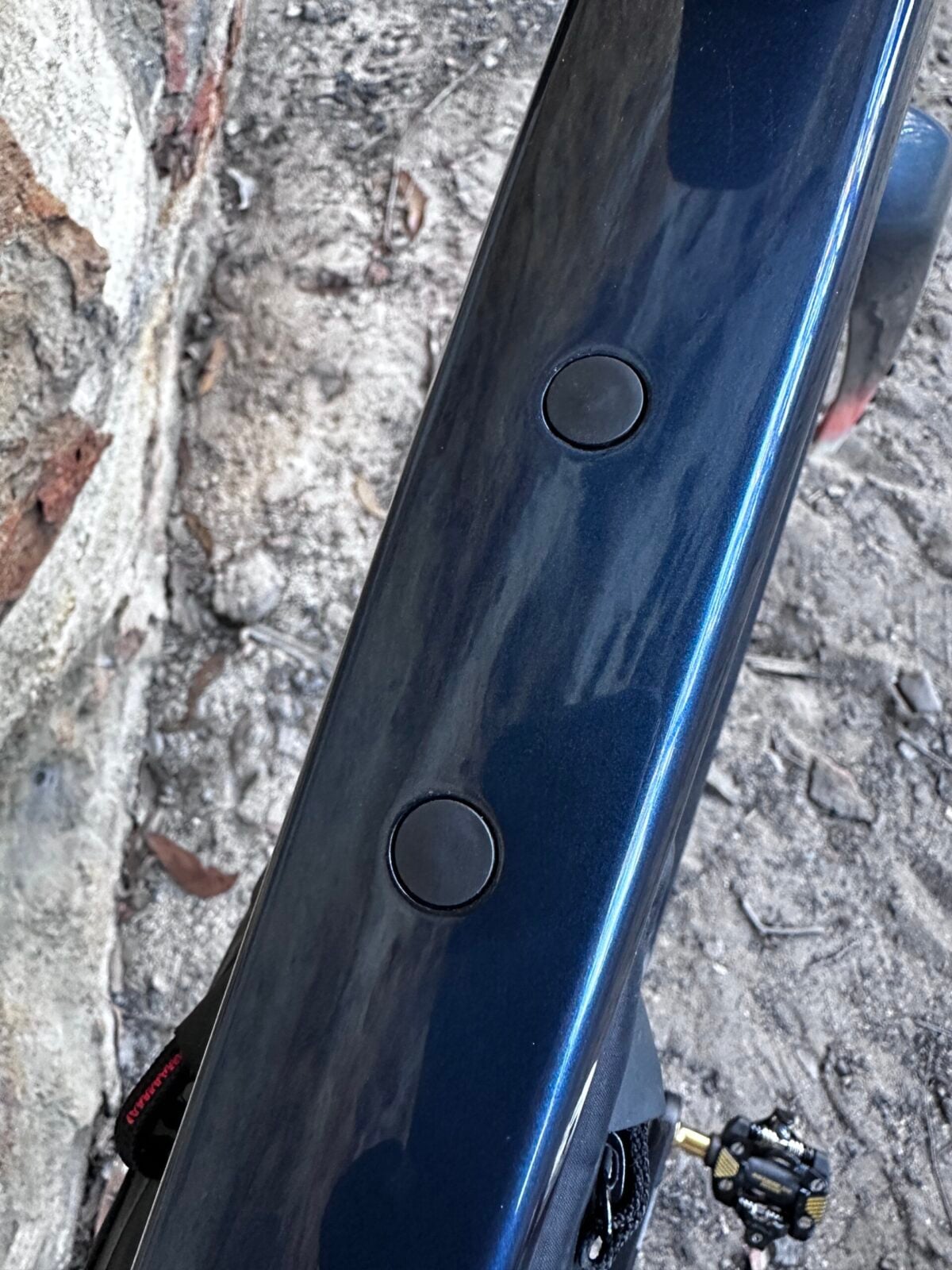
Basically an easy-to-access compartment behind the bottle cage that provides a little extra storage which I found genuinely useful.
There’s also an ample supply of mounts for panniers and bags on the fork and frame itself. Maximum recommended load on the fork is 3kg per side.
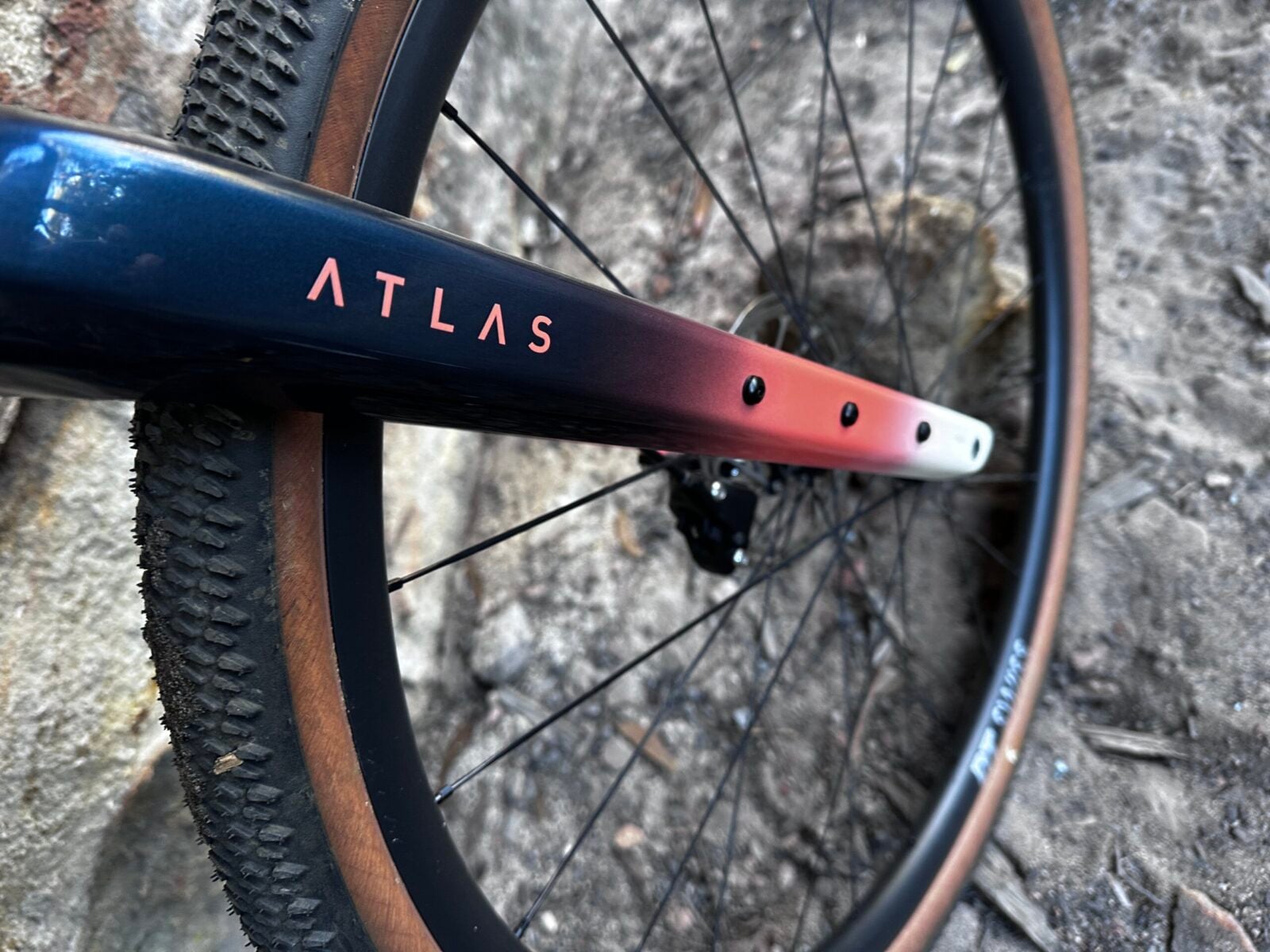
One of the more significant changes to the new Atlas is the removal of the wider ‘Road Boost’ hub spacings found on the ongoing model.
This means the 2026 fork and frame return to standard 12 x 100mm front and 12 x 142mm rear axle dimensions.
Introduced on earlier Atlas gravel models to increase lateral wheel stiffness and tyre/chain clearance for heavy-duty bike packing, Road Boost was generally considered a nightmare for wheel upgrades, suggesting few are likely to miss it.
Wheelset and components
The Atlas 8.8 features a versatile DT Swiss G 1800 wheelset with robust alloy rims (inner width 24mm, outer width 28mm) that can really take a beating – particularly when shod with Schwalbe G-One R Pro 45mm tubeless tyres being run at low pressures, 35-40psi in my case.
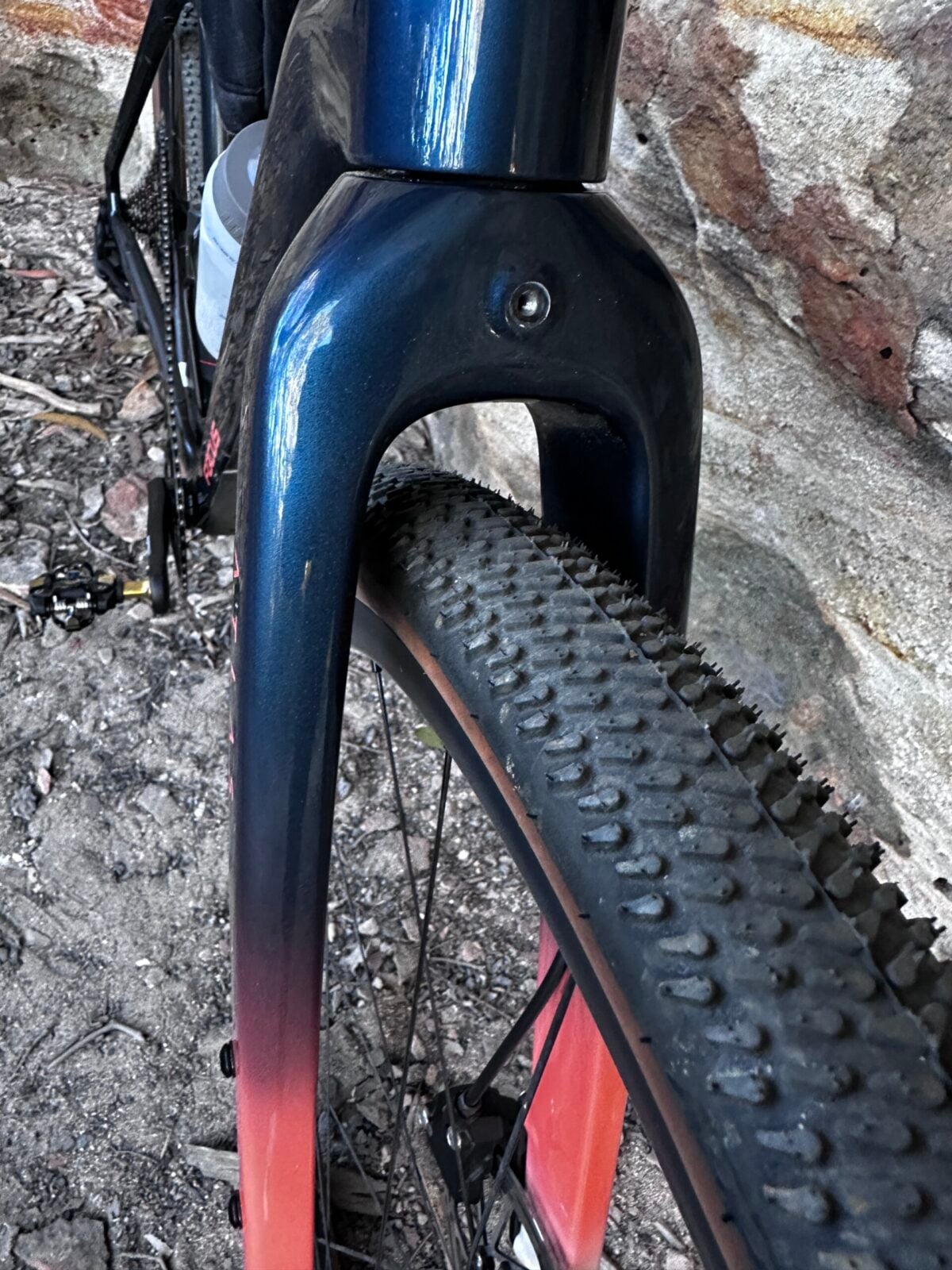
The rims weigh around 1,900 grams for the pair and can support a maximum system weight of 135kg – important if you’re touring with fully-laden panniers.
Throw some carbon rims on and you’ll certainly save some weight and likely enhance the bike’s agility, but you may also restrict the amount of luggage you can cart around.
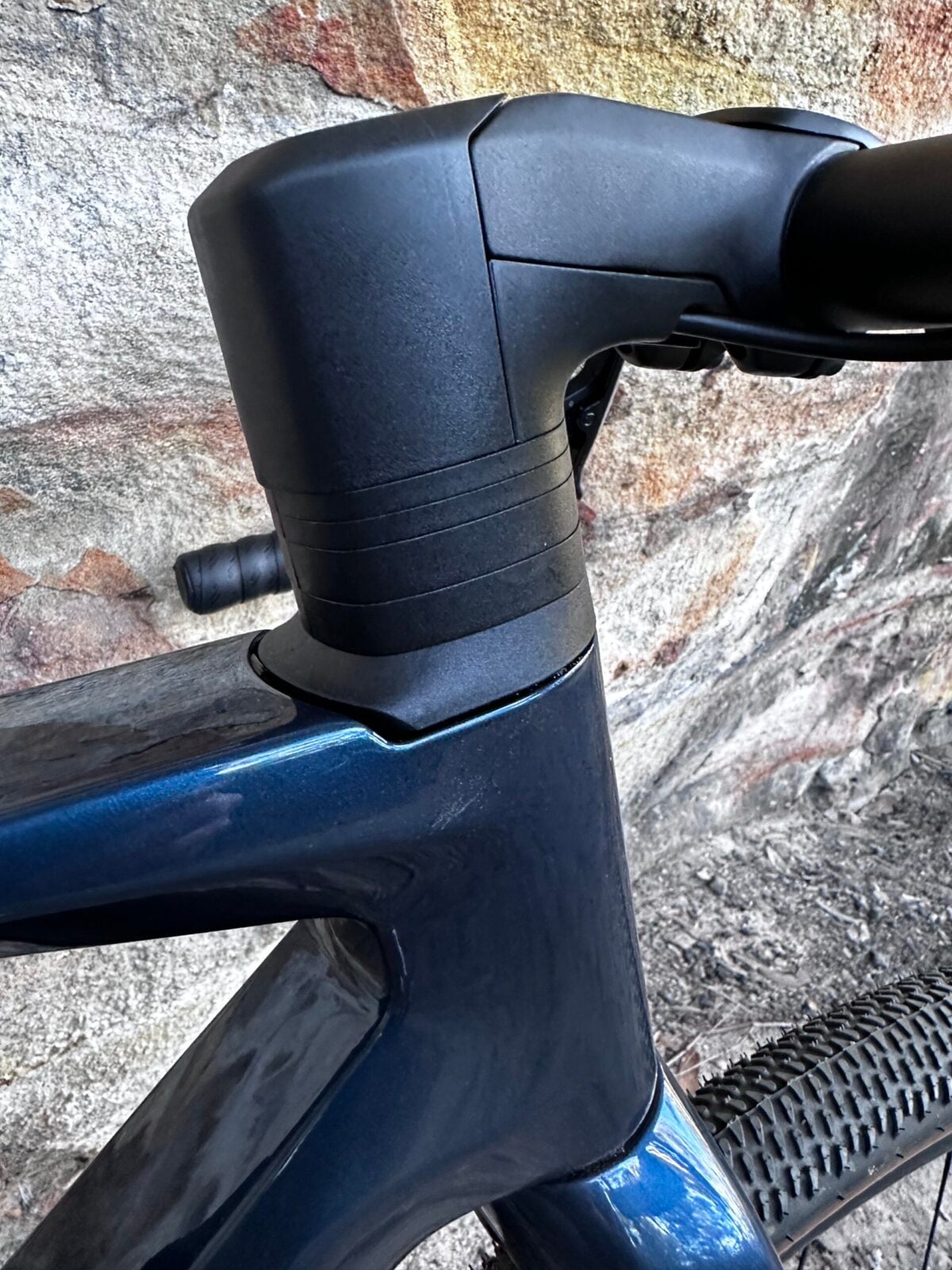
Up front, the two-piece cockpit includes an alloy gravel handlebar (31.8mm) with 115mm drop and modest 16° of flare. A CIS 2.0 stem routes the cables neatly under a removable cover rather than running as a completely internal system.
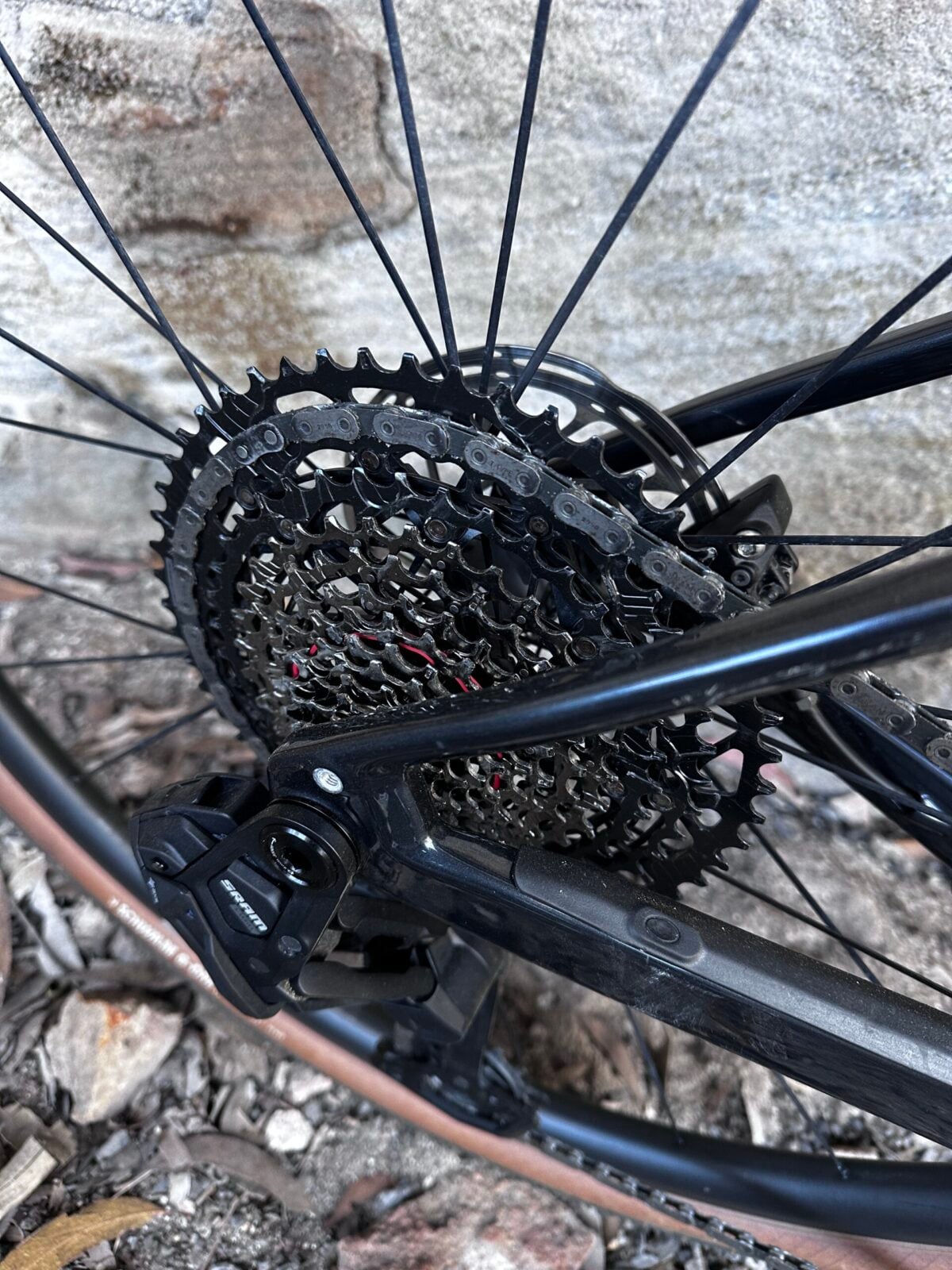
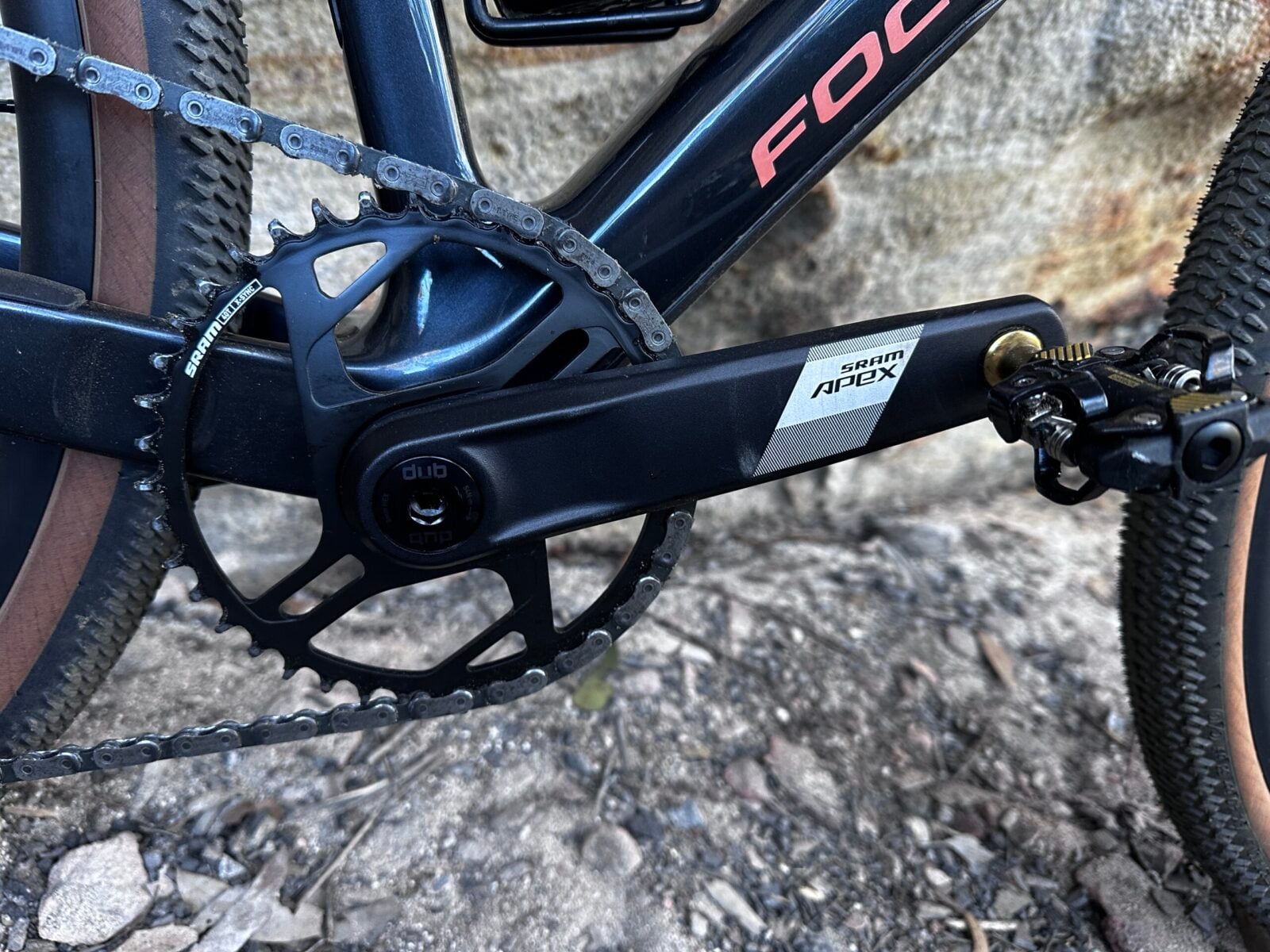
Equipped with a 10-52T cassette and 40T chainring the SRAM Apex AXS D1 1×12-speed groupset provides reliable electronic shifting and a good range of gearing for most terrain.
The ride
Whether moving fast or slow, through straight lines or corners, on smooth surfaces or corrugations the Atlas 8.8 felt ultra smooth, stable and endlessly reliable.
This filled me with the confidence to take it pretty much anywhere whatever the conditions. The handling is steady more than sharp, resulting in a well behaved ride with few surprises.
It’s a comfortable riding position too, quite upright, making it suitable for long and winding days in the saddle.
As already mentioned, it’s a bit heavy and certainly isn’t what you would call spritely bike but you get there and the gearing is ample for all but the steepest of gravel pitches.
As just one example, I took the Atlas 8.8 on a 60km out and back ride to McMahon’s Lookout on the Kings Tableland Road in the Blue Mountains with around 1,100 metres of climbing and a real mix of road surfaces from hard-packed dirt to loose gravel, sand and even some pretty gnarly rocky sections.
The Atlas handled it all without fuss and I always felt in control – even heading downhill on loose, bumpy services which is a good indicator of the balance and handling capabilities of any bike.
The other thing I really appreciated was the down tube storage. Simple to access and much better than loading up my back pocket.
Overall, the Atlas 8.8 isn’t the snappiest or most aggressive gravel bike you’ll ever ride.
But it really does come into its own on longer days spent on undulating fire trails and routes with varied surfaces rather than faster, punchy rides on smooth and well-packed dirt.
The wrap-up
The Atlas certainly isn’t a high-end performance bike and if your primary interest is gravel racing or going as fast as possible whatever the road surface on a super agile beast, this isn’t the bike for you.
But if you want a well-behaved gravel steed that’s pretty much bulletproof and versatile enough to take almost anywhere, while also offering strong value for money, it ticks plenty of boxes.
I really enjoyed it and if I was in the market right now it would absolutely be on my shortlist.
FOCUS ATLAS 8.8
| Specification | Details |
|---|---|
| RRP | $4,999 |
| Colour | Azurblue/Diamondblack |
| Frame | Focus Atlas Carbon Technology |
| Fork | Focus Atlas Carbon Technology |
| Handlebar | Focus Gravel Bar, alloy, 31.8mm |
| Stem | Focus C.I.S. 2.0 |
| Saddle | Focus |
| Seatpost | Carbon, 27.2mm, 15mm setback |
| Brakes/Rotors | SRAM Centerline, 160mm front/rear |
| Shifters | SRAM Apex D1 |
| Rear derailleur | SRAM S1000 Eagle Transmission AXS, 12-speed |
| Crankset | SRAM Apex D1 Wide, 40T |
| Cassette | SRAM XS-1270, 10–52T |
| Chain | SRAM Eagle 70 |
| Bottom bracket | SRAM BSA DUB |
| Wheelset | DT Swiss G 1800 alloy, 20mm |
| Tyres | Schwalbe G-One R Pro, 45mm, tubeless ready |
| Max tyre clearance | 53mm front / 45mm rear |
| Maximum system weight | 135kg |
www.focus-bikes.com/au_en/atlas-8-8

Peter Maniaty
Peter Maniaty - Peter is Bicycling Australia’s senior journalist, and highly respected in the world of cycling. From bike reviews, to destination features and nitty gritty opinion pieces, he’s a gun writer.