
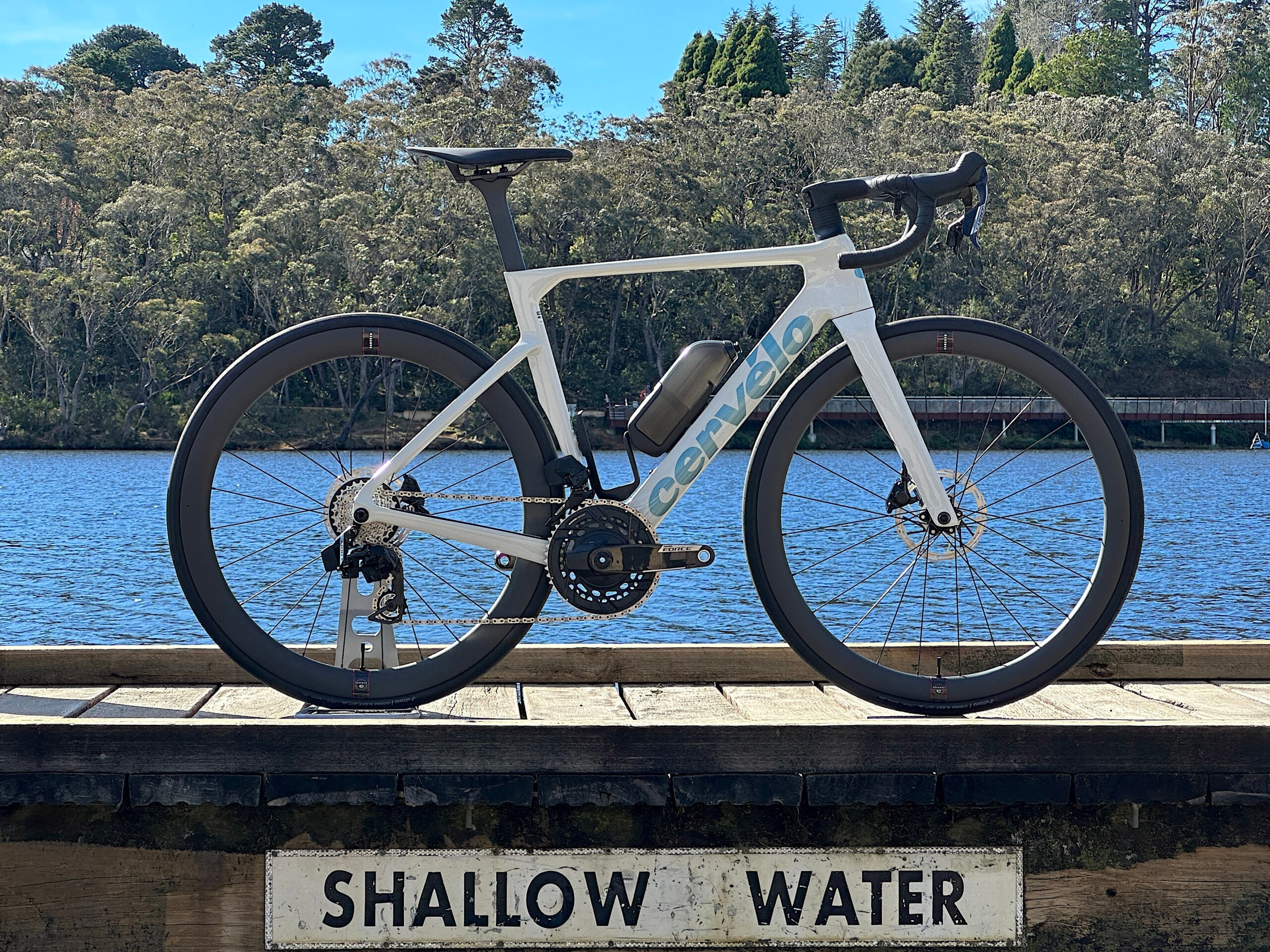
The original Cervélo Soloist first appeared in 2002 before being phased out six years later as Cervélo transitioned to its now-iconic S series.
However, the Soloist name re-emerged in 2022 and this year’s reboot represents the second generation of the current platform.
While released to coincide with this year’s Tour de France the new Cervélo Soloist wasn’t actually ridden there as the elite market isn’t who it’s aimed at.
Rather, featuring plenty of learnings from the more pro-oriented Cervélo S5 and R5 models, it’s very much pitched as an aero all-rounder for serious amateurs.
Race-ready performance without the S series price tag. Fast on any course, one road bike to rule them all, that kind of thing.
But does it live up to the billing?
First impressions
Setting eyes on it for the first time the Soloist is a sleek and thoroughly contemporary road machine that looks both fast and capable.
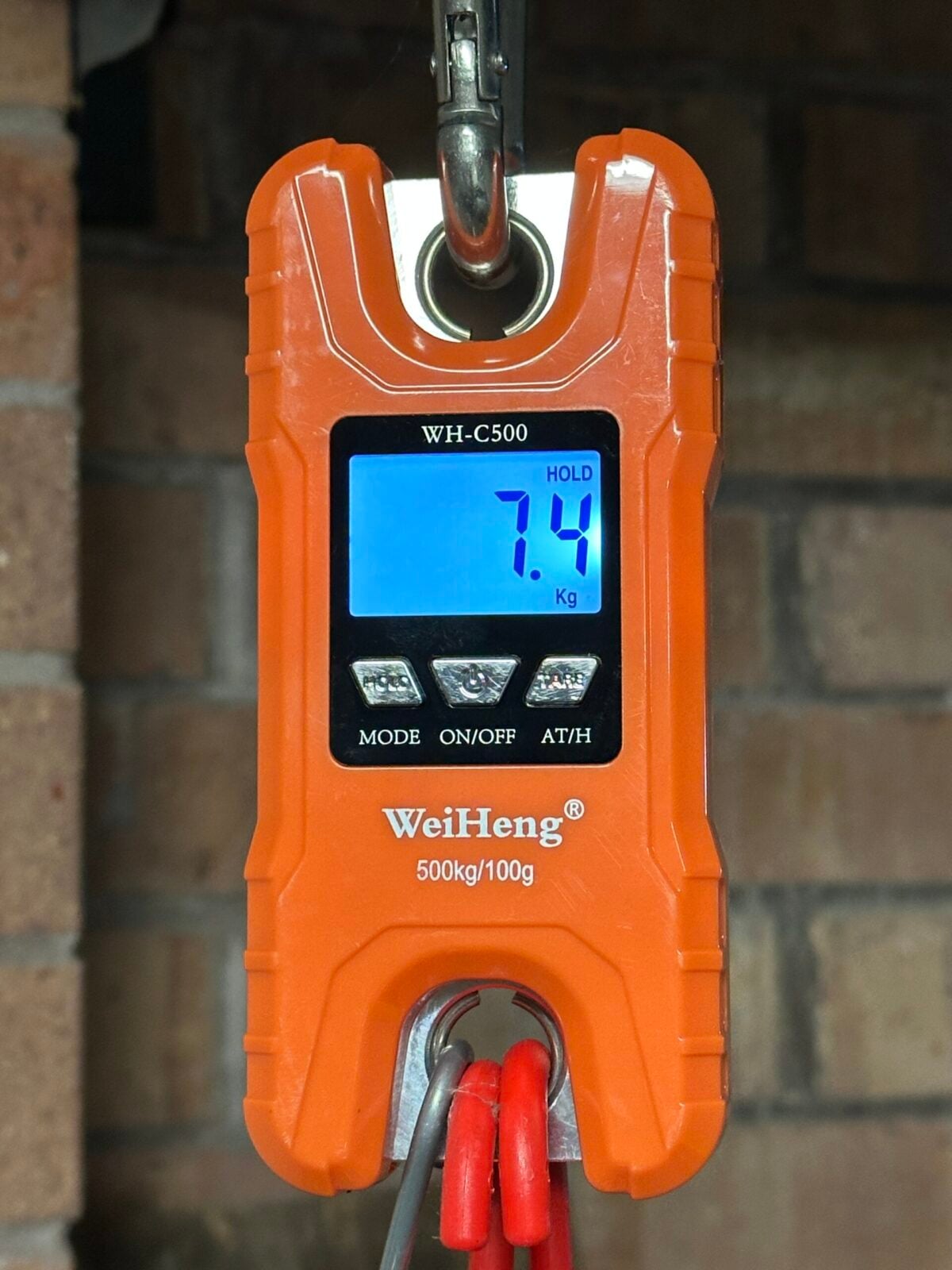
Picking it up it’s also nice and light. The top-spec SRAM Red build weighs just 6.85kg – around 500 grams less than the equivalent S5 which I reviewed last year for Bicycling Australia – while the SRAM Force AXS review build (54cm) weighed in at 7.4kg on my home scales including a pair of bottle cages and an out-front computer mount. Not bad at all.
Frame and geo
Yes, yes, you’ve already guessed. The new Cervélo Soloist is faster, lighter and more aero. But while claims like these are ubiquitous nowadays, they are true for the 2027 Soloist nonetheless.
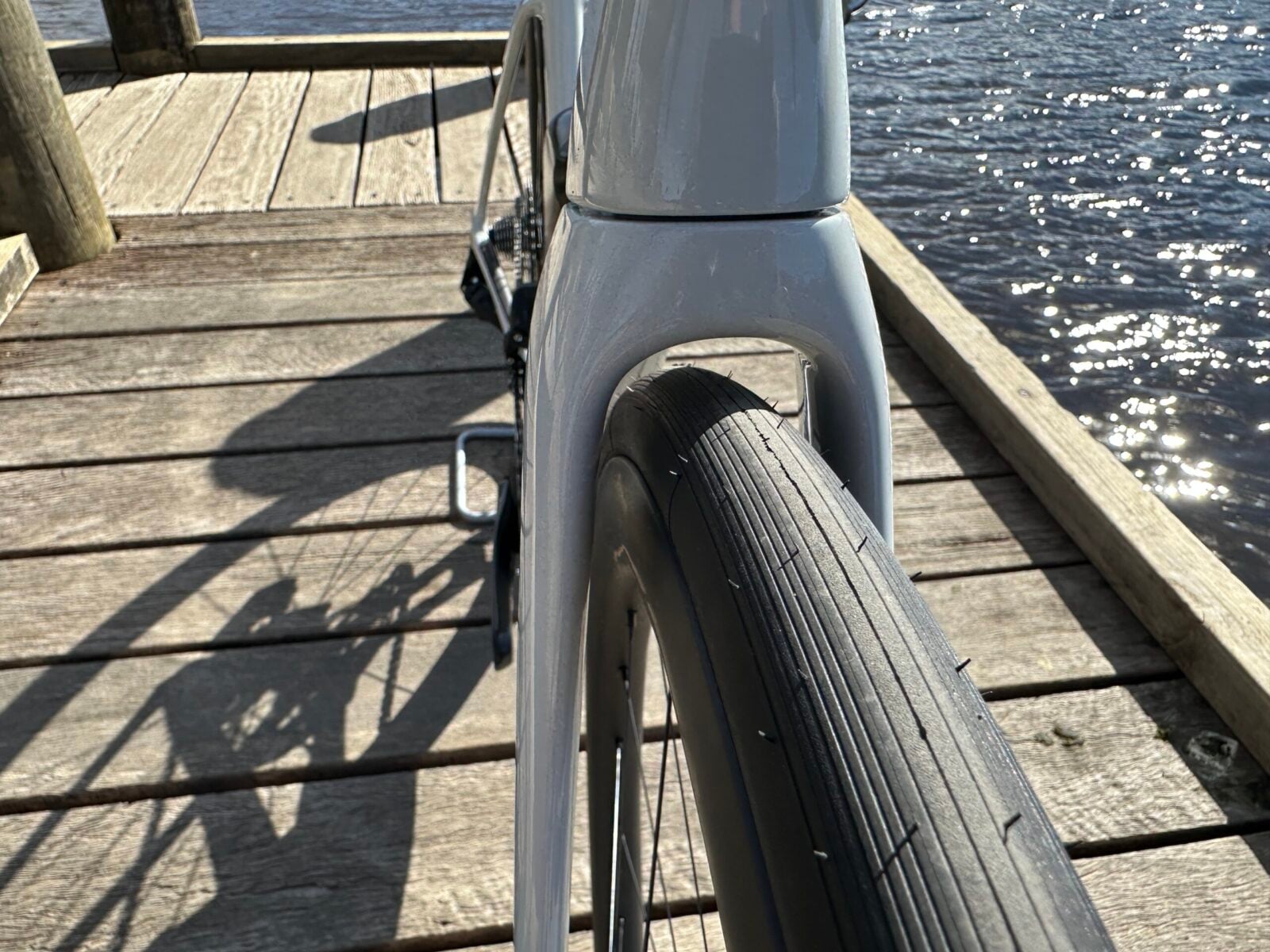
Refined through CFD analysis and wind tunnel testing the weight and performance enhancements have been achieved through some pretty significant tube changes while the steerer has also been narrowed to enhance aerodynamic performance while a new exit hole design also offers easier cable routing.
The new Soloist frame is 28 grams lighter than the previous model while the fork also shaves 16 grams. Cervélo also says the 2027 frameset reduces bike-only drag by 8.6 watts which is a pretty significant number.
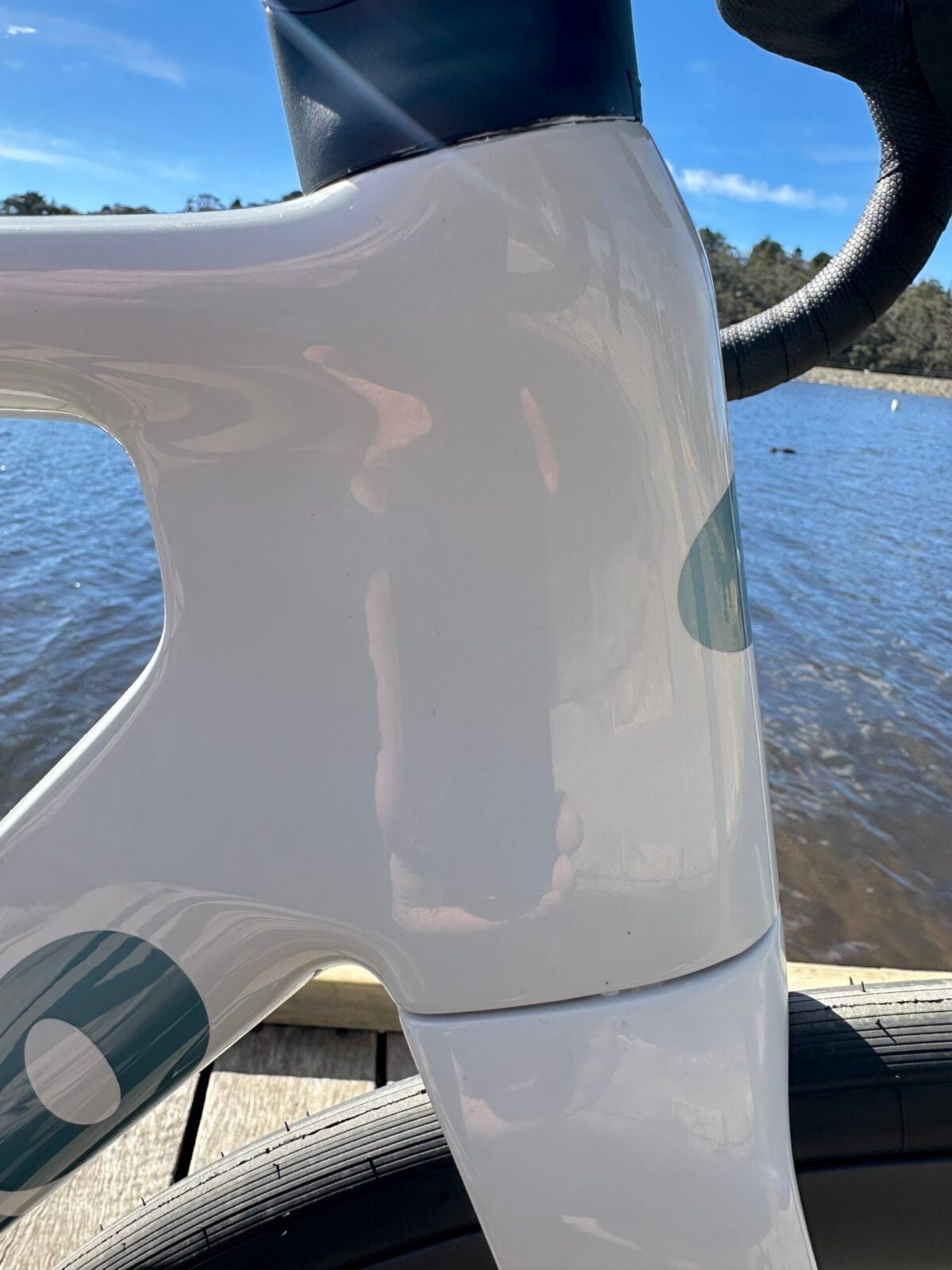
The head tube, down tube, fork and seat stay blades are all visibly narrower while the head tube is also noticeably deeper than the outgoing model.
There’s also an updated clamp system for the Cervélo SP27 carbon seatpost that shaves another 12 grams while maximum tyre clearance also bumps up from 34 mm to 36 mm. The fit geometry matches the Cervélo R5.
This means it’s not as aggressive as the S5 but still far more race-oriented than, say, the more relaxed geometry of the go-almost-anywhere Caledonia. The frame is electronic only and UDH compatible with a threaded bottom bracket.
Wheelset and components
The top four 2027 Soloist models all feature Cervélo’s Reserve 42|49TA carbon wheelset with DT Swiss 240 hubs on the top-of-the range SRAM Red AXS build and 350 hubs for the rest.
The entry level SRAM Rival AXS build comes with a Reserve 40|44 carbon wheelset. In addition to the standard 12-speed models a SRAM Force XPLR AXS option is also available using the new UDH frame design to run a direct-mount gravel/all-road transmission with a single 48T chainring paired with a 10-46T 13-speed cassette.
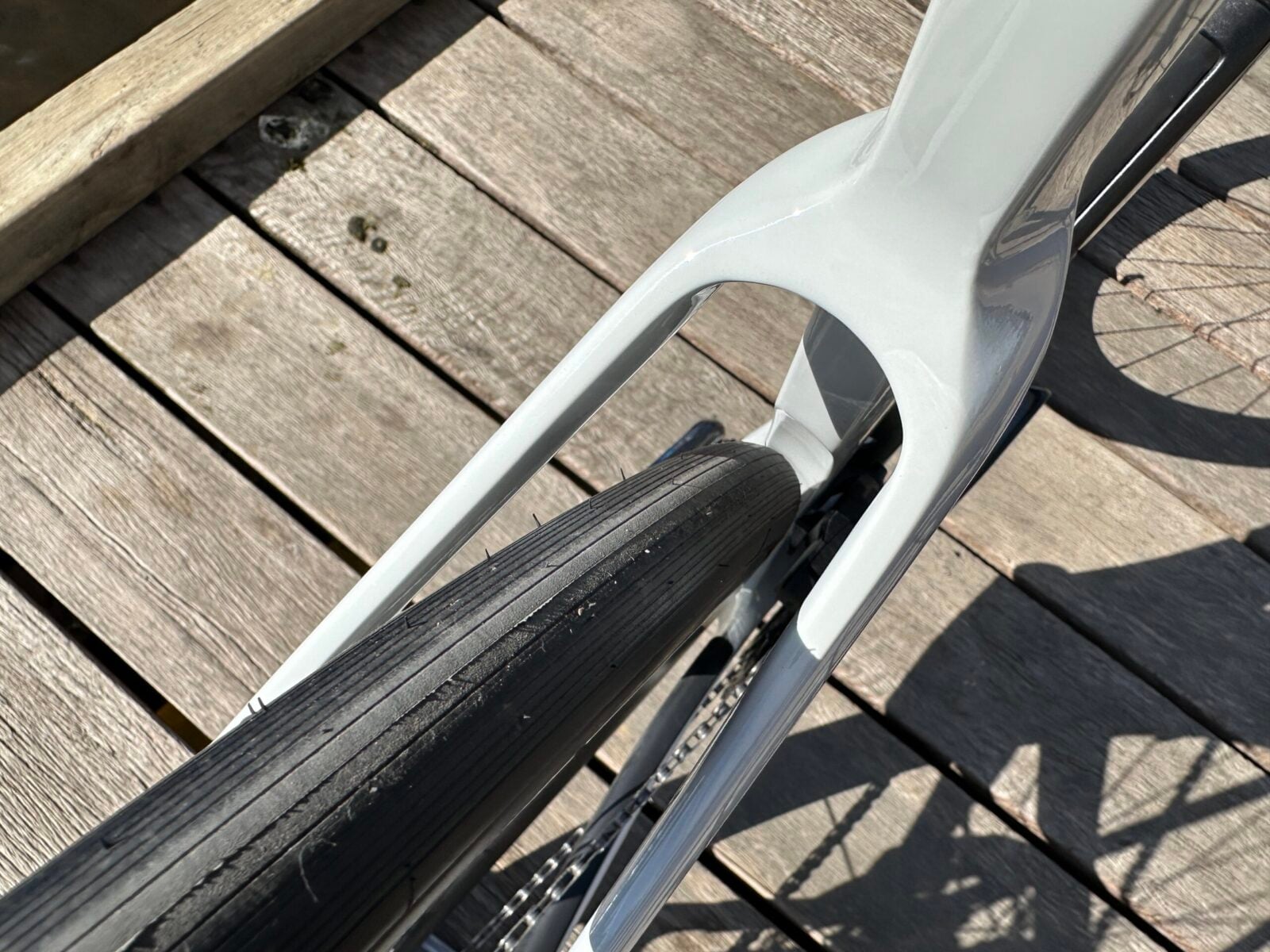
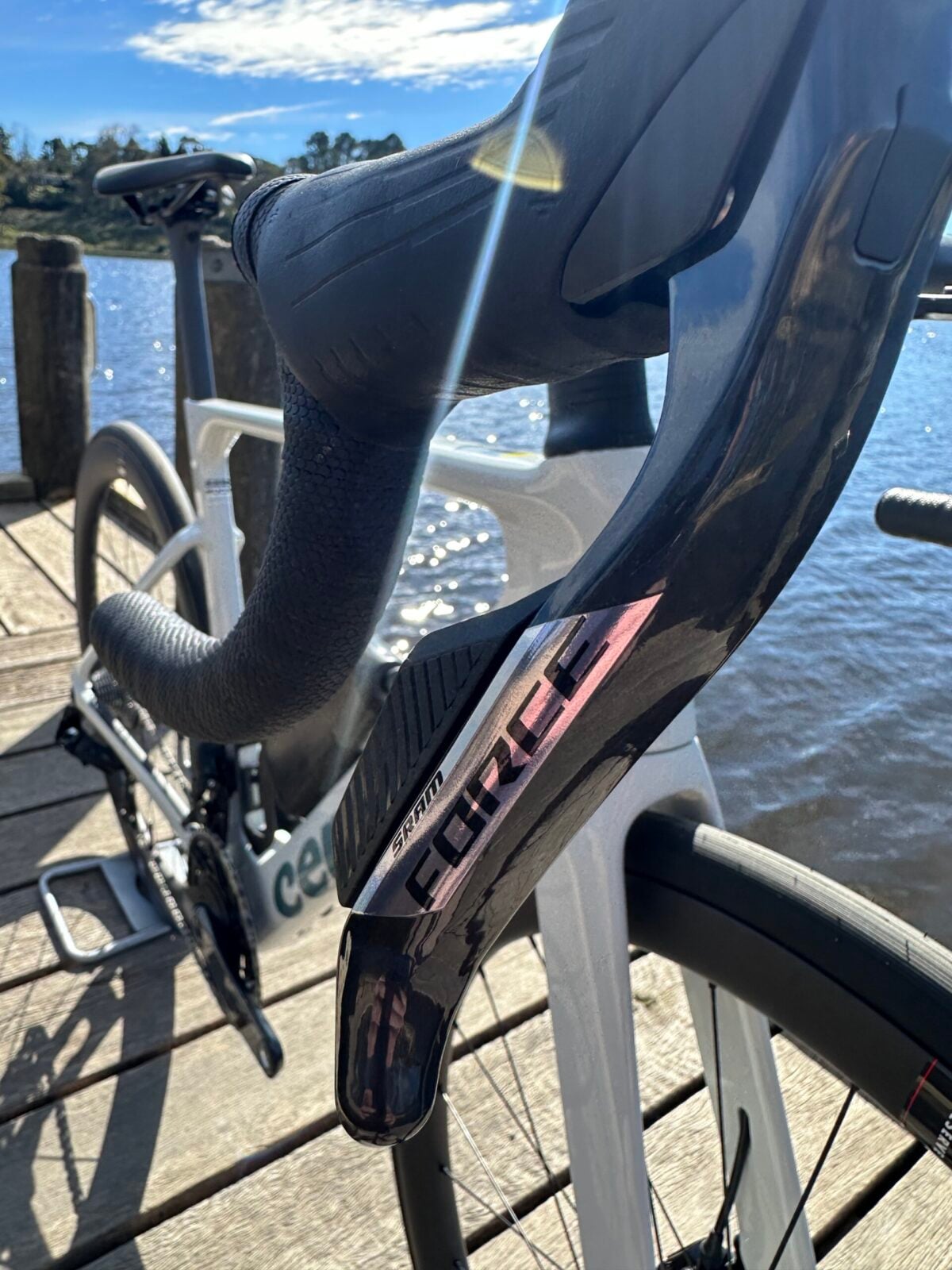
Every 2027 Soloist model features the same sleek HB18 one-piece carbon cockpit used on the R5 with fully internal brake hose routing. This saves 134 grams versus the previous HB13 two-piece set-up on the outgoing models.
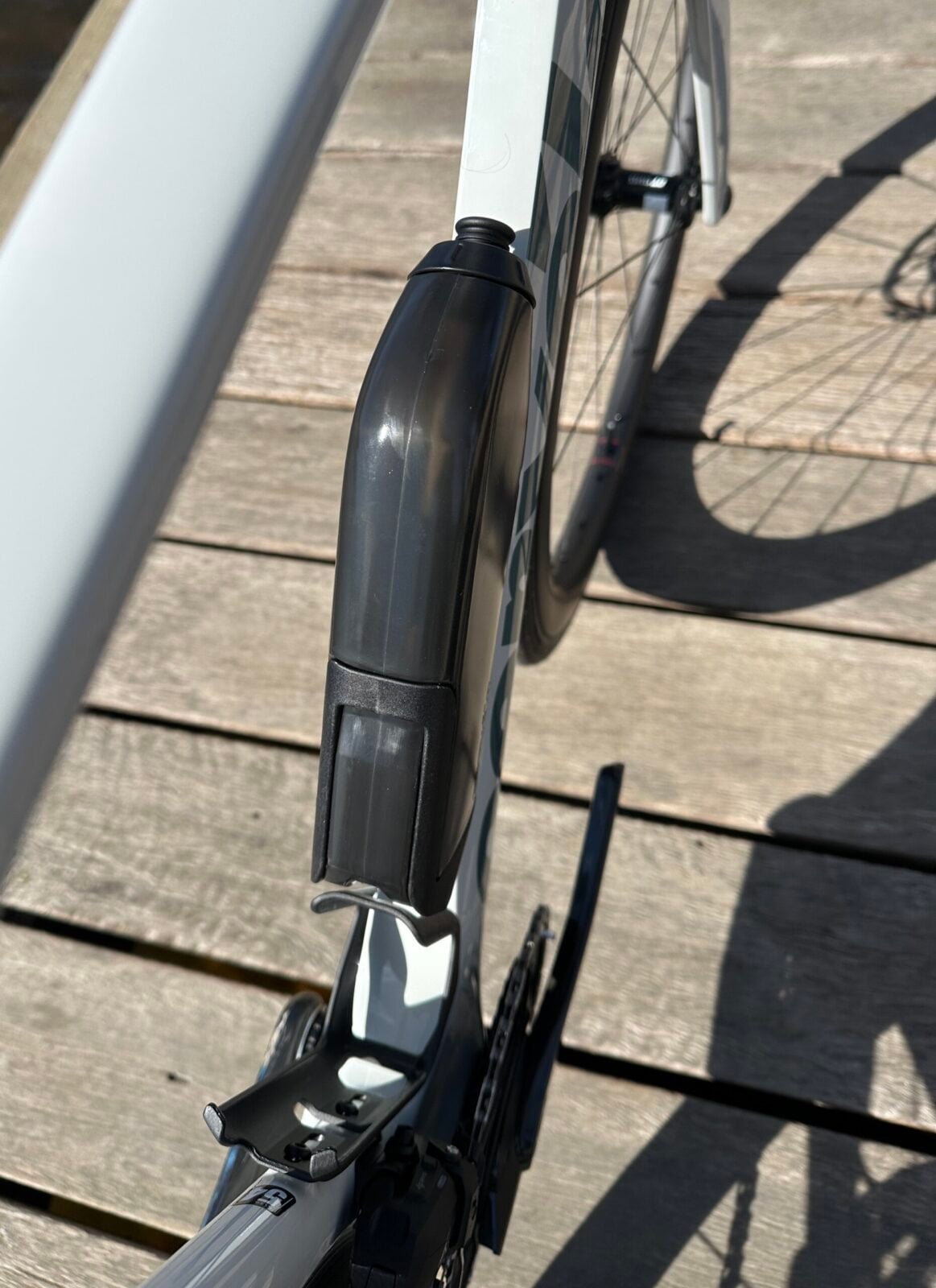
As with the S5 and R5 you can swap your cockpit within the first 60 days at authorised Cervélo retailers to ensure you have the perfect size. The Soloist also arrives with a pair of 550mL plastic Cervélo aero bottles and cages which tuck in neatly behind the down tube.
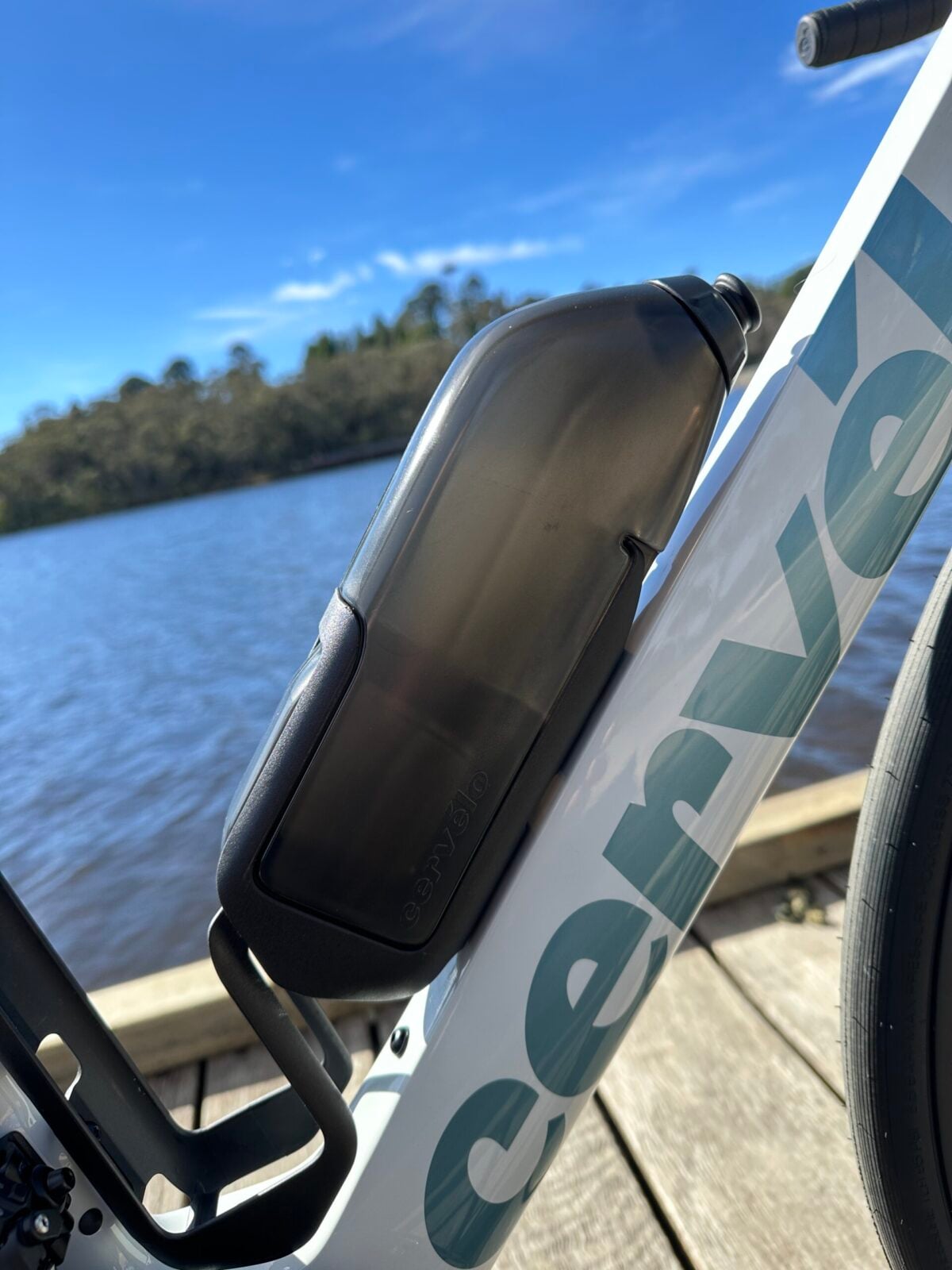
Cervélo says these will save you a further 4.3 watts versus using traditional round bottles. In good news, the bespoke bottle cages can still accommodate standard round bottles and tool containers should you prefer.
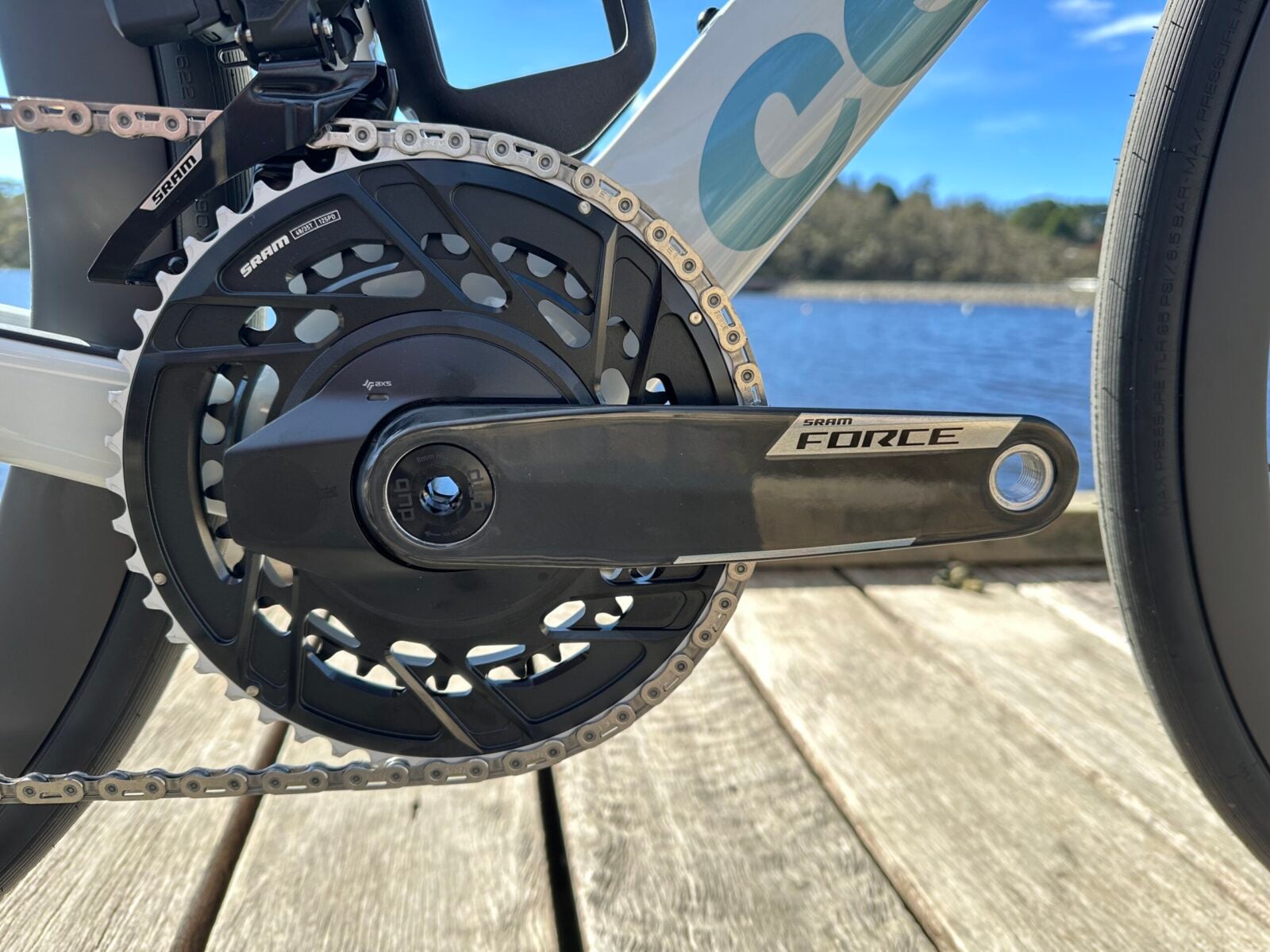
All SRAM models come with Quarq powermeters while the Ultegra build comes with a 4iiii Gen3+ powermeter.
The ride
Saddling up for the first time the Soloist puts you in a reasonably low and compact ride position, although certainly more forgiving than the S5 as to be expected.
I ran the review build with multiple spacers, but take them out to really slam the stem and have your nose close to the ground for an aggressive position if that’s how you like to roll. While I wouldn’t go so far as to call the handling twitchy this is definitely an agile bike with pretty direct steering.
I also found the overall ride feel and front end was very much on the stiffer end of the scale with plenty of road feedback coming up through my hands even with the tubeless set-up reviewed.
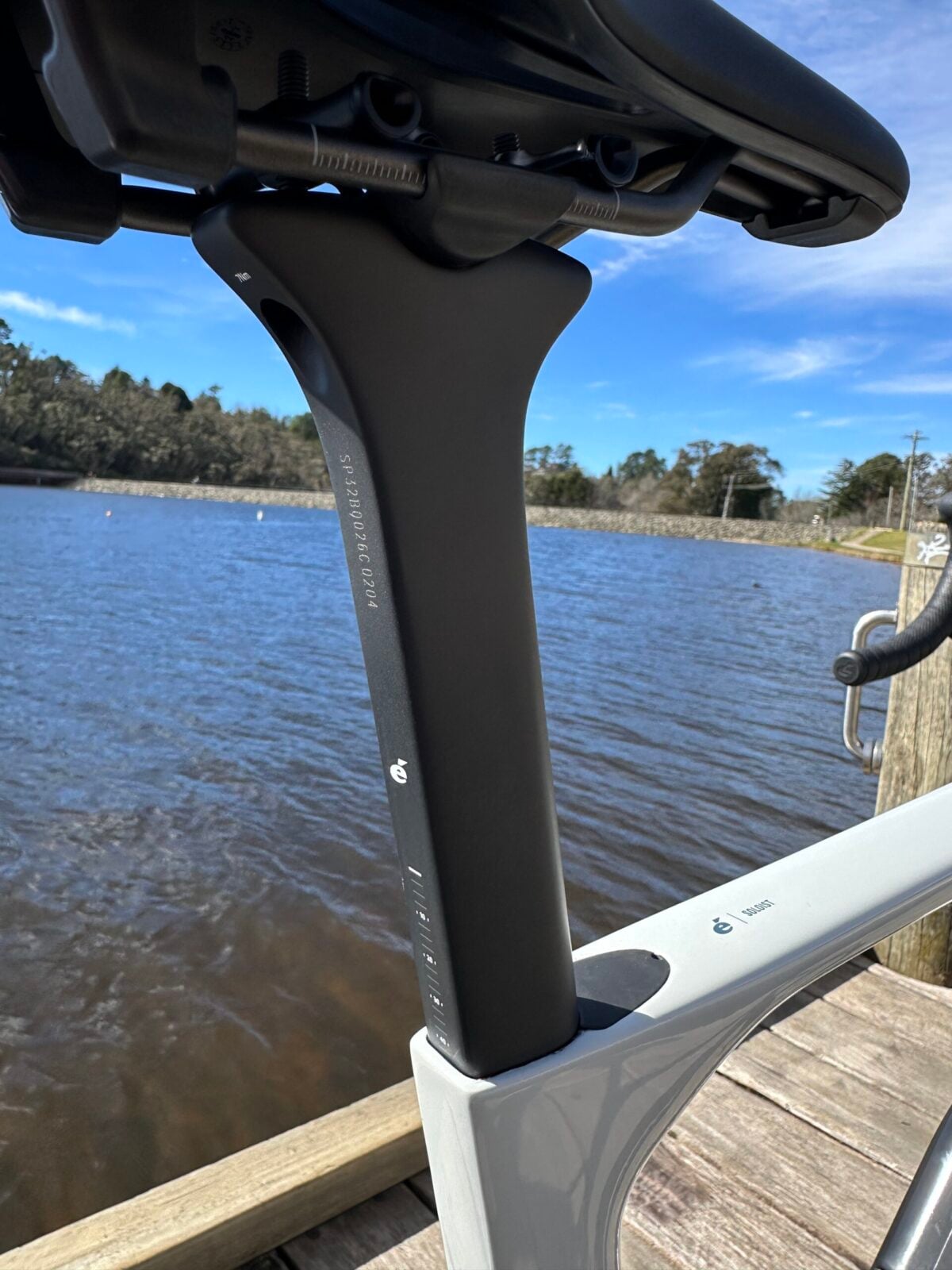
This makes it absolutely fabulous on smoother roads but a little less accommodating on rougher surfaces, particularly on longer rides where lower tyre pressures are absolutely the way to go.
With its relatively light weight and stiff frame I found acceleration was above average and, overall, the Soloist gives the clear impression it would be a more than capable crit bike for a committed club-level racer.
Tucked on to a wheel at higher speeds it feels aero, efficient and very much in its comfort zone. On the other hand, I found climbing performance was a little less accomplished. Again this isn’t unexpected and it’s certainly not a bad climber per se.
The standard gearing is more than enough to get you over all but the nastiest pitches without too much trouble. That said I was left with a strong feeling the Soloist sits closer in performance to the S5 than the R5, certainly not a 50/50 split – something to keep in mind if you spend a large amount of your time ascending.
Oh, and just one final observation. While the aero bottles will save you some watts, they do require a slight refinement of technique to get in out out of their cages quickly.
The narrow rectangular shape isn’t as forgiving as traditional round cages – something that made things more than a little tricky when reviewing this bike in the middle of winter wearing long fingered gloves. You have been warned!
Summing up
The 2027 Soloist is the latest impressive update to the Cervélo road stable and a genuine upgrade from its predecessor in terms of spec, performance and price.
It’s lighter and more comfortable than the S5, more aero than the R5 and considerably cheaper than the same spec models in both. In isolation there’s no arguing it’s a fabulous bike.
But while it is cheaper than the equivalent Cervélo S5 and R5 models, even the base 2027 Soloist offering now retails for around $8,500.
That’s quite a step up from the outgoing model and something that, for many riders, could put in direct competition with a slightly lower spec S5 or even R5 if you do plenty of climbing.
Whichever way you go you’ll get a great bike, but there’s plenty to weigh up and for me the choice isn’t as clearcut as I’d expected at the start of this review.
Cervélo SOLOIST (2027)
RRP: $11,000 ($5,900 frameset only)
COLOUR: Cloud Break (white)
FRAME: Cervélo All-Carbon, Soloist
FORK: Cervélo All-Carbon, Tapered Soloist
HANDLEBAR/STEM: Cervélo HB18 carbon
SADDLE: Fizik Arione R3
SEAT POST: Cervélo SP27 Carbon
ROTORS: SRAM Paceline Centerlock (160 mm/160 mm)
SHIFT LEVERS: SRAM Force AXS E1
FRONT DERAILLEUR: SRAM Force AXS E1
REAR DERAILLEUR: SRAM Force AXS E1
CRANKSET: SRAM Force AXS E1, 48/35T, DUB w/ Quarq powermeter
CASSETTE: SRAM Force E1, 10-33T, 12-Speed
CHAIN: SRAM Force E1
BOTTOM BRACKET: SRAM DUB, T47 BBright
RIMS: Reserve 42|49TA carbon w/DT Swiss 350 hubs (tubeless compatible)
TYRES: Vittoria Corsa N.EXT TLR G2.0 29mm
CLEARANCE (MAX): 36mm
www.cervelo.com/en-AU/bikes/soloist

Peter Maniaty
Peter Maniaty - Peter is Bicycling Australia’s senior journalist, and highly respected in the world of cycling. From bike reviews, to destination features and nitty gritty opinion pieces, he’s a gun writer.